
Consistent, thermostat-controlled heat for Ohio County's hill country.
Wheeling and the rest of Ohio County sit in the hills above the Ohio River, where winter lows average 22°F and heating season runs long. Find the right pellet stove or insert, and connect with a trusted local dealer who can size it, vent it, and install it correctly.
Every Project Starts From One of These Five Situations
A clean-burning fit for hardwood country.
Ohio County anchors West Virginia's northern panhandle, a narrow strip of steep Appalachian ridges wedged between the Ohio River and the Pennsylvania line. Wheeling is the population and commercial center, but much of the county is rolling hill country of oak, hickory, maple, and cherry forest. Climate zone 5A and a winter heating load on par with Madison, WI put winters here on the same footing for total heating demand, even though the average winter low of 22°F is milder than the deep cold of the upper Midwest. It's a long, steady heating season rather than an extreme one—exactly the kind of climate where a pellet stove's even, thermostat-driven heat output holds its own against a wood stove without the daily tending.
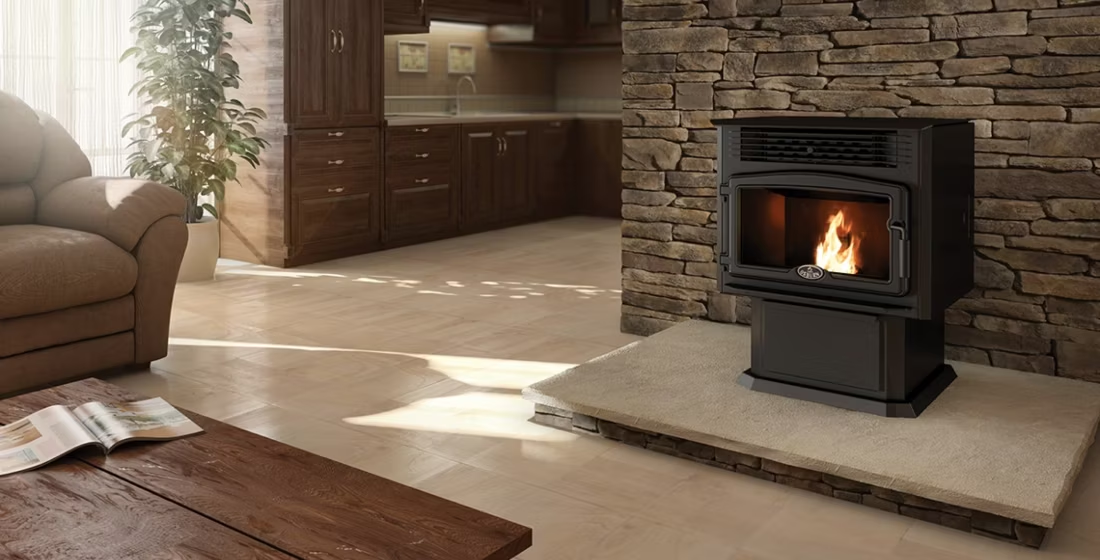
Ohio County has no air quality non-attainment designation and no winter inversion or wildfire smoke concerns, so pellet stoves aren't filling a regulatory gap here the way they do in some Western counties—they're chosen for convenience, cleaner glass, and lower ash output. Regional pellet fuel comes from mills like Energex, Hamer Pellet Fuel, and Greene Team Pellet Fuel, all of which press hardwood byproduct from the same oak, hickory, maple, and cherry stands that supply the region's sawmills and firewood dealers. For homes in and around Wheeling without a usable masonry chimney—common in the county's older row houses and newer subdivisions alike—a pellet stove's simple through-wall vent kit is often the most practical path to real supplemental heat.
Three steps. No salesperson until you're ready.
Tell us about your project
Your zip code, your situation, and the fuel you're leaning toward—or let the answers point you to one.
See what's actually available
The brands dealers within 100 miles genuinely carry—real options, never a catalog mirage.
Get your dealer & Project Guide
A trusted local dealer, plus the free Project Guide & Parts List that names every component of the job.
Frequently Asked Questions
How much does a pellet stove installation cost in Ohio County?
A typical pellet stove installation in Ohio County runs in the neighborhood of $3,000 to $6,000 once you account for the stove itself, a code-compliant hearth pad, and the through-wall PL-vent kit most installations use instead of a full chimney. Homes that already have a masonry fireplace can sometimes install a pellet insert for less, since the existing chimney or a liner inside it can double as part of the venting path. Because pellet stoves require a standard 120V outlet nearby to run the auger, igniter, and blower, older Wheeling-area homes occasionally need a small electrical addition, which a local dealer will flag during an in-home consultation.
What size pellet stove do I need for my Ohio County home?
With an average winter low around 22°F and a winter heating load put Ohio County's winters are long but not brutally cold—closer to the demand profile of Pittsburgh than to the deep cold of somewhere like Duluth, MN. Most homes in the county do well with a mid-size pellet stove rated for 1,200 to 2,000 square feet as a primary heat source in a well-insulated space, or as effective supplemental heat in a larger, older farmhouse up in the hills outside Wheeling. Older homes with less insulation or higher ceilings should size up rather than down—a local dealer will walk your space and factor in insulation, ceiling height, and layout before recommending a model.
Pellet stove vs. wood stove—which is right for my home?
Both fuels are common in Ohio County, and the choice usually comes down to convenience versus self-sufficiency. Wood stoves burn the oak, hickory, maple, and cherry that's abundant in the surrounding hills, work with zero electricity, and are the better emergency-heat option when an ice storm along the Ohio River takes down power lines. Pellet stoves are easier to live with day to day—load the hopper, set the thermostat, and let the auger and blower do the work—but they need continuous electricity to run, so they go dark in an outage unless you add a battery backup or small generator. For a primary living space where daily convenience matters most, pellet usually wins. For a cabin, workshop, or backup heat source where the power might not be reliable, wood still has the edge.
Where can I buy pellet fuel in Ohio County?
Regional hardwood pellet brands including Energex, Hamer Pellet Fuel, and Greene Team Pellet Fuel are widely stocked at hearth retailers and farm supply stores throughout the northern panhandle, and all three are milled from the same oak, hickory, and maple hardwood base common to the region. Pricing moves with hardwood supply and shipping costs, so it's worth asking your local dealer which brand they stock consistently and buying by the ton rather than the bag once you know your stove's seasonal burn rate—a typical mid-size stove run as primary heat burns through 2 to 3 tons over an Ohio County winter.
Do I need a permit to install a pellet stove in Ohio County?
Most jurisdictions in Ohio County, including the City of Wheeling, require a building permit for a new pellet stove installation, along with an inspection to confirm proper clearances and venting. Pellet stove permitting is generally simpler than wood stove permitting because the through-wall PL-vent system doesn't involve the same chimney and roof-penetration code questions as a masonry or Class A chimney installation. Most local dealers pull the permit as part of the installation, so you typically don't have to navigate the paperwork yourself.
How is a pellet stove vented, and do I need a chimney?
No existing chimney is required. Pellet stoves vent through a small-diameter PL-rated pipe that runs horizontally through an exterior wall, using a blower to push exhaust out rather than relying on a chimney's natural draft. That makes pellet stoves a practical option for Ohio County homes—including many of the older row houses in and around Wheeling—that don't have a usable masonry fireplace or chimney. Homes that do have an existing fireplace can instead install a pellet insert, which vents through the existing chimney using a liner.
Will my pellet stove work during a power outage?
Not without a backup power source. Pellet stoves rely on electricity to run the auger that feeds fuel, the igniter, and the blower that distributes heat and exhausts combustion gases—cut the power and the stove stops, even with a full hopper. For Ohio County homes concerned about ice storms or downed lines along the river valley, a small battery backup unit or a portable generator sized for the stove's draw (typically under 120 watts) will keep it running through an outage. If uninterrupted backup heat during outages is the priority, a wood stove or a vented gas unit with a battery-backed ignition is worth considering alongside pellet.
How often does a pellet stove need to be cleaned and serviced?
Plan on cleaning the burn pot and ash pan every few days during heavy use, a deeper cleaning of the exhaust fan, hopper, and venting once a month during heating season, and a full annual service—including inspection of the auger motor and gaskets—before each burning season starts. Ohio County's long heating season means a stove run as primary heat can accumulate several tons of throughput by spring, so staying ahead of ash buildup keeps efficiency up and extends the life of the auger motor and igniter.
Pellet stove vs. gas fireplace—which makes more sense in Ohio County?
Gas offers instant on-off convenience and, with the right ignition system, can keep running during a power outage on battery backup. Pellet stoves offer a real flame and genuine supplemental or primary heat output, often at a lower fuel cost than propane in areas of the county without natural gas service, but they need continuous electricity and regular hopper refilling and ash cleanout. For a den or living room where ambiance and hands-off operation matter most, gas is usually the simpler choice. For a home that wants meaningful heat output and lower ongoing fuel costs, and doesn't mind refilling a hopper every day or two, pellet is the better fit.
How often does a pellet stove need cleaning?
A clean pellet stove is a happy pellet stove. Plan on cleaning the burn pot about once a week when you're burning regularly—ash and clinkers gum up the air holes just like a pellet barbecue. Most pellet stove problems trace back to skipped cleaning that nobody explained up front. Some designs make it easy with a trapdoor burn pot: pull a lever and the gunk drops into the ash pan.
Why is my open fireplace making my house colder?
Open fireplaces suck—literally. As the fire burns, it consumes air your furnace already paid to heat and pulls it out through the chimney, so the house is actually colder after the fire goes out than before you lit it. An insert fixes this: it seals the chimney, puts fixed glass across the front, and turns that hole in your house into a real heat source.
How much should I budget for a fireplace?
For an average home—covering the fireplace, the vent pipe, and basic installation—a budget between $3,900 and $5,500 gives you a lot of options across wood, gas, and pellet. By the time you add finish work, gas line, and electrical, the average complete installation lands between $5,000 and $12,000 all-in. In a remodel or new build, a good rule is to put about 2.5% of the total project cost toward the fireplace.
Can I install a fireplace myself?
If you're putting a fire in your house on purpose, it's best to work with an expert. Unless you're genuinely experienced in framing, gas line, vent pipe, and the national code on clearances to combustibles, have a professional do it—and ideally the same company that sells you the fireplace, so warranty, service, and liability all live under one roof.
Stove and Fireplace Dealers in Ohio County
Listings include WhyFire partner dealers, dealers we have verified as authorized for the brands we recommend, and established local businesses that carry hearth products. Every listing shows which one it is. The ones marked Preferred run on WhyFire's software, so they can show you real pricing and book your appointment right here. No manufacturer pays for placement. How we verify dealers →
Buckeye Valley Chimney Service
Samson Glass And Mirror
Scenery Hill Hardware
Tri-State Stoves
The Stove Place
Builders Wholesale
Bottled Gas Service
Fireplace & Patioplace
Pellet Brands Stocked Around Ohio County
Manufacturers will point you to the nearest stocking dealer.
Find your pellet stove in Ohio County.
Tell us about your home and heating goals, and we'll match you with a trusted local dealer and send over a free Project Guide & Parts List—the exact stove, vent kit, and hearth setup recommended for your Ohio County home.
Find Your Fireplace →