
Warmth without the chimney in Marion County, WV.
No flue, no gas line, no permit hassle—just plug-in or hardwired zone heat for Fairmont, Rivesville, Mannington, and every corner of Marion County. Find the right unit and connect with a trusted local dealer.
Every Project Starts From One of These Five Situations
The convenience play for Marion County's older housing stock.
Marion County sits in north-central West Virginia around Fairmont, with a climate zone 5A profile—winter lows averaging 24°F and about 5,017 heating degree days a year. That's a real heating season, but it's less than half the heating load of a true cold-climate town like Duluth, MN or Fargo, ND, which run closer to 9,000 HDD. Marion County's housing stock reflects its coal and glass-industry history: a lot of older brick and frame homes in Fairmont, Mannington, and Rivesville with existing but often unused masonry fireboxes, alongside newer construction on the edges of town. Those older fireplaces are exactly where electric inserts do their best work.
An electric fireplace or insert needs no chimney, no venting, and in most cases no building permit—just an outlet or, for larger built-in units, a dedicated circuit run by a licensed electrician. That makes it a practical fit for a county where many homes have a flue that hasn't been swept in decades, and for renters, Fairmont State-area apartments, and condos where a wood or gas retrofit isn't realistic. It's zone heat and ambiance on demand, not a replacement for a furnace, and it's worth being upfront about that trade-off before you buy.
Three steps. No salesperson until you're ready.
Tell us about your project
Your zip code, your situation, and the fuel you're leaning toward—or let the answers point you to one.
See what's actually available
The brands dealers within 100 miles genuinely carry—real options, never a catalog mirage.
Get your dealer & Project Guide
A trusted local dealer, plus the free Project Guide & Parts List that names every component of the job.
Frequently Asked Questions
How much does an electric fireplace installation cost in Marion County?
A freestanding or wall-mounted plug-in electric fireplace typically runs $300 to $1,500 for the unit itself, with no venting or chimney work needed—often the simplest hearth project available in Marion County. A built-in electric insert or a larger unit requiring a dedicated 240-volt circuit runs higher, generally $800 to $2,500 once you factor in a licensed electrician for the wiring. Most jurisdictions in Marion County only require an electrical permit when a new circuit is being run, not for a standard plug-in unit—your installer or electrician can confirm what applies to your specific home.
Do electric fireplaces need a chimney or venting in Marion County?
No. Electric fireplaces and inserts produce no combustion byproducts, so there's no flue, chimney, or exterior venting required. That's a real advantage in Fairmont and Mannington's older housing stock, where a lot of masonry chimneys tied to fireplaces that haven't been used in years are in questionable condition. An electric insert can go into that same firebox opening without anyone needing to inspect or repair the flue first—it just needs a nearby outlet or a new circuit.
Can an electric insert go into my existing wood-burning fireplace?
Yes, and it's one of the more common projects local dealers see in Marion County. Many homes in Fairmont and the surrounding communities have an original masonry firebox that's sat unused for years. An electric insert slides into that opening, covers the old firebox with a faceplate, and runs off a standard outlet or a new dedicated circuit if the unit calls for more amperage. You keep the look of a fireplace without needing a working flue, a cutting permit, or firewood at all.
What size electric fireplace do I need for my Marion County home?
Given the county's climate zone 5A profile and roughly 5,017 heating degree days, an electric fireplace in Marion County is almost always supplemental or zone heat rather than a whole-home heat source—most models top out around 1,500 watts, which is enough to comfortably warm a 400 to 1,000 square foot room but won't carry a whole house through a January cold snap on its own. For a living room or finished basement, a standard 1,500-watt insert or freestanding unit is usually sufficient. For open-concept spaces, talk to a local dealer about a larger built-in unit or supplementing with a second zone heater elsewhere in the home.
Will my electric fireplace work if the power goes out?
No—and this is worth being clear about. Electric fireplaces require power to run the heater and, on most models, the flame effect, so during an ice storm or wind event that knocks out Mon Power service in Marion County, the unit goes dark along with everything else. If backup heat during outages matters to you, a wood stove or a battery-backed gas unit is a better fit; electric works best as a convenience and ambiance choice for homes with reliable grid power, not as emergency heat.
Electric vs. wood—which is right for my Marion County home?
Wood heat has deep roots in this part of West Virginia—oak, hickory, maple, and cherry are all common locally, and Monongahela National Forest cutting permits run about $20 per cord during the May-to-October season for residents who want to cut their own. Wood also works without electricity, which matters during outages. Electric, on the other hand, means no ash, no smoke, no chimney maintenance, and no permit for a standard plug-in unit—at the cost of needing grid power and delivering less raw heat output. For a primary heat source or backup during storms, wood still wins for a lot of Marion County households. For ambiance and zone heat in a room that doesn't already have a working chimney, electric is usually the more practical and lower-maintenance choice.
Electric vs. pellet stove—which should I choose?
Regional pellet brands like Energex, Hamer Pellet Fuel, and Greene Team Pellet Fuel are all reasonably available to Marion County homeowners, and a pellet stove puts out considerably more BTUs than an electric unit—genuinely capable of heating a whole room or small home through a cold snap. But pellet stoves also run on electricity to power the auger and blower, so they share electric's vulnerability during outages, plus they require fuel storage and periodic hopper loading and ash removal. Electric fireplaces skip the fuel storage and maintenance entirely, but they're strictly zone heat. If you want real heating capacity with some hands-on involvement, pellet is worth a look; if you want plug-in simplicity for a specific room, electric is the lower-effort option.
How much does it cost to run an electric fireplace in Marion County?
A typical 1,500-watt electric fireplace running on Mon Power's residential rates costs roughly a few dollars for several hours of use—inexpensive compared to running a whole-home furnace, but it's important to remember these units are supplemental. With Marion County's winter lows averaging 24°F and around 5,017 heating degree days a year, an electric fireplace isn't sized to replace your furnace on the coldest days of the season; it's best used to take the edge off in one room while your main heating system covers the rest of the house.
Are electric fireplaces a good fit for rentals and apartments in Fairmont?
Yes—this is one of the most common uses for electric units in Marion County. Fairmont has a fair amount of rental housing tied to Fairmont State University and the broader city, plus condos and apartment units where landlords and tenants alike want to avoid chimney work, gas line permits, or fuel storage. A plug-in electric fireplace or a wall-mounted unit installed with landlord approval requires no venting, no permit in most cases, and can be removed without leaving structural changes behind—making it a low-commitment way to add real ambiance and some supplemental warmth to a rented space.
Can I put a TV above my fireplace?
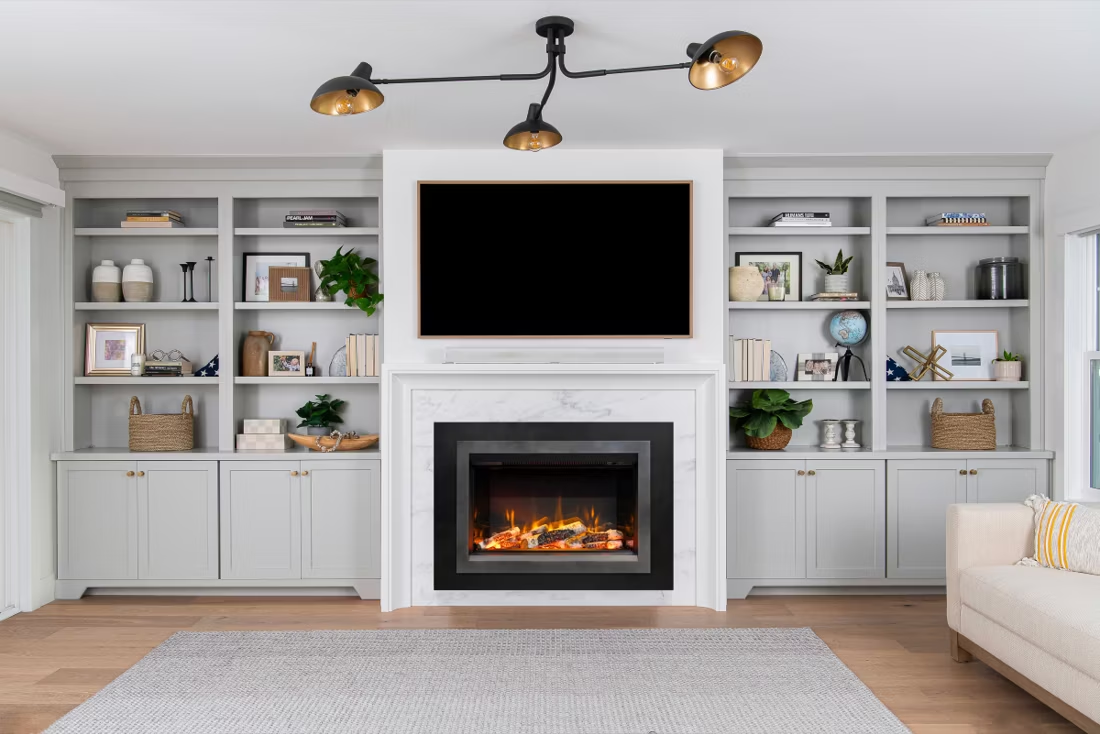
Yes—with an asterisk. Fireplaces are hot and TVs don't like heat. Either put a mantel between them to deflect rising warmth, or choose a fireplace with heat-management technology that creates a cool zone on the wall above—the wall stays around 125 degrees, barely warm, while the room still gets full heat. If you like clean lines and don't want a mantel, heat management is the answer.
Does an electric fireplace need a vent or chimney?
No—that's its superpower. An electric fireplace needs a wall and an outlet, period. No vent pipe, no gas line, no clearances to design around, which is why it works in bedrooms, offices, apartments, and walls where venting a gas or wood unit would be impractical or impossible. Installation is typically the simplest and least expensive of any fireplace type.
Does a fireplace add value to my home?
On average, a fireplace adds back to the home about the same amount you spent installing it. Add the monthly savings from heating the rooms you actually use instead of the whole house—often hundreds of dollars a year—and the value case is strong before you even count what a fire does for how your family uses the room.
Can I install a fireplace myself?
If you're putting a fire in your house on purpose, it's best to work with an expert. Unless you're genuinely experienced in framing, gas line, vent pipe, and the national code on clearances to combustibles, have a professional do it—and ideally the same company that sells you the fireplace, so warranty, service, and liability all live under one roof.
Stove and Fireplace Dealers in Marion County
Listings include WhyFire partner dealers, dealers we have verified as authorized for the brands we recommend, and established local businesses that carry hearth products. Every listing shows which one it is. The ones marked Preferred run on WhyFire's software, so they can show you real pricing and book your appointment right here. No manufacturer pays for placement. How we verify dealers →
Mike's Kitchen, Bath, Fireplace
Cam-Rock
Spike’s Chimney Sweep LLC
Streets Hardware Store
Find your electric fireplace in Marion County.
Tell us a bit about your home and we'll put together a free Project Guide & Parts List for your Marion County electric fireplace project—the right unit, the wiring it needs, and a trusted local dealer who can install it.
Find Your Fireplace →