
Instant heat for Fairmont-area winters that start in October.
With 5,017 heating degree days and winter lows averaging 24°F, Marion County's heating season runs long even without the extremes of the Great Lakes. I'll match you with a trusted local dealer who knows the difference between Mountaineer Gas service in town and propane out in the county's hollows.
Every Project Starts From One of These Five Situations
Reliable heat on demand, in the heart of natural gas country.
Marion County sits in north-central West Virginia, anchored by Fairmont and the smaller towns of Mannington, Monongah, Rivesville, and Barrackville along the Monongahela and Tygart Valley rivers. At climate zone 5A with 5,017 heating degree days, the county's winters are shorter and milder than what you'd see in Buffalo, NY, but still cold enough to keep a heating appliance running from October well into April across the rolling Appalachian terrain. Wood heat has deep roots here—oak, hickory, maple, and cherry are the hardwoods most homeowners burn, and permits through Monongahela National Forest run $20 per cord from May through October—but many Marion County households, especially in Fairmont's older neighborhoods and newer construction alike, have shifted to gas for daily, thermostat-controlled heat that doesn't require splitting or stacking anything.
Marion County sits within West Virginia's Marcellus and Utica shale gas region, so natural gas infrastructure is a familiar part of the local landscape even where individual homes aren't yet connected. Mountaineer Gas Company serves Fairmont and the county's incorporated towns, while homes in unincorporated stretches of the county more often run on propane delivered by regional suppliers. The county has no significant air quality restrictions on the books, which gives homeowners real flexibility, but a properly sized direct-vent gas fireplace or insert still makes sense here: it keeps combustion byproducts out of older, tightly built homes, holds up through the ice storms that occasionally knock out power in the hillier parts of the county, and heats a room in minutes rather than the hour or more it takes to build a wood fire from a cold start.
Three steps. No salesperson until you're ready.
Tell us about your project
Your zip code, your situation, and the fuel you're leaning toward—or let the answers point you to one.
See what's actually available
The brands dealers within 100 miles genuinely carry—real options, never a catalog mirage.
Get your dealer & Project Guide
A trusted local dealer, plus the free Project Guide & Parts List that names every component of the job.
Frequently Asked Questions
How much does a gas fireplace installation cost in Marion County?
Most gas fireplace installations in Marion County run between $3,800 and $9,500. A direct-vent insert dropped into an existing masonry firebox in a Fairmont neighborhood with a gas line already run to that wall lands toward the lower end. A new direct-vent fireplace for a remodel or new build—with framing, a fresh gas line, and roof or wall venting—sits in the middle to upper range. Homes in the county's rural stretches that need a new propane tank set or a longer line run, or that require venting through a steep hillside roofline, can push toward the top of that range, and a modest travel charge may apply for installers based out of Fairmont serving Mannington or the far reaches of the county.
Can I convert my existing wood fireplace to gas?
Yes—it's a common project in Marion County's older housing stock, particularly in Fairmont neighborhoods with original brick fireboxes and mantels built from local oak or cherry. A gas insert slides into the existing firebox and vents through a stainless liner run up your current chimney, so the masonry and any custom woodwork stay intact while you gain clean, controllable heat. Expect roughly $4,500 to $8,500 depending on whether the home is on Mountaineer Gas service or propane, and whether any new gas line work is needed to reach the fireplace wall.
Do I need natural gas, or is propane the standard here?
Either can work, and most gas fireplace models are configurable for one or the other with the correct orifice and regulator. Mountaineer Gas Company serves Fairmont and the county's larger towns—Mannington, Monongah, Rivesville, and Barrackville—so if your home already has gas service for a furnace or water heater, adding a fireplace to that line is usually straightforward. Outside those service areas, in the county's more rural hollows and ridgetop communities, propane from a regional bulk supplier is the standard fuel. Being in a natural gas-producing region doesn't automatically mean every home has a line to it, so it's worth checking your address against Mountaineer's service map before assuming which fuel path applies.
Will my gas fireplace work if the power goes out?
Most modern gas fireplaces are built to keep running through an outage. Units with intermittent pilot ignition (IPI) carry a battery backup that kicks in automatically when power drops, so the fireplace still lights and operates on demand. Valor fireplaces go further, generating their own electricity through the pilot assembly's thermocouple, so there's no battery to maintain at all. That reliability matters in Marion County's hillier terrain, where ice storms and downed lines can knock out power for a day or more during the coldest stretches of winter.
What's the difference between a gas fireplace, gas insert, and gas stove?
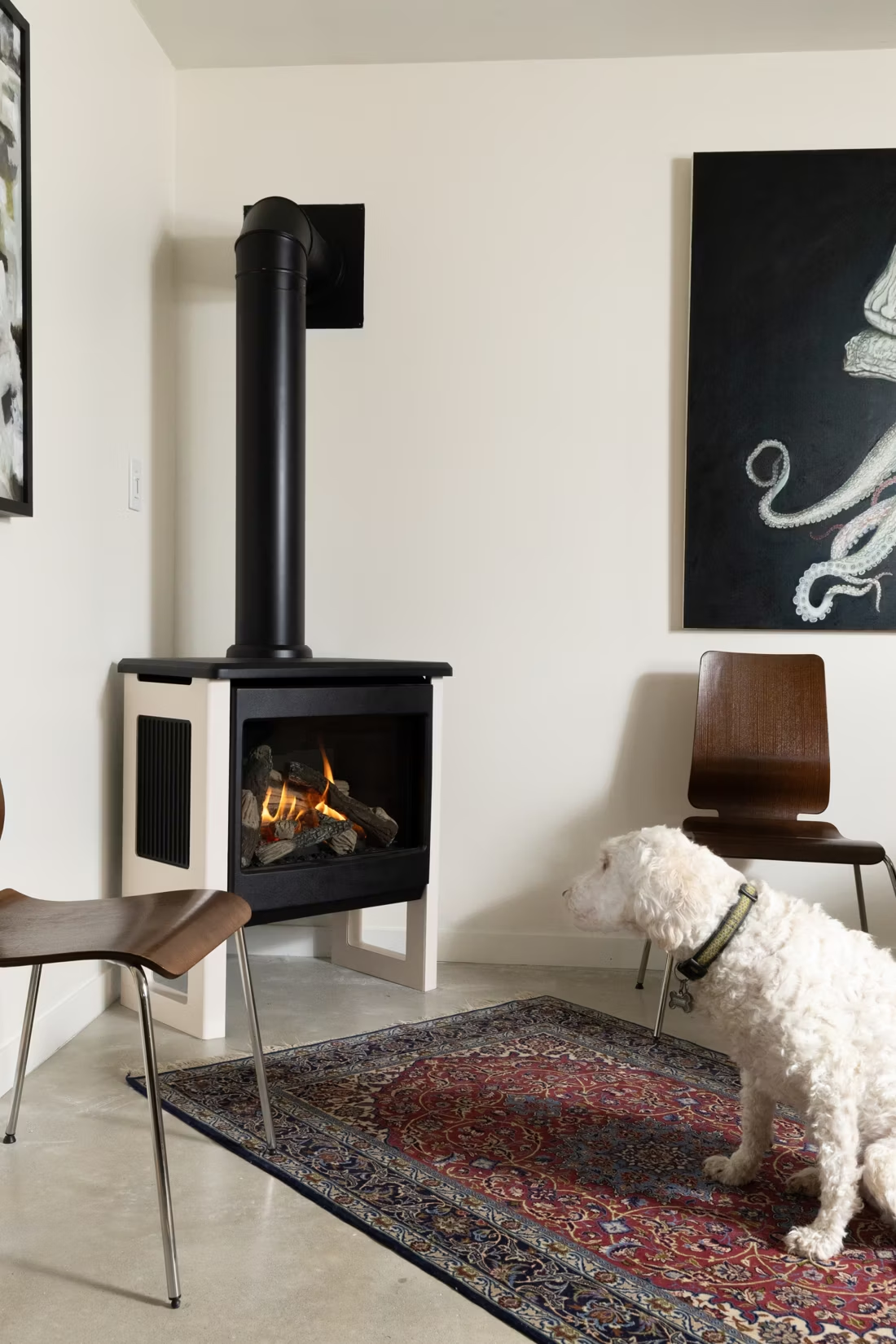
A gas fireplace is a fully built-in unit framed into a wall—the typical choice for new construction or a full remodel. A gas insert slides into an existing masonry firebox and uses your current chimney as the vent path, which fits many of Fairmont's older homes with an existing wood fireplace. A gas stove is a freestanding, cabinet-style unit that sits on the floor and vents through a wall or existing flue, which works well in manufactured homes or ranch-style houses common in the county's more rural stretches that don't have a chimney to begin with. A local dealer can walk your space and tell you which configuration actually fits your layout.
Do I need a permit to install a gas fireplace in Marion County?
Yes. New gas fireplace installations require both a building permit and a gas line permit, filed through the City of Fairmont if your home is inside city limits, or the Marion County Building Department for unincorporated areas. The gas line work has to be done by a licensed gas-fitter, which is one reason to go through a full-service hearth dealer rather than a general handyman—a dealer coordinates the gas work, venting, and inspection sign-off as one job instead of leaving you to schedule separate trades.
What's the difference between vented and vent-free gas fireplaces?
Vented (direct-vent) gas fireplaces pull combustion air from outside and exhaust it back outside through sealed pipe, keeping combustion byproducts entirely out of the living space. Vent-free units burn directly into the room and are legal in West Virginia, but they come with strict room-sizing requirements and require an oxygen depletion sensor. Marion County doesn't carry any significant air quality restrictions, which gives homeowners some flexibility, but most local dealers still steer buyers toward direct-vent units in the county's older, tightly insulated homes, since they add heat without adding humidity or combustion byproducts to the indoor air.
How often should my gas fireplace be serviced?
Plan on an annual inspection, ideally before the heating season ramps up in October. A technician checks the burner, pilot assembly, gas connections, and venting, and cleans the glass and interior—a much quicker visit than a wood chimney sweep. Expect to pay roughly $150 to $250 for a standard annual service call from a local gas appliance technician, and don't skip it even in mild winters, since Marion County's heating season still stretches five to six months.
Gas vs. wood—which makes more sense for my Marion County home?
Wood—cut as oak, hickory, maple, or cherry, with Monongahela National Forest permits running $20 per cord from May through October—offers lower fuel cost and heat that doesn't depend on electricity or a gas line, which matters when an ice storm knocks out power in the county's hillier stretches. Gas offers instant, thermostat-controlled heat with no ash or splitting, and it runs on either Mountaineer Gas service in town or propane in the outlying county. Many Marion County households run both: gas in the main living area for daily convenience, and a wood stove or insert elsewhere as backup heat and a hedge against outages. If daily low-maintenance heat is the priority, gas is usually the better starting point.
What's the difference between an insert and a zero-clearance fireplace?
An insert is a fireplace that slides into a pre-existing wood-burning fireplace—if you don't have one, there's nothing to insert it into. A zero-clearance fireplace is built into a framed wall, which makes it the answer for remodels and new construction. Simple test: existing masonry fireplace means insert; blank or framed wall means zero-clearance.
Why is a fireplace insert so efficient?
An insert does two things: it seals the chimney completely, so you stop losing air you already paid to heat, and it radiates warmth into the room through the firebox and glass. Most add a heat-exchange fan that pulls cool room air underneath, wraps it around the hot firebox, and pushes it back out warm. Your home is more efficient before you've even lit the first fire.
What is an in-home preview and do I need one?
It's a visit where a hearth professional measures your space, confirms the model you picked actually works in your home, and walks the specs—framing, gas line, venting, finish work—before anything is ordered. Some details you just can't know until you see the house. Never make a down payment without one; it's the single most-skipped step that burns buyers.
Can a fireplace actually lower my heating bill?
Yes—by creating a comfort zone. A furnace heats every square foot of the house just to warm the one room you're in; a gas fireplace on low burns roughly a sixth of the gas a typical furnace does. Set the furnace around 55–60 degrees as a baseline, then heat the rooms your family actually uses. Families who heat this way commonly save $20–$60 a month.
Stove and Fireplace Dealers in Marion County
Listings include WhyFire partner dealers, dealers we have verified as authorized for the brands we recommend, and established local businesses that carry hearth products. Every listing shows which one it is. The ones marked Preferred run on WhyFire's software, so they can show you real pricing and book your appointment right here. No manufacturer pays for placement. How we verify dealers →
Mike's Kitchen, Bath, Fireplace
Cam-Rock
Spike’s Chimney Sweep LLC
Streets Hardware Store
Get your free Project Guide & Parts List for a gas fireplace in Marion County.
Tell me about your home and whether you're on Mountaineer Gas or propane, and I'll match you with a trusted local Marion County dealer and send over a free Project Guide & Parts List—the exact equipment, vent kit, and recommended installer for your gas project, no big-box guesswork.
Find Your Fireplace →