
Instant Warmth, No Chimney Required.
A clean, plug-in-simple way to add real ambiance and zone heat to a Fairmont home—especially the older houses with fireplaces that stopped drawing decades ago. Find the right unit and connect with a trusted local dealer.
Every Project Starts From One of These Five Situations
A practical fit for Fairmont's older housing stock.
Fairmont grew up fast during the coal and oil boom of the late 1800s and early 1900s, and the housing stock along Palatine Hill, the East Side, and the streets near Fairmont State still reflects it—Victorian and early-20th-century homes with decorative masonry fireplaces that haven't safely vented a fire in years. With a winter heating season on par with places like Columbus, OH and winter lows averaging in the mid-20s, that's a lot of unused firebox sitting cold through a Marion County winter.
Electric service in Fairmont comes through Monongahela Power in town and Harrison Rural Electric Assn in the surrounding county, with residential rates around 13.97 cents per kWh—cheap enough that running a 1,500-watt electric insert for an evening costs about the price of a cup of coffee. An electric fireplace or insert isn't going to replace your furnace here; it's a supplemental heat source for a den, finished basement, or bonus room, and a way to bring a working fireplace back to life in a house where reopening the original chimney would mean a costly liner and structural inspection first.
Three steps. No salesperson until you're ready.
Tell us about your project
Your zip code, your situation, and the fuel you're leaning toward—or let the answers point you to one.
See what's actually available
The brands dealers within 100 miles genuinely carry—real options, never a catalog mirage.
Get your dealer & Project Guide
A trusted local dealer, plus the free Project Guide & Parts List that names every component of the job.
Frequently Asked Questions
How much does an electric fireplace installation cost in Fairmont?
A basic plug-in electric insert or freestanding stove runs $300 to $1,200 installed in Fairmont—most 120-volt units just need an existing outlet, so there's little to no electrical work involved. A built-in linear electric fireplace recessed into a wall, or a full insert retrofit into an existing masonry firebox with a dedicated circuit and trim work, typically runs $1,500 to $4,500 depending on whether an electrician needs to run new wiring from your panel. Homes on Monongahela Power's older residential service sometimes need a panel capacity check before a 240-volt unit gets added.
Can an electric insert go into my existing masonry fireplace?
Yes, and it's one of the most common projects for Fairmont's older neighborhoods. An electric insert slides into the existing firebox opening in a house on Palatine Hill or the East Side, plugs in or gets hardwired, and needs no chimney liner, no cap repair, and no masonry inspection—which matters when the original chimney hasn't been used in 30 years and nobody wants to find out what shape it's in. It restores the look of a working fireplace without touching the flue at all.
Will an electric fireplace heat my whole house through a Fairmont winter?
No—and any dealer worth working with will tell you the same thing. Most units put out 4,600 to 5,200 BTUs (about 1,500 watts), which is enough to noticeably warm a single room but nowhere near what's needed for whole-home heat at Fairmont's average winter low of 24°F and a heating season on par with places like Columbus, OH. Compare that to a place like Duluth, MN, with nearly twice the winter heating load—nobody there is heating a house on a plug-in unit either. Treat an electric fireplace as a zone heater for a den or finished basement, not a furnace replacement.
Do I need a permit to install an electric fireplace in Fairmont?
A standard 120-volt plug-in insert or freestanding unit generally doesn't require a permit—it's no different than plugging in a space heater. A built-in unit that needs a new dedicated circuit run to your panel, or any wall modification, typically requires an electrical permit pulled by a licensed electrician through the City of Fairmont or Marion County, depending on where the property sits. A local dealer that handles installation will usually coordinate this as part of the job.
What's the difference between an insert, a built-in, and a mantel electric fireplace?
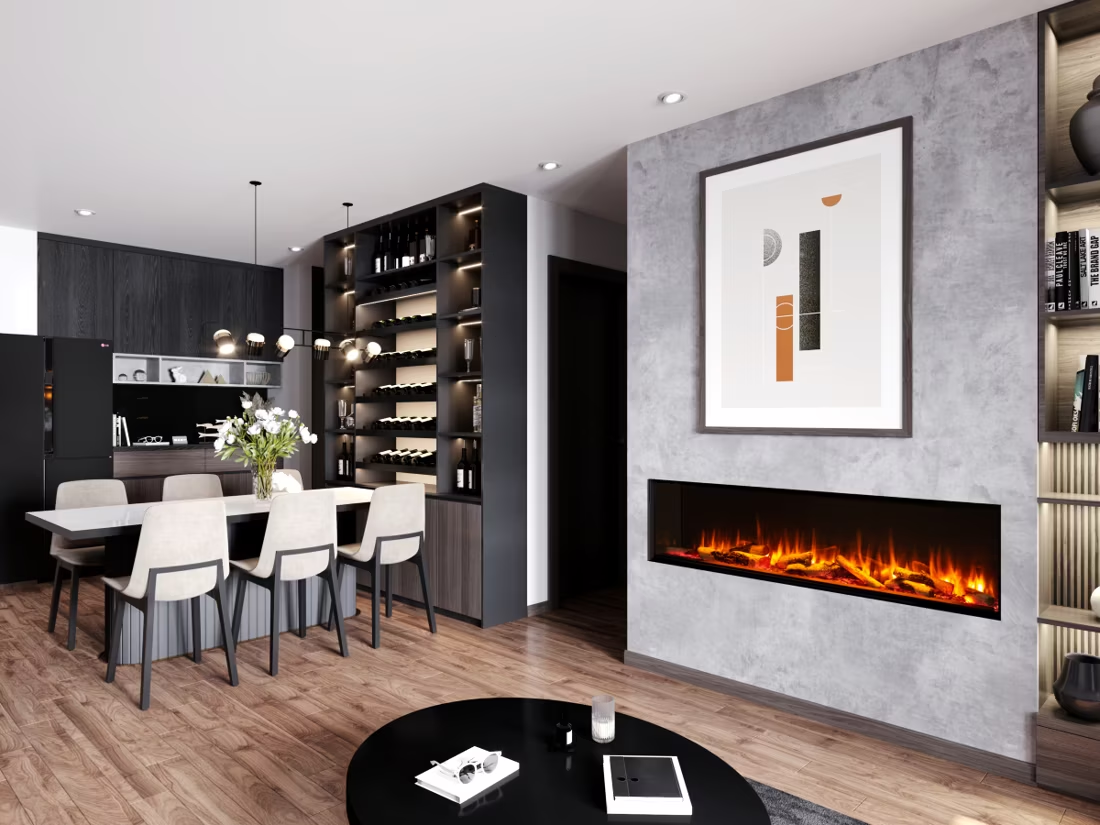
An insert is built to slide into an existing fireplace opening—the go-to choice for Fairmont's older masonry fireboxes. A built-in (or linear) electric fireplace is recessed directly into new framing or a wall cavity, used in remodels or new construction where there's no existing firebox. A mantel package pairs a freestanding or wall-mount electric unit with a surrounding cabinet or mantel shelf and needs no construction at all—it's the fastest option for renters or homeowners who want heat and ambiance without any wall work.
How much does it cost to run an electric fireplace in Fairmont?
At Monongahela Power's residential rate of about 13.97 cents per kWh, a 1,500-watt electric fireplace running on its heat setting draws 1.5 kWh per hour—roughly 21 cents an hour, or about $5 for a full evening. Harrison Rural Electric Assn customers in the surrounding county pay a similar rate. That's cheap compared to running a portable space heater in an under-insulated room, and it comes with a flame effect that works year-round even with the heater switched off.
Electric vs. wood or pellet—which makes more sense for a Fairmont home?
Marion County sits near the Monongahela National Forest, where cutting permits run about $20 per cord from May through October, and oak, hickory, maple, and cherry are all common local firewood—which is part of why wood heat still has a following here. Wood and pellet stoves put out real BTUs and, in the case of wood, keep working through a power outage. Electric fireplaces can't do either of those things, but they win on convenience: no ash, no venting, no permit hassle, and they're the only realistic option for a home where the chimney is unsound or nonexistent. For a primary heat source, wood or pellet still wins in Fairmont's climate; for ambiance and supplemental warmth in a specific room, electric is hard to beat.
Where can I get an electric fireplace installed near me?
A big-box store can sell you a unit, but sizing the circuit correctly, confirming your panel has capacity, and fitting a built-in cleanly into an existing masonry opening is where a local installer earns their fee. A trusted Fairmont-area dealer will check your home's electrical service, recommend the right wattage for the room, and handle any permit work with Marion County or the City of Fairmont if new wiring is involved—steps that get skipped when a unit just gets shipped to your door.
Will my electric fireplace still work during a power outage?
No—since it runs entirely on electricity, an electric fireplace goes dark the moment the power does. Marion County's hillier, more rural areas served by Harrison Rural Electric Assn can see outages during ice storms and heavy winter weather, so homeowners who want backup heat for those situations typically pair an electric fireplace for daily ambiance with a wood stove or propane heater elsewhere in the house for actual outage coverage.
Can I put a TV above my fireplace?
Yes—with an asterisk. Fireplaces are hot and TVs don't like heat. Either put a mantel between them to deflect rising warmth, or choose a fireplace with heat-management technology that creates a cool zone on the wall above—the wall stays around 125 degrees, barely warm, while the room still gets full heat. If you like clean lines and don't want a mantel, heat management is the answer.
What fireplace styles should I know before shopping?
Four cover most of the market: screen-front traditional (mesh front, open feel, fits craftsman homes), traditional door set (the classic look you grew up with), modern linear (wide, low, the statement piece for entertaining), and clean face contemporary (no trim—your tile or stone runs right to the fire's edge). Walk in knowing those four terms and you're ahead of most buyers.
How much should I budget for a fireplace?
For an average home—covering the fireplace, the vent pipe, and basic installation—a budget between $3,900 and $5,500 gives you a lot of options across wood, gas, and pellet. By the time you add finish work, gas line, and electrical, the average complete installation lands between $5,000 and $12,000 all-in. In a remodel or new build, a good rule is to put about 2.5% of the total project cost toward the fireplace.
Can a fireplace actually lower my heating bill?
Yes—by creating a comfort zone. A furnace heats every square foot of the house just to warm the one room you're in; a gas fireplace on low burns roughly a sixth of the gas a typical furnace does. Set the furnace around 55–60 degrees as a baseline, then heat the rooms your family actually uses. Families who heat this way commonly save $20–$60 a month.
Nearby Dealers
Hearth shops serving Fairmont and the surrounding area. Every listing shows whether it is a WhyFire partner, a dealer we have verified as authorized for the brands we recommend, or a local business carrying hearth products. No manufacturer pays for placement. How we verify dealers →
Cam-Rock
Mike's Kitchen, Bath, Fireplace
Spike’s Chimney Sweep LLC
Streets Hardware Store
Electric Service in Fairmont
An electric fireplace's heater draws about 1,500 watts—pennies per hour at local rates.
Monongahela Power Co
Harrison Rural Elec Assn, Inc
Find your electric fireplace in Fairmont.
Tell us a bit about your home and we'll put together a free Project Guide & Parts List for your Fairmont electric fireplace project—the right unit, the exact parts, and a trusted local dealer to install it.
Find Your Fireplace →