
Load it, set it, and stay warm all winter in Braxton County.
Thermostat-controlled heat for the farmhouses, doublewides, and cabins scattered through the hollows around Sutton, Gassaway, and Flatwoods. Find the right pellet stove and connect with a trusted local dealer.
Every Project Starts From One of These Five Situations
A clean-burning fit for rural central West Virginia.
Braxton County sits on the Appalachian Plateau in central West Virginia, a landscape of steep ridges and hollows carved by the Elk River. With just under 2,600 residents spread across small communities like Sutton, Gassaway, and Flatwoods, this is rural, close-knit country—the kind of place where a lot of homes are older farmhouses, manufactured homes, or cabins set well back off the state route, and where natural gas lines simply don't reach most properties. Climate zone 4A here means cold, damp winters, hard freezes, and the ice storms that periodically work their way down off the plateau. For generations, wood cut from the oak, hickory, maple, and cherry stands that cover the county has kept these homes warm, but for residents looking for a cleaner-burning, lower-maintenance alternative to splitting and stacking cordwood, pellet stoves have become a practical middle ground.
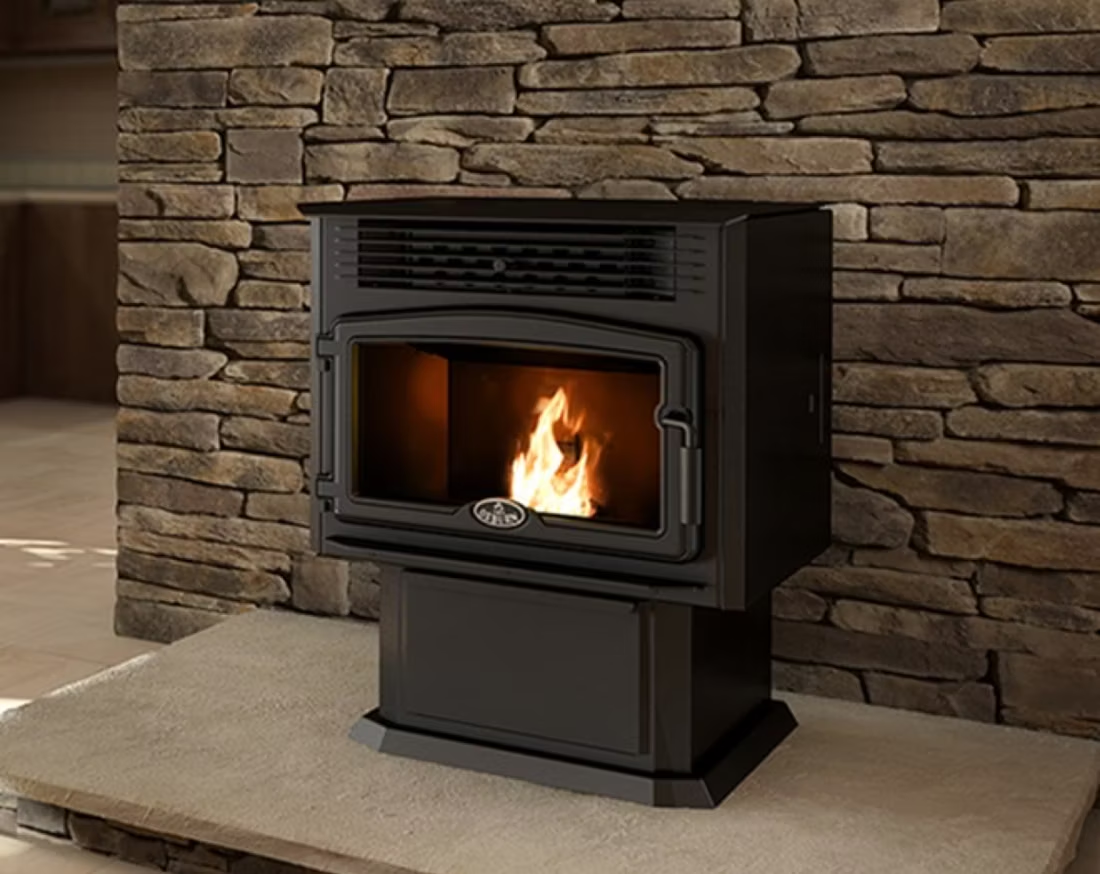
Braxton County doesn't have a hearth store on every corner, so knowing what's actually stocked nearby matters more than browsing online. Regional pellet brands like Energex, Hamer Pellet Fuel, and Greene Team Pellet Fuel are the ones you'll most commonly find at farm and hardware suppliers along the Route 19 and I-79 corridor near Sutton and Flatwoods, and buying a season's supply early—before back roads get harder to travel in the winter—is standard practice here. A pellet stove delivers even, thermostat-set heat without the daily wood-splitting, chimney creosote buildup, or bark mess of a wood stove, while still burning fuel made largely from the same regional hardwoods that have heated this county for generations.
Three steps. No salesperson until you're ready.
Tell us about your project
Your zip code, your situation, and the fuel you're leaning toward—or let the answers point you to one.
See what's actually available
The brands dealers within 100 miles genuinely carry—real options, never a catalog mirage.
Get your dealer & Project Guide
A trusted local dealer, plus the free Project Guide & Parts List that names every component of the job.
Frequently Asked Questions
How much does a pellet stove installation cost in Braxton County?
A pellet stove installation in a Braxton County home typically runs $3,000 to $6,000, depending on whether you're installing a freestanding stove with simple through-wall venting or an insert into an existing masonry fireplace that needs a stainless liner. Because certified installers are spread thin across this rural stretch of central West Virginia—most homeowners end up working with a retailer based in Sutton, Flatwoods, or out toward Weston or Clarksburg—expect a modest travel charge factored into your quote if you're out in one of the county's more remote hollows. Ask your installer whether the quote includes the vent kit and hearth pad, since those are common places for surprise add-on costs.
Do I need a permit to install a pellet stove in Braxton County?
Most jurisdictions require a building permit for a new solid-fuel appliance, and Braxton County is no exception—check with the county's permit office at the courthouse in Sutton before installation. Permitting is typically more straightforward for pellet stoves than wood stoves, since pellet units vent horizontally through an exterior wall rather than requiring a full masonry or Class A chimney system. Your installer will usually handle the permit application and inspection scheduling as part of the job, and it's worth confirming with your homeowner's insurance carrier as well, since some policies want documentation of a certified installation.
How does a pellet stove vent, and does my Braxton County home need a chimney?
No—this is one of the biggest advantages of pellet stoves for older Braxton County housing stock. Pellet stoves use a small-diameter PL vent that runs horizontally through an exterior wall, rather than requiring a full vertical chimney. That makes them a practical retrofit option for the manufactured homes, doublewides, and older farmhouses common throughout the county that were never built with a masonry chimney. If you have an existing fireplace you'd rather convert, a pellet insert can use that chimney chase, but a freestanding pellet stove doesn't need one at all.
Where can I buy pellets in Braxton County, and how much should I store?
Look for regional brands like Energex, Hamer Pellet Fuel, and Greene Team Pellet Fuel at farm supply and hardware retailers along the Route 19 and I-79 corridor near Sutton, Gassaway, and Flatwoods. Given the county's rural roads and the way winter weather can make travel harder for stretches at a time, most local burners buy two to three tons at the start of the season rather than counting on mid-winter trips into town. A ton of pellets takes up roughly the space of a stacked cord of wood but needs to stay bone dry—a garage, shed, or basement works, as long as bags aren't sitting directly on a damp concrete floor.
Pellet stove vs. wood stove—which makes more sense for my Braxton County home?
Wood is free or cheap if you're cutting your own from the oak, hickory, and cherry that cover much of the county, and it works with zero electricity—a real advantage during the ice storms that periodically take down power lines here. Pellet stoves trade that off for convenience: load the hopper, set the thermostat, and get even, consistent heat without splitting, stacking, or chimney creosote buildup. If you already have a reliable source of firewood and don't mind the physical work, wood often wins on cost. If you'd rather buy fuel by the bag or pallet and want more hands-off, thermostatically controlled heat, pellet is usually the better fit—with the tradeoff that you'll want a backup plan for power outages.
Will my pellet stove work during a power outage?
Not on its own—pellet stoves rely on an electric auger to feed fuel and a blower to circulate heat, so a power outage stops the stove. This matters in Braxton County, where ice storms and downed lines on the rural electric grid can knock out power for a day or more at a stretch. Some homeowners pair a pellet stove with a small battery backup or a portable generator sized to run the stove's low-draw electronics, which is worth discussing with your installer if you're relying on the stove as primary heat rather than as a supplement to a wood stove or propane furnace.
How much maintenance does a pellet stove need?
Plan on daily ash removal from the burn pot, a weekly cleaning of the hopper and auger area, and a full professional service once a year—typically before the start of the heating season in late summer or early fall. That service should cover the exhaust venting, the auger motor and igniter, and the door and ash pan gaskets. Pellet stoves are lower-maintenance than wood stoves overall, since there's no chimney to sweep, but the mechanical components do need periodic attention to keep running reliably through a full Braxton County winter.
What pellet stove brands are available through local Braxton County dealers?
For pellet fuel, Energex, Hamer Pellet Fuel, and Greene Team Pellet Fuel are the regional brands most commonly stocked at farm and hardware suppliers serving the county. For the stoves themselves, availability depends on which dealer you're working with—local hearth retailers serving the Sutton, Weston, and Clarksburg area typically carry a mix of national brands. Rather than trying to research every model on your own, a local dealer can tell you what they actually stock, service, and can get parts for quickly, which matters more in a rural county than brand-name recognition alone.
What size pellet stove do I need for my Braxton County home?
Sizing depends on square footage, ceiling height, and how well-insulated the home is—and insulation varies a lot across the county's mix of older farmhouses, manufactured homes, and newer construction. As a rough guide, a small pellet stove rated around 40,000 BTU can handle a single large room or a tight home up to about 1,000 square feet, while mid-size units in the 50,000 to 60,000 BTU range cover most main living areas up to around 2,000 square feet. Older, less-insulated farmhouses common in the county's hollows often need to size up a notch compared to a similarly sized newer build. A local dealer can size your specific home during an in-home visit.
Why is a fireplace insert so efficient?
An insert does two things: it seals the chimney completely, so you stop losing air you already paid to heat, and it radiates warmth into the room through the firebox and glass. Most add a heat-exchange fan that pulls cool room air underneath, wraps it around the hot firebox, and pushes it back out warm. Your home is more efficient before you've even lit the first fire.
What's the difference between an insert and a zero-clearance fireplace?
An insert is a fireplace that slides into a pre-existing wood-burning fireplace—if you don't have one, there's nothing to insert it into. A zero-clearance fireplace is built into a framed wall, which makes it the answer for remodels and new construction. Simple test: existing masonry fireplace means insert; blank or framed wall means zero-clearance.
Does a fireplace add value to my home?
On average, a fireplace adds back to the home about the same amount you spent installing it. Add the monthly savings from heating the rooms you actually use instead of the whole house—often hundreds of dollars a year—and the value case is strong before you even count what a fire does for how your family uses the room.
What is an in-home preview and do I need one?
It's a visit where a hearth professional measures your space, confirms the model you picked actually works in your home, and walks the specs—framing, gas line, venting, finish work—before anything is ordered. Some details you just can't know until you see the house. Never make a down payment without one; it's the single most-skipped step that burns buyers.
Stove and Fireplace Dealers in Braxton County
Listings include WhyFire partner dealers, dealers we have verified as authorized for the brands we recommend, and established local businesses that carry hearth products. Every listing shows which one it is. The ones marked Preferred run on WhyFire's software, so they can show you real pricing and book your appointment right here. No manufacturer pays for placement. How we verify dealers →
Hardman's Hardware
Walton Thriftway
Pellet Brands Stocked Around Braxton County
Manufacturers will point you to the nearest stocking dealer.
Find your pellet stove in Braxton County.
Tell us about your home and heating goals, and we'll match you with a trusted local dealer serving Braxton County and put together a free Project Guide & Parts List—the exact parts, including the vent kit, for your pellet stove project.
Find Your Fireplace →