
Add real warmth to your Braxton County home—no chimney required.
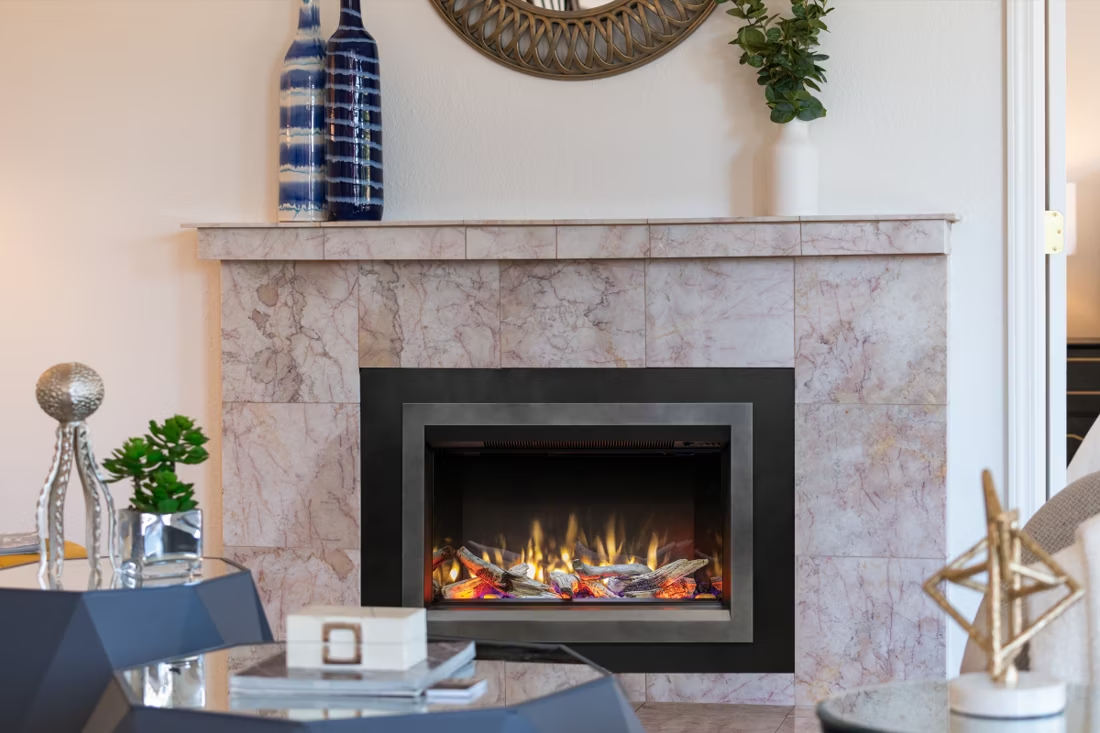
From Sutton to Gassaway to the Elk River valley, electric fireplaces give Braxton County homes supplemental heat and real flame-look ambiance without venting, gas lines, or a masonry chimney. Get matched with a trusted local dealer.
Every Project Starts From One of These Five Situations
No gas line, no chimney, no problem.
Braxton County sits in the Appalachian foothills along the Elk River, and like much of rural central West Virginia, a lot of the housing stock is older farmhouses and manufactured or modular homes rather than new construction on a natural gas grid. Outside of Sutton and Gassaway, natural gas lines simply don't reach many properties, and running a wood-burning masonry chimney or a full gas insert isn't always practical or affordable. That's where electric fireplaces earn their place—they plug into a standard outlet or a dedicated 120V/240V circuit, mount into a wall, insert into an existing opening, or stand freestanding, and they need zero clearance to combustibles and no venting whatsoever.
Climate zone 4A means Braxton County gets real winter cold—enough that most homes run a primary heat source like propane, heating oil, a wood stove, or electric baseboard—but not the kind of sustained sub-zero stretch you'd see farther north. That makes electric fireplaces a strong fit for zone heating: warm the living room or a converted den without firing up the whole house, and skip the trip to the woodpile on a weeknight. For manufactured and modular homes across the county, where structural or code limitations can complicate a wood or gas install, electric is often the only realistic upgrade—and it's powered by the same Mon Power service most of the county already relies on.
Three steps. No salesperson until you're ready.
Tell us about your project
Your zip code, your situation, and the fuel you're leaning toward—or let the answers point you to one.
See what's actually available
The brands dealers within 100 miles genuinely carry—real options, never a catalog mirage.
Get your dealer & Project Guide
A trusted local dealer, plus the free Project Guide & Parts List that names every component of the job.
Frequently Asked Questions
How much does an electric fireplace installation cost in Braxton County?
Most electric fireplace projects in Braxton County fall into two categories. A plug-in freestanding or wall-mount unit can run as low as $300 to $800 installed, since it just needs an outlet and a mounting bracket. A built-in electric insert or a linear wall unit that requires a dedicated 240V circuit, drywall framing, or recessing into an existing fireplace opening typically runs $1,000 to $3,000, depending on the unit and whether an electrician needs to run new wiring from the panel. Homes on older knob-and-tube or undersized panels—common in some of the county's older farmhouses—may need panel work first, which adds to the total. A local dealer will give you a firm number after seeing the space.
What size electric fireplace do I need for my room?
Electric fireplaces are rated by width and by supplemental heater wattage (typically 4,600–5,200 BTU on the heater side, regardless of the visual flame size). For a single room in a Braxton County home—a den, a converted porch, a bedroom in a modular home—a 30 to 40-inch insert or wall unit is usually plenty. For an open living-dining area, sizing up to a 50 to 60-inch linear unit gives you both more visual impact and more even heat distribution across the space. Electric heaters don't lose efficiency the way an oversized wood stove can, so the bigger risk with sizing is aesthetic, not functional—a local dealer can help you match the unit to your wall and opening dimensions.
Who installs electric fireplaces near me in Braxton County?
For a simple plug-in unit, no licensed installer is required—it's a DIY-friendly product. For a built-in or wall-recessed unit that needs a dedicated circuit, you'll want a licensed electrician, and many hearth dealers serving the Sutton and Gassaway area either employ one or work directly with a local electrical contractor as part of the install package. That matters in Braxton County specifically because older housing stock and manufactured homes sometimes have panel capacity limits that a general handyman install could miss—an electrician will confirm the circuit can handle the unit's draw before anything gets mounted.
What's the difference between an electric fireplace, insert, and wall-mount unit?
An electric fireplace insert is built to slide into an existing fireplace opening—a good option if you have an old, unused masonry firebox in a Braxton County farmhouse and want to convert it to clean, low-maintenance heat without touching the chimney. A wall-mount or linear unit hangs on or recesses into a flat wall, which works well in newer construction, additions, or manufactured homes without an existing fireplace. A freestanding electric stove or mantel package sits on the floor and can be relocated, which is popular in rental properties and homes where residents don't want to commit to permanent wall changes. All three run off standard household power and produce the same electric-resistance or infrared heat.
Do I need a permit to install an electric fireplace in Braxton County?
A plug-in electric fireplace that uses an existing outlet doesn't require a permit—there's no venting, no gas line, and no structural change. If your project involves adding a new dedicated circuit or breaker for a built-in unit, that electrical work typically does require a permit through the county building permit process, and it should be pulled by whoever does the wiring. Because Braxton County is largely rural with a mix of older and manufactured housing, it's worth confirming panel capacity and permit requirements with your electrician or dealer before work starts, especially in homes with older wiring.
What's the best electric fireplace for a Braxton County home?
For older farmhouses around Sutton and Flatwoods with an existing masonry fireplace sitting unused, an insert-style unit that slides into that opening gives you a clean upgrade without altering the room. For manufactured and modular homes—common throughout the county—a wall-mount linear unit is often the better fit since it doesn't rely on an existing masonry opening and installs into standard wall framing. If the goal is genuine supplemental heat on cold nights rather than just ambiance, look for a model with a true infrared or fan-forced heater rated near 5,000 BTU rather than a decorative-only flame unit. A local dealer can walk you through models suited to your specific wall or opening.
How long do electric fireplaces last, and what maintenance do they need?
Electric fireplaces are low-maintenance by design—there's no chimney to sweep, no gas line to inspect, and no creosote to worry about. Most units last 10 to 15 years with normal use, and the main wear points are the LED flame bulbs or light strips (usually rated for tens of thousands of hours but occasionally replaceable) and the fan motor on the heater. Dusting the vents periodically and keeping the unit clear of furniture or curtains near the heater outlet is about all that's needed. There's no annual inspection requirement like you'd have with a wood stove or gas insert.
How much does it cost to run an electric fireplace in Braxton County?
Running cost depends on whether the heater element is on. With the flame effect only and the heater off, an electric fireplace draws almost nothing—a few cents a day. With the heater running at full output (roughly 1,500 watts, typical for most units), you're looking at somewhere around 15 to 25 cents per hour at typical Mon Power residential rates, depending on your specific plan. Used as supplemental zone heat for a few hours in the evening rather than as a whole-home primary heater, most Braxton County households find the running cost modest compared to heating an entire home with propane or oil.
Electric vs. wood or pellet—which makes sense for my Braxton County home?
Wood heat has deep roots in Braxton County, where oak, hickory, maple, and cherry are all commonly available for cutting or purchase, and a good wood stove keeps a home warm even if the power's out—a real consideration on rural lines during winter storms. Pellet stoves, using brands like Energex or Hamer Pellet Fuel that circulate through this part of West Virginia, offer cleaner, more convenient burning but still need electricity to run the auger and blower, so they go down with the power just like electric units do. An electric fireplace can't serve as backup heat during an outage at all, but it wins on convenience, install simplicity, and cost for anyone who just wants supplemental warmth and ambiance in a specific room without the upkeep of a chimney or a pellet hopper. Many Braxton County homes end up with both—wood or propane as the primary or outage-safe heat source, electric for the room where you actually spend your evenings.
Can I put a TV above my fireplace?
Yes—with an asterisk. Fireplaces are hot and TVs don't like heat. Either put a mantel between them to deflect rising warmth, or choose a fireplace with heat-management technology that creates a cool zone on the wall above—the wall stays around 125 degrees, barely warm, while the room still gets full heat. If you like clean lines and don't want a mantel, heat management is the answer.
Does an electric fireplace need a vent or chimney?
No—that's its superpower. An electric fireplace needs a wall and an outlet, period. No vent pipe, no gas line, no clearances to design around, which is why it works in bedrooms, offices, apartments, and walls where venting a gas or wood unit would be impractical or impossible. Installation is typically the simplest and least expensive of any fireplace type.
Can a fireplace actually lower my heating bill?
Yes—by creating a comfort zone. A furnace heats every square foot of the house just to warm the one room you're in; a gas fireplace on low burns roughly a sixth of the gas a typical furnace does. Set the furnace around 55–60 degrees as a baseline, then heat the rooms your family actually uses. Families who heat this way commonly save $20–$60 a month.
Can I install a fireplace myself?
If you're putting a fire in your house on purpose, it's best to work with an expert. Unless you're genuinely experienced in framing, gas line, vent pipe, and the national code on clearances to combustibles, have a professional do it—and ideally the same company that sells you the fireplace, so warranty, service, and liability all live under one roof.
Stove and Fireplace Dealers in Braxton County
Listings include WhyFire partner dealers, dealers we have verified as authorized for the brands we recommend, and established local businesses that carry hearth products. Every listing shows which one it is. The ones marked Preferred run on WhyFire's software, so they can show you real pricing and book your appointment right here. No manufacturer pays for placement. How we verify dealers →
Hardman's Hardware
Walton Thriftway
Find your electric fireplace in Braxton County.
Tell us about your room and your home's wiring, and we'll match you with a trusted local dealer serving Braxton County—plus a free Project Guide & Parts List with the exact parts for your install.
Find Your Fireplace →