
Consistent Warmth Through Tacoma's Long, Wet Winters.
Clean-burning, thermostat-controlled heat for Puget Sound's mild but persistent chill. Find the right pellet stove or insert and connect with a trusted local dealer.
Every Project Starts From One of These Five Situations
Steady heat that matches Tacoma's marine climate.
Tacoma sits at 370 feet on Puget Sound in climate zone 4C, where winters are mild and damp rather than brutally cold—average lows hover around 37°F and the city logs a winter heating season a fraction as demanding as what a place like Duluth, MN or Bismarck, ND sees. That milder profile is exactly where pellet stoves shine: rather than needing to hold a fire at single-digit temperatures all night, most Tacoma homes just need dependable, even heat for long stretches of gray, 40-degree days from November through March.
Pierce County sits inside a Pacific Northwest timber corridor of Douglas fir, red alder, and lodgepole pine, which keeps regional pellet manufacturers like Bear Mountain, Lignetics, and Pacific Pellet within easy reach—shorter supply chains generally mean more stable pellet pricing and availability compared to inland markets. Pellet stoves also sidestep the wood-smoke restrictions the Puget Sound Clean Air Agency imposes during winter stagnation events and wildfire smoke advisories, since pellet appliances typically burn clean enough to stay exempt from burn bans that can sideline traditional wood stoves.
Three steps. No salesperson until you're ready.
Tell us about your project
Your zip code, your situation, and the fuel you're leaning toward—or let the answers point you to one.
See what's actually available
The brands dealers within 100 miles genuinely carry—real options, never a catalog mirage.
Get your dealer & Project Guide
A trusted local dealer, plus the free Project Guide & Parts List that names every component of the job.
Frequently Asked Questions
How much does a pellet stove installation cost in Tacoma?
A freestanding pellet stove installation in Tacoma typically runs $3,500 to $6,500, depending on the unit, whether new venting is needed, and hearth pad requirements. Pellet inserts installed into an existing masonry fireplace usually land a bit higher, often $4,000 to $7,500, since they require a liner run through the existing chimney. Because pellet stoves vent horizontally through an exterior wall rather than needing a full chimney, Tacoma installations are often less invasive—and less expensive—than a comparable wood stove project.
What's the difference between a pellet stove and a pellet insert?
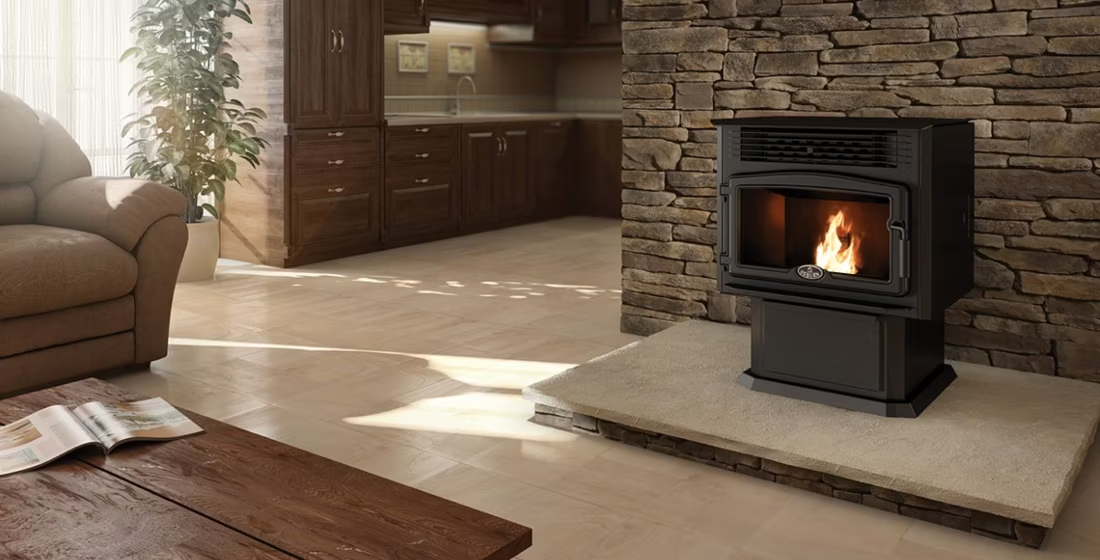
A pellet stove is a freestanding appliance that sits on its own hearth pad and vents through a wall, which makes it a good fit for Tacoma homes without an existing fireplace—many older Tacoma neighborhoods like the North End and Proctor District have homes built before fireplaces were standard. A pellet insert slides into an existing masonry firebox and uses a liner run up the current chimney, which is the better option if you already have a wood-burning fireplace you want to convert to cleaner, thermostat-controlled heat without losing the mantel and hearth you have.
Where can I buy pellet fuel in Tacoma?
Pellets from Pacific Northwest producers like Bear Mountain, Lignetics, and Pacific Pellet are widely stocked at hearth retailers and hardware stores throughout Pierce County, and prices generally run in the $250 to $320 per ton range depending on brand and softwood vs. hardwood blend. Because these mills draw on the same regional timber supply—largely Douglas fir and other Pacific Northwest softwoods—Tacoma tends to see more stable pellet pricing and fewer shortages than markets further from Northwest mills.
Do I need a permit to install a pellet stove in Tacoma?
Yes—new pellet stove and insert installations require a building permit through the City of Tacoma's Planning and Development Services department (or Pierce County's building department if you're outside city limits). Most local hearth retailers handle the permit application and inspection scheduling as part of the installation, since the permit process checks venting placement, clearances to combustibles, and hearth pad requirements.
Do pellet stoves work during a power outage?
Pellet stoves rely on electricity to run the auger, igniter, and combustion blower, so a standard unit will shut down in an outage unless you add a battery backup or small generator. This matters in Tacoma, where storms off Puget Sound occasionally knock out power for Tacoma Public Utilities and Peninsula Light Company customers alike. If backup heat during outages is a priority, ask your local dealer about pellet stoves with battery backup options or consider pairing pellet heat with a wood stove for true off-grid reliability.
What's the best pellet stove for Tacoma's climate?
Because Tacoma's winters are mild compared to inland or mountain climates, most homes don't need the largest, highest-BTU pellet stove on the market—a mid-size unit rated for 1,200 to 1,800 square feet handles the majority of Tacoma homes comfortably, even during a cold snap. Look for models with a thermostat mode that automatically ramps output up and down, since Tacoma's temperature swings day to day (40s during the day, high 30s at night) reward a stove that can throttle itself rather than run at full output constantly.
Are pellet stoves affected by wildfire smoke or burn ban restrictions?
The Puget Sound Clean Air Agency issues burn bans during winter air stagnation events and, increasingly, during summer wildfire smoke episodes that drift into the South Sound. Pellet stoves are generally exempt from these restrictions because they burn more completely and produce far less particulate matter than open wood stoves—one more reason pellet heat has become a popular choice in Tacoma neighborhoods where older, uncertified wood stoves are being phased out.
Pellet stove vs. gas fireplace—which is right for my Tacoma home?
Gas fireplaces offer instant on-off convenience and require no fuel storage, but they depend on natural gas service reaching your specific address or a propane tank if it doesn't. Pellet stoves require you to store bags of pellets (typically a ton or so per season) but deliver a more substantial, radiant heat output and aren't tied to a gas line at all. For Tacoma homes where natural gas isn't run to the property, or for homeowners who want a renewable, regionally-sourced fuel, pellet is often the more practical choice. A local dealer can tell you what's actually feasible at your address before you decide.
How does pellet heat compare to burning wood from local forests?
Pierce County residents can cut their own firewood—Douglas fir, red alder, and lodgepole pine are all common permitted species—through the Olympic National Forest or Mt. Baker-Snoqualmie National Forest, with cutting permits typically running $5 to $20 per cord during the May-through-October season. That's a real cost advantage for wood, but it requires a truck, a saw, storage space to season the wood for a year, and regular chimney maintenance. Pellet stoves skip all of that: bagged pellets show up ready to burn, store compactly, and produce a fraction of the ash and creosote, which is why many Tacoma homeowners choose pellet heat even when cheap firewood is technically available nearby.
What's the difference between an insert and a zero-clearance fireplace?
An insert is a fireplace that slides into a pre-existing wood-burning fireplace—if you don't have one, there's nothing to insert it into. A zero-clearance fireplace is built into a framed wall, which makes it the answer for remodels and new construction. Simple test: existing masonry fireplace means insert; blank or framed wall means zero-clearance.
Why is a fireplace insert so efficient?
An insert does two things: it seals the chimney completely, so you stop losing air you already paid to heat, and it radiates warmth into the room through the firebox and glass. Most add a heat-exchange fan that pulls cool room air underneath, wraps it around the hot firebox, and pushes it back out warm. Your home is more efficient before you've even lit the first fire.
What is an in-home preview and do I need one?
It's a visit where a hearth professional measures your space, confirms the model you picked actually works in your home, and walks the specs—framing, gas line, venting, finish work—before anything is ordered. Some details you just can't know until you see the house. Never make a down payment without one; it's the single most-skipped step that burns buyers.
Does a fireplace add value to my home?
On average, a fireplace adds back to the home about the same amount you spent installing it. Add the monthly savings from heating the rooms you actually use instead of the whole house—often hundreds of dollars a year—and the value case is strong before you even count what a fire does for how your family uses the room.
Nearby Dealers
Hearth shops serving Tacoma and the surrounding area. Every listing shows whether it is a WhyFire partner, a dealer we have verified as authorized for the brands we recommend, or a local business carrying hearth products. No manufacturer pays for placement. How we verify dealers →
Aqua Rec Swimmin Hole And Fireside
Rich’s Woodstoves & Spas
Aqua Rec’s Fireplace Shop
Benson, LLC
Cascade Fire Solutions
Fireside Hearth & Home-Auburn
Rcs Fireplace
Dowell Company
Cressy Door & Fireplace
Chimney And Fireplace Solutions
Economy Wiring
Rich's For The Home
Rich's Stoves & Spas
Aqua Quip
Yelm Home Center
Sunrice Gas & Chimney Services
Good Earth Works
Pellet Brands Stocked Around Tacoma
Manufacturers will point you to the nearest stocking dealer.
Find your pellet stove in Tacoma.
Tell us a bit about your home and we'll match you with a trusted local Tacoma dealer and send over a free Project Guide & Parts List—the exact pellet stove or insert, vent kit, and installation plan for your address.
Find Your Fireplace →