
Warm Up Fast in Tacoma's Wet Pacific Northwest Winters.
A damp Puget Sound climate calls for heat you can flip on the moment the rain starts. Find the right gas fireplace or insert and connect with a trusted local dealer.
Every Project Starts From One of These Five Situations
Steady, on-demand heat for a mild, damp climate.
Tacoma sits at just 370 feet on the shores of Commencement Bay, in climate zone 4C—a marine climate where winter lows average a relatively mild 37°F and the region logs about 4,332 heating degree days a year. That's a fraction of what a colder inland city like Bozeman, MT or Duluth, MN sees, which is exactly why gas has become the fuel of choice for so many Tacoma homes: nobody needs a wood stove to survive the night here, but everybody wants a fast, dry, reliable way to take the chill off a gray, drizzly evening in November.
Tacoma's housing stock ranges from early-1900s craftsman bungalows in the North End with existing masonry fireplaces to newer construction spreading south toward Parkland and Spanaway. In the older homes, a direct-vent gas insert is a popular retrofit into a chimney that's rarely used for wood anymore. In newer builds, a built-in direct-vent gas fireplace is often specified from the start as an efficient zone-heat source alongside central HVAC. Late-summer wildfire smoke drifting in from eastern Washington and Oregon is also pushing more households toward sealed-combustion gas units instead of open wood-burning fireplaces, since a direct-vent gas appliance doesn't pull smoky outdoor air into the room.
Three steps. No salesperson until you're ready.
Tell us about your project
Your zip code, your situation, and the fuel you're leaning toward—or let the answers point you to one.
See what's actually available
The brands dealers within 100 miles genuinely carry—real options, never a catalog mirage.
Get your dealer & Project Guide
A trusted local dealer, plus the free Project Guide & Parts List that names every component of the job.
Frequently Asked Questions
How much does a gas fireplace installation cost in Tacoma?
Most Tacoma gas fireplace and insert installations run between roughly $4,500 and $10,000, with the final number driven mainly by venting path and whether new gas line work is required. A direct-vent insert dropped into an existing brick fireplace in a North End craftsman—using the existing chimney chase for the vent liner—tends to land on the lower end. A new built-in gas fireplace in a remodel or new-construction home in areas like South Tacoma or Parkland, where framing and a fresh gas line run are needed, sits toward the middle to upper end. A local dealer will give you a firm number after seeing the space in person.
Can I convert my existing wood fireplace to gas?
Yes, and it's a very common project in Tacoma's older housing stock—the North End, Proctor District, and Stadium neighborhoods are full of early-1900s homes with brick fireboxes that haven't burned wood in years. A gas insert typically slides into that existing masonry opening, running a stainless liner up the original chimney chase to vent safely. Expect $4,500 to $9,000 depending on the insert and whether your home already has a gas line nearby. The conversion keeps the original mantel and brickwork intact while eliminating creosote buildup, ash cleanup, and the smoke concerns that come with an open hearth.
Do I need natural gas to install a gas fireplace, or can I use propane?
Either works, and which one you use mostly comes down to where you live. Homes within Tacoma's city limits and the denser inner Pierce County suburbs typically already have natural gas service running to the street, so tying in a new fireplace is usually straightforward if you have an existing gas appliance like a furnace or water heater. Homes further out toward the Key Peninsula, Eatonville, or other unincorporated pockets of Pierce County are more likely to rely on propane, either from an existing tank or a new tank set by a local propane supplier. Most fireplace models can be configured for either fuel—your installer sets the correct orifice and regulator for whichever you have.
Will my gas fireplace work during a power outage?
Most modern gas fireplaces will, which matters in a city that sees its share of December windstorms knock out power along the Puget Sound. Units with IPI (intermittent pilot ignition) run on a small battery backup that kicks in automatically when service from City of Tacoma Power or Peninsula Light Company drops, so the fireplace lights on demand just like normal. Valor's lineup takes a different approach worth knowing about—their fireplaces generate their own electricity through the pilot's thermocouple, so there's no battery to remember at all. Ask your local dealer which ignition system is on any unit you're considering if outage performance matters to you.
What's the difference between a gas fireplace, gas insert, and gas stove?
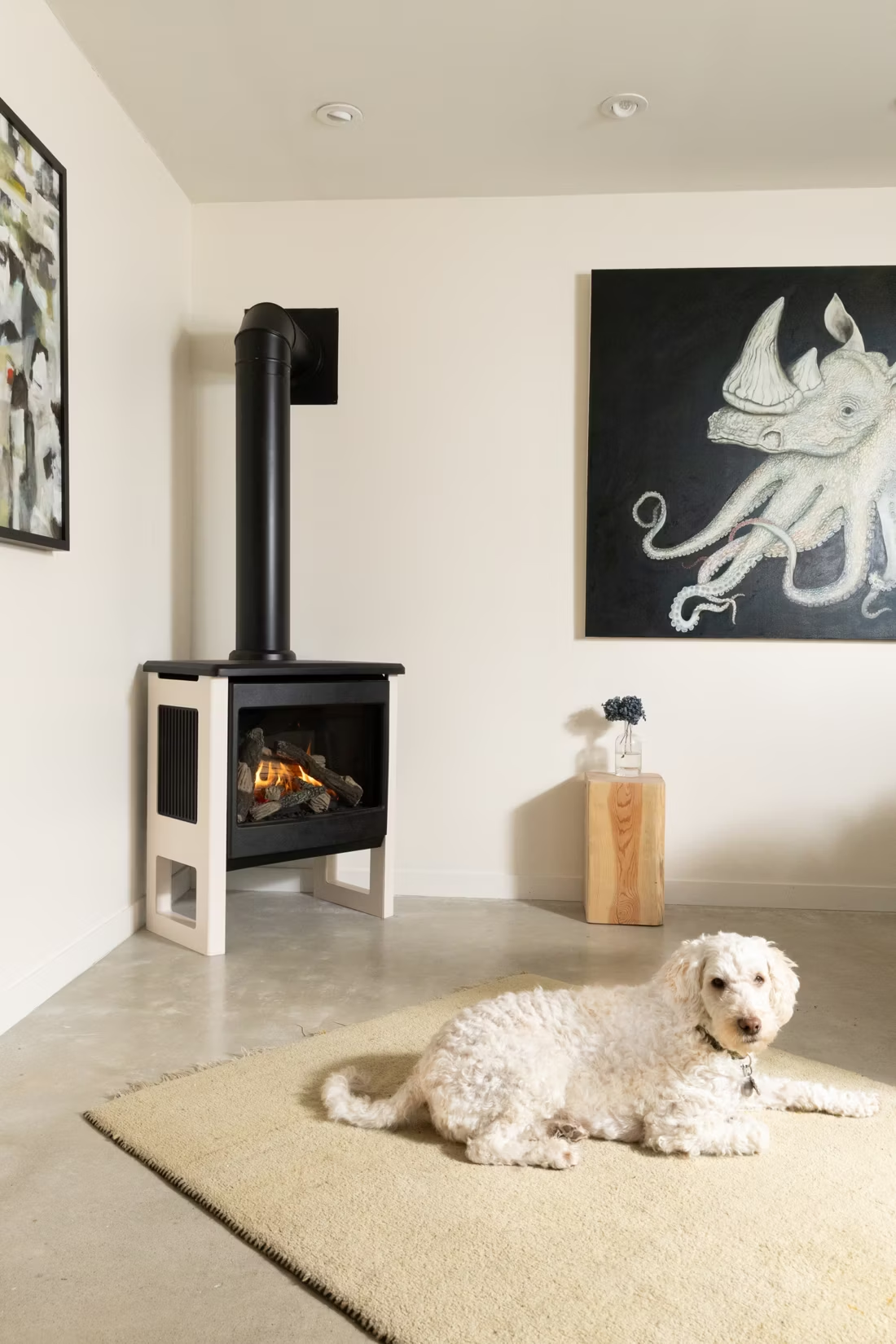
A gas fireplace is a fully built-in unit framed into a wall—the right call for new construction or a remodel in a home without an existing fireplace, which describes a lot of newer South Tacoma and Parkland builds. A gas insert is sized to slide into an existing masonry firebox, which fits the older craftsman and bungalow homes common in the North End and Proctor District. A gas stove is a freestanding unit that sits on a hearth pad like a wood stove but runs on gas, which works well in a room with no chimney at all. A local dealer can walk your specific space and tell you which category actually fits.
Do I need a permit to install a gas fireplace in Tacoma?
Yes. Inside city limits, permits go through the City of Tacoma's Building & Land Use Services division, which requires both a building permit and a gas line permit for new installations. In unincorporated Pierce County, that permitting runs through Pierce County Planning and Public Works instead. Either way, the gas line connection has to be pulled by a licensed gas-fitter, which is one of the main reasons to work with an established hearth dealer—they coordinate the gas line, venting, and inspection sign-off as one job instead of leaving you to juggle separate trades.
What's the difference between vented and vent-free gas fireplaces?
Vented, direct-vent gas fireplaces draw combustion air from outside and exhaust it back outside through a sealed pipe—they're the standard choice in Washington and the option nearly every Tacoma dealer will point you toward first. Vent-free (unvented) units burn gas directly into the room air, which is legal in some jurisdictions but comes with strict room-sizing and ventilation rules, and Washington's energy code increasingly favors sealed-combustion appliances for efficiency anyway. Given Tacoma's marine climate, where homes are often tightly sealed to hold in heat during the wet months, a direct-vent unit is the safer and more common recommendation—it won't add extra moisture or combustion byproducts to an already humid Puget Sound house.
How often should my gas fireplace be serviced?
Plan on an annual inspection, ideally before the rainy season really sets in around October. A certified technician checks the burner, pilot assembly, venting, gas connections, and cleans the glass and interior—a much quicker job than a wood chimney sweep, but still important since a blocked vent or failing thermocouple isn't always obvious from the living room. Local gas appliance service providers in the Tacoma area typically charge $150 to $250 for this annual visit.
Gas vs. wood—which is right for my Tacoma home?
Wood still has a following here—Douglas fir, red alder, and lodgepole pine are all locally available, and Forest Service permits through Olympic National Forest or Mt. Baker-Snoqualmie National Forest run just $5 to $20 per cord during the May-to-October cutting season. But with winter lows averaging a mild 37°F and only about 4,332 heating degree days a year, Tacoma doesn't demand wood heat the way a harsher inland climate like Fargo, ND does—most homes here use wood for ambiance more than survival. Gas wins for homeowners on smaller urban lots with nowhere to stack cordwood, anyone bothered by the wildfire smoke that settles over the South Sound in late summer, and anyone who just wants heat at the flip of a switch on a wet Tuesday night. Wood still makes sense for households that want a true off-grid backup during a windstorm outage and don't mind the upkeep.
Why is my open fireplace making my house colder?
Open fireplaces suck—literally. As the fire burns, it consumes air your furnace already paid to heat and pulls it out through the chimney, so the house is actually colder after the fire goes out than before you lit it. An insert fixes this: it seals the chimney, puts fixed glass across the front, and turns that hole in your house into a real heat source.
Can I put a TV above my fireplace?
Yes—with an asterisk. Fireplaces are hot and TVs don't like heat. Either put a mantel between them to deflect rising warmth, or choose a fireplace with heat-management technology that creates a cool zone on the wall above—the wall stays around 125 degrees, barely warm, while the room still gets full heat. If you like clean lines and don't want a mantel, heat management is the answer.
Can I install a fireplace myself?
If you're putting a fire in your house on purpose, it's best to work with an expert. Unless you're genuinely experienced in framing, gas line, vent pipe, and the national code on clearances to combustibles, have a professional do it—and ideally the same company that sells you the fireplace, so warranty, service, and liability all live under one roof.
What is an in-home preview and do I need one?
It's a visit where a hearth professional measures your space, confirms the model you picked actually works in your home, and walks the specs—framing, gas line, venting, finish work—before anything is ordered. Some details you just can't know until you see the house. Never make a down payment without one; it's the single most-skipped step that burns buyers.
Nearby Dealers
Hearth shops serving Tacoma and the surrounding area. Every listing shows whether it is a WhyFire partner, a dealer we have verified as authorized for the brands we recommend, or a local business carrying hearth products. No manufacturer pays for placement. How we verify dealers →
Aqua Rec Swimmin Hole And Fireside
Rich’s Woodstoves & Spas
Aqua Rec’s Fireplace Shop
Benson, LLC
Cascade Fire Solutions
Fireside Hearth & Home-Auburn
Rcs Fireplace
Dowell Company
Cressy Door & Fireplace
Chimney And Fireplace Solutions
Economy Wiring
Rich's For The Home
Rich's Stoves & Spas
Aqua Quip
Yelm Home Center
Sunrice Gas & Chimney Services
Good Earth Works
Find your gas fireplace in Tacoma.
Tell us about your home and we'll put together a free Project Guide & Parts List—the exact parts, including the vent kit, and a recommended local Tacoma dealer to install it.
Find Your Fireplace →