
Keep Your Family Warm and Safe—No Matter What
With a long, demanding heating season and forested land stretching from Colville to Kettle Falls, wood heat is a way of life here. Find the right stove or insert and get matched with a trusted local dealer.
Every Project Starts From One of These Five Situations
Deep winters, deep timber, deep roots in wood heat.
Stevens County sits in the far northeast corner of Washington, a landscape of forested mountains and river valleys along the Columbia and Colville. At Climate Zone 6B with winters comparable to Bozeman, Montana or Duluth, Minnesota, winters here run long, cold stretches with average winter lows around 23°F and plenty of nights well below that. Ponderosa pine, lodgepole pine, and Douglas fir are the dominant species growing right on the county's own timberland, which is part of why wood heat has stayed the default choice for so many households from Colville to Kettle Falls to Chewelah.
Public land access is close and inexpensive: permits through the BLM Spokane District and BLM Coeur d'Alene District run around $10 per cord, and the Idaho Panhandle National Forests offer cutting permits from $5 to $20 per cord, generally available April through October. That kind of access keeps self-sufficient wood heat practical for rural properties across the county. The main thing to watch is wildfire smoke—Stevens County sees seasonal smoke events, so a modern EPA-certified stove that burns efficiently and doesn't add to airborne particulates during those stretches is worth prioritizing over an old smoke-dragon unit.
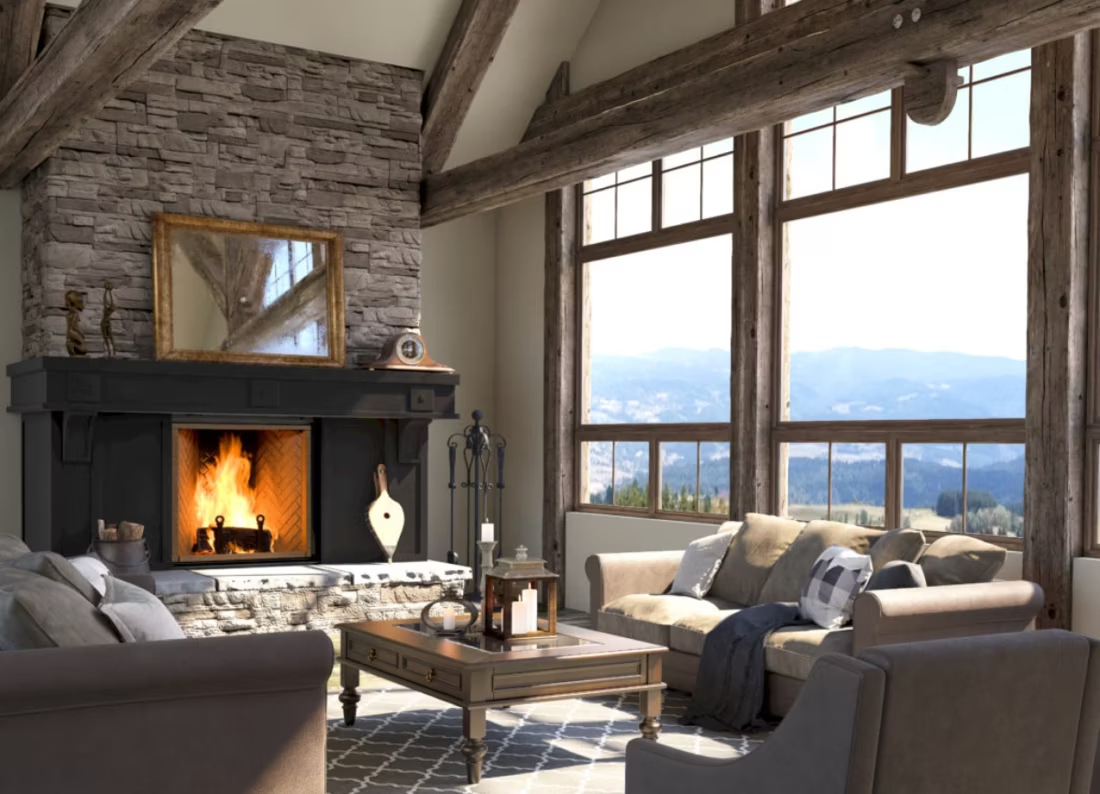
Firewood Cutting Permits Near Stevens County
Three steps. No salesperson until you're ready.
Tell us about your project
Your zip code, your situation, and the fuel you're leaning toward—or let the answers point you to one.
See what's actually available
The brands dealers within 100 miles genuinely carry—real options, never a catalog mirage.
Get your dealer & Project Guide
A trusted local dealer, plus the free Project Guide & Parts List that names every component of the job.
Frequently Asked Questions
How much does a wood stove installation cost in Stevens County?
Wood stove and insert installations in Stevens County typically run in the $4,500 to $9,000 range for most homes, depending on the stove model, whether you have an existing chimney to work with, and any hearth pad or clearance modifications needed for code compliance. Homes without an existing chimney—common in newer construction outside Colville and Chewelah—run higher once Class A chimney pipe and roof penetration are factored in. Rural properties farther from Colville or Kettle Falls may see a modest travel charge added by installers covering the wider county.
What size wood stove do I need for my home?
Sizing depends on square footage, insulation quality, and whether the stove is your primary or supplemental heat source. Given Stevens County's long, hard winters, homes here generally need to size on the larger end of manufacturer recommendations compared to milder parts of Washington—a stove rated for 1,500 square feet in a Puget Sound climate may only comfortably heat 1,000-1,200 square feet through a Stevens County winter. Older farmhouses and log homes around Springdale and Hunters, which tend to be draftier, often do better with a mid-size or large stove even at modest square footage. A local dealer can size your space correctly during an in-home visit—oversizing leads to smoldering, creosote-heavy fires, while undersizing means you're feeding the stove constantly on the coldest nights.
Where can I find certified wood stove installers near me?
Look for NFI (National Fireplace Institute) or CSIA (Chimney Safety Institute of America) certification—these credentials mean the installer has been trained specifically on venting, clearances, and code compliance for wood-burning appliances. Trusted local dealers serving Stevens County generally cover the whole county from Colville out to Kettle Falls, Chewelah, and Springdale, though expect a possible travel charge for the more remote corners near the Idaho border. Skip general handyman or contractor installs for a wood stove—improper chimney work is the leading cause of residential chimney fires, and a certified installer will also stand behind the warranty.
What's the difference between a wood stove and a wood insert?
A wood stove is a freestanding unit on its own hearth pad, vented through a chimney, and can go almost anywhere clearances allow. A wood insert slides into an existing masonry fireplace opening, turning a drafty old fireplace into a sealed, high-efficiency heat source using the chimney you already have. Many older homes around Colville and Kettle Falls have existing masonry fireplaces from earlier decades of construction, which makes an insert a natural upgrade—you keep the existing chimney and gain real heating performance instead of watching most of the warmth go straight up the flue.
Do I need a permit to install a wood stove in Stevens County?
Yes, new wood stove installations require a building permit, and the unit itself needs to meet current EPA emissions standards. Most local dealers handle the permitting paperwork as part of the installation, so it's rarely something you have to manage yourself. You don't need a permit to burn once the stove is installed, but keep an eye on local air quality notices during wildfire smoke season—burning an older, uncertified stove during a smoke event adds unnecessary particulate to already compromised air.
What's the best wood stove for Stevens County's climate?
With winters that regularly test single-digit lows and a long, demanding heating season, a catalytic stove from a brand like Blaze King is worth a serious look if you want long, steady burns—some models hold a fire 20+ hours on a load, which matters when you don't want to reload at 2 a.m. during a cold snap. Non-catalytic stoves from Pacific Energy or Lopi are a solid, lower-maintenance option for supplemental heat or smaller spaces. Given the ponderosa pine, lodgepole pine, and Douglas fir that are common firewood species locally, either style will perform well as long as the wood is properly seasoned—Douglas fir in particular needs a full season or more to dry down to a burnable moisture content.
How often should my chimney be inspected and cleaned?
An annual inspection is the standard recommendation from the CSIA for any wood-burning appliance in regular use. In Stevens County, late summer before burning season starts is the ideal window, since chimney sweeps get busy once temperatures start dropping in October. Households burning wood as a primary heat source—common on rural properties around Kettle Falls and Springdale—may need a mid-season cleaning if they're going through several cords a winter. Given how remote some parts of the county are, staying ahead of creosote buildup is worth the extra attention; emergency response times can be longer outside Colville.
Where can I get firewood or cutting permits in Stevens County?
Local firewood suppliers around Colville and Chewelah sell seasoned cordwood, typically priced by the cord, with ponderosa pine, lodgepole pine, and Douglas fir being the most common species available. For self-cutting, the BLM Spokane District and BLM Coeur d'Alene District both offer permits around $10 per cord, and the Idaho Panhandle National Forests run $5 to $20 per cord—cutting season generally runs April through October across these areas. Given the proximity of national forest and BLM land to much of Stevens County, self-cut firewood is a popular and affordable option for rural households.
Wood stove vs. pellet stove—which is right for me?
Wood stoves burn cordwood, work without electricity—a real advantage in Stevens County where winter storms can knock out power in more remote areas for extended periods—and pair naturally with the low-cost cutting permits available through nearby BLM and national forest land. Pellet stoves burn compressed pellets from brands like Bear Mountain, Lignetics, or Pacific Pellet, are simpler to operate day to day, and burn cleaner with less ash, but they need electricity to run the auger and blower, so they go dark during an outage unless paired with a battery backup. For rural properties around Kettle Falls or Springdale where power reliability is a real concern, wood is often the safer bet for backup heat. For in-town homes prioritizing convenience, pellet is a strong option. Local dealers carry both.
Why is a fireplace insert so efficient?
An insert does two things: it seals the chimney completely, so you stop losing air you already paid to heat, and it radiates warmth into the room through the firebox and glass. Most add a heat-exchange fan that pulls cool room air underneath, wraps it around the hot firebox, and pushes it back out warm. Your home is more efficient before you've even lit the first fire.
What do I measure to size a fireplace insert?
Four numbers tell you what fits: the front width, the front height, the back width, and the overall depth of your existing fireplace opening. Grab a tape measure, jot those down, and snap a photo of the wall—those two things do more to move your project forward than anything else you can do today.
What is an in-home preview and do I need one?
It's a visit where a hearth professional measures your space, confirms the model you picked actually works in your home, and walks the specs—framing, gas line, venting, finish work—before anything is ordered. Some details you just can't know until you see the house. Never make a down payment without one; it's the single most-skipped step that burns buyers.
How much should I budget for a fireplace?
For an average home—covering the fireplace, the vent pipe, and basic installation—a budget between $3,900 and $5,500 gives you a lot of options across wood, gas, and pellet. By the time you add finish work, gas line, and electrical, the average complete installation lands between $5,000 and $12,000 all-in. In a remodel or new build, a good rule is to put about 2.5% of the total project cost toward the fireplace.
Stove and Fireplace Dealers in Stevens County
Listings include WhyFire partner dealers, dealers we have verified as authorized for the brands we recommend, and established local businesses that carry hearth products. Every listing shows which one it is. The ones marked Preferred run on WhyFire's software, so they can show you real pricing and book your appointment right here. No manufacturer pays for placement. How we verify dealers →
North Country Rental And Supply
Norstar Heating & Cooling
Tri-County Stove
Find your wood stove in Stevens County.
Tell us a bit about your home and we'll match you with a trusted local dealer and a free Project Guide & Parts List—a plan for your wood stove or insert project in Stevens County, including the exact parts and vent kit you'll need.
Find Your Fireplace →