
Set It, Forget It, Stay Warm in Spokane Valley.
Thermostat-controlled heat for Inland Northwest winters—no splitting, no stacking, no creosote. Find the right pellet stove or insert and connect with a trusted local dealer.
Every Project Starts From One of These Five Situations
Automated heat for a real Inland Northwest winter.
Spokane Valley sits at roughly 2,037 feet in the Spokane River valley, with a climate zone of 5B and a winter heating load a bit heavier than most—a workload closer to Bozeman, Montana than to the milder side of the Pacific Northwest. Average winter lows hover around 26°F, with routine cold snaps well below that, so homeowners here need heat they can rely on for months at a stretch, not just a few cold weekends.
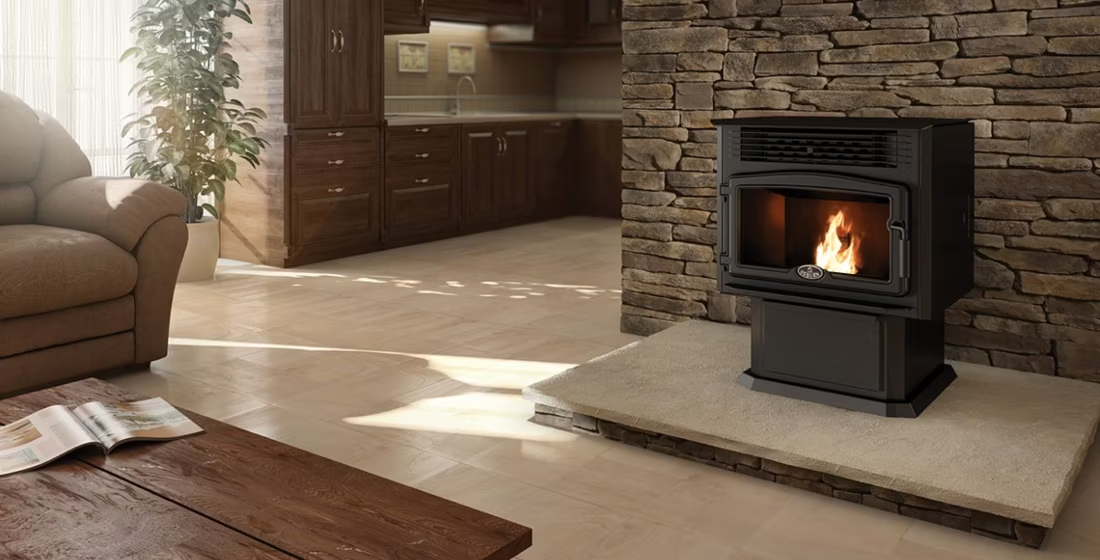
Pellet stoves fit that need without asking homeowners to buck, split, and stack cordwood every fall. Regional brands like Bear Mountain, Lignetics, and Pacific Pellet keep the Inland Northwest well supplied, and a hopper-fed stove holds a steady burn for 24 hours or more between reloads. Pellet units also burn cleaner than cordwood—a real advantage during the region's summer and fall wildfire smoke events, when air quality advisories can restrict open burning but generally leave EPA-certified pellet appliances unaffected. The tradeoff is that pellet stoves need electricity to run the auger and combustion blower, so it's worth planning around your service from Avista Corp or Inland Power & Light and, if outages concern you, asking a dealer about battery backup options.
Three steps. No salesperson until you're ready.
Tell us about your project
Your zip code, your situation, and the fuel you're leaning toward—or let the answers point you to one.
See what's actually available
The brands dealers within 100 miles genuinely carry—real options, never a catalog mirage.
Get your dealer & Project Guide
A trusted local dealer, plus the free Project Guide & Parts List that names every component of the job.
Frequently Asked Questions
How much does a pellet stove installation cost in Spokane Valley?
Most pellet stove and insert installations in Spokane Valley run somewhere between $3,500 and $7,000, depending on the unit, whether it's a freestanding stove or an insert going into an existing masonry fireplace, and how much venting work is required. A pellet insert using an existing chimney with a liner tends to land on the lower end; a freestanding stove requiring new wall-penetration venting and a hearth pad in a room without an existing fireplace runs higher. Local dealers will give you a firm number after seeing your space, but expect the quote to include the vent kit and any electrical work for the outlet the stove needs.
Where do I buy pellets in Spokane Valley, and what do they cost?
Regional brands including Bear Mountain, Lignetics, and Pacific Pellet are the most common bags you'll find at hearth shops, farm and feed stores, and hardware retailers around Spokane Valley. Expect to pay somewhere in the range of $250 to $325 per ton, with prices firming up in fall as heating season demand picks up. A typical home burning a pellet stove as primary heat through an Inland Northwest winter uses two to three tons of pellets a season, so buying early and storing dry is worth the effort.
Do pellet stoves need electricity to run?
Yes—unlike a wood stove, a pellet stove relies on an electric auger to feed fuel from the hopper and a blower to move combustion air and distribute heat, so it won't run during a power outage without backup. Spokane Valley homes are served by Avista Corp or Inland Power & Light depending on location, with residential rates in the roughly $0.09 to $0.12 per kWh range—pellet stoves are inexpensive to run on that draw, typically a few cents an hour. If winter outages are a real concern for your household, ask a local dealer about battery backup systems sized for pellet stoves, or consider a wood stove as a true no-power backup.
Pellet stove vs. wood stove—which makes more sense in Spokane Valley?
Wood is abundant here—ponderosa pine, lodgepole pine, and Douglas fir are the common species cut locally through permits from the BLM Spokane District, Idaho Panhandle National Forests, and BLM Coeur d'Alene District, typically $5 to $20 per cord during the April-through-October cutting season. A wood stove burns without electricity and costs less to fuel if you cut your own. A pellet stove trades that self-sufficiency for convenience: automated feed, consistent thermostat-set heat, easier cleanup, and a cleaner burn that isn't affected by the wildfire smoke advisories that occasionally restrict outdoor burning here in late summer and fall. Households with someone home to reload a hopper and reliable power tend to prefer pellet; households prioritizing storm-proof heat often lean wood.
Do I need a permit to install a pellet stove in Spokane Valley?
Yes—a building permit is required for new pellet stove installations in Spokane Valley, covering the appliance installation, venting, and any electrical work for the outlet the unit needs. Most hearth dealers pull this permit as part of the installation and coordinate the inspection, so you generally don't have to navigate it yourself. Unlike a wood stove, a pellet installation doesn't involve a Forest Service or BLM cutting permit—that's only relevant if you're also planning to burn cordwood.
What size pellet stove do I need for my home?
Given Spokane Valley's fairly demanding winters, sizing matters more here than in milder climates. As a rough guide: smaller pellet stoves rated around 40,000 BTU suit spaces up to about 1,200 square feet, mid-range units in the 40,000–60,000 BTU class handle 1,200–2,000 square feet, and larger units above 60,000 BTU are built for whole-home heating in bigger or less-insulated houses. Ceiling height, insulation quality, and whether you want primary or supplemental heat all shift these numbers, which is why an in-home consultation from a local dealer is worth more than a chart.
How much maintenance does a pellet stove need?
Pellet stoves need regular but relatively light upkeep compared to a wood-burning chimney system: daily ash removal from the burn pot, a weekly wipe-down of the hopper and auger area, and a full professional cleaning of the exhaust venting and combustion blower once a year, usually before heating season starts. Because pellet fuel burns cleaner and more consistently than cordwood, there's no creosote buildup to worry about, but the mechanical components—auger motor, igniter, blower—do wear over time and benefit from an annual once-over by a certified technician.
What's a good pellet stove brand for Spokane Valley's climate?
Quadra-Fire, manufactured just north of Spokane in Colville, WA, is a natural fit given the local roots and cold-climate engineering—their pellet inserts and freestanding stoves are built with Inland Northwest winters in mind. Harman and Lopi are also well represented among regional dealers and hold up well through the kind of sustained cold Spokane Valley sees from December through February. Look for a model with a large hopper capacity if you want fewer reloads during multi-day cold snaps, and ask your dealer about auto-ignition features if convenience is the main reason you're choosing pellet over wood.
Pellet stove vs. electric fireplace—which is better for my situation?
An electric fireplace or heater plugs into a standard outlet, needs no venting or fuel storage, and installs in an afternoon—but it's realistically a supplemental heat source, not something that will carry a Spokane Valley home through a long, demanding winter on its own. A pellet stove requires more upfront investment and a fuel supply, but delivers genuine whole-room or whole-home heat output that scales with the Inland Northwest's cold. If you're heating a single room occasionally, electric is simpler and cheaper. If you're looking to meaningfully cut a furnace's workload through winter, pellet is the better tool for the job.
Are pellet stoves loud?
They make some noise—there are two fans running plus an auger motor that turns as it feeds pellets. But there's a real range: premium models are engineered quiet, and the best offer a whisper-quiet mode you can comfortably watch TV next to. If noise matters in your room, ask to hear a stove running before you buy—it's a five-minute test that saves years of annoyance.
Why is my open fireplace making my house colder?
Open fireplaces suck—literally. As the fire burns, it consumes air your furnace already paid to heat and pulls it out through the chimney, so the house is actually colder after the fire goes out than before you lit it. An insert fixes this: it seals the chimney, puts fixed glass across the front, and turns that hole in your house into a real heat source.
How much should I budget for a fireplace?
For an average home—covering the fireplace, the vent pipe, and basic installation—a budget between $3,900 and $5,500 gives you a lot of options across wood, gas, and pellet. By the time you add finish work, gas line, and electrical, the average complete installation lands between $5,000 and $12,000 all-in. In a remodel or new build, a good rule is to put about 2.5% of the total project cost toward the fireplace.
Does a fireplace add value to my home?
On average, a fireplace adds back to the home about the same amount you spent installing it. Add the monthly savings from heating the rooms you actually use instead of the whole house—often hundreds of dollars a year—and the value case is strong before you even count what a fire does for how your family uses the room.
Preferred Dealers in Spokane Valley
Pellet Brands Stocked Around Spokane Valley
Manufacturers will point you to the nearest stocking dealer.
Find your pellet stove in Spokane Valley.
Tell us about your home and heating goals, and we'll match you with a trusted local dealer and send over a free Project Guide & Parts List—sized, vented, and ready to install.
Find Your Fireplace →