
Clean, flip-a-switch heat for Spokane Valley homes.
With 6,019 heating degree days and winter lows averaging 26°F, Spokane Valley homeowners lean on electric fireplaces for zone heat with none of the smoke, splitting, or venting a wood or pellet setup demands. I'll match you with a trusted local dealer who knows what actually fits your space.
Every Project Starts From One of These Five Situations
No smoke, no chimney, no wood to split.
Spokane Valley sits at just over 2,000 feet in a Climate Zone 5B pocket of the Inland Northwest, with an average winter low of 26°F and a six-month heating season that adds up to more than 6,000 heating degree days a year. That's a genuinely cold climate, but it's rarely brutal—the kind of winter where a lot of homes are already running a gas or heat pump furnace and just want a clean, controllable secondary heat source for the family room or a finished basement rather than a whole-house primary. Electric fireplaces fit that role well, and they carry zero combustion byproducts at a time of year when wildfire smoke is already a recurring regional concern each late summer and fall.
Electric service here splits between Avista Corp, at roughly $0.1187 per kWh, and Inland Power & Light Company, which serves parts of the surrounding Spokane Valley and Otis Orchards area at a notably lower $0.0898 per kWh. That gap matters if you're running a 1,500-watt insert several hours a night through a long winter—homes on the Inland Power side see a meaningfully smaller bill for the same usage. Either way, electric units plug into a standard outlet or a dedicated 120V/240V circuit, skip the masonry and venting work altogether, and install in an afternoon rather than a day.
Three steps. No salesperson until you're ready.
Tell us about your project
Your zip code, your situation, and the fuel you're leaning toward—or let the answers point you to one.
See what's actually available
The brands dealers within 100 miles genuinely carry—real options, never a catalog mirage.
Get your dealer & Project Guide
A trusted local dealer, plus the free Project Guide & Parts List that names every component of the job.
Frequently Asked Questions
How much does an electric fireplace or insert cost to install in Spokane Valley?
A plug-in wall-mount or freestanding electric fireplace typically runs $400 to $1,500 installed, since most just need a standard outlet and a mounting bracket. A built-in electric insert going into an existing masonry firebox—common in older Spokane Valley homes off Sprague or Pines that started life with a wood-burning fireplace—runs $1,500 to $3,500, with the higher end covering a dedicated 240V circuit if your electrician needs to run new wiring. Compare that to the venting and Class A chimney work a wood or gas install requires, and electric is consistently the least expensive fuel to add to a home here.
How much does it cost to run an electric fireplace through a Spokane Valley winter?
It depends heavily on which utility serves your address. At Avista's roughly $0.1187 per kWh, running a 1,500-watt insert for five hours a night over a 6,000-plus HDD winter costs somewhere in the range of $30 to $45 a month. On Inland Power & Light's lower $0.0898 rate, the same usage drops closer to $25 to $35 a month. Either way, it's a fraction of what most homeowners spend heating with a furnace alone, which is exactly why electric units work well as supplemental heat in a cold room rather than a full home-heating replacement here.
Can an electric fireplace actually heat a room through a Spokane Valley winter?
For a single room, yes—most electric inserts and stoves put out 4,600 to 5,200 BTUs, enough to comfortably warm a 400 to 1,000 square foot space even with winter lows averaging 26°F. What it won't do is replace your furnace as primary heat across an entire Spokane Valley home; with over 6,000 heating degree days a year, this climate calls for a real central heating system as the backbone, with electric fireplaces used the way most local buyers use them—as zone heat for a family room, converted garage, or basement that the main system doesn't reach efficiently.
Do I need a permit for an electric fireplace in Spokane Valley?
Most plug-in electric fireplaces need no permit at all since they don't involve gas lines, venting, or new structural work. A built-in insert wired to a dedicated 240V circuit is more likely to need an electrical permit, particularly if a licensed electrician is opening a wall or panel to add the circuit. Since there's no combustion involved, you also skip the chimney and clearance-to-combustibles inspections that come with a wood or gas install—one reason a lot of Spokane Valley homeowners find electric the simplest fuel to add to a room that doesn't already have a fireplace.
Electric vs. wood—which makes more sense for a Spokane Valley home?
Wood still has a following here, with ponderosa pine, lodgepole pine, and Douglas fir cut under permits from BLM Spokane District or Idaho Panhandle National Forests for as little as $10 a cord—genuinely cheap heat if you're willing to split and stack it. But wood smoke adds to regional air quality concerns during wildfire season, and it requires a chimney, hearth clearances, and annual sweeping. Electric skips all of that: no combustion, no smoke, no permit hassle, at the tradeoff of a higher per-BTU running cost and total dependence on the grid. A lot of Spokane Valley households end up doing both—wood or a pellet stove for real cold-weather backup, electric for easy daily ambiance in a room that just needs a little extra warmth.
Electric vs. pellet stove—which is the better fit?
Pellet stoves burning regional brands like Bear Mountain, Lignetics, or Pacific Pellet put out serious heat—enough to function as a primary or near-primary source through a 6,000-plus HDD Spokane Valley winter—but they need pellet storage, an auger and blower that draw electricity anyway, and periodic ash cleanout. Electric fireplaces skip the fuel storage and mechanical upkeep entirely, but they can't match a pellet stove's output for whole-room primary heat. If you're looking for supplemental warmth with zero maintenance, electric wins; if you want a real secondary heat source that can carry a room through a cold snap, pellet is the stronger choice.
Does an electric fireplace help during Spokane Valley's wildfire smoke season?
Indirectly, yes. Wildfire smoke is a recognized air quality concern in the Spokane Valley area during late summer and fall, and burn advisories during those stretches can discourage wood burning even outside the winter heating season. An electric fireplace produces zero particulate emissions, so it's one of the few heat sources you can run without adding to smoke-related air quality issues, and some homeowners appreciate having it as a smoke-free option for cooler shoulder-season evenings when a wood stove might not be the best choice.
What happens to my electric fireplace during a power outage?
It stops working, full stop—electric fireplaces have no battery backup and go dark the moment the grid does, which is a real consideration given that Inland Northwest winter storms occasionally knock out power across Avista and Inland Power & Light's service territories. This is the main tradeoff against wood or pellet heat, which can keep a room warm through a multi-day outage. If backup heat during an outage is a priority for your household, most local dealers recommend pairing an electric fireplace for daily convenience with a wood stove or a battery-capable pellet unit for resilience.
How much maintenance does an electric fireplace need?
Very little. There's no chimney to sweep, no creosote to manage, and no ash to clean out—an occasional dusting of the heating element and a wipe-down of the glass front covers most of it. LED-based units can run 15 to 20 years without needing a bulb or element replacement. That low-maintenance profile is a big part of why electric inserts are popular in Spokane Valley rental properties and secondary living spaces where nobody wants to deal with fuel storage or annual inspections.
Can I put a TV above my fireplace?
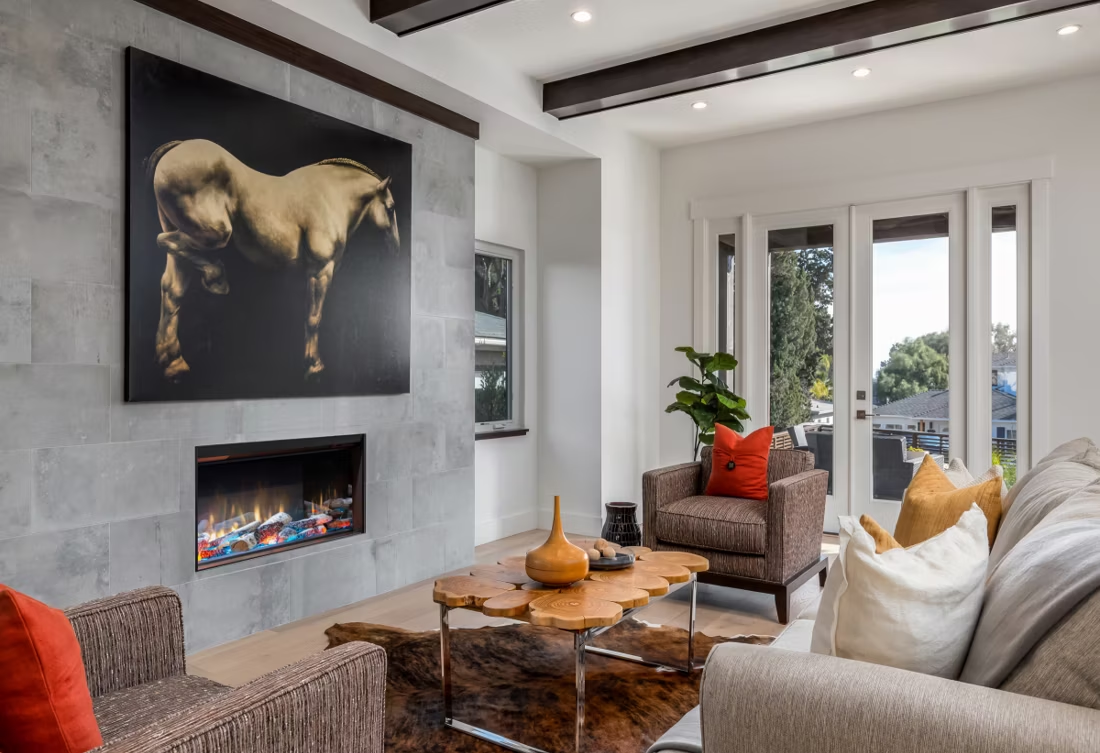
Yes—with an asterisk. Fireplaces are hot and TVs don't like heat. Either put a mantel between them to deflect rising warmth, or choose a fireplace with heat-management technology that creates a cool zone on the wall above—the wall stays around 125 degrees, barely warm, while the room still gets full heat. If you like clean lines and don't want a mantel, heat management is the answer.
Does an electric fireplace need a vent or chimney?
No—that's its superpower. An electric fireplace needs a wall and an outlet, period. No vent pipe, no gas line, no clearances to design around, which is why it works in bedrooms, offices, apartments, and walls where venting a gas or wood unit would be impractical or impossible. Installation is typically the simplest and least expensive of any fireplace type.
What is an in-home preview and do I need one?
It's a visit where a hearth professional measures your space, confirms the model you picked actually works in your home, and walks the specs—framing, gas line, venting, finish work—before anything is ordered. Some details you just can't know until you see the house. Never make a down payment without one; it's the single most-skipped step that burns buyers.
Can a fireplace actually lower my heating bill?
Yes—by creating a comfort zone. A furnace heats every square foot of the house just to warm the one room you're in; a gas fireplace on low burns roughly a sixth of the gas a typical furnace does. Set the furnace around 55–60 degrees as a baseline, then heat the rooms your family actually uses. Families who heat this way commonly save $20–$60 a month.
Preferred Dealers in Spokane Valley
Electric Service in Spokane Valley
An electric fireplace's heater draws about 1,500 watts—pennies per hour at local rates.
Avista Corp
Inland Power & Light Company
Get your free Project Guide & Parts List for an electric fireplace in Spokane Valley.
Tell me about your room, your electric utility—Avista or Inland Power & Light—and how you plan to use it, and I'll match you with a trusted local dealer and send a free Project Guide & Parts List with the exact unit and parts your project needs.
Find Your Fireplace →