
Pellet stoves aren't common in SeaTac, but they still have a place.
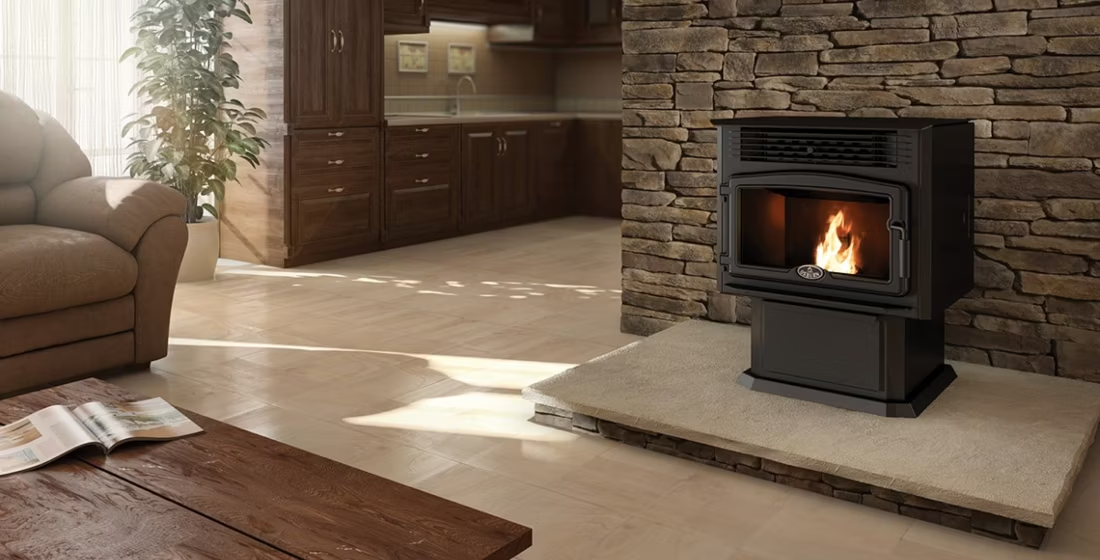
SeaTac's mild Puget Sound winters mean most homes lean on gas furnaces or electric heat pumps—but a pellet stove can still add efficient supplemental warmth in the right room. We'll help you figure out if it fits, then connect you with a trusted local dealer.
Every Project Starts From One of These Five Situations
Mild Puget Sound winters don't ask much of a heating system.
SeaTac sits at just 349 feet in elevation along Puget Sound, in climate zone 4C—a marine climate where the average winter low is a mild 38°F and winters bring a modest heating load compared to most of the country. That's less than half the winter heating load a place like Duluth, Minnesota racks up in an average winter, and it's a big part of why solid-fuel heating—wood or pellet—never became the default here the way it has in colder, drier parts of the Pacific Northwest interior.
Most SeaTac homes near Sea-Tac International Airport and throughout King County heat with natural gas furnaces or electric heat pumps served by Puget Sound Energy, at a residential rate around 14.6 cents per kWh. Lot sizes tend to be smaller and denser than in rural parts of the state, and many properties are condos, townhomes, or HOA-governed communities where adding solid-fuel venting isn't straightforward. That said, a small number of SeaTac homeowners still install pellet stoves—usually as supplemental heat for a family room or daylight basement, or for the look of visible flame without the wood-handling and chimney demands of a full wood stove.
Three steps. No salesperson until you're ready.
Tell us about your project
Your zip code, your situation, and the fuel you're leaning toward—or let the answers point you to one.
See what's actually available
The brands dealers within 100 miles genuinely carry—real options, never a catalog mirage.
Get your dealer & Project Guide
A trusted local dealer, plus the free Project Guide & Parts List that names every component of the job.
Frequently Asked Questions
How much does a pellet stove installation cost in SeaTac?
Pellet stove installations are uncommon enough in SeaTac that there isn't a deep well of local pricing data, but homeowners across the broader Puget Sound region typically spend $3,500 to $6,500 for a pellet stove or insert, including the vent kit and hearth pad work. Where you land in that range depends mostly on whether you're venting through an existing chimney chase or need a new through-wall vent run. The City of SeaTac's building division requires a permit for the installation, which a local dealer will typically pull on your behalf.
Does a pellet stove even make sense in SeaTac's climate?
For most SeaTac homes, no—not as a primary heat source. With winter lows averaging 38°F and a modest heating load overall, the heating load here is modest compared to colder inland climates, and gas furnaces or electric heat pumps handle it efficiently and automatically. Where a pellet stove does make sense is as supplemental heat for a specific room—a bonus room, daylight basement, or detached space—or for homeowners who simply prefer the look and low-maintenance convenience of a self-feeding hopper over hauling cordwood.
Where can I buy pellets locally in SeaTac?
Even though pellet stoves themselves are uncommon here, pellet fuel isn't hard to find—regional brands like Bear Mountain, Lignetics, and Pacific Pellet are distributed throughout King County and sold at hardware and farm supply retailers across the South Sound. Because local demand is lower than in colder parts of Washington and Oregon, it's worth calling ahead in peak winter months, or stocking up in late summer, rather than assuming a store keeps pallets on hand year-round.
Pellet stove vs. wood stove—why is pellet slightly more common here?
Neither is especially common in SeaTac, honestly. Wood stoves are effectively not-applicable for most homes here—the region's mild, marine climate and denser residential lots don't create much demand for cordwood heating, even though species like Douglas fir, red alder, and lodgepole pine grow throughout the Cascade foothills nearby. Of the two, pellet stoves are somewhat more practical in a suburban setting because they don't require wood storage or splitting, and smaller hopper-fed units are easier to fit into a tight utility room or corner.
Do I need a permit to install a pellet stove in SeaTac?
Yes. The City of SeaTac's building division requires a permit for any new solid-fuel or pellet-burning appliance, and the unit needs to meet current EPA emissions certification. Because the Puget Sound region occasionally sees wildfire smoke advisories from the Puget Sound Clean Air Agency in late summer, it's worth knowing that certified pellet stoves are generally exempt from burn restrictions that can apply to older, uncertified wood stoves—one practical advantage if you're weighing the two.
Will a pellet stove keep my house warm during a power outage?
Not on its own—and this is worth knowing before you buy. Unlike a wood stove, a pellet stove depends on an electric auger to feed fuel and a blower to distribute heat, so it shuts down the moment the power does. Puget Sound Energy's service area does see outages during winter windstorms, and if backup heat during an outage is your main goal, a wood stove or a gas unit with battery-backup ignition is a better fit than pellet. If a pellet stove is mainly for everyday supplemental warmth, this trade-off matters less.
What does pellet fuel cost, and how much will I use?
Bagged pellets from regional brands like Bear Mountain and Lignetics typically run in the $250 to $325 per ton range at retailers across King County, sold in 40-pound bags. A pellet stove used for supplemental heat in one room might burn through a half-ton to a ton over a mild SeaTac winter—considerably less than a home relying on pellets as primary heat in a colder climate would use.
How often does a pellet stove need cleaning and service?
Pellet stoves need more frequent ash removal than wood stoves—typically every few days to weekly with regular use—because pellets burn hotter and produce fine ash. Beyond that, an annual professional inspection and cleaning of the venting, hopper, and auger mechanism is recommended, similar to servicing a gas appliance. Given how few pellet stoves are in service around SeaTac, it's worth asking a prospective dealer directly whether they stock parts and offer ongoing service before you commit to a brand.
Pellet vs. gas or electric heat—which is right for my SeaTac home?
For most SeaTac homeowners, gas and electric win on convenience and cost predictability—both are considered standard, well-supported options here, with natural gas furnaces and Puget Sound Energy electric heat pumps handling the bulk of home heating. A pellet stove makes more sense as a secondary, zone-heating choice: a way to add visible flame and supplemental warmth to one room without the venting demands of a full wood-burning fireplace. If your goal is whole-home heating, a gas or electric system sized by a local HVAC contractor will usually serve you better than a pellet stove.
What's the difference between an insert and a zero-clearance fireplace?
An insert is a fireplace that slides into a pre-existing wood-burning fireplace—if you don't have one, there's nothing to insert it into. A zero-clearance fireplace is built into a framed wall, which makes it the answer for remodels and new construction. Simple test: existing masonry fireplace means insert; blank or framed wall means zero-clearance.
Why is my open fireplace making my house colder?
Open fireplaces suck—literally. As the fire burns, it consumes air your furnace already paid to heat and pulls it out through the chimney, so the house is actually colder after the fire goes out than before you lit it. An insert fixes this: it seals the chimney, puts fixed glass across the front, and turns that hole in your house into a real heat source.
Does a fireplace add value to my home?
On average, a fireplace adds back to the home about the same amount you spent installing it. Add the monthly savings from heating the rooms you actually use instead of the whole house—often hundreds of dollars a year—and the value case is strong before you even count what a fire does for how your family uses the room.
Can I install a fireplace myself?
If you're putting a fire in your house on purpose, it's best to work with an expert. Unless you're genuinely experienced in framing, gas line, vent pipe, and the national code on clearances to combustibles, have a professional do it—and ideally the same company that sells you the fireplace, so warranty, service, and liability all live under one roof.
Nearby Dealers
Hearth shops serving SeaTac and the surrounding area.
Rich's Stoves & Spas
Pellet Brands Stocked Around SeaTac
Manufacturers will point you to the nearest stocking dealer.
See if a pellet stove fits your SeaTac home.
Tell us about your space and heating goals, and we'll give you an honest read on fit—then match you with a trusted local dealer and a free Project Guide & Parts List for your SeaTac pellet project.
Find Your Fireplace →