
Keep Your Family Warm and Safe—No Matter What
Mild, damp winters and the occasional windstorm outage make wood heat a practical backup on the bluffs above the Sound. Find the right stove or insert, and connect with a trusted local dealer.
Every Project Starts From One of These Five Situations
Wood heat holds its place above the Sound.
Picnic Point sits on a bluff above Puget Sound between Edmonds and Mukilteo, at roughly 500 feet elevation in climate zone 4C. Winters here are mild by national standards—average lows hover around 37°F and the area has a winter heating load that's just a fraction of what a place like Duluth, MN or Fargo, ND sees in a single winter. But mild doesn't mean irrelevant: the Puget Sound region's damp, gray stretches from November through March, combined with periodic windstorms that knock out Puget Sound Energy service for hours or days, keep wood heat firmly in the picture for a lot of Snohomish County homes.
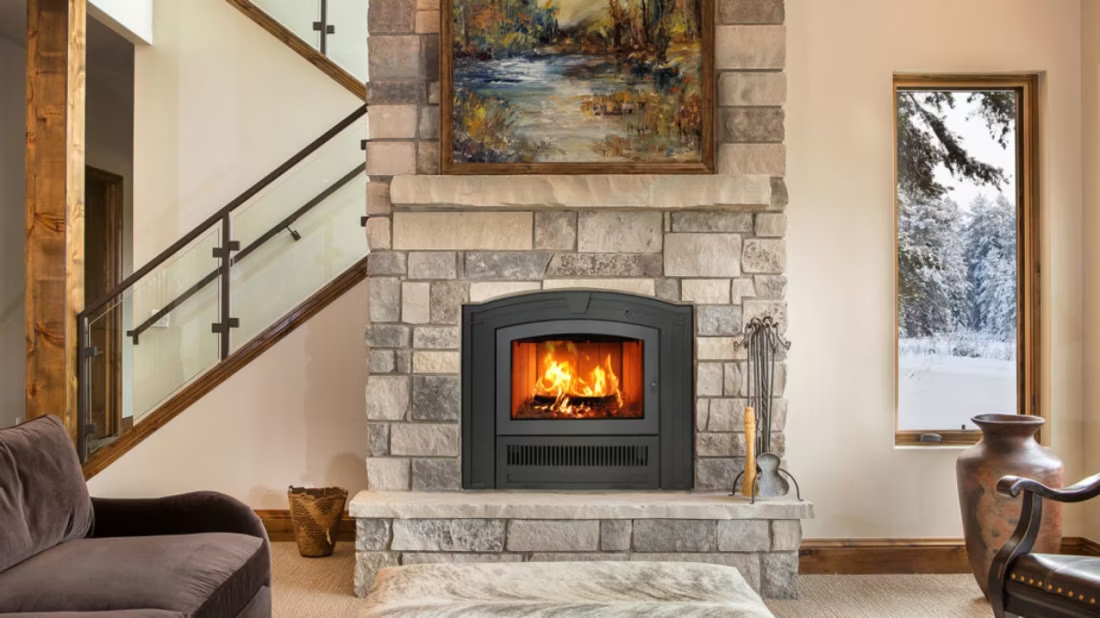
Local forests supply the fuel—Douglas fir, red alder, and lodgepole pine are the species most homeowners in this part of Snohomish County burn, whether self-cut under a Mt. Baker-Snoqualmie National Forest permit or purchased by the cord. A properly sized, EPA-certified wood stove or insert gives Picnic Point homeowners heat that doesn't depend on the grid, a hedge against rising electricity costs, and—for older homes near the water with an existing masonry fireplace—a meaningful efficiency upgrade over an open hearth that mostly sends heat up the flue.
Firewood Cutting Permits Near Picnic Point
Three steps. No salesperson until you're ready.
Tell us about your project
Your zip code, your situation, and the fuel you're leaning toward—or let the answers point you to one.
See what's actually available
The brands dealers within 100 miles genuinely carry—real options, never a catalog mirage.
Get your dealer & Project Guide
A trusted local dealer, plus the free Project Guide & Parts List that names every component of the job.
Frequently Asked Questions
How much does a wood stove installation cost in Picnic Point?
In the Snohomish County and greater Puget Sound area, a typical wood stove or insert installation runs roughly $4,000 to $8,500, depending on the unit, whether an existing chimney can be reused, and whether new Class A chimney pipe or a full through-roof venting system is needed. Homes with an existing masonry fireplace near Edmonds or Mukilteo often land toward the lower end if converting to an insert; new construction or homes without any existing chimney run higher once framing and venting are added. A local retailer will give you a firm number after seeing your home.
What size wood stove do I need for a Picnic Point home?
Because Picnic Point's winters are mild compared to interior or mountain climates—this area's winter heating load is roughly half what you'd see in a place like Bozeman, MT—most homes here don't need the biggest catalytic units on the market. A small to medium stove (up to about 1,500 square feet of coverage) is usually enough for supplemental heat in a main living area, and a medium unit handles most whole-floor heating needs in the older homes common near the Sound. Homes relying on wood as a primary heat source, or with vaulted ceilings and lots of glass facing the water, may need to size up. A local dealer will walk your space before recommending a model.
Where can I find certified wood stove installers near Picnic Point?
Look for installers with NFI (National Fireplace Institute) certification or CSIA (Chimney Safety Institute of America) credentials. Since Picnic Point is unincorporated, building permits for a new wood stove or insert go through Snohomish County Planning and Development Services rather than a city building department, and a certified installer will already know that process. Most hearth retailers serving the Edmonds-Mukilteo-Lynnwood corridor employ their own certified installers, which keeps warranty coverage and code compliance under one roof rather than splitting the job between a retailer and an independent contractor.
Should I get a wood stove or a wood insert?
A freestanding wood stove sits on a hearth pad and can go almost anywhere in a room with proper clearances—a good fit for newer construction without an existing fireplace. A wood insert slides into an existing masonry fireplace and uses the chimney you already have, which matters in this part of Snohomish County, where a lot of homes built in the 1960s through 1980s near the Sound still have an original open masonry fireplace that loses more heat up the flue than it puts into the room. For those homes, an insert is usually the more efficient upgrade. For a home with no existing fireplace, a freestanding stove or zero-clearance unit is the more straightforward install.
Do I need a permit to install a wood stove in Picnic Point?
Yes. Because Picnic Point is unincorporated, permits are issued through Snohomish County Planning and Development Services, and the stove itself needs to meet current EPA emissions standards. Most local installers handle the permit paperwork as part of the job. You won't need a burn permit to use the stove day to day, but the Puget Sound Clean Air Agency does issue burn advisories during periods of poor air quality—most commonly tied to summer wildfire smoke drifting into the region, though stagnant winter air can also trigger a notice. Certified stoves are generally allowed to keep operating during these advisories; older uncertified units are the ones typically restricted.
What's the best wood stove for Picnic Point's climate?
Because winters here are mild and damp rather than brutally cold, you don't need a stove built to hold a 20-hour overnight burn at sub-zero temperatures the way a home in Bismarck, ND might. A mid-size non-catalytic stove from a brand like Pacific Energy or Lopi burns cleanly and is easy to manage for the intermittent, supplemental-heat pattern most Picnic Point households use—running it hard during cold snaps and windstorm outages, lighter the rest of the season. Homes that lean on wood as a primary heat source, or that want the longest possible burn times, should look at a catalytic model instead. A local dealer can match burn time and output to how you actually plan to use it.
How often should my chimney be inspected and cleaned?
CSIA guidance calls for an annual inspection on any wood-burning appliance, and that holds true in Picnic Point even with a shorter, milder burning season than colder inland climates. Plan on a sweep and inspection each late summer or early fall, before the wet season starts and before any wildfire smoke advisories push you to rely more heavily on the stove. Creosote buildup is worse with wetter, less-seasoned wood—a real risk here given the region's humidity—so make sure whatever you're burning has been split and dried for at least six to twelve months.
Where can I get firewood in the Picnic Point area?
Local firewood dealers throughout Snohomish County deliver split, seasoned cordwood—Douglas fir, red alder, and lodgepole pine are the species you'll most commonly find, all of which grow in the forests east of the Sound. For self-cutting, the Mt. Baker-Snoqualmie National Forest issues personal-use cutting permits for $5 to $20 per cord, valid during the May-through-October season. Alder burns hotter and cleaner than green fir, so many local burners mix species or let their fir season longer before use.
Wood stove vs. pellet stove—which makes more sense for Picnic Point?
Wood stoves run on cordwood, work without any electricity, and are the better choice if you want backup heat during a Puget Sound Energy outage—a real consideration here given how often regional windstorms take down power lines. Pellet stoves burn compressed pellets from regional brands like Bear Mountain, Lignetics, or Pacific Pellet, are simpler to load and operate, and burn cleaner overall, but they need electricity to run the auger and blower, so they go dark in an outage unless paired with a battery backup. With PSE's residential rate around 14.6 cents per kWh, running a pellet stove is inexpensive when the power's on—the tradeoff is what happens when it isn't. For most Picnic Point homes, that outage risk tips the choice toward wood, especially as a secondary heat source; homes that don't need storm backup and prioritize convenience often do fine with pellet.
Why is a fireplace insert so efficient?
An insert does two things: it seals the chimney completely, so you stop losing air you already paid to heat, and it radiates warmth into the room through the firebox and glass. Most add a heat-exchange fan that pulls cool room air underneath, wraps it around the hot firebox, and pushes it back out warm. Your home is more efficient before you've even lit the first fire.
Why won't my new wood stove get going like my old one?
New wood stoves are 70%+ efficient, so far less heat goes up the flue—which also means less draft to get a fire established. The rule: build a genuinely hot fire for about 45 minutes before you choke it down. Skip that and you get smoke in the room, creosote in the chimney, and a fire that never takes off. Most performance complaints trace straight back to this.
What is an in-home preview and do I need one?
It's a visit where a hearth professional measures your space, confirms the model you picked actually works in your home, and walks the specs—framing, gas line, venting, finish work—before anything is ordered. Some details you just can't know until you see the house. Never make a down payment without one; it's the single most-skipped step that burns buyers.
Does a fireplace add value to my home?
On average, a fireplace adds back to the home about the same amount you spent installing it. Add the monthly savings from heating the rooms you actually use instead of the whole house—often hundreds of dollars a year—and the value case is strong before you even count what a fire does for how your family uses the room.
Nearby Dealers
Hearth shops serving Picnic Point and the surrounding area. Every listing shows whether it is a WhyFire partner, a dealer we have verified as authorized for the brands we recommend, or a local business carrying hearth products. No manufacturer pays for placement. How we verify dealers →
All Points Heating
Rich's For The Home
Sundance Energy Services, Inc.
T.d.r Masonry LLC
Pristine Sweeps
Island Gas Piping & Installations, LLC
Ecco Supply
Anderson Fireplace
Kirkland Fireplace
Ace Freeland Home
Four Day Fireplace
Whidbey Heating And Stoves
Rich’s Woodstoves & Spas
Economy Hearth & Home
All Seasons Spa & Stove
Sunshine Propane
Find your wood fireplace in Picnic Point.
Tell us a bit about your home and we'll match you with a trusted local dealer and send over a free Project Guide & Parts List—sized, vented, and ready to install.
Find Your Fireplace →