
Pellet heat that fits Orchards' mild, marine climate.
Thermostat-controlled warmth for Clark County's damp, moderate winters—without splitting a single log. Find the right pellet stove and connect with a trusted local dealer.
Every Project Starts From One of These Five Situations
Steady, thermostat-controlled heat for Orchards' wet winters.
Orchards sits at just 273 feet elevation in the Vancouver metro area of Clark County, where winters are wet more than they are brutally cold—average lows hover around 32°F and the heating season stretches long and damp rather than delivering the deep-freeze snaps you'd see in a place like Fargo, ND. That 5,303-degree-day heating load means homes here need consistent, controllable warmth for months at a time, not a stove built to survive sub-zero nights. Pellet stoves are a natural fit: set the thermostat, load the hopper, and let it run.
The Pacific Northwest is also pellet country. Regional mills like Bear Mountain, Lignetics, and Pacific Pellet keep the Portland-Vancouver market well supplied, so fuel is easy to find without the cutting, splitting, and seasoning that cordwood requires. Late-summer wildfire smoke from Cascade fires is a recurring concern for the region, and Southwest Clean Air Agency—which covers Clark County—occasionally issues burn advisories; pellet stoves burn cleaner than open wood fires and are typically exempt from the curtailment restrictions that can affect wood-burning appliances. With PUD No. 1 of Clark County's residential electric rate sitting around 10.4 cents per kWh, a lot of Orchards homeowners use a pellet stove as efficient zone heat in the main living space, backed up by electric heat elsewhere in the house.
Three steps. No salesperson until you're ready.
Tell us about your project
Your zip code, your situation, and the fuel you're leaning toward—or let the answers point you to one.
See what's actually available
The brands dealers within 100 miles genuinely carry—real options, never a catalog mirage.
Get your dealer & Project Guide
A trusted local dealer, plus the free Project Guide & Parts List that names every component of the job.
Frequently Asked Questions
How much does a pellet stove installation cost in Orchards?
A typical pellet stove installation in the Orchards area runs about $3,000 to $6,000, depending on the unit, whether it's a freestanding stove or an insert going into an existing masonry fireplace, and how much venting work is involved. Pellet stoves vent through a smaller-diameter pipe than wood stoves and can often exit through a side wall rather than requiring a full chimney, which keeps installation costs on the lower end compared to wood. Local dealers in the Vancouver-Clark County area will typically quote a firm price after seeing your hearth setup and wall or roof access in person.
What size pellet stove do I need for my home in Orchards?
Most homes in Orchards are single-family houses built from the 1970s through the 2000s with moderate insulation, and given the region's mild winter lows, a mid-size pellet stove (rated for 1,200-2,000 sq ft) is usually enough to heat a main living area or open floor plan. Smaller stoves work fine for supplemental heat in a family room or bonus room. Because Clark County rarely sees the extreme cold that drives oversizing decisions in colder states, local dealers can usually size a stove tightly to your square footage without leaving a lot of headroom for emergencies—always confirm with an in-home consultation before buying.
Where can I find certified pellet stove installers near me?
Look for installers with NFI (National Fireplace Institute) pellet-specialist certification, and confirm they're a licensed contractor registered with Washington State's Department of Labor & Industries—required for any hearth appliance install in Clark County. Most hearth retailers serving the Orchards and Vancouver area sell and install the same brands, which keeps warranty coverage and venting work under one roof. Skip general handyman installs for pellet appliances; the venting and electrical hookup for the auger and combustion blower are easy to get wrong.
What's the difference between a pellet stove and a pellet insert?
A pellet stove is a freestanding appliance that sits on a hearth pad and vents through a wall or existing chase—it can go almost anywhere with the right clearances. A pellet insert is built to slide into an existing masonry fireplace opening, which is common in older Orchards-area homes that already have a wood-burning fireplace they no longer use. For those homes, an insert is usually the simpler upgrade because it reuses the existing masonry opening and often the chimney chase for venting. Homes without an existing fireplace typically go with a freestanding stove instead.
Do I need a permit to install a pellet stove in Orchards?
Yes—pellet stove installations in unincorporated Clark County, including Orchards, require a mechanical permit through Clark County Community Planning and Building, covering the appliance installation and venting per Washington's state mechanical code. Most local dealers handle the permit application and inspection as part of the install. Unlike wood stoves, pellet stoves are generally exempt from Southwest Clean Air Agency's winter burn curtailment rules, since their combustion is cleaner and more consistent than an open wood fire.
What's the best pellet stove for Orchards' climate?
Because Orchards doesn't see extreme cold, you don't need the largest hopper or the longest burn time on the market—you need reliability and easy ash cleanup for months of steady, moderate-output use. Two well-regarded brands are actually built right in Washington State: Quadra-Fire (Colville, WA) and Lopi, made by Travis Industries in Mukilteo, WA—both offer pellet models sized for main-living-area heat. Harman and Englander are also common in the Portland-Vancouver market. A local dealer can match hopper capacity and BTU output to your square footage and how often you want to refill the hopper.
How much maintenance does a pellet stove need?
Plan on emptying the ash pan every few days to weekly depending on use, wiping the glass as needed, and vacuuming the burn pot and hopper area every couple of weeks during heavy winter use. Once a year—ideally before the fall heating season starts—have a technician inspect and clean the venting, combustion blower, and exhaust fan, since pellet stoves rely on mechanical parts that wood stoves don't have. Compared to a wood-burning chimney sweep, pellet stove servicing is quicker and less involved, but skipping the annual check can lead to auger jams or venting blockages mid-winter.
Where can I buy pellets in the Orchards area, and what do they cost?
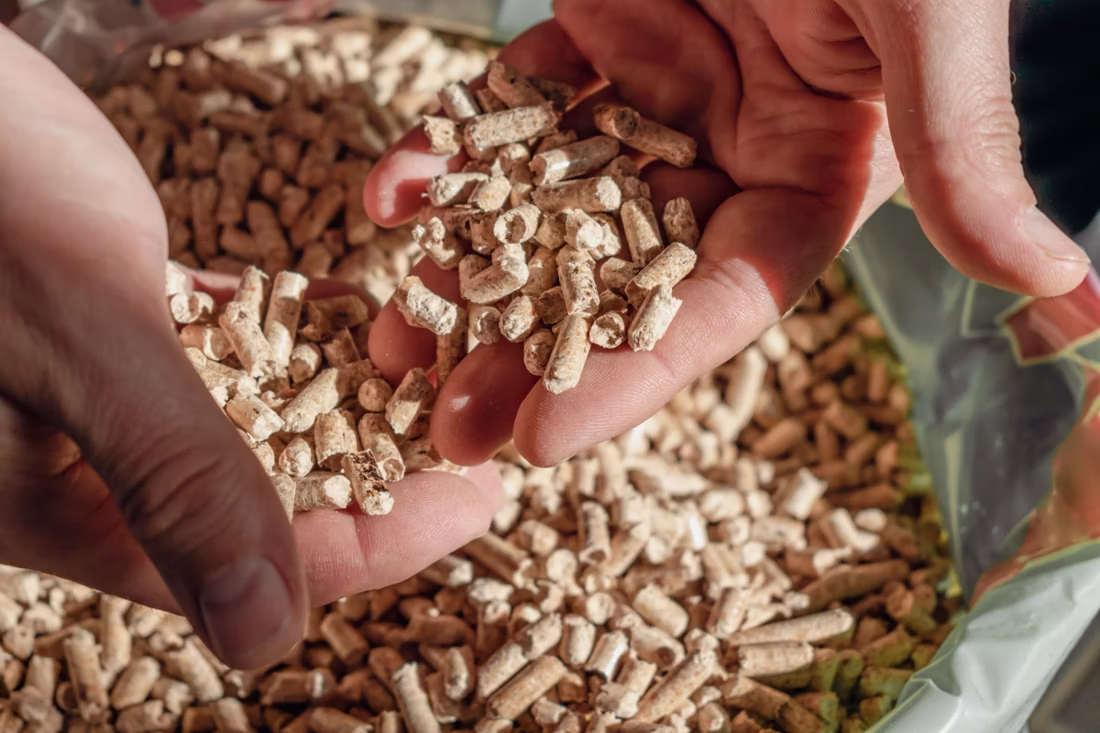
Pellets are widely available in the Portland-Vancouver metro from home improvement stores, farm supply stores, and hearth retailers, with regional brands like Bear Mountain, Lignetics, and Pacific Pellet all sold locally. Expect to pay roughly $250 to $320 per ton, usually sold in 40-pound bags, 50 bags to a pallet. Buying a full pallet before the fall rush—rather than by the bag mid-winter—is the most common way local homeowners keep costs down, since demand and prices can rise once cold, wet weather sets in.
Pellet stove vs. wood stove—which is right for my home?
Wood stoves burn cordwood you can cut yourself—Douglas fir, red alder, and lodgepole pine are the common species locally, and Forest Service permits through Gifford Pinchot or Mt. Hood National Forest run just $5 to $20 per cord during the May-to-October cutting season. Wood also keeps working during a power outage, since it doesn't rely on an electric auger or blower. Pellet stoves trade that off for convenience and cleaner combustion: no splitting, less ash, more consistent heat output, and generally fewer restrictions during regional air quality advisories tied to wildfire smoke. For Orchards homes without easy firewood storage or access to a truck, pellet is usually the simpler choice; for homeowners who want a heat source that works with no electricity at all, wood remains the more resilient backup.
Why is a fireplace insert so efficient?
An insert does two things: it seals the chimney completely, so you stop losing air you already paid to heat, and it radiates warmth into the room through the firebox and glass. Most add a heat-exchange fan that pulls cool room air underneath, wraps it around the hot firebox, and pushes it back out warm. Your home is more efficient before you've even lit the first fire.
Why is my open fireplace making my house colder?
Open fireplaces suck—literally. As the fire burns, it consumes air your furnace already paid to heat and pulls it out through the chimney, so the house is actually colder after the fire goes out than before you lit it. An insert fixes this: it seals the chimney, puts fixed glass across the front, and turns that hole in your house into a real heat source.
Can a fireplace actually lower my heating bill?
Yes—by creating a comfort zone. A furnace heats every square foot of the house just to warm the one room you're in; a gas fireplace on low burns roughly a sixth of the gas a typical furnace does. Set the furnace around 55–60 degrees as a baseline, then heat the rooms your family actually uses. Families who heat this way commonly save $20–$60 a month.
How much should I budget for a fireplace?
For an average home—covering the fireplace, the vent pipe, and basic installation—a budget between $3,900 and $5,500 gives you a lot of options across wood, gas, and pellet. By the time you add finish work, gas line, and electrical, the average complete installation lands between $5,000 and $12,000 all-in. In a remodel or new build, a good rule is to put about 2.5% of the total project cost toward the fireplace.
Nearby Dealers
Hearth shops serving Orchards and the surrounding area.
Pellet Brands Stocked Around Orchards
Manufacturers will point you to the nearest stocking dealer.
Find your pellet stove in Orchards.
Tell us about your home and heating goals, and we'll match you with a trusted local Clark County dealer plus a free Project Guide & Parts List—the exact stove, vent kit, and parts recommended for your pellet project in Orchards.
Find Your Fireplace →