
Find the right fireplace for your Clark County home.
Wood, gas, pellet, and electric fireplace resources for every city and rural community in Clark County—from the Vancouver metro to the timber towns along the Lewis River. Find the right unit and connect with a trusted local hearth retailer.
Every Project Starts From One of These Five Situations
Mild, wet winters shape how Clark County heats its homes.
Clark County sits in the Portland-Vancouver metro's shadow, in climate zone 4C—mild by Pacific Northwest standards, with average winter lows around 34°F and roughly 4,400 heating degree days a year. That's a fraction of what a place like Duluth, MN sees, but the heating season here still runs long, from October through April, and the Cascade foothills toward Yacolt and Amboy get colder and wetter than the valley floor. Douglas fir, red alder, and lodgepole pine are the wood species most homeowners burn, much of it sourced from private timberland or cut through permits at Gifford Pinchot National Forest and Mt. Hood National Forest. Wildfire smoke in late summer is the county's main air-quality concern, not winter inversions—burning restrictions here are seasonal and smoke-driven rather than basin-trapped like some inland counties.
What you'll find on this hub: hearth retailers, service technicians, and fuel suppliers serving every community in the county—from Vancouver and Camas in the west to Battle Ground, Yacolt, and Amboy toward the foothills, and north along I-5 to Ridgefield and Woodland. Pick your fuel below to drill into specifics—local dealers, installation costs, recommended units, and the resources that match your project. Whether you're heating a Vancouver bungalow or a wooded lot outside Yacolt, this is the starting point.
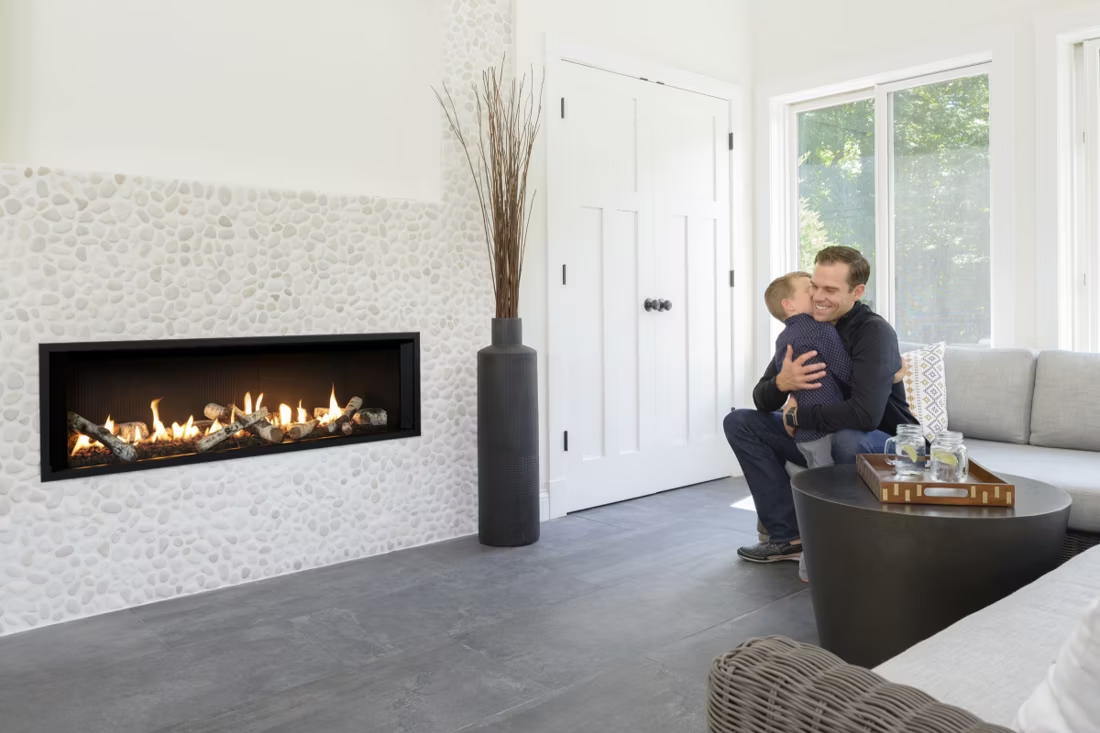
Four fuels. One honest answer for Clark County.
Three steps. No salesperson until you're ready.
Tell us about your project
Your zip code, your situation, and the fuel you're leaning toward—or let the answers point you to one.
See what's actually available
The brands dealers within 100 miles genuinely carry—real options, never a catalog mirage.
Get your dealer & Project Guide
A trusted local dealer, plus the free Project Guide & Parts List that names every component of the job.
Frequently Asked Questions
Which fuel works best for a Clark County home?
It depends on where in the county you live and what you're trying to solve. Gas is the most common primary choice in the Vancouver metro—natural gas service through NW Natural or Clark Public Utilities makes for instant heat with no wood handling, which fits a climate where winters are mild but wet and long. Wood stoves remain popular toward Battle Ground, Yacolt, and Amboy, where properties are larger, firewood (often douglas fir or red alder) is easier to source, and power outages from winter windstorms are more common. Pellet stoves are a strong middle option countywide—Bear Mountain and Lignetics pellets are both readily available locally, and pellet units give wood-like ambiance without the splitting and stacking. Electric fireplaces work well as supplemental heat in bedrooms, additions, or condos in Vancouver where a full masonry chimney isn't practical. Most homes end up mixing fuels—gas or wood as primary, electric for the room that never quite gets warm enough.
Do I need a permit to install a fireplace in Clark County?
In most cases, yes. New wood stoves, wood inserts, gas fireplaces, gas inserts, gas stoves, and pellet stoves all require a building permit, and gas installations need a separate gas line permit pulled by a licensed gas-fitter. Within Vancouver, Camas, Battle Ground, Ridgefield, and Woodland, permits go through the city; in unincorporated Clark County—including Yacolt and Amboy—they're issued through Clark County Community Planning. Electric fireplaces are usually permit-free unless the installation involves hardwiring or a new dedicated circuit, in which case an electrical permit is needed. Most local hearth retailers handle the permitting process as part of the installation quote, so it's rarely something a homeowner has to navigate alone.
Does wildfire smoke affect wood burning rules in Clark County?
Not in the way winter burn bans work in colder inland counties. Clark County's air-quality concern is wildfire smoke, which is a late-summer issue tied to regional fire activity rather than a winter wood-smoke problem. There's no equivalent to the inversion-driven curtailment periods you'd see in a basin climate—burn restrictions here are more about outdoor debris burning during dry, smoke-heavy stretches. That said, homeowners installing a new wood stove should still expect current EPA-certified units to be standard practice, since older uncertified stoves are increasingly hard to find replacement parts for and most local dealers won't install them.
Can one local hearth retailer handle all four fuel types?
Many Clark County retailers carry three or four fuel types, especially the larger showrooms based in Vancouver and Camas that serve the whole metro area. Smaller dealers toward Battle Ground and the outlying towns tend to specialize more heavily in wood and pellet, reflecting what their customer base actually installs. If you're not sure which fuel fits your home, a multi-fuel dealer can show you working displays side by side and talk through venting, gas-line access, or firewood logistics specific to your property before you commit.
How does fireplace service work outside the Vancouver metro?
Most service technicians are based in or near Vancouver and travel out to Battle Ground, Ridgefield, Woodland, and the foothill communities of Yacolt and Amboy. Expect a modest travel fee for the farthest calls, and expect scheduling to tighten up considerably once the weather turns in October—booking chimney sweeps or gas inspections in late summer avoids the fall rush. Winter windstorms occasionally take out power in the foothills longer than in the valley, which is part of why wood and pellet stoves stay popular as backup heat even in homes with gas as the primary system.
What's the typical cost range for fireplace installation across all fuel types in Clark County?
Ranges vary by fuel and by how much existing infrastructure is in place. Wood stove or insert installation typically runs $4,000–$8,500, more if new chimney chase work is needed. Gas fireplace, insert, or stove installation runs $4,000–$10,000, with cost driven largely by how far the unit sits from existing gas service—homes already on NW Natural or Clark Public Utilities gas lines tend to land on the lower end. Pellet stove or insert installation typically runs $4,200–$7,000. Electric fireplaces run $200–$3,000 for the unit itself, plus $400–$1,200 in labor for anything beyond a simple plug-and-play placement. See the county + fuel pages above for cost detail tied to specific local retailers.
Can a fireplace actually lower my heating bill?
Yes—by creating a comfort zone. A furnace heats every square foot of the house just to warm the one room you're in; a gas fireplace on low burns roughly a sixth of the gas a typical furnace does. Set the furnace around 55–60 degrees as a baseline, then heat the rooms your family actually uses. Families who heat this way commonly save $20–$60 a month.
Wood, gas, pellet, or electric—how do I choose?
Match the fuel to your life, not the other way around. Wood: lowest fuel cost and total power-outage independence, but you're hauling and stacking. Gas: press a button, set a thermostat, no maintenance to speak of. Pellet: wood economics with automatic feeding, in exchange for weekly cleaning and a need for electricity. Electric: plugs in anywhere with honest supplemental heat. Nobody regrets the fuel that fits how they actually live.
Can I install a fireplace myself?
If you're putting a fire in your house on purpose, it's best to work with an expert. Unless you're genuinely experienced in framing, gas line, vent pipe, and the national code on clearances to combustibles, have a professional do it—and ideally the same company that sells you the fireplace, so warranty, service, and liability all live under one roof.
Should the dealer who sells my fireplace also install it?
Ideally, yes. A fireplace project involves vent pipe, gas line, electrical, and often tile or stone. Hire three or four separate trades and you own the liability and the game of telephone between them. One company selling and installing means one accountable party, start to finish—ask about factory training, on-time completion records, and what happens if an inspection fails.
Stove and Fireplace Dealers in Clark County
Listings include WhyFire partner dealers, dealers we have verified as authorized for the brands we recommend, and established local businesses that carry hearth products. Every listing shows which one it is. The ones marked Preferred run on WhyFire's software, so they can show you real pricing and book your appointment right here. No manufacturer pays for placement. How we verify dealers →
Ez Propane
New Flame Hearth & Grill
Lumos Hearth & Home
Tri-Tech Heating
Haven Spa Pool & Hearth
Lakewood Gas
Performance Building Products
The Stove Shop
Lisac’s Spark & Splash
Bridgetown Chimney & Masonry
Addco Electric Fireplaces
A Your Town Chimney Service
HomeTown Hearth & Grill
Nw Natural Appliance Center
Coastal - Gresham
Buck's Stove Palace
All Fuel Installation & Service
Richs For The Home
Fireside Home Solutions
Rich's Stoves & Spa
Find your fireplace in Clark County.
Pick your fuel below to find the right unit, see installation costs, and connect with a trusted local hearth retailer through our free Project Guide & Parts List.
Find Your Fireplace →