
Keep Your Family Warm and Safe—No Matter What
Reliable backup heat for a valley more likely to lose power to a windstorm than to a hard freeze. Find the right stove or insert, and connect with a trusted local dealer.
Every Project Starts From One of These Five Situations
A mild climate that still needs a backup heat plan.
Mount Vernon sits at just 195 feet on the flood plain of the Skagit River, where the marine climate keeps winter lows around a mild 35°F on average—nothing like the sub-zero nights of Duluth or Fargo. But mild doesn't mean storm-free: Pacific windstorms roll through Skagit Valley most winters, and the Puget Sound Energy outages that follow can last hours or, occasionally, days. That's the real reason wood heat remains common here, from older farmhouses scattered across the valley floor to newer subdivisions on higher ground.
Skagit County borders the Mt. Baker-Snoqualmie National Forest, where cutting permits run $5 to $20 per cord from May through October—Douglas fir, red alder, and lodgepole pine are the species most local burners split and stack. Air quality concerns here run differently than in inland climates: rather than winter inversion, it's late-summer wildfire smoke that occasionally triggers advisories from the Northwest Clean Air Agency. A well-sized, EPA-certified wood stove or insert gives Skagit Valley homeowners heat that doesn't depend on the grid staying up.
Firewood Cutting Permits Near Mount Vernon
Three steps. No salesperson until you're ready.
Tell us about your project
Your zip code, your situation, and the fuel you're leaning toward—or let the answers point you to one.
See what's actually available
The brands dealers within 100 miles genuinely carry—real options, never a catalog mirage.
Get your dealer & Project Guide
A trusted local dealer, plus the free Project Guide & Parts List that names every component of the job.
Frequently Asked Questions
How much does a wood stove installation cost in Mount Vernon?
A typical wood stove installation in Mount Vernon runs $3,500 to $8,500, depending on the stove itself, whether you're converting an existing masonry fireplace or starting from scratch, and how much new Class A chimney pipe is required. Older Skagit Valley farmhouses with an existing chimney and flue are usually on the lower end since an insert can reuse that structure. Newer subdivisions without an existing flue land on the higher end once framing, a hearth pad, and through-roof venting are added. Most local dealers fold the permit into the installation price.
What size wood stove or insert do I need for my home?
Mount Vernon's winter lows average around 35°F—mild compared to inland climates—so most homes here don't need the oversized, all-night catalytic stoves common in places like Bozeman or Fargo. A small stove (up to 1,000 sq ft) suits a single great room or a rambler; a medium stove (1,000-2,000 sq ft) covers most Skagit Valley homes; larger farmhouses or two-story homes may want a 2,000+ sq ft rated unit if wood is meant to carry real heating load rather than serve as backup. A local dealer will size to your square footage, ceiling height, and floor plan for free.
Where can I find certified wood stove installers near me?
Look for NFI (National Fireplace Institute)-certified or CSIA-trained installers—both indicate real training in clearances, venting, and code compliance for wood-burning appliances. In Skagit County, most wood stove and insert installs are handled directly by the retailer selling the unit, which keeps warranty coverage and permitting in one place. Avoid general contractor or handyman installs for wood appliances—improper clearance-to-combustible work is a leading cause of house fires tied to wood heat.
What's the difference between a wood stove and a wood insert?
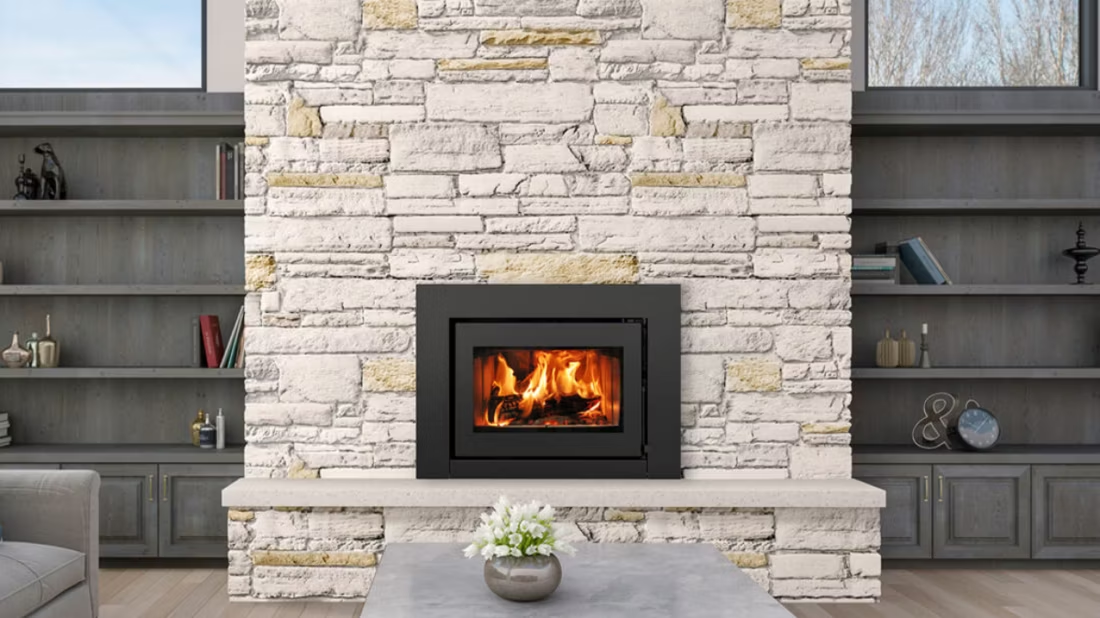
A wood stove is freestanding, sits on a hearth pad, and can go almost anywhere with proper clearances—useful for newer Mount Vernon homes without an existing flue. A wood insert slides into an existing masonry fireplace and vents through a stainless liner run up your current chimney, which is the more common upgrade in older Skagit Valley farmhouses that already have a fireplace but want real heat output instead of an open hearth that mostly loses warmth up the flue.
Do I need a permit to install a wood stove in Mount Vernon?
Yes. New wood stove or insert installations require a permit through the City of Mount Vernon Building Department, or Skagit County Planning & Development Services if you're outside city limits, and the unit must be EPA/Washington Department of Ecology-certified. Most dealers pull the permit as part of the install. Burning itself is governed separately by the Northwest Clean Air Agency, which can call burn bans during air stagnation events—these are more common here during late-summer wildfire smoke season than in deep winter, unlike inland basins that see winter inversion bans.
What's the best wood stove for Mount Vernon's climate?
Because Mount Vernon's winters are mild and maritime rather than bitterly cold—closer to a Pacific Northwest 35°F average low than the sub-zero nights of Duluth or Bismarck—most homes here do fine with a mid-size, non-catalytic stove from a Pacific Northwest-stocked brand like Pacific Energy or Lopi. Homes using wood as genuine backup heat during Puget Sound Energy outages, which are more often caused by windstorms off the Sound than by cold snaps, benefit from a stove that holds coals well overnight without needing a 20-hour catalytic burn cycle.
How often should my chimney be inspected and cleaned?
An annual inspection is standard, ideally in late summer before burning season starts—especially given that Skagit Valley's wildfire smoke season can push some households into burning during shoulder months. Homes using a wood stove for regular winter heat should plan on a full sweep every year; occasional or backup-only users burning less than a cord or two per season can sometimes stretch to every other year, but a CSIA-certified sweep should make that call, not a guess.
Where can I get firewood in Mount Vernon and Skagit County?
Cutting permits for the Mt. Baker-Snoqualmie National Forest run $5 to $20 per cord and are available May through October. Douglas fir, red alder, and lodgepole pine are the species most local burners cut and split—fir and alder season reliably over a summer, while lodgepole burns hot but fast. For delivered firewood, several Skagit Valley suppliers sell by the cord (a stacked 4x4x8 pile), and buying green in spring to season through summer is standard practice here, since marine humidity slows drying compared to drier inland climates.
Wood stove vs. pellet stove—which is right for me?
Wood works without electricity, which matters in Mount Vernon: Puget Sound Energy outages from Pacific windstorms are far more likely here than the deep-freeze events that drive backup heat needs in colder inland climates. Pellet stoves from regional brands like Bear Mountain or Lignetics burn cleaner and are easier to run, but need power for the auger and blower, so they go dark in the same storms that make backup heat necessary in the first place. For homes in flood- or wind-exposed parts of the Skagit Valley, wood is often the more resilient choice; for convenience-focused homes with reliable power, pellet is worth a look.
Why is a fireplace insert so efficient?
An insert does two things: it seals the chimney completely, so you stop losing air you already paid to heat, and it radiates warmth into the room through the firebox and glass. Most add a heat-exchange fan that pulls cool room air underneath, wraps it around the hot firebox, and pushes it back out warm. Your home is more efficient before you've even lit the first fire.
What's the difference between an insert and a zero-clearance fireplace?
An insert is a fireplace that slides into a pre-existing wood-burning fireplace—if you don't have one, there's nothing to insert it into. A zero-clearance fireplace is built into a framed wall, which makes it the answer for remodels and new construction. Simple test: existing masonry fireplace means insert; blank or framed wall means zero-clearance.
Can I install a fireplace myself?
If you're putting a fire in your house on purpose, it's best to work with an expert. Unless you're genuinely experienced in framing, gas line, vent pipe, and the national code on clearances to combustibles, have a professional do it—and ideally the same company that sells you the fireplace, so warranty, service, and liability all live under one roof.
How much should I budget for a fireplace?
For an average home—covering the fireplace, the vent pipe, and basic installation—a budget between $3,900 and $5,500 gives you a lot of options across wood, gas, and pellet. By the time you add finish work, gas line, and electrical, the average complete installation lands between $5,000 and $12,000 all-in. In a remodel or new build, a good rule is to put about 2.5% of the total project cost toward the fireplace.
Nearby Dealers
Hearth shops serving Mount Vernon and the surrounding area.
Find your wood fireplace in Mount Vernon.
Tell us about your home and we'll match you with the right wood stove or insert, hand you a free Project Guide & Parts List with the exact vent kit and parts for your install, and connect you with a trusted local Skagit Valley dealer.
Find Your Fireplace →