
Reliable heat for Skagit County's wet, mild winters.
Wood, gas, pellet, and electric fireplace resources for every city and rural community in Skagit County—from the tidelands near La Conner to the foothills above Concrete. Find the right unit and connect with a trusted local hearth retailer.
Every Project Starts From One of These Five Situations
Marine climate, mixed heating needs across Skagit County, Washington.
Skagit County runs from Puget Sound tidelands near Anacortes and La Conner up through the farmland of the Skagit Valley to the North Cascades foothills near Concrete and Hamilton. With a winter heating load roughly half what a place like Duluth, Minnesota sees over a winter, the county's heating load is far lighter than an interior climate—but the season is long and damp. Winter lows average around 35°F, so hard freezes are the exception, not the rule; the real heating driver is months of persistent 40s-and-rain chill rather than deep cold. Douglas fir and red alder dominate local woodpiles at lower elevations, with lodgepole pine common up toward the North Cascades, where Mt. Baker-Snoqualmie National Forest issues personal-use firewood permits.
What you'll find on this hub: hearth retailers, service technicians, and fuel suppliers serving every community in the county—from Mount Vernon and Burlington in the valley, out to Anacortes and La Conner near the water, and up into Sedro-Woolley, Concrete, Hamilton, and Lyman toward the mountains. Pick your fuel below to drill into specifics—local dealers, installation costs, recommended units, and the resources that match your project. Whether you're heating a farmhouse on the flats or a cabin near the Cascade foothills, this is the starting point.
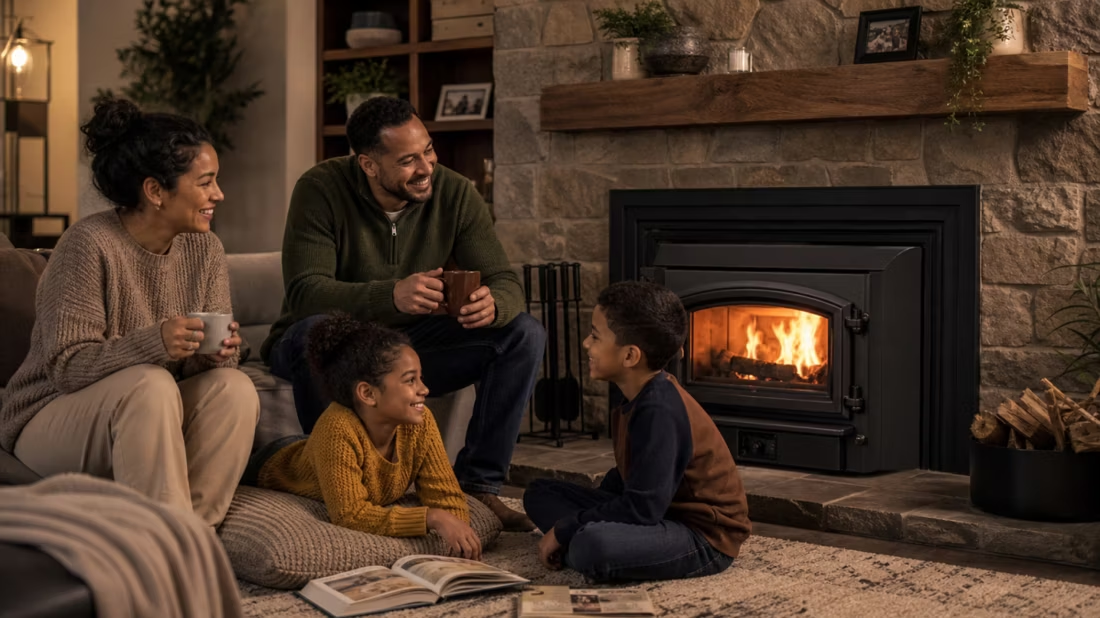
Four fuels. One honest answer for Skagit County.
Three steps. No salesperson until you're ready.
Tell us about your project
Your zip code, your situation, and the fuel you're leaning toward—or let the answers point you to one.
See what's actually available
The brands dealers within 100 miles genuinely carry—real options, never a catalog mirage.
Get your dealer & Project Guide
A trusted local dealer, plus the free Project Guide & Parts List that names every component of the job.
Frequently Asked Questions
Which fuel works best in Skagit County?
It depends on your home and where you sit in the county. Wood remains popular, especially away from the Mount Vernon–Burlington corridor—douglas fir and red alder are the go-to local species, with lodgepole pine common up toward Concrete and Hamilton, and Mt. Baker-Snoqualmie National Forest issuing cutting permits for anyone willing to gather their own. Gas is the convenience pick where service reaches, particularly in the denser valley towns—instant heat with no woodpile, no hauling. Pellet splits the difference: wood-style ambiance without daily tending, with regional brands like Bear Mountain and Lignetics widely stocked. Electric fits Skagit's mild winters better than it would a harsher climate—with average lows only around 35°F, an electric insert or built-in can genuinely serve as a room's primary heat source on most days, not just a supplement. Many households here mix fuels: a wood or pellet stove for the damp shoulder seasons, gas or electric for convenience elsewhere in the house.
Do I need a permit to install a fireplace in Skagit County?
In most cases, yes. New wood stoves, wood inserts, gas fireplaces, gas inserts, gas stoves, and pellet stoves typically require a building permit, issued through the city if you're in Mount Vernon, Anacortes, Burlington, or Sedro-Woolley, and through the county for unincorporated areas like Concrete, Hamilton, and Lyman. Gas installations also need a separate gas-line permit and a licensed gas fitter for the connection work. Wood-burning appliances sold and installed in Washington State must meet current EPA emissions standards—older uncertified stoves generally can't be newly installed. Electric fireplaces usually skip the permit process unless you're doing a hardwired built-in that involves new circuit work. Most local hearth retailers handle the permitting as part of the installation, so you're rarely filing paperwork yourself.
Are there air quality restrictions on wood burning in Skagit County?
Skagit County doesn't sit in the kind of geographic bowl that traps winter smoke the way inland basins do—the main air quality concern here is wildfire smoke, which can roll in during late summer and fall from fires in the Cascades or drift over from eastern Washington and British Columbia. During those events, outdoor air can turn hazardous regardless of whether anyone's burning wood at all, and Washington's Department of Ecology may issue advisories affecting outdoor burning. Winter wood-burning restrictions are less of a routine issue here than in places prone to stagnant winter inversions, but any new wood stove installation still has to meet current EPA emissions standards. If you're buying a wood stove specifically for shoulder-season and winter heat, that's a straightforward, well-supported choice in this county.
Can one local hearth retailer handle all four fuel types?
Many full-service hearth retailers in the Mount Vernon–Burlington area carry three or four fuel types under one roof, which makes cross-shopping easier if you're not sure which fuel fits your home. Smaller shops and standalone fuel suppliers—firewood sellers, pellet distributors—tend to focus on one fuel category rather than selling and installing appliances across the board. If you want to compare working displays of wood, gas, pellet, and electric side by side, a multi-fuel retailer near the valley corridor is generally your best bet; if you already know your fuel, a specialist closer to Anacortes, Sedro-Woolley, or one of the smaller towns may get you faster, more focused service.
How does service work in rural areas of Skagit County?
Most service technicians are based in the Mount Vernon–Burlington area and travel out to Anacortes, La Conner, and the foothill communities of Sedro-Woolley, Concrete, Hamilton, and Lyman. Expect a modest travel fee for the farther towns, especially anything up toward the North Cascades highway corridor. Because Skagit's winters are mild rather than brutally cold, there's a bit more flexibility on scheduling than in a harder-freeze climate—but wet-season demand still means chimney sweeps and gas inspections book up in fall. If you're in one of the smaller mountain communities, it's worth scheduling annual service early rather than waiting for the first cold, rainy stretch.
What's the typical cost range for fireplace installation across all fuel types in Skagit County?
Ranges vary by fuel and by how much venting or gas-line work is involved. Wood stove or insert installation: roughly $4,000–$8,500 for a typical retrofit, more for new construction with full chimney work. Gas fireplace, insert, or stove: roughly $4,000–$10,000 depending on whether you're extending a gas line or tapping into existing service—homes in the Mount Vernon–Burlington corridor with nearby natural gas infrastructure often land toward the lower end. Pellet stove or insert: roughly $4,000–$7,000 for a standard install. Electric fireplace: $200–$3,000 for the unit itself, plus $300–$1,200 in labor for anything beyond a plug-and-play placement, which covers most inserts and built-ins. For details tied to your fuel and city, see the county + fuel pages above.
What is an in-home preview and do I need one?
It's a visit where a hearth professional measures your space, confirms the model you picked actually works in your home, and walks the specs—framing, gas line, venting, finish work—before anything is ordered. Some details you just can't know until you see the house. Never make a down payment without one; it's the single most-skipped step that burns buyers.
Does a fireplace add value to my home?
On average, a fireplace adds back to the home about the same amount you spent installing it. Add the monthly savings from heating the rooms you actually use instead of the whole house—often hundreds of dollars a year—and the value case is strong before you even count what a fire does for how your family uses the room.
Can a fireplace actually lower my heating bill?
Yes—by creating a comfort zone. A furnace heats every square foot of the house just to warm the one room you're in; a gas fireplace on low burns roughly a sixth of the gas a typical furnace does. Set the furnace around 55–60 degrees as a baseline, then heat the rooms your family actually uses. Families who heat this way commonly save $20–$60 a month.
Can I install a fireplace myself?
If you're putting a fire in your house on purpose, it's best to work with an expert. Unless you're genuinely experienced in framing, gas line, vent pipe, and the national code on clearances to combustibles, have a professional do it—and ideally the same company that sells you the fireplace, so warranty, service, and liability all live under one roof.
Stove and Fireplace Dealers in Skagit County
Listings include WhyFire partner dealers, dealers we have verified as authorized for the brands we recommend, and established local businesses that carry hearth products. Every listing shows which one it is. The ones marked Preferred run on WhyFire's software, so they can show you real pricing and book your appointment right here. No manufacturer pays for placement. How we verify dealers →
Coastal - Mt. Vernon
Barron Heating - Burlington
Rich’s For The Home
Handy's Heating
Craft Stoves Of Western Wa
Sundance Energy Services, Inc.
Jacobson Heating & Air
All Seasons Spa & Stove
Berry Garage Door Company
Northwest Energy Systems
Find your fireplace in Skagit County.
Pick your fuel below and we'll match you with a trusted local dealer, plus a free Project Guide & Parts List—a plan for your fireplace project with the exact parts, including the vent kit, and our recommended dealer near you.
Find Your Fireplace →