
Keep Your Family Warm and Safe—No Matter What
Douglas fir and red alder cordwood, a Mt. Baker-Snoqualmie cutting permit, and a stove sized right for Snohomish County's marine climate—find the right setup and a trusted local dealer.
Every Project Starts From One of These Five Situations
Steady heat for a mild but soggy climate.
Monroe sits at just 55 feet elevation in the Skykomish River valley, in climate zone 4C—a mild, marine climate where the average winter low hovers around 32°F rather than the sub-zero swings of Fargo, ND or International Falls, MN. But mild doesn't mean short: with a long, steady heating season stretching from October through April, Monroe homes need heat for a good chunk of the year, and the region's persistent Pacific Northwest damp cold is exactly the kind of weather that makes a good wood stove worth having—steady radiant heat that doesn't dry a house out the way forced air does, and heat that keeps working when a windstorm off Puget Sound knocks out power.
Snohomish County backs right up to the Mt. Baker-Snoqualmie National Forest, where residents can buy a personal-use cutting permit for $5 to $20 per cord during the May-through-October season—a big part of why wood heat has stayed common here, especially outside city limits. Douglas fir, red alder, and lodgepole pine are the woods most Monroe households burn, all of which season well over a summer under cover. Air quality concerns here aren't driven by the same winter inversions you'd see east of the Cascades—the main local issue is wildfire smoke in late summer and fall, not sub-zero cold snaps trapping smoke in a basin.
Firewood Cutting Permits Near Monroe
Three steps. No salesperson until you're ready.
Tell us about your project
Your zip code, your situation, and the fuel you're leaning toward—or let the answers point you to one.
See what's actually available
The brands dealers within 100 miles genuinely carry—real options, never a catalog mirage.
Get your dealer & Project Guide
A trusted local dealer, plus the free Project Guide & Parts List that names every component of the job.
Frequently Asked Questions
How much does a wood stove installation cost in Monroe?
Wood stove and insert installations in the Puget Sound area typically run $3,500 to $8,500, depending on the unit, whether you're venting through an existing masonry chimney or need new Class A pipe run through a wall or roof, and whether the hearth pad needs to be extended for clearance. Converting an older open masonry fireplace to an insert is usually on the lower end since it reuses the existing flue with a stainless liner; a freestanding stove in a room with no chimney at all costs more once full venting is factored in. Local hearth retailers will give you a firm number after an in-home visit.
What size wood stove do I need for a Monroe home?
Because Monroe's climate is mild compared to inland Washington or the mountain West, a lot of local homeowners run a wood stove as zone heat for a main living area rather than as the sole heat source for the whole house—often paired with an existing heat pump or electric baseboard for backup. A small stove (under 1,000 sq ft) suits a living room or daylight basement, a medium stove (1,000–2,000 sq ft) handles most main floors in the ranch and split-level homes common around Monroe, and a large stove is usually overkill unless you're heating an older farmhouse or a home with vaulted ceilings and open sightlines to the upper floor. A local dealer will size it based on your actual floor plan and insulation.
Where can I find certified wood stove installers near Monroe?
Look for NFI (National Fireplace Institute) or CSIA (Chimney Safety Institute of America) certification—both signal formal training in wood-burning appliance clearances and venting. Most Monroe-area hearth shops employ certified installers and handle the City of Monroe or Snohomish County permit application as part of the job. Avoid a general handyman or roofing contractor for the venting work specifically—improper Class A chimney pipe clearances are the most common cause of house fires tied to wood stove installs.
What's the difference between a wood stove and a wood insert?
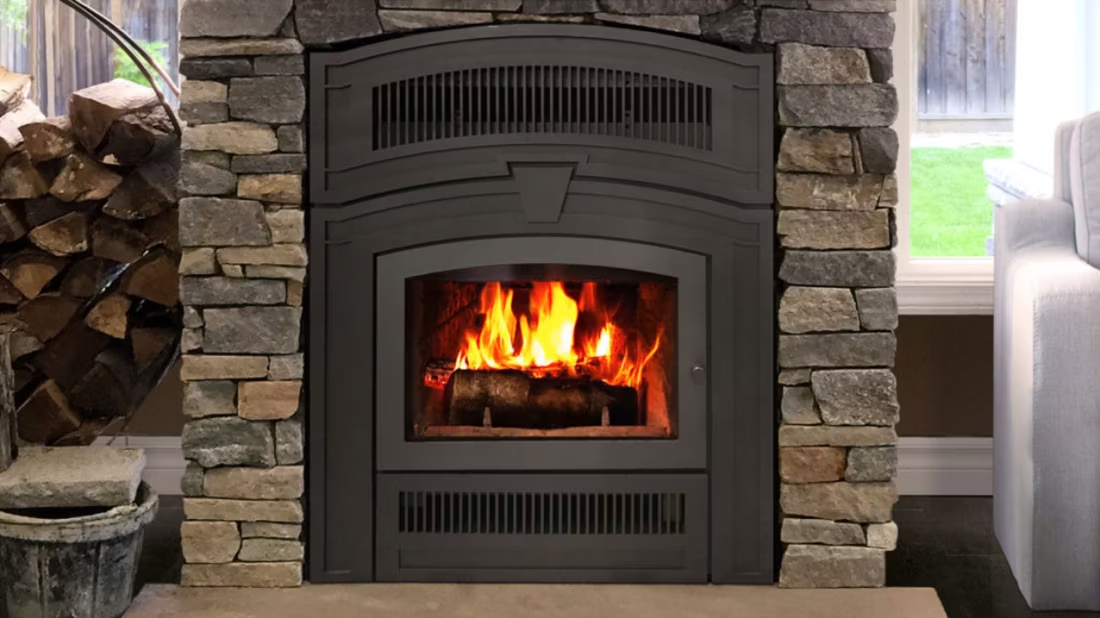
A wood stove is a freestanding unit on a hearth pad, vented through a chimney, and can go almost anywhere with the right clearances. A wood insert slides into an existing masonry fireplace opening, using a stainless liner run up the existing chimney. Older homes near downtown Monroe with a built-in wood-burning fireplace are usually good insert candidates—it keeps the existing masonry and dramatically improves how much heat you actually get out of it. Newer subdivisions built without a masonry fireplace generally need a freestanding stove with new venting instead.
Do I need a permit to install a wood stove in Monroe?
Yes. New wood stove installations require a building permit—through the City of Monroe if you're inside city limits, or Snohomish County Planning and Development Services if you're outside them—and the appliance itself has to meet current EPA emissions standards. Washington also requires that uncertified older wood stoves be removed or disabled at the time a home is sold within Puget Sound Clean Air Agency's jurisdiction, which covers Snohomish County. Most local installers handle the permit paperwork as part of the job.
What's a good wood stove for Monroe's climate?
Since Monroe winters are damp and moderate rather than brutally cold, non-catalytic stoves from brands like Lopi and Avalon—both made by Travis Industries just down the road in Mukilteo, in Snohomish County—are a popular local fit, offering solid heat output without the long single-load burn times that eastern Washington or Rocky Mountain homes need. For households that want maximum efficiency and the longest burn times, a catalytic model from Blaze King is worth a look, particularly if you're heating a larger or older, less-insulated home. A local retailer can match a model to your square footage and how you plan to use it.
How often should my chimney be inspected and cleaned?
The CSIA recommends an annual inspection for any wood-burning appliance, and that holds in Monroe even with a milder burning season than colder inland climates. Plan on a sweep and inspection each late summer before the fall rains and heating season start. Because Douglas fir and lodgepole pine can build creosote faster than harder woods if burned before they're fully seasoned, homes burning green or under-seasoned wood should consider a mid-season check as well.
Where can I get firewood in Monroe?
Several local suppliers deliver seasoned cordwood throughout Monroe and the greater Snohomish County area, with prices typically running $300 to $450 per cord depending on species—Douglas fir and red alder are the most common, with lodgepole pine also available. For self-cutting, a personal-use permit through the Mt. Baker-Snoqualmie National Forest runs $5 to $20 per cord and is valid May through October, which lines up well with a full summer of drying time before burning season.
Wood stove vs. pellet stove—which is right for a Monroe home?
Wood stoves burn cordwood, work without electricity, and pair naturally with a Mt. Baker-Snoqualmie cutting permit if you're willing to cut and season your own supply—a real advantage here, since Puget Sound windstorms are a leading cause of local power outages. Pellet stoves, stocked locally by brands like Bear Mountain, Lignetics, and Pacific Pellet, are more convenient to load and run cleaner, but need electricity for the auger and blower, so they go dark in the same outages a wood stove would ride out. With Puget Sound Energy's residential rate near 14.6 cents per kWh, running electric backup heat during an extended outage isn't free either, which is another point in wood's favor for households that want true off-grid heat.
Why is a fireplace insert so efficient?
An insert does two things: it seals the chimney completely, so you stop losing air you already paid to heat, and it radiates warmth into the room through the firebox and glass. Most add a heat-exchange fan that pulls cool room air underneath, wraps it around the hot firebox, and pushes it back out warm. Your home is more efficient before you've even lit the first fire.
What's the difference between an insert and a zero-clearance fireplace?
An insert is a fireplace that slides into a pre-existing wood-burning fireplace—if you don't have one, there's nothing to insert it into. A zero-clearance fireplace is built into a framed wall, which makes it the answer for remodels and new construction. Simple test: existing masonry fireplace means insert; blank or framed wall means zero-clearance.
Can a fireplace actually lower my heating bill?
Yes—by creating a comfort zone. A furnace heats every square foot of the house just to warm the one room you're in; a gas fireplace on low burns roughly a sixth of the gas a typical furnace does. Set the furnace around 55–60 degrees as a baseline, then heat the rooms your family actually uses. Families who heat this way commonly save $20–$60 a month.
What is an in-home preview and do I need one?
It's a visit where a hearth professional measures your space, confirms the model you picked actually works in your home, and walks the specs—framing, gas line, venting, finish work—before anything is ordered. Some details you just can't know until you see the house. Never make a down payment without one; it's the single most-skipped step that burns buyers.
Preferred Dealer in Monroe
Marked Preferred because they run on WhyFire's software—so they can show you real pricing and book your appointment right here. No manufacturer pays for placement. How we verify dealers →
Find Your Wood Stove in Monroe.
Tell us about your home and we'll match you with the right wood stove or insert for Monroe's climate, plus a free Project Guide & Parts List and a trusted local dealer to install it.
Find Your Fireplace →