Keep Your Family Warm and Safe—No Matter What
Minnehaha winters are mild by Pacific Northwest standards, but ice storms off the Columbia Gorge can knock out power for days. Find the right wood stove or insert, and connect with a trusted local dealer.
Every Project Starts From One of These Five Situations
Mild winters, real storms, and the case for a backup wood stove.
Minnehaha sits along the Columbia River in Clark County, part of the Vancouver–Portland metro corridor, at just under 300 feet of elevation. Winters here are mild compared to inland cold climates like Bozeman, Montana or Fargo, North Dakota—average lows hover around 32°F and the region logs about 5,295 heating degree days a year. That's a marine west coast climate (Zone 4C): wet, gray, and rarely brutally cold. So wood heat in Minnehaha isn't usually about surviving sub-zero nights. It's about supplemental warmth, the ambiance of a real fire, and something a lot of local homeowners learned the hard way: when an ice storm takes down the power grid, a wood stove is the only heat source in the house that doesn't need electricity to run.
Clark County sits within reach of both the Gifford Pinchot National Forest and Oregon's Mt. Hood National Forest, both of which issue cutting permits from May through October at $5 to $20 per cord—cheap enough that plenty of local homeowners cut their own firewood rather than buy it. Douglas fir, red alder, and lodgepole pine are the common species in this stretch of the Cascade foothills; fir and lodgepole split and burn hot and steady, while alder is a lighter, faster-burning wood that's easy to season in a single summer. Late-summer wildfire smoke from Cascade fire activity is the region's main air quality concern—it affects outdoor conditions well before burn season starts, not stove operation itself.
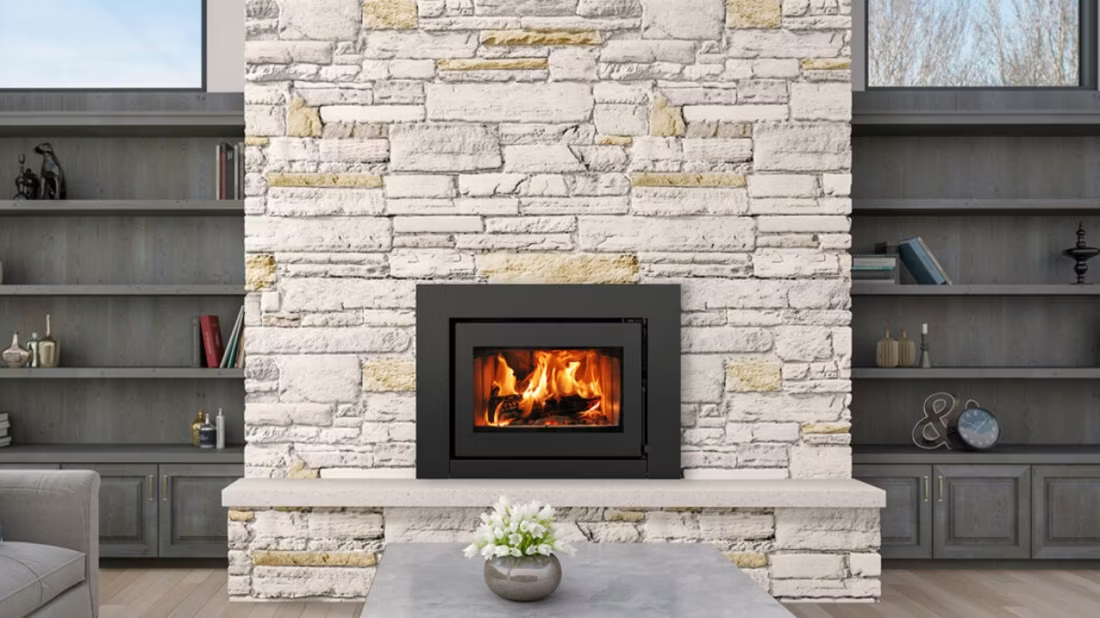
Firewood Cutting Permits Near Minnehaha
Three steps. No salesperson until you're ready.
Tell us about your project
Your zip code, your situation, and the fuel you're leaning toward—or let the answers point you to one.
See what's actually available
The brands dealers within 100 miles genuinely carry—real options, never a catalog mirage.
Get your dealer & Project Guide
A trusted local dealer, plus the free Project Guide & Parts List that names every component of the job.
Frequently Asked Questions
How much does a wood stove installation cost in Minnehaha?
In the Vancouver–Clark County area, a typical wood stove installation runs $3,500 to $8,000 depending on the unit and the venting work involved. Because a lot of housing stock in and around Minnehaha is ranch and split-level construction from the 1960s through 1980s without an existing masonry chimney, many installs require a full Class A chimney run through the roof, which pushes cost toward the higher end. Homes with an existing masonry fireplace can often convert to a wood insert for less, since the existing chimney does most of the venting work. A local installer will quote a firm number after seeing your framing and roofline.
What size wood stove do I need for a Minnehaha home?
Because winter lows here average around 32°F rather than the single digits you'd see in a place like Duluth or International Falls, most Minnehaha homes don't need a stove sized for 24/7 primary heat. Small to medium stoves rated for 1,000 to 1,800 square feet cover most main living areas and handle the occasional hard freeze without overheating the room the rest of the season. Homes using wood as true backup heat—meant to keep one or two rooms livable during a multi-day outage—often do fine with a smaller unit than the square footage chart suggests. A local dealer will size it based on your layout rather than a generic BTU table.
Where can I find certified wood stove installers near Minnehaha?
Look for NFI (National Fireplace Institute) certified installers or CSIA (Chimney Safety Institute of America) credentialed technicians—both indicate formal training in solid-fuel venting and clearances. Clark County requires a building permit for new wood stove installations, and reputable local retailers in the Vancouver area typically pull that permit as part of the job rather than leaving it to the homeowner. Skip general handyman or contractor installs for a wood-burning unit—improper chimney clearance is the most common cause of house fires tied to wood stoves, and it's the one thing a certified installer is specifically trained to get right.
Should I get a freestanding wood stove or a wood insert?
It depends on what your house already has. If your Minnehaha home has an existing masonry fireplace, an insert is usually the better call—it drops into the opening you already have, uses the existing chimney with a stainless liner, and converts a drafty, inefficient fireplace into real heat output. But a lot of homes in this part of Clark County were built without a fireplace at all, especially ranch and split-level construction from the postwar decades—those homes need a freestanding stove venting through new Class A pipe. Either option works well with the region's mix of fir, alder, and lodgepole firewood; the right choice comes down to what's already built into your house.
Do I need a permit to install a wood stove in Minnehaha?
Yes. New wood stove installations in unincorporated Clark County go through Clark County Community Development, and the stove has to meet current EPA emissions standards. Washington also has a rule worth knowing about even if you're not installing today: an uncertified, older wood stove generally has to be removed or replaced at the time a home is sold, similar to Oregon's Heat Smart program across the river. If you're buying or selling a Minnehaha home with an old pre-EPA stove already installed, plan on addressing it as part of the transaction rather than after closing.
Will a wood stove actually help during a Pacific Northwest power outage?
This is the single biggest reason a lot of homeowners in the Vancouver–Clark County area install one. Ice storms off the Columbia Gorge have knocked out power to tens of thousands of Clark Public Utilities customers for a week or more in past winters, and a furnace, heat pump, or pellet stove all stop working the moment the grid goes down—they need electricity to run blowers, augers, or igniters. A wood stove doesn't. As long as you have dry, seasoned wood on hand, it keeps producing real heat with zero dependence on the grid, which is exactly the scenario homeowners here are usually planning around when they call a dealer.
What's a good wood stove brand for the Minnehaha area?
Lopi, manufactured just up the road in Mukilteo, Washington, is a strong regional fit and widely stocked by dealers throughout the Portland–Vancouver metro. For homes that want a long, steady overnight burn during a cold snap or an extended outage, catalytic stoves from Blaze King hold a fire well past 12 hours on a load of seasoned fir. Pacific Energy is another solid non-catalytic option common in the region and easier to operate day-to-day for homeowners who just want reliable supplemental heat rather than maximum burn time. A local retailer can match the model to your square footage and how often you actually expect to burn.
How often should my chimney be inspected in Minnehaha?
Plan on an annual inspection, ideally in September before the region's wet season sets in and before you start burning regularly. Even in a milder climate like Minnehaha's, creosote builds up in the flue with regular use, and the CSIA recommends yearly Level 1 inspections regardless of how cold the winter actually gets. If you're using the stove as backup heat and it sits unused for long stretches between outages and cold snaps, it's still worth the annual check—a flue that hasn't been swept in a couple of years is the more common risk than one that's used constantly.
Where can I get firewood or cut my own near Minnehaha?
Self-cutting permits are available through the Gifford Pinchot National Forest and, across the river, Mt. Hood National Forest, both running $5 to $20 per cord during the May-through-October cutting season—some of the more affordable permit pricing in the Pacific Northwest. Douglas fir and lodgepole pine split cleanly and burn hot for sustained heat, while red alder is lighter and quicker to season, useful for shoulder-season fires in October and April. If you'd rather buy delivered wood, local sellers in the Vancouver area typically charge by the cord with pricing that varies by species and season—ask whether it's been seasoned at least six months, since green fir and alder smoke heavily and won't produce good heat.
Why is a fireplace insert so efficient?
An insert does two things: it seals the chimney completely, so you stop losing air you already paid to heat, and it radiates warmth into the room through the firebox and glass. Most add a heat-exchange fan that pulls cool room air underneath, wraps it around the hot firebox, and pushes it back out warm. Your home is more efficient before you've even lit the first fire.
What's the difference between an insert and a zero-clearance fireplace?
An insert is a fireplace that slides into a pre-existing wood-burning fireplace—if you don't have one, there's nothing to insert it into. A zero-clearance fireplace is built into a framed wall, which makes it the answer for remodels and new construction. Simple test: existing masonry fireplace means insert; blank or framed wall means zero-clearance.
Can a fireplace actually lower my heating bill?
Yes—by creating a comfort zone. A furnace heats every square foot of the house just to warm the one room you're in; a gas fireplace on low burns roughly a sixth of the gas a typical furnace does. Set the furnace around 55–60 degrees as a baseline, then heat the rooms your family actually uses. Families who heat this way commonly save $20–$60 a month.
How much should I budget for a fireplace?
For an average home—covering the fireplace, the vent pipe, and basic installation—a budget between $3,900 and $5,500 gives you a lot of options across wood, gas, and pellet. By the time you add finish work, gas line, and electrical, the average complete installation lands between $5,000 and $12,000 all-in. In a remodel or new build, a good rule is to put about 2.5% of the total project cost toward the fireplace.
Nearby Dealers
Hearth shops serving Minnehaha and the surrounding area. Every listing shows whether it is a WhyFire partner, a dealer we have verified as authorized for the brands we recommend, or a local business carrying hearth products. No manufacturer pays for placement. How we verify dealers →
Performance Building Products
The Stove Shop
Ez Propane
Haven Spa Pool & Hearth
New Flame Hearth & Grill
Tri-Tech Heating
Bridgetown Chimney & Masonry
Lisac’s Spark & Splash
Addco Electric Fireplaces
Lumos Hearth & Home
Lakewood Gas
Nw Natural Appliance Center
Buck's Stove Palace
HomeTown Hearth & Grill
A Your Town Chimney Service
Fireside Home Solutions
Rich's Stoves & Spa
Emerald Outdoor Living-Portland
Richs For The Home
Classic Pool And Spa
Find your wood fireplace in Minnehaha.
Tell us about your home and how you plan to use a wood stove—daily heat, storm backup, or both—and we'll send a free Project Guide & Parts List with the right unit, vent kit, and a trusted local dealer to install it.
Find Your Fireplace →