
Pellet Stoves Are Rare in Lakewood, But They Still Have a Place.
Mild Puget Sound winters and low-cost electricity keep pellet stoves off most Lakewood wish lists—but for backup heat, ambiance, or a detached shop, a local dealer can still get one installed correctly.
Every Project Starts From One of These Five Situations
A market built around gas and electric, not pellets.
Lakewood sits at just 207 feet in elevation along the south end of Puget Sound, in a climate zone (4C) that almost never sees the kind of prolonged cold that drives pellet-stove demand elsewhere. Winter lows average around 36°F, and the city logs roughly 4,884 heating degree days a year—barely half of what a place like Duluth, MN racks up in a typical winter. That mildness, combined with wide natural gas availability and Peninsula Light Company's residential rate of just 10.5 cents per kWh, means most Lakewood homeowners solve their heating question with a furnace, a gas insert, or an electric heat pump long before a pellet stove enters the conversation.
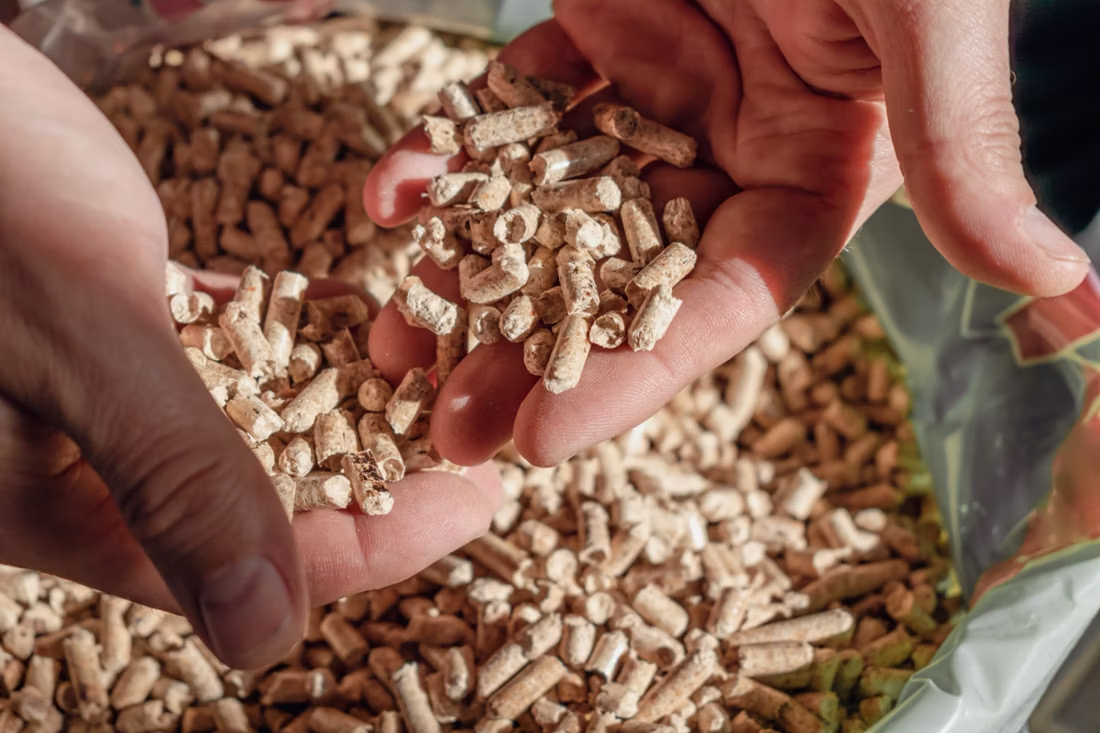
That's why both wood and pellet appliances are flagged as not-applicable for this market—not because they don't work, but because they're a genuine minority choice here. The homeowners who do install a pellet stove in Lakewood tend to have a specific reason: backup heat for the windstorm outages that occasionally hit Peninsula Light Company's service area, supplemental warmth for a detached garage or shop, or simply the ambiance of a real flame without the splitting and stacking wood requires. When they go this route, regional pellet brands like Bear Mountain, Lignetics, and Pacific Pellet—all manufactured from Pacific Northwest mill residue, much of it Douglas fir—are the fuel most South Sound hearth shops carry.
Three steps. No salesperson until you're ready.
Tell us about your project
Your zip code, your situation, and the fuel you're leaning toward—or let the answers point you to one.
See what's actually available
The brands dealers within 100 miles genuinely carry—real options, never a catalog mirage.
Get your dealer & Project Guide
A trusted local dealer, plus the free Project Guide & Parts List that names every component of the job.
Frequently Asked Questions
Are pellet stoves actually available in Lakewood, or is this a niche product here?
It's genuinely a niche product in Lakewood. With mild winters (average low around 36°F), broad natural gas coverage, and Peninsula Light Company's below-average residential rate of 10.5 cents per kWh, most homeowners here heat with a furnace, gas insert, or electric heat pump rather than a pellet stove. That said, pellet appliances aren't unavailable—a handful of hearth retailers in the greater Tacoma and Puyallup area stock and install them, and Lakewood homeowners who want one for backup heat or ambiance can still get a proper install. Just expect fewer floor models and a smaller pool of installers than you'd find for gas.
How much does a pellet stove installation cost in Lakewood?
Because pellet stoves are uncommon here, there isn't a deep local pricing history the way there is for gas inserts. Based on typical Pacific Northwest installs—a freestanding pellet stove with a straightforward through-wall vent kit and no major structural work—expect roughly $3,500 to $6,500 including the unit. Costs run higher if you're venting through a masonry chimney or need electrical work added for the auger and blower circuit. Because Lakewood has fewer competing pellet dealers than gas or electric retailers, it's worth getting quotes from shops in both Lakewood and nearby Tacoma or Puyallup before committing.
What size pellet stove do I actually need in a climate this mild?
Less than you'd think. With roughly 4,884 heating degree days a year, Lakewood's heating load is a fraction of what colder inland or mountain climates deal with, so most homeowners here are using a pellet stove for supplemental or zone heat rather than whole-house primary heat. A small to mid-size unit (rated for 1,000–1,500 sq ft) is usually plenty for a main living area, den, or converted garage. If you're trying to heat an entire home with pellets in this climate, you're likely oversized for the job—a local dealer can walk through your square footage and insulation to confirm.
Do I need a permit to install a pellet stove in Lakewood?
Yes—a building permit is required through the City of Lakewood's building division for any new solid-fuel or pellet-burning appliance, and the unit itself needs to meet current EPA emissions standards. One advantage of pellet stoves in this region: the Puget Sound Clean Air Agency, which enforces winter burn bans on wood stoves and fireplaces during air stagnation events, generally exempts EPA-certified pellet stoves from those curtailment periods. That's one of the few practical advantages pellet has over wood in the South Sound, even though both remain minority heating choices here.
Why would someone choose a pellet stove over a wood stove in Lakewood?
Both are uncommon in Lakewood for the same underlying reason—mild winters and cheap utility heat—but pellet has a couple of practical edges where solid fuel is wanted anyway. Pellet stoves don't require cutting, splitting, or seasoning cordwood, and self-cut firewood permits through Olympic National Forest or Mt. Baker-Snoqualmie National Forest ($5–$20 per cord, May through October) mean real effort that most Lakewood homeowners simply aren't set up for. Pellet stoves are also generally exempt from Puget Sound Clean Air Agency winter burn bans, while older uncertified wood stoves are not. The tradeoff is that pellet stoves need electricity to run the auger and blower, so they're not a true off-grid backup option the way a wood stove is.
Where can I buy pellets locally, and what do they cost?
Bear Mountain, Lignetics, and Pacific Pellet are the three brands most commonly stocked at hearth and feed retailers serving the South Sound, including shops in Tacoma and Puyallup. Because Lakewood itself has limited dedicated pellet retail, most homeowners buy by the pallet (40–50 bags) rather than by the single bag. Regional pricing for these brands typically runs $250 to $320 per ton, though it's worth calling ahead in late summer—pellet supply can tighten during wildfire-smoke seasons when regional demand shifts.
Will my pellet stove work if the power goes out?
Not without a backup power source. Pellet stoves rely on an electric auger to feed fuel and a blower to distribute heat, so a standard unit goes dark the moment power drops—which matters in Lakewood given that Peninsula Light Company's lines do see outages during Puget Sound windstorms. Homeowners who want pellet heat specifically as storm backup typically pair the stove with a small battery backup unit or a portable generator sized to run the auger and blower. If off-grid reliability during outages is the priority, that's worth discussing with your dealer before you buy, since not every pellet stove model is generator-friendly out of the box.
Pellet stove vs. electric heat pump—which makes more sense in Lakewood?
For most Lakewood homes, an electric heat pump wins on pure economics. Peninsula Light Company's residential rate of 10.5 cents per kWh is well below the national average, and a modern heat pump delivers efficient heating and cooling from a single system with no fuel deliveries or ash to manage. A pellet stove makes sense in narrower cases: you want visible flame and radiant heat in one specific room, you're heating a detached space not served by the home's HVAC, or you want a heat source that isn't entirely dependent on the electric grid's primary supply (even though the stove itself needs power to run). For most everyday heating decisions in Lakewood, the heat pump is the more common—and more cost-effective—answer.
What's the best pellet stove for a mild climate like Lakewood's?
Since most Lakewood installs are supplemental rather than whole-house heat, look at smaller-capacity units from brands with strong Pacific Northwest service networks—Quadra-Fire, manufactured in Colville, WA, and Lopi are both well represented by regional hearth dealers and easier to get serviced locally than less common brands. A unit with a smaller hopper and lower maximum BTU output is often the right fit here, since you're not trying to fight single-digit overnight lows the way a Rocky Mountain or upper-Midwest home would. A local dealer can match hopper size and BTU output to the specific room or space you're heating.
Why is a fireplace insert so efficient?
An insert does two things: it seals the chimney completely, so you stop losing air you already paid to heat, and it radiates warmth into the room through the firebox and glass. Most add a heat-exchange fan that pulls cool room air underneath, wraps it around the hot firebox, and pushes it back out warm. Your home is more efficient before you've even lit the first fire.
Why is my open fireplace making my house colder?
Open fireplaces suck—literally. As the fire burns, it consumes air your furnace already paid to heat and pulls it out through the chimney, so the house is actually colder after the fire goes out than before you lit it. An insert fixes this: it seals the chimney, puts fixed glass across the front, and turns that hole in your house into a real heat source.
Does a fireplace add value to my home?
On average, a fireplace adds back to the home about the same amount you spent installing it. Add the monthly savings from heating the rooms you actually use instead of the whole house—often hundreds of dollars a year—and the value case is strong before you even count what a fire does for how your family uses the room.
Can a fireplace actually lower my heating bill?
Yes—by creating a comfort zone. A furnace heats every square foot of the house just to warm the one room you're in; a gas fireplace on low burns roughly a sixth of the gas a typical furnace does. Set the furnace around 55–60 degrees as a baseline, then heat the rooms your family actually uses. Families who heat this way commonly save $20–$60 a month.
Nearby Dealers
Hearth shops serving Lakewood and the surrounding area.
Pellet Brands Stocked Around Lakewood
Manufacturers will point you to the nearest stocking dealer.
Find your pellet stove in Lakewood.
Tell us a bit about your home and project, and we'll match you with one of the local dealers who actually carries and installs pellet stoves in the South Sound—plus a free Project Guide & Parts List with the vent kit and parts your install needs.
Find Your Fireplace →