
No Chimney. No Venting. Just Heat for Lakewood Homes.
Lakewood's mild Puget Sound winters and dense mix of condos, townhomes, and JBLM-area rentals make electric fireplaces an easy fit. Find the right unit and get matched with a trusted local dealer.
Every Project Starts From One of These Five Situations
A mild climate and modern housing stock built for plug-in heat.
At 207 feet elevation near American Lake, Lakewood sees an average winter low of just 36°F and has a winter heating load only a fraction of what a place like Fargo, ND racks up. Hard freezes are the exception here, not the rule, which is a big reason wood and pellet stoves are rare in Pierce County: the Puget Sound Clean Air Agency actively discourages solid-fuel burning in the Tacoma-Lakewood air basin, and most winters simply don't demand the BTU output a wood stove is built for. Wildfire smoke is the region's real air-quality concern, and it runs in summer, not winter.
What Lakewood does have is a lot of housing that's hard to retrofit for a chimney—condos and townhomes near I-5, older ramblers without existing masonry, and rental units around Joint Base Lewis-McChord where landlords want zero-clearance solutions. An electric fireplace or insert needs no flue, no gas line, and often no more than a standard outlet or a single dedicated circuit. Peninsula Light Company, the local electric cooperative, bills residential power at roughly $0.105 per kWh—below the Washington average—which keeps the ongoing cost of running one of these units genuinely low, whether it's your main source of zone heat or just ambiance in the family room.
Three steps. No salesperson until you're ready.
Tell us about your project
Your zip code, your situation, and the fuel you're leaning toward—or let the answers point you to one.
See what's actually available
The brands dealers within 100 miles genuinely carry—real options, never a catalog mirage.
Get your dealer & Project Guide
A trusted local dealer, plus the free Project Guide & Parts List that names every component of the job.
Frequently Asked Questions
How much does an electric fireplace installation cost in Lakewood?
Plug-in electric inserts and freestanding stoves that use an existing outlet typically run $300 to $900 installed, since there's no venting or gas line to run. Hardwired wall-mounted units or built-in mantel packages—which usually need an electrician to add a dedicated 120V or 240V circuit—run closer to $1,000 to $2,500 depending on the unit size and how far the panel is from the install location. Because Peninsula Light Company serves much of Lakewood, any electrician doing panel or circuit work will need to coordinate with their service standards; local dealers who install electric fireplaces regularly already know this process.
Will an electric fireplace actually heat my Lakewood home, or is it just for looks?
Most electric inserts and stoves put out 4,600 to 9,000 BTU on the heater setting—enough to comfortably warm a single room or open living area, which lines up well with Lakewood's mild 36°F average winter low. Very few homes here need whole-house heat from a fireplace the way a home in International Falls, MN might; electric units are typically installed as zone heat to take the load off a heat pump on the coldest nights, or run flame-only with the heater off for ambiance during milder stretches, which most of the heating season in Lakewood qualifies as.
Do I need a permit to install an electric fireplace in Lakewood?
A plug-in unit that doesn't touch your wiring generally doesn't require a permit. If you're adding a hardwired wall-mounted fireplace or a built-in unit that requires new circuit work, that falls under an electrical permit through the City of Lakewood's Community Development Department (or Pierce County Planning and Public Works if you're just outside city limits). Licensed electricians who do this work routinely pull the permit as part of the job, so it's worth confirming with your installer up front rather than assuming it's not needed.
Why aren't wood or pellet stoves more common in Lakewood?
Lakewood sits in the Puget Sound Clean Air Agency's jurisdiction, which restricts solid-fuel burning during air stagnation events and has made new wood stove permitting more difficult across Pierce County's urban areas. Combined with winters that rarely dip much below freezing, the case for a wood or pellet stove as primary heat just isn't strong here the way it is in higher-elevation, colder parts of the Northwest. A small number of Lakewood homeowners still install a wood stove for ambiance or backup heat, often using douglas fir or red alder cut under permits from the Olympic or Mt. Baker-Snoqualmie National Forests, but it's the exception rather than the norm—electric and gas cover the vast majority of installs here.
What does it cost to actually run an electric fireplace in Lakewood?
At Peninsula Light Company's residential rate of about $0.105 per kWh, a typical 1,500-watt electric fireplace running on the heater setting costs roughly $0.16 an hour—about $1.90 for a 12-hour day of use. Running the unit on flame-only mode with the heater off draws only 30-100 watts, which costs a cent or two an hour. That makes electric fireplaces one of the cheapest ways to add supplemental warmth to a single room without touching the furnace or heat pump.
Electric vs. gas fireplace—which makes more sense for my Lakewood home?
Gas fireplaces put out more heat (typically 20,000+ BTU) and give you a real flame, but they require venting and, for many Lakewood homes, a gas line—which adds cost and isn't an option in every condo or townhome. Electric fireplaces install almost anywhere with just an outlet or a simple circuit, cost far less upfront, and are the practical choice for renters, condo owners, or anyone in a unit without existing gas service. For homes that already have a gas line and want serious heat output, gas is usually worth the extra install cost. For everyone else—especially in Lakewood's more mild, supplemental-heat climate—electric gets the job done without the added infrastructure.
What's the difference between an electric insert and a wall-mounted electric fireplace?
An electric insert is built to slide into an existing fireplace opening—masonry or zero-clearance—and is the natural upgrade if your Lakewood home already has an old, unused wood-burning fireplace you want to convert without touching the chimney. A wall-mounted electric fireplace hangs flush on any interior wall like a large TV, which works well in condos, apartments, or newer homes that were never built with a fireplace at all. Freestanding electric stoves are a third option, useful when you want a portable, plug-and-play unit you can move between rooms or take when you move.
What electric fireplace brands are available through local Lakewood dealers?
Local hearth dealers in the South Sound typically carry wall-mounted and insert lines from Dimplex and Touchstone, along with mantel package options from Napoleon—all of which are readily serviceable and stocked through Pacific Northwest distribution. Availability varies by dealer and by unit size, so the best approach is getting matched with a local retailer who can show you what's actually in stock or ready to order for your specific opening or wall dimensions, rather than shopping blind online.
I have an old, unused fireplace—is an electric insert my best option?
If it's a masonry wood-burning fireplace you never use, an electric insert is often the simplest fix: no chimney relining, no gas line, and no permitting hassle in most cases, since you're not altering the structure or adding combustion. It won't produce the heat output of a gas conversion, but for a Lakewood home where the fireplace is mostly decorative or used a few evenings a month, that's rarely the goal. If you're chasing serious supplemental heat instead of ambiance, it's worth having a local dealer walk you through both the electric and gas conversion options for that same opening before you decide.
Can I put a TV above my fireplace?
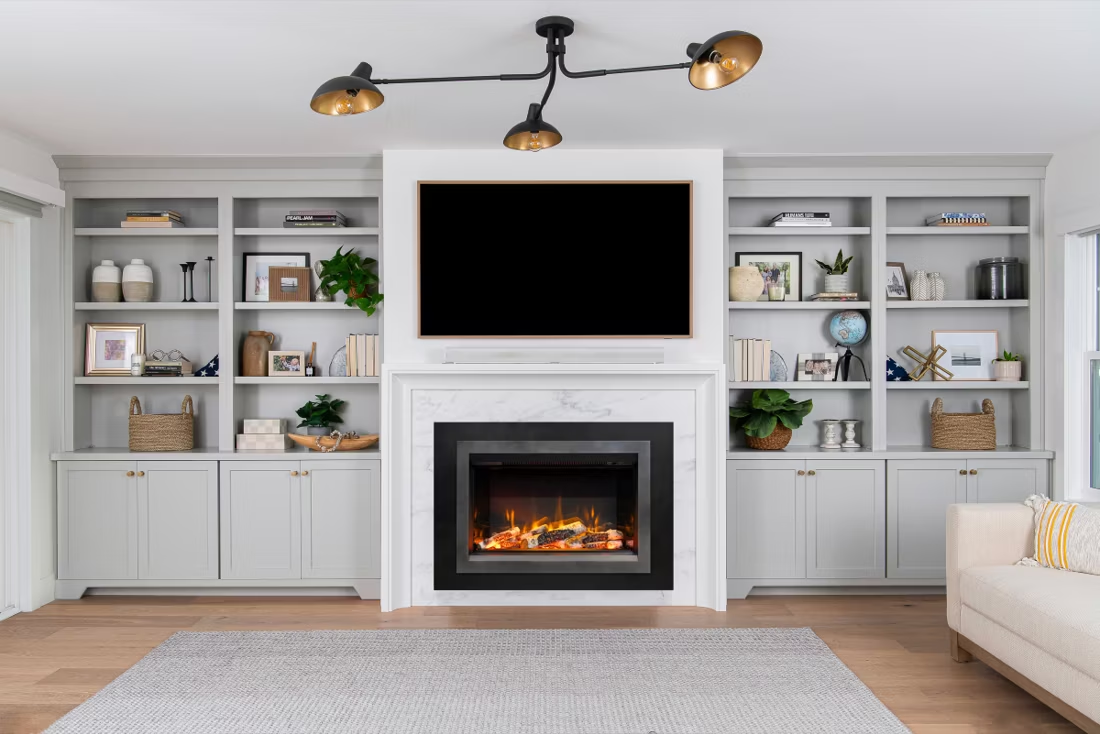
Yes—with an asterisk. Fireplaces are hot and TVs don't like heat. Either put a mantel between them to deflect rising warmth, or choose a fireplace with heat-management technology that creates a cool zone on the wall above—the wall stays around 125 degrees, barely warm, while the room still gets full heat. If you like clean lines and don't want a mantel, heat management is the answer.
Does an electric fireplace need a vent or chimney?
No—that's its superpower. An electric fireplace needs a wall and an outlet, period. No vent pipe, no gas line, no clearances to design around, which is why it works in bedrooms, offices, apartments, and walls where venting a gas or wood unit would be impractical or impossible. Installation is typically the simplest and least expensive of any fireplace type.
Can I install a fireplace myself?
If you're putting a fire in your house on purpose, it's best to work with an expert. Unless you're genuinely experienced in framing, gas line, vent pipe, and the national code on clearances to combustibles, have a professional do it—and ideally the same company that sells you the fireplace, so warranty, service, and liability all live under one roof.
How much should I budget for a fireplace?
For an average home—covering the fireplace, the vent pipe, and basic installation—a budget between $3,900 and $5,500 gives you a lot of options across wood, gas, and pellet. By the time you add finish work, gas line, and electrical, the average complete installation lands between $5,000 and $12,000 all-in. In a remodel or new build, a good rule is to put about 2.5% of the total project cost toward the fireplace.
Nearby Dealers
Hearth shops serving Lakewood and the surrounding area.
Electric Service in Lakewood
An electric fireplace's heater draws about 1,500 watts—pennies per hour at local rates.
Peninsula Light Company
Find your electric fireplace in Lakewood.
Tell us a bit about your home and we'll put together a free Project Guide & Parts List—the right electric unit, the parts you'll need, and a trusted local Lakewood dealer to install it.
Find Your Fireplace →