
Steady, clean heat for Grant County's long winters.
From Moses Lake to Ephrata, Quincy, and the Coulee corridor, pellet stoves offer clean, thermostat-controlled heat for the Columbia Basin's cold, windy winters—no chimney, no woodpile. Find the right unit and connect with a trusted local dealer.
Every Project Starts From One of These Five Situations
Convenience heat for a high-desert climate.
Grant County sits in the semi-arid Columbia Basin of central Washington, with roughly 5,790 heating degree days and winter lows averaging 24°F across a landscape that runs from irrigated farmland around Quincy and Royal City to the drier scablands near Coulee City and Wilson Creek. The county's population is spread thin across a large footprint—Moses Lake and Ephrata anchor the middle, but plenty of homes sit well outside city limits on ag land, where hauling and stacking cordwood isn't always practical. Pellet stoves have found real traction here because they deliver dependable, adjustable heat without the splitting, seasoning, and storage that wood demands.
Grant County PUD's hydroelectric grid—fed by the Wanapum and Priest Rapids Dams on the Columbia River—keeps electricity rates among the lowest in the country, which makes the modest power draw of a pellet stove's auger and blower cheap to run day to day. Regional bags from Bear Mountain, Lignetics, and Pacific Pellet are stocked at farm and hardware stores throughout the county, so restocking doesn't mean a long drive. Wildfire smoke is a recurring summer air quality concern in this part of the state, and pellet appliances burn measurably cleaner than cordwood—a real consideration for households thinking about indoor air quality and winter burn advisories alike.
Three steps. No salesperson until you're ready.
Tell us about your project
Your zip code, your situation, and the fuel you're leaning toward—or let the answers point you to one.
See what's actually available
The brands dealers within 100 miles genuinely carry—real options, never a catalog mirage.
Get your dealer & Project Guide
A trusted local dealer, plus the free Project Guide & Parts List that names every component of the job.
Frequently Asked Questions
How much does a pellet stove installation cost in Grant County?
Most Grant County homeowners see installed pellet stove costs in the $3,000 to $6,500 range, depending on the unit, whether it vents through an existing wall or requires new wall penetration, and whether a dedicated electrical circuit needs to be added. Because pellet stoves vent through a simple wall or roof pipe rather than a full masonry chimney, installs are typically faster and less expensive than wood stove projects. Homes in outlying areas around Royal City, Mattawa, or Coulee City may see a modest travel charge added by installers based out of Moses Lake or Ephrata.
What size pellet stove do I need for my home?
Sizing depends on square footage, insulation, and whether the stove is meant to be primary or supplemental heat. With roughly 5,790 heating degree days and winter lows regularly in the low-to-mid 20s, most Grant County homes in the 1,200 to 2,200 square foot range do well with a mid-size unit, while larger farmhouses or homes with high ceilings and older, drafty construction often need to size up. Local dealers will walk your floor plan and insulation before recommending a specific model—oversizing wastes fuel, undersizing leaves the coldest rooms short on heat.
Do I need a permit to install a pellet stove in Grant County?
In most cases, yes—a mechanical or building permit is typically required for new pellet stove installations, and the work is reviewed through the Grant County Building Department for properties outside city limits, or through the relevant city building office for installs inside Moses Lake, Ephrata, or Quincy. Electrical work for a dedicated circuit may require a separate electrical permit. Most established local dealers handle the permitting process as part of the installation, so homeowners generally don't have to navigate it alone.
What's the difference between a pellet stove and a pellet insert?
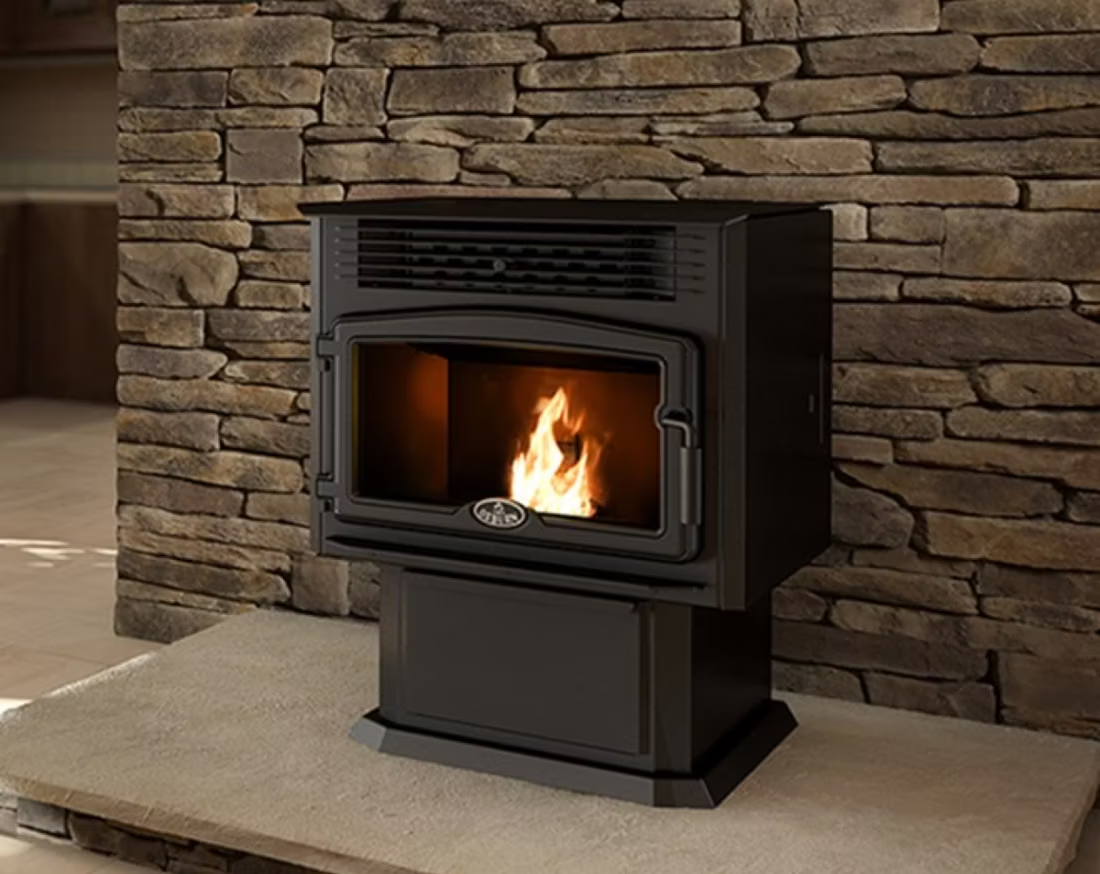
A pellet stove is a freestanding unit that sits on its own hearth pad and vents through a nearby wall or roof—it can go almost anywhere with the right clearances and doesn't require an existing fireplace. A pellet insert is built to slide into an existing masonry or prefab wood fireplace opening, using the existing chimney chase (with a vent liner) to exhaust combustion gases. For Grant County homes with an underused open fireplace, an insert is often the more efficient upgrade; for homes without an existing fireplace, a freestanding stove is the more common route.
Which pellet brands are available near Grant County?
Bear Mountain, Lignetics, and Pacific Pellet are the pellet brands most commonly stocked at farm supply and hardware stores across central Washington, and all three show up regularly at retailers serving Grant County. Because the county's towns are spread out—Moses Lake, Ephrata, Quincy, Soap Lake, Coulee City—many homeowners buy pellets by the pallet (roughly a ton) ahead of the heating season rather than making repeat trips for single bags once winter sets in.
Will my pellet stove work during a power outage?
No—pellet stoves rely on electricity to run the auger that feeds fuel and the blower that distributes heat, so they will shut down without power. Grant County PUD's hydro-fed grid is generally reliable, but winter windstorms across the open Columbia Basin do cause occasional outages. If backup heat during an outage matters to you, a small battery backup unit or a portable generator sized for the stove's draw is worth discussing with your installer—or consider a wood stove as a secondary, power-independent heat source.
How does pellet heat compare on wildfire smoke and air quality?
Pellet stoves burn compressed, kiln-dried fuel far more completely than cordwood, which means significantly less particulate output and less visible smoke from the flue. That matters in Grant County, where summer wildfire smoke is already a recognized regional air quality concern—homeowners who are sensitive to smoke, or who simply want to minimize their own household's contribution during winter inversions, often choose pellet over wood for this reason alone.
How much pellet fuel will I need for a Grant County winter?
A typical Grant County home heating primarily with pellets through a winter with around 5,790 heating degree days uses somewhere in the neighborhood of 2 to 3 tons of pellets, though poorly insulated older farmhouses or homes using the stove as the sole heat source can run higher. Buying pellets early in the fall, before cold weather hits and local supply tightens, is common practice among longtime pellet users in the area.
Pellet stove vs. wood stove—which is right for my home?
Wood stoves work without electricity, pair with self-cut firewood from Okanogan-Wenatchee National Forest permits (typically $5 to $20 per cord during the May-through-October cutting season), and often cost less to fuel if you're willing to cut and haul. Pellet stoves are simpler to operate—load the hopper, set the thermostat—burn cleaner, and don't require splitting or seasoning wood, but they depend on electricity and on species like ponderosa pine, lodgepole pine, and Douglas fir being processed into pellets rather than burned as rounds. For Grant County homes prioritizing convenience and lower emissions, pellet often wins; for rural properties focused on self-sufficiency or storm-proof backup heat, wood still has a strong case.
Why is my open fireplace making my house colder?
Open fireplaces suck—literally. As the fire burns, it consumes air your furnace already paid to heat and pulls it out through the chimney, so the house is actually colder after the fire goes out than before you lit it. An insert fixes this: it seals the chimney, puts fixed glass across the front, and turns that hole in your house into a real heat source.
What's the difference between an insert and a zero-clearance fireplace?
An insert is a fireplace that slides into a pre-existing wood-burning fireplace—if you don't have one, there's nothing to insert it into. A zero-clearance fireplace is built into a framed wall, which makes it the answer for remodels and new construction. Simple test: existing masonry fireplace means insert; blank or framed wall means zero-clearance.
How much should I budget for a fireplace?
For an average home—covering the fireplace, the vent pipe, and basic installation—a budget between $3,900 and $5,500 gives you a lot of options across wood, gas, and pellet. By the time you add finish work, gas line, and electrical, the average complete installation lands between $5,000 and $12,000 all-in. In a remodel or new build, a good rule is to put about 2.5% of the total project cost toward the fireplace.
Can a fireplace actually lower my heating bill?
Yes—by creating a comfort zone. A furnace heats every square foot of the house just to warm the one room you're in; a gas fireplace on low burns roughly a sixth of the gas a typical furnace does. Set the furnace around 55–60 degrees as a baseline, then heat the rooms your family actually uses. Families who heat this way commonly save $20–$60 a month.
Stove and Fireplace Dealers in Grant County
Listings include WhyFire partner dealers, dealers we have verified as authorized for the brands we recommend, and established local businesses that carry hearth products. Every listing shows which one it is. The ones marked Preferred run on WhyFire's software, so they can show you real pricing and book your appointment right here. No manufacturer pays for placement. How we verify dealers →
Big R - Wenatchee
Patriot Plumbing, Heating & Cooling Inc.
Seasonally Living By Chim Chimney
Armstrong's Stove & Spa
Rt Services
Total Energy Mgmnt
Fire & Water
Armstrong’s Stove & Spa
Armstrong’s Yakima
Pellet Brands Stocked Around Grant County
Manufacturers will point you to the nearest stocking dealer.
Find your pellet stove in Grant County.
Tell us a bit about your home and we'll match you with the right pellet stove or insert, plus a free Project Guide & Parts List—the exact parts, including the vent kit, and a recommended local dealer to install it.
Find Your Fireplace →