
Find the right fireplace for your Grant County home.
Wood, gas, pellet, and electric fireplace resources for every city and rural community in Grant County—from Moses Lake to Coulee City. Find the right unit and connect with a trusted local hearth retailer.
Every Project Starts From One of These Five Situations
Basin heating across Grant County, Washington.
Grant County sits in the irrigated flatlands of the Columbia Basin, where roughly 5,790 heating degree days and average winter lows around 24°F make for a solid but not brutal heating season—nothing like International Falls, but cold enough that most homes need a dependable primary heat source from November through March. Ponderosa pine, lodgepole pine, and Douglas fir are the common wood species available locally, much of it sourced through Okanogan-Wenatchee National Forest cutting permits. Summer wildfire smoke drifting in from surrounding forestland is the main air-quality concern here, rather than the winter inversions that plague some Northwest basins, so wood-burning restrictions tend to be seasonal and smoke-driven rather than a constant wintertime issue.
What you'll find on this hub: hearth retailers, service technicians, and fuel suppliers serving every community in the county—from Moses Lake and Ephrata in the population center, west to Quincy and George along Highway 28, north to Coulee City near Banks Lake, and south to Royal City and Mattawa in the farming communities. Pick your fuel below to drill into specifics—local dealers, installation costs, recommended units, and the resources that match your project. Whether you're heating a farmhouse outside Warden or a lake home near Soap Lake, this is the starting point.
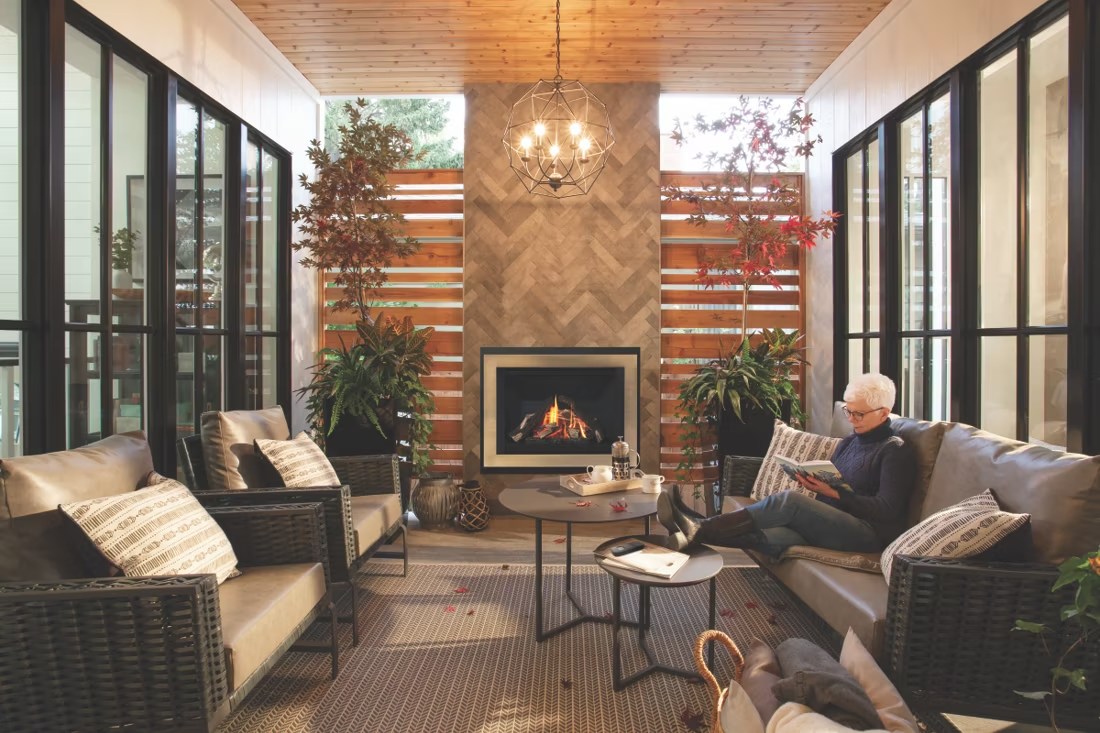
Four fuels. One honest answer for Grant County.
Three steps. No salesperson until you're ready.
Tell us about your project
Your zip code, your situation, and the fuel you're leaning toward—or let the answers point you to one.
See what's actually available
The brands dealers within 100 miles genuinely carry—real options, never a catalog mirage.
Get your dealer & Project Guide
A trusted local dealer, plus the free Project Guide & Parts List that names every component of the job.
Frequently Asked Questions
Which fuel works best in Grant County?
It depends on your home and priorities, but all four fuels see genuine use here. Wood remains popular in the farming communities outside Moses Lake and Ephrata—Okanogan-Wenatchee National Forest cutting permits keep fuel costs down, and a properly sized wood stove handles the county's roughly 5,790 heating degree days without trouble. Gas is the convenience pick in town, where natural gas or propane service makes for instant heat with none of the wood-hauling labor. Pellet stoves are a strong middle option—regional brands like Bear Mountain and Lignetics keep supply steady, and pellet appliances don't need the same daily tending as cordwood. Electric fireplaces work well as supplemental heat in bedrooms, additions, or apartments, but given the winter lows here, most homeowners still want a wood, gas, or pellet unit carrying the main heating load. Many Grant County homes end up running two fuels—one primary, one backup for outages or shoulder-season days.
Do I need a permit to install a fireplace in Grant County?
Yes, in most cases. New wood stoves, wood inserts, gas fireplaces, gas inserts, gas stoves, and pellet stoves installed in Grant County require a building permit, and gas installations also need a separate gas line permit completed by a licensed gas-fitter. Wood-burning appliances need to meet current EPA emissions standards to be permitted for new installation. Electric fireplaces are typically permit-exempt unless the installation involves hardwiring or a new dedicated circuit. Within incorporated cities like Moses Lake or Ephrata, permits are pulled through the city building department; in unincorporated parts of the county, they go through Grant County. Most local hearth retailers handle this paperwork as part of the installation, so it's rarely something the homeowner has to manage directly.
Are there wood-burning restrictions in Grant County?
Restrictions here are tied mainly to wildfire smoke rather than winter inversions. During summer and early fall, when regional wildfire smoke settles into the Columbia Basin, air quality advisories can affect outdoor burning and, in some cases, prompt voluntary requests to limit wood stove use if smoke levels spike. Wintertime burning in Grant County isn't subject to the kind of routine curtailment programs you'd see in basins prone to persistent inversions. New wood stove installations still need to meet EPA emissions standards, and it's worth checking current Washington Department of Ecology air quality guidance if you're burning during a smoke event, but day-to-day winter wood heating in Grant County is largely unrestricted.
Can one local hearth retailer handle all four fuel types?
Several Grant County retailers carry at least three of the four fuel types, and a few carry all of them—wood, gas, pellet, and electric—which is useful if you're comparing options before committing to one. Dealers based in Moses Lake tend to have the broadest showroom selection since they serve the largest population base in the county. Retailers in Ephrata and Quincy often focus on wood, gas, and pellet with a smaller electric lineup, since electric fireplaces see more limited demand outside town centers. If you're not sure which fuel fits your home, a multi-fuel dealer can walk you through working displays and talk through the trade-offs for your specific situation—venting requirements, fuel costs, and maintenance included.
How does service work in the smaller farming towns around Grant County?
Most chimney sweeps, gas techs, and pellet stove technicians are based in Moses Lake or Ephrata and travel out to the surrounding farming communities—Warden, Royal City, Mattawa, Hartline, and Wilson Creek among them. Expect a modest travel fee for calls outside the immediate Moses Lake–Ephrata corridor, and expect longer lead times for scheduling if you wait until mid-winter. Late summer and early fall (August through October) is the best window to book annual service before the heating season starts. For homes in the more remote parts of the county, it's worth keeping a backup heat source on hand—a wood stove as backup for a pellet-heated home, for instance—in case of a winter power outage or a delayed service call.
What's the typical cost range for fireplace installation across all fuel types in Grant County?
Costs vary by fuel and by how much venting or gas line work is involved. Wood stove or insert installation typically runs $4,000–$8,500, with new-construction chimney work pushing toward the higher end. Gas fireplace, insert, or stove installation runs roughly $4,000–$10,000 depending on whether existing gas service is in place or a new line needs to be run. Pellet stove or insert installation generally falls between $4,000–$7,000. Electric fireplace costs range from $200–$3,000 for the unit itself, plus $400–$1,200 in labor for anything beyond a simple plug-and-play setup. For more detailed, dealer-informed pricing, see the county + fuel pages above.
Does a fireplace add value to my home?
On average, a fireplace adds back to the home about the same amount you spent installing it. Add the monthly savings from heating the rooms you actually use instead of the whole house—often hundreds of dollars a year—and the value case is strong before you even count what a fire does for how your family uses the room.
What are the biggest mistakes people make buying a fireplace?
Five come up constantly: budgeting for the unit but not the full job (vent, gas line, electrical, finish work); drowning in options instead of starting from style and fuel; buying without an in-home preview; handing installation to a handyman instead of a pro; and giving up out of sheer indecision. Every one is avoidable with a clear plan—step one, step two, step three.
Can I install a fireplace myself?
If you're putting a fire in your house on purpose, it's best to work with an expert. Unless you're genuinely experienced in framing, gas line, vent pipe, and the national code on clearances to combustibles, have a professional do it—and ideally the same company that sells you the fireplace, so warranty, service, and liability all live under one roof.
Can a fireplace actually lower my heating bill?
Yes—by creating a comfort zone. A furnace heats every square foot of the house just to warm the one room you're in; a gas fireplace on low burns roughly a sixth of the gas a typical furnace does. Set the furnace around 55–60 degrees as a baseline, then heat the rooms your family actually uses. Families who heat this way commonly save $20–$60 a month.
Stove and Fireplace Dealers in Grant County
Listings include WhyFire partner dealers, dealers we have verified as authorized for the brands we recommend, and established local businesses that carry hearth products. Every listing shows which one it is. The ones marked Preferred run on WhyFire's software, so they can show you real pricing and book your appointment right here. No manufacturer pays for placement. How we verify dealers →
Big R - Wenatchee
Coastal - East Wenatchee
Patriot Plumbing, Heating & Cooling Inc.
Seasonally Living By Chim Chimney
Armstrong's Stove & Spa
Rt Services
Total Energy Mgmnt
Fire & Water
Armstrong’s Stove & Spa
Coastal - Yakima
Armstrong’s Yakima
Find your fireplace in Grant County.
Pick your fuel below to get matched with a trusted local dealer and receive a free Project Guide & Parts List—the exact parts, vent kit included, and our recommended dealer for your Grant County project.
Find Your Fireplace →