
Keep Your Family Warm and Safe—No Matter What
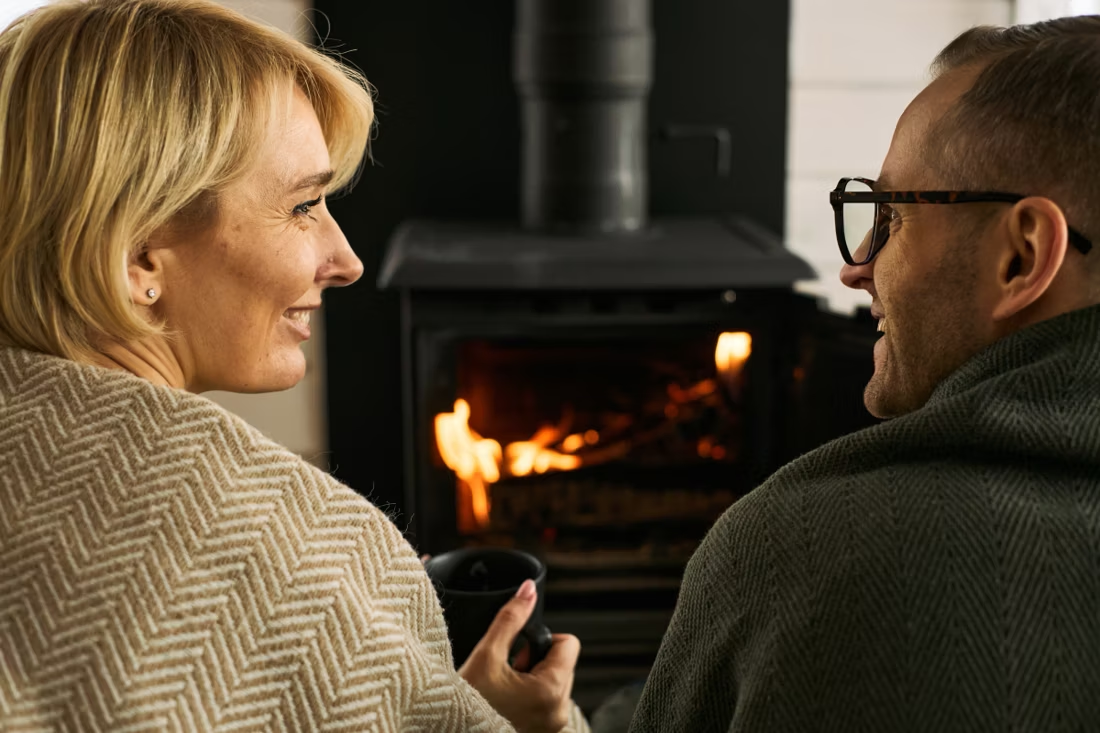
Wood heat is uncommon in Camas's marine climate, but for backup power outages, rural properties, or the ambiance of a real fire, we'll connect you with a local dealer who can tell you honestly whether it makes sense for your home.
Every Project Starts From One of These Five Situations
Wood burning is the exception here, not the rule.
Camas sits at the western edge of the Columbia River Gorge, on the north bank of the Portland-Vancouver metro, at just 711 feet elevation with a mild marine climate. Winter lows average around 37°F and the city has a fairly light winter heating load—roughly a third of what a genuinely cold-climate city like Duluth, MN sees in a typical winter. That mild, wet climate is a big part of why so few Camas homes rely on wood as a primary or supplemental heat source: heat pumps and gas furnaces handle the occasional cold snap without much strain, and most new construction in Clark County has skipped wood entirely in favor of gas or electric appliances.
Air quality plays a role too. The Southwest Clean Air Agency (SWCAA), which covers Clark County, issues burn bans during winter stagnant-air events and tracks wildfire smoke impacts in late summer and fall, both of which make wood-burning appliances a harder sell for everyday use here. That said, wood stoves aren't extinct in Camas—some homeowners install one for emergency backup heat during the ice storms that occasionally knock out power along the Gorge, or for a rural property near the edge of town. If that's you, Douglas fir, red alder, and lodgepole pine are the common regional species, and cutting permits are available through the Gifford Pinchot National Forest and Mt. Hood National Forest for $5 to $20 per cord during the May-through-October season.
Firewood Cutting Permits Near Camas
Three steps. No salesperson until you're ready.
Tell us about your project
Your zip code, your situation, and the fuel you're leaning toward—or let the answers point you to one.
See what's actually available
The brands dealers within 100 miles genuinely carry—real options, never a catalog mirage.
Get your dealer & Project Guide
A trusted local dealer, plus the free Project Guide & Parts List that names every component of the job.
Frequently Asked Questions
Are wood stoves still a realistic option for a Camas home?
They're uncommon, but not unheard of. Camas's mild marine climate and Clark County's air quality rules through the Southwest Clean Air Agency mean most homes have moved to gas or electric heat, and few local dealers stock wood appliances as a primary focus. Where wood still makes sense is emergency backup heat—the wind and ice storms that periodically knock out power along the Columbia River Gorge—or a detached shop or rural property outside city limits. If that describes your situation, we can still match you with a dealer who carries EPA-certified wood stoves, but for most Camas homes, gas or electric will be the more practical recommendation.
Is wood burning restricted in Clark County?
Not banned outright, but regulated. The Southwest Clean Air Agency issues burn ban advisories during winter temperature inversions when smoke accumulates in the Vancouver-Camas basin, and it discourages wood burning during wildfire smoke events in late summer and fall—a growing concern in this part of the Gorge. Washington state law also requires any wood stove sold or installed to meet current EPA certification standards. None of this makes wood burning illegal in Camas, but it does mean a wood stove here gets used more selectively than in a colder, drier climate where it's the default heat source.
What does a wood stove installation cost in Camas?
Because so few installers in the Camas-Vancouver area specialize in wood appliances, pricing isn't as localized as it is for gas or electric here. Nationally, a wood stove or insert installation typically runs $3,500 to $8,000 depending on the unit, chimney work, and hearth pad requirements. Given how rare full wood installs are locally, it's worth asking any dealer you contact whether they also handle gas or electric options—most Camas hearth retailers do all three, and can give you a real comparison alongside a wood quote.
Do I need a permit to install a wood stove in Camas?
Yes. The City of Camas Building Department requires a permit for any new wood-burning appliance installation, and the unit itself must meet current EPA New Source Performance Standards—Washington state law prohibits the sale or installation of uncertified wood stoves. Most installers who do take on wood stove work in Clark County will handle the permit as part of the job, but confirm this up front since it's a less routine request than a gas or electric permit here.
Where can I source firewood near Camas?
For self-cut firewood, the Gifford Pinchot National Forest and Mt. Hood National Forest both issue cutting permits covering the Camas area, running roughly $5 to $20 per cord during the May-through-October season. Common species in this part of the Gorge are Douglas fir, red alder, and lodgepole pine—Douglas fir burns hot and is widely available, red alder is easier to split and seasons faster, and lodgepole pine works well as a supplemental or kindling wood. Commercial firewood delivery is also available from a handful of regional suppliers, though selection is smaller here than in more wood-reliant markets east of the Cascades.
Would a wood stove help during a power outage in Camas?
It can. PUD No. 1 of Clark County serves most of Camas, and like much of the Gorge, the area sees occasional multi-day outages from winter windstorms and ice events. A wood stove is one of the few heating appliances that keeps working with zero electricity, which is the main reason some Camas homeowners still install one even in a climate that doesn't otherwise call for wood heat. If backup power is your primary concern rather than daily heating, it's worth discussing with a local dealer whether a wood stove or a battery-backed gas fireplace better fits your situation.
Should I get a wood stove or a gas fireplace for my Camas home?
For most homes here, gas is the more practical choice—natural gas and propane service are well established in Camas, installation is straightforward, and there's no firewood sourcing or ash cleanup involved. Wood makes sense mainly for backup heat during outages or for a rural or detached-structure property where a chimney is already in place or easy to add. Given how mild Camas winters run (average lows near 37°F), most local dealers will steer primary living spaces toward gas or an electric heat pump insert and reserve wood recommendations for specific backup or lifestyle needs.
How often does a wood stove need chimney inspection if I do install one in Camas?
The same annual standard applies here as anywhere: the Chimney Safety Institute of America recommends a yearly inspection and sweep for any wood-burning appliance, ideally before burning season starts in the fall. Because wood stoves are used less frequently in Camas than in colder climates—often just for backup heat during outages—creosote buildup tends to be slower, but skipping the inspection is still the leading cause of chimney fires nationally. If you install a wood stove here, plan on the same late-summer inspection window as anywhere else, even if you don't expect to burn much.
What wood species burn best in a Camas fireplace or stove?
Douglas fir is the most common regional wood and burns hot with a moderate burn time once properly seasoned. Red alder is a good secondary choice—it splits easily and seasons faster than fir, making it a practical option if you're cutting your own from a Gifford Pinchot or Mt. Hood National Forest permit. Lodgepole pine is available but burns faster and is better suited to supplemental fires or kindling than as a primary fuel. Whatever you source, make sure it's seasoned at least six to twelve months—unseasoned wood in the Gorge's damp climate is a common cause of poor draft and excess smoke.
What's the difference between an insert and a zero-clearance fireplace?
An insert is a fireplace that slides into a pre-existing wood-burning fireplace—if you don't have one, there's nothing to insert it into. A zero-clearance fireplace is built into a framed wall, which makes it the answer for remodels and new construction. Simple test: existing masonry fireplace means insert; blank or framed wall means zero-clearance.
Why is a fireplace insert so efficient?
An insert does two things: it seals the chimney completely, so you stop losing air you already paid to heat, and it radiates warmth into the room through the firebox and glass. Most add a heat-exchange fan that pulls cool room air underneath, wraps it around the hot firebox, and pushes it back out warm. Your home is more efficient before you've even lit the first fire.
Does a fireplace add value to my home?
On average, a fireplace adds back to the home about the same amount you spent installing it. Add the monthly savings from heating the rooms you actually use instead of the whole house—often hundreds of dollars a year—and the value case is strong before you even count what a fire does for how your family uses the room.
What is an in-home preview and do I need one?
It's a visit where a hearth professional measures your space, confirms the model you picked actually works in your home, and walks the specs—framing, gas line, venting, finish work—before anything is ordered. Some details you just can't know until you see the house. Never make a down payment without one; it's the single most-skipped step that burns buyers.
Nearby Dealers
Hearth shops serving Camas and the surrounding area.
Find your wood heating option in Camas.
Tell us about your home and how you plan to use wood heat—daily use, backup power, or ambiance—and we'll match you with a local dealer and send a free Project Guide & Parts List with the exact parts, venting, and installer recommendation for your Camas property.
Find Your Fireplace →