
Keep Your Family Warm and Safe—No Matter What
From the wheat fields around Ritzville to the small towns of Othello, Lind, and Washtucna, Adams County homes have long leaned on wood heat when winter wind and ice knock out power. Find the right stove or insert, and connect with a trusted local dealer.
Every Project Starts From One of These Five Situations
A wheat-country tradition of self-reliant heat.
Adams County sits in the heart of the Columbia Basin and Palouse wheat country, with the county seat of Ritzville and smaller communities like Othello, Lind, Washtucna, and Hatton spread across open, wind-exposed farmland at roughly 1,500 to 2,500 feet elevation. Winters here average lows around 27°F with about 5,450 heating degree days a year—colder than western Washington, though not as brutal as places like Fargo, ND or International Falls, MN. What Adams County does share with those harder-winter towns is a rural, self-sufficient streak: wind-driven ice storms and windstorms regularly knock out power to Big Bend Electric Cooperative service areas, and a wood stove that runs without electricity is often the difference between a warm kitchen and a cold one during an outage.
Local supply is straightforward for county residents: ponderosa pine, lodgepole pine, and Douglas fir are the common species available through cutting permits with the Okanogan-Wenatchee National Forest, running $5 to $20 per cord during the May-to-October season. Summer wildfire smoke is the county's main air quality concern, which means most homeowners plan their wood cutting, splitting, and stacking for spring and early summer, well ahead of both fire season and the first cold snap. A properly sized wood stove or insert gives Adams County homes dependable heat through the coldest stretches of winter and a fallback source of warmth whenever the grid goes down.
Firewood Cutting Permits Near Adams County
Three steps. No salesperson until you're ready.
Tell us about your project
Your zip code, your situation, and the fuel you're leaning toward—or let the answers point you to one.
See what's actually available
The brands dealers within 100 miles genuinely carry—real options, never a catalog mirage.
Get your dealer & Project Guide
A trusted local dealer, plus the free Project Guide & Parts List that names every component of the job.
Frequently Asked Questions
How much does a wood stove installation cost in Adams County?
Most wood stove installations in Adams County run somewhere between $3,500 and $8,000, with the final number driven by the stove model, whether new Class A chimney pipe is needed, and whether an older farmhouse needs a hearth pad rebuilt to meet current clearance codes. Many homes in Ritzville, Othello, and the surrounding rural sections of the county are older farmhouses with existing masonry chimneys, which can lower cost if the flue is still sound—or add cost if it needs relining. Installers serving the more remote parts of the county, like Washtucna or Hatton, may add a modest travel charge to the quote.
What size wood stove do I need for my home?
Sizing depends on square footage, ceiling height, insulation, and whether the stove is your primary heat or backup. Many Adams County homes are older farmhouses with higher ceilings and less insulation than newer construction, which pushes sizing up a notch compared to a tightly built modern home of the same footprint. A small stove suits a single room or a cabin outside town; a medium stove handles most main living areas in a Ritzville or Othello home; larger stoves are common in whole-house heating setups on outlying farms where the stove needs to carry the load during a winter power outage. A local dealer can size your space accurately during an in-home visit—oversizing leads to smoldering, creosote-heavy fires, while undersizing leaves you cold on the coldest nights.
Where can I find certified wood stove installers near me?
Look for installers holding NFI (National Fireplace Institute) or CSIA (Chimney Safety Institute of America) certification—both signal formal training in wood-burning appliance installation and venting. Adams County is served by a small number of hearth dealers covering Ritzville, Othello, and the surrounding rural area; homes in Lind, Washtucna, or Hatton may see a modest travel fee added to the install quote. Skipping certified installation to save money on a wood-burning unit is a poor trade—improper venting and clearance mistakes are the leading cause of chimney fires, and a bad install can also void your homeowner's insurance coverage for wood heat.
What's the difference between a wood stove and a wood insert?
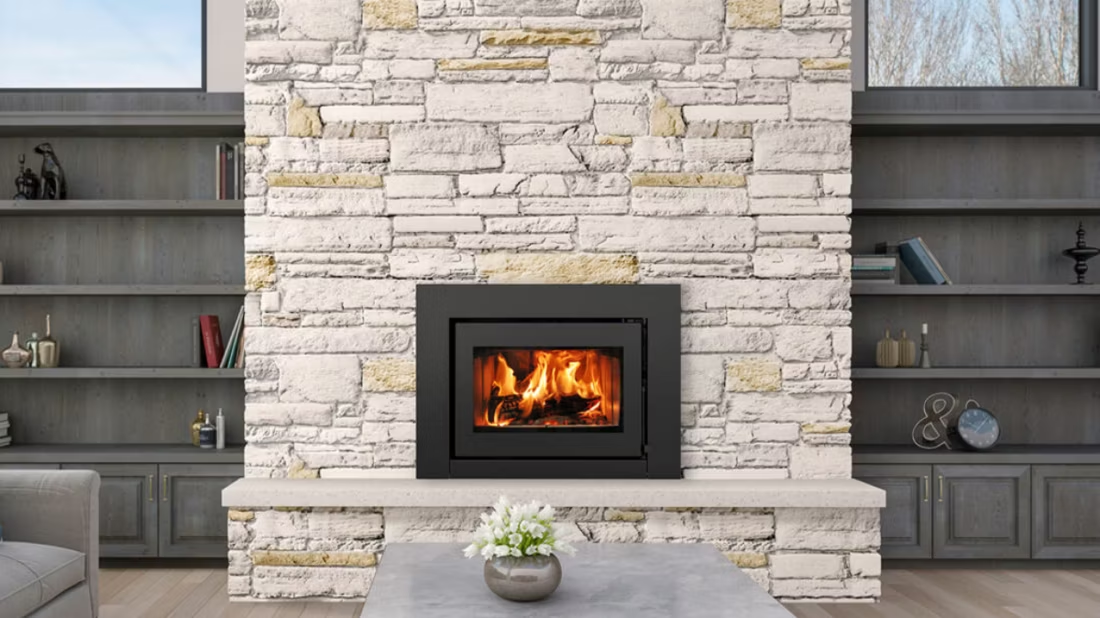
A wood stove is a freestanding unit installed on a hearth pad, vented through a chimney, and can go almost anywhere in a home with the right clearances. A wood insert is built to slide into an existing masonry fireplace, turning a drafty open hearth into a sealed, high-efficiency heat source. Many older farmhouses around Ritzville and Othello already have masonry fireplaces from their original construction, which makes an insert the more cost-effective upgrade—you're reusing the existing chimney rather than building new venting. Homes without an existing fireplace, or newer construction, are usually better suited to a freestanding stove.
Do I need a permit to install a wood stove in Adams County?
Yes—new wood stove installations require a building permit through the Adams County Building Department, and the stove must meet current EPA 2020 NSPS emissions standards. Most local dealers handle the permitting and inspection scheduling as part of the installation, so it's rarely something homeowners have to navigate alone. Separately, if you're cutting your own firewood on public land, a cutting permit is required through the Okanogan-Wenatchee National Forest, valid during the May-through-October season at $5 to $20 per cord—that permit is unrelated to the building permit for the stove itself.
What's the best wood stove for Adams County's climate?
Adams County's winters are cold but not extreme—an average low around 27°F and roughly 5,450 heating degree days a year, milder than places like Bismarck, ND or Duluth, MN. That means a well-sized non-catalytic stove from a brand like Pacific Energy or Lopi handles most homes comfortably. For farms and rural properties where wind-driven power outages are common and the stove needs to serve as primary emergency heat, a catalytic stove such as a Blaze King is worth the extra upfront cost—catalytic models can hold a fire well past 12 hours on a single load, which matters when you're waiting out a multi-day outage after an ice storm.
How often should my chimney be inspected and cleaned?
An annual inspection is the standard recommendation from the CSIA for any wood-burning appliance. In Adams County, the ideal timing is late spring or early summer—after the heating season wraps up and before wildfire smoke starts to settle into the valley in July and August, which is also when most local residents are cutting and splitting their next season's wood. Homes that burn wood as primary heat through the full winter, especially on outlying farms, may need a mid-season check if creosote builds up faster than expected.
Where can I get firewood in Adams County?
Many Adams County residents cut their own through a permit with the Okanogan-Wenatchee National Forest, available during the May-to-October season for $5 to $20 per cord—ponderosa pine, lodgepole pine, and Douglas fir are the species most commonly available. For homeowners who'd rather buy split and seasoned wood, local sellers around Ritzville and Othello typically sell by the cord, with pricing that varies by species and season. Whichever route you choose, plan to have wood cut, split, and stacked well before wildfire smoke settles in over the summer—seasoning wood properly takes several months, and getting it done early avoids scrambling once the first cold snap hits.
Does wildfire smoke affect wood burning in Adams County?
Wildfire smoke is the county's primary air quality concern, typically settling in during the peak of summer rather than the heating season itself. It doesn't usually trigger the kind of winter burn curtailments you'd see in a non-attainment area, but it does affect how residents time their wood-cutting and storage—most people finish gathering and splitting wood before smoke season sets in, both for air quality reasons and to keep wood seasoning outdoors rather than hauling it through smoky conditions. A clean-burning EPA-certified stove also helps minimize your own contribution to local air quality during the winter months when inversions can occasionally trap smoke in the Basin.
Why is a fireplace insert so efficient?
An insert does two things: it seals the chimney completely, so you stop losing air you already paid to heat, and it radiates warmth into the room through the firebox and glass. Most add a heat-exchange fan that pulls cool room air underneath, wraps it around the hot firebox, and pushes it back out warm. Your home is more efficient before you've even lit the first fire.
Why won't my new wood stove get going like my old one?
New wood stoves are 70%+ efficient, so far less heat goes up the flue—which also means less draft to get a fire established. The rule: build a genuinely hot fire for about 45 minutes before you choke it down. Skip that and you get smoke in the room, creosote in the chimney, and a fire that never takes off. Most performance complaints trace straight back to this.
What is an in-home preview and do I need one?
It's a visit where a hearth professional measures your space, confirms the model you picked actually works in your home, and walks the specs—framing, gas line, venting, finish work—before anything is ordered. Some details you just can't know until you see the house. Never make a down payment without one; it's the single most-skipped step that burns buyers.
Can I install a fireplace myself?
If you're putting a fire in your house on purpose, it's best to work with an expert. Unless you're genuinely experienced in framing, gas line, vent pipe, and the national code on clearances to combustibles, have a professional do it—and ideally the same company that sells you the fireplace, so warranty, service, and liability all live under one roof.
Stove and Fireplace Dealers in Adams County
Listings include WhyFire partner dealers, dealers we have verified as authorized for the brands we recommend, and established local businesses that carry hearth products. Every listing shows which one it is. The ones marked Preferred run on WhyFire's software, so they can show you real pricing and book your appointment right here. No manufacturer pays for placement. How we verify dealers →
Total Energy Mgmnt
Fire & Water
Campbell & Company, Inc.
Apollo Heating & Air Conditioning
Legacy Pool & Spa LLC
Dayco Heating
Bruce Heating & Ac
Find your wood stove in Adams County.
Tell us about your home and we'll match you with a trusted local dealer and send over a free Project Guide & Parts List—a clear plan for your wood heat project in Adams County, including the exact parts, venting kit, and recommended installer.
Find Your Fireplace →