
Instant, no-mess heat for Adams County homes.
From Ritzville to Othello, Lind, and Washtucna, electric fireplaces add real warmth to a cold room without a chimney, a gas line, or a wood pile. Find the right unit and connect with a trusted local dealer.
Every Project Starts From One of These Five Situations
Heat without a chimney, a gas line, or a wood pile.
Adams County spans nearly 1,900 square miles of dryland wheat country in the Columbia Basin, with Ritzville along I-90 as the county seat and Othello anchoring the irrigated south end of the county. Winters here run cold but not extreme—average lows around 27°F and a fairly long, steady heating season, cool enough that a chilly back bedroom or a converted porch stays uncomfortable most of the year without help. Many of the county's older farmhouses were never plumbed with ductwork reaching every room, and a lot of the manufactured and modular housing common around Othello and Lind relies on electric baseboard or a heat pump that struggles to keep up in the coldest stretches of January.
That's the gap an electric fireplace or insert fills. There's no chimney to build, no gas line to run, and—for a plug-in unit—often no electrician needed at all. For built-in models on a dedicated circuit, a licensed electrician wires it in an afternoon. Electric also has a quieter advantage in Adams County: when wildfire smoke drifts in from the Okanogan-Wenatchee National Forest and the broader Columbia Basin during late summer, an electric unit adds zone heat and ambiance without adding a single particle of smoke to the air inside or outside your home. Power comes through Big Bend Electric Cooperative across most of the county, and running costs for a typical unit are modest compared to propane space heating.
Three steps. No salesperson until you're ready.
Tell us about your project
Your zip code, your situation, and the fuel you're leaning toward—or let the answers point you to one.
See what's actually available
The brands dealers within 100 miles genuinely carry—real options, never a catalog mirage.
Get your dealer & Project Guide
A trusted local dealer, plus the free Project Guide & Parts List that names every component of the job.
Frequently Asked Questions
How much does it cost to install an electric fireplace in Adams County?
A freestanding or wall-mount plug-in electric fireplace typically runs $150 to $600 for the unit itself, with no installation cost beyond plugging it into an existing outlet. A built-in electric insert or a recessed wall unit that needs a dedicated 20-amp circuit run by a licensed electrician usually lands between $800 and $2,500 installed, depending on how far the new wiring has to travel—a factor that matters in older Ritzville and Lind farmhouses where the electrical panel may be a room or two away. Either way, you're skipping the chimney, venting, and gas line costs that come with wood or gas installations.
What size electric fireplace do I need for a farmhouse or manufactured home in Adams County?
Most electric fireplaces are built around 1,500-watt heating elements sized to comfortably supplement a single room of roughly 400 to 1,000 square feet—not to replace your primary heat source through a Columbia Basin winter with a fairly long, steady heating season. For drafty older farmhouses common around Ritzville and Washtucna, a unit sized for the room it's in (not the whole house) works best. For manufactured homes around Othello, wall-mount or built-in models sized to a bedroom or living area are the most common fit. A local dealer can confirm sizing after seeing your floor plan.
Do I need a permit to install an electric fireplace in Adams County?
A plug-in freestanding or wall-mount electric fireplace that runs off an existing outlet doesn't require a permit—it's treated like any other appliance. If you're installing a built-in unit that needs new wiring or a dedicated circuit, Washington state requires that work be done by a licensed electrician, and it will typically need an electrical permit through the county. Because there's no combustion, venting, or clearance-to-combustibles review involved, the permitting process for electric is far simpler than what wood or gas installations require in Adams County.
What's the difference between an electric fireplace, insert, and stove?
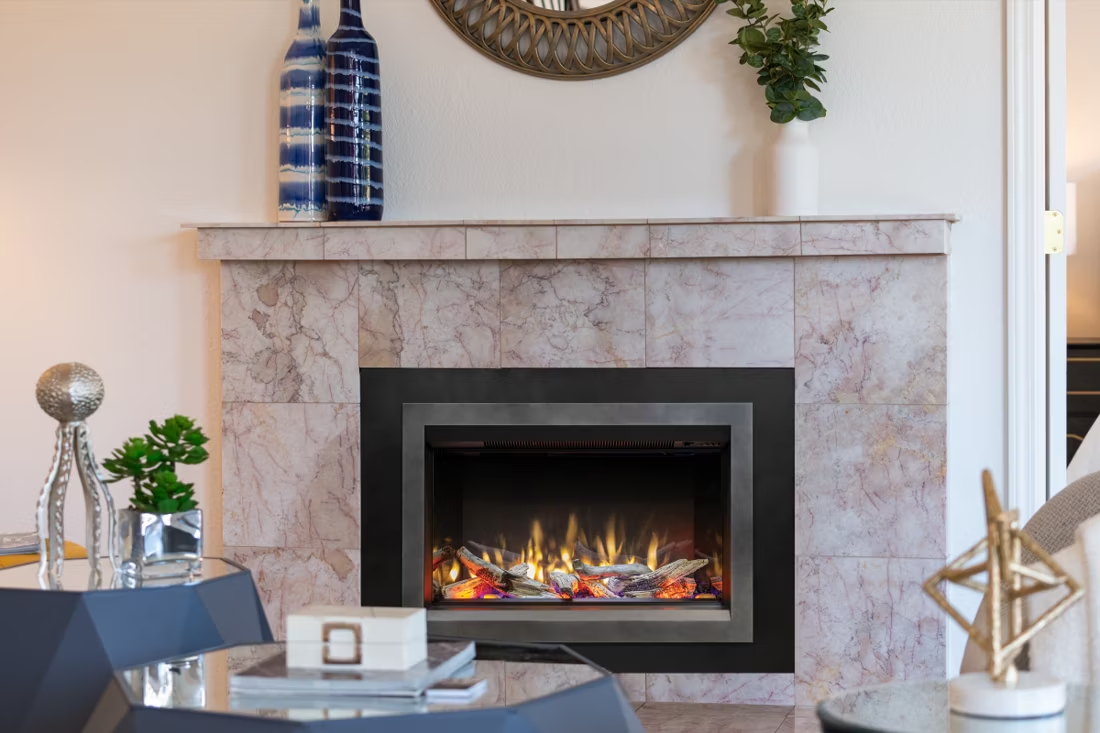
An electric fireplace is typically a built-in or wall-mount unit designed to look like a traditional fireplace, often with a realistic flame-effect display. An electric insert is sized to slide into an existing masonry fireplace opening, giving an old wood-burning fireplace in a Ritzville or Othello home a heat source again without touching the chimney. An electric stove is a freestanding cabinet-style unit that sits on the floor like a wood stove but plugs into the wall. All three heat the same way—with a resistance or infrared heating element—so the choice mostly comes down to the space you're filling and the look you want.
Are electric fireplaces a good option during wildfire smoke season in Adams County?
Yes, and it's one of the more practical reasons homeowners in this part of the Columbia Basin choose electric. Late-summer wildfire smoke from the Okanogan-Wenatchee National Forest and other regional fires regularly settles over Adams County, and a wood stove adds its own smoke and particulate matter right when outdoor air quality is already poor. An electric fireplace produces zero combustion byproducts, so it doesn't add to indoor or outdoor air quality problems—useful if anyone in the household has asthma or other respiratory sensitivity during smoke season.
Are electric fireplaces a good fit for rentals or manufactured homes around Othello?
Very much so. Othello and the surrounding area have a significant number of manufactured and rental homes, and electric fireplaces are one of the few heat-adding upgrades that don't require structural changes, roof penetrations, or landlord sign-off for anything beyond a plug-in unit. Manufactured homes often have restrictions on venting through exterior walls that apply to gas or wood units—restrictions that simply don't come up with electric. For renters, a freestanding electric unit can move with you; for landlords, a wall-mount model adds value without the maintenance burden of a chimney.
Can an electric fireplace heat my whole house through an Adams County winter?
No—and this is worth setting expectations on. With a fairly long, steady heating season and average winter lows around 27°F, Adams County winters are cold enough that most homes rely on a heat pump, propane furnace, or electric baseboard as the primary heat source. An electric fireplace is built to supplement that system in one room—the living room, a converted porch, a home office—not to replace it across the whole house. Homeowners who want whole-home backup heat during an outage typically look at wood instead, since electric units stop working without power.
How much does it cost to run an electric fireplace in Adams County?
Running costs depend on your rate through Big Bend Electric Cooperative, which serves most of the county, but a typical 1,500-watt unit costs roughly 15 to 20 cents per hour of use at average residential rates. Most units include a built-in thermostat that cycles the heater on and off to maintain a set temperature, which keeps actual runtime—and cost—well below running the unit continuously. For supplemental zone heating in one room, that's generally cheaper than running a propane space heater for the same purpose.
Electric vs. wood—which is right for my Adams County home?
Wood offers heat during a power outage, lower fuel cost if you're cutting your own firewood, and taps into the ponderosa pine, lodgepole pine, and Douglas fir available through Okanogan-Wenatchee National Forest cutting permits (roughly $5 to $20 per cord, May through October)—but it means chimney maintenance and adds smoke on top of the wildfire smoke that already settles over the Columbia Basin some summers. Electric skips all of that: no venting, no smoke, and it installs almost anywhere, but it goes dark in an outage. For a converted room, a rental, or a manufactured home around Othello, electric is usually the simpler answer. For a rural property that needs backup heat when the power goes out, wood still has the edge.
Can I put a TV above my fireplace?
Yes—with an asterisk. Fireplaces are hot and TVs don't like heat. Either put a mantel between them to deflect rising warmth, or choose a fireplace with heat-management technology that creates a cool zone on the wall above—the wall stays around 125 degrees, barely warm, while the room still gets full heat. If you like clean lines and don't want a mantel, heat management is the answer.
How much does an electric fireplace cost to run?
With the heater on, a typical unit draws about 1,500 watts—at average electric rates that's roughly 20 cents an hour. Run the flame effect alone and it costs pennies; the flames are LED-driven and use about as much power as a light bulb. There's no pilot light, no fuel delivery, and essentially no maintenance.
What is an in-home preview and do I need one?
It's a visit where a hearth professional measures your space, confirms the model you picked actually works in your home, and walks the specs—framing, gas line, venting, finish work—before anything is ordered. Some details you just can't know until you see the house. Never make a down payment without one; it's the single most-skipped step that burns buyers.
Does a fireplace add value to my home?
On average, a fireplace adds back to the home about the same amount you spent installing it. Add the monthly savings from heating the rooms you actually use instead of the whole house—often hundreds of dollars a year—and the value case is strong before you even count what a fire does for how your family uses the room.
Stove and Fireplace Dealers in Adams County
Listings include WhyFire partner dealers, dealers we have verified as authorized for the brands we recommend, and established local businesses that carry hearth products. Every listing shows which one it is. The ones marked Preferred run on WhyFire's software, so they can show you real pricing and book your appointment right here. No manufacturer pays for placement. How we verify dealers →
Total Energy Mgmnt
Fire & Water
Campbell & Company, Inc.
Apollo Heating & Air Conditioning
Legacy Pool & Spa LLC
Dayco Heating
Bruce Heating & Ac
Find your electric fireplace in Adams County.
Tell us about your home and we'll match you with the right electric fireplace, insert, or stove, connect you with a trusted local dealer, and send along a free Project Guide & Parts List for your specific project.
Find Your Fireplace →