
Reliable, low-fuss heat for Northern Neck winters.
Westmoreland County has a moderate winter heating load and winter lows averaging 25°F—a moderate mixed-humid climate, but one where a power outage off the Potomac or Chesapeake can leave a rural home without heat for days. I match homeowners here with a vetted local dealer who carries Energex, Hamer, and Greene Team pellets and can size, vent, and install a stove correctly the first time.
Every Project Starts From One of These Five Situations
Hardwood country meets a cleaner-burning alternative.
Westmoreland County sits on Virginia's Northern Neck peninsula, bounded by the Potomac and Rappahannock river systems, with Montross as the county seat and small communities like Colonial Beach, Kinsale, and Oak Grove spread across the rural landscape. It's the kind of place where oak, hickory, and maple line the woodlots behind most properties, and plenty of households already split their own firewood. Climate zone 4A puts the county in a moderate mixed-humid heating season: a solidly moderate winter heating load and winter lows averaging 25°F mean real cold spells but nothing like the sustained deep-freeze winters of the Upper Midwest. Air quality here carries none of the non-attainment restrictions or burn bans found in some other Mid-Atlantic counties, so pellet stoves run without curtailment concerns.
What pellet heat solves for in Westmoreland County isn't extreme cold—it's convenience and reliability in a rural setting. Much of the county has no natural gas main, so propane delivery is the common alternative, and pellet stoves let a homeowner skip both propane bills and daily wood-splitting while still getting a real, thermostatically responsive heat source. Regional brands like Energex, Hamer Pellet Fuel, and Greene Team Pellet Fuel are all produced within a day's truck route of the Northern Neck, which keeps supply steadier than pellets trucked in from farther afield. The one tradeoff worth knowing upfront: pellet stoves need electricity to run the auger and blower, and rural power along the Potomac and Chesapeake corridors can go down during nor'easters or summer storms—a battery backup or small generator closes that gap.
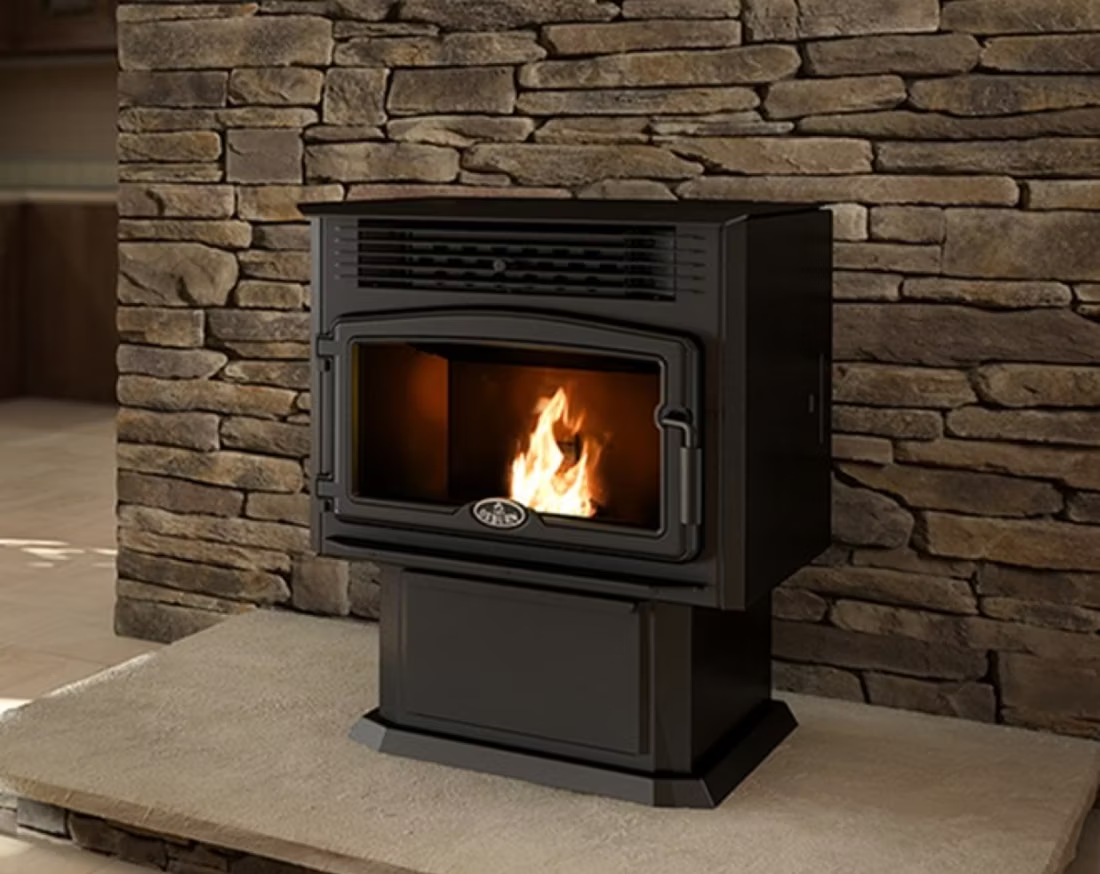
Three steps. No salesperson until you're ready.
Tell us about your project
Your zip code, your situation, and the fuel you're leaning toward—or let the answers point you to one.
See what's actually available
The brands dealers within 100 miles genuinely carry—real options, never a catalog mirage.
Get your dealer & Project Guide
A trusted local dealer, plus the free Project Guide & Parts List that names every component of the job.
Frequently Asked Questions
How much does a pellet stove installation cost in Westmoreland County?
Most pellet stove installations in Westmoreland County run $3,000 to $6,000, depending on whether it's a freestanding stove venting through an exterior wall or an insert going into an existing masonry fireplace. A straightforward through-wall installation in a Montross or Oak Grove home with a clear exterior wall tends to land on the lower end; an insert conversion that requires liner work in an older Colonial Beach or Kinsale fireplace runs higher. A local dealer can give you a firm number after seeing the space and the run length to the vent termination.
What size pellet stove do I need for my home?
Most pellet stoves are rated for 1,000 to 2,500 square feet, and in a mixed-humid climate like Westmoreland County's—a moderate winter heating load, winter lows averaging around 25°F—a mid-size unit covers most main living areas without needing to run at full output constantly. Older farmhouses common around Oak Grove and Kinsale, often with less insulation than newer construction near Colonial Beach, may need a slightly larger unit or supplemental heat in the coldest rooms. A dealer walking the space will factor in ceiling height, window count, and open floor plan before recommending a size.
Do I need a permit to install a pellet stove in Westmoreland County?
Yes. New pellet stove installations require a permit through the Westmoreland County Building Inspections Office, covering both the appliance installation and the venting. Most established local hearth dealers handle the permit application and schedule the inspection as part of the job, which is one advantage of going through a full-service dealer rather than a DIY install—you're not left tracking down inspection scheduling on your own in a county without a large in-house code enforcement staff.
Where do I buy pellets in Westmoreland County, and what do they cost?
Bagged pellets from regional producers like Energex, Hamer Pellet Fuel, and Greene Team Pellet Fuel are the most common options at Northern Neck feed stores, farm supply retailers, and hardware stores, typically running in the $250 to $300 per ton range. Buying a season's supply—usually 2 to 3 tons for a mid-size stove running as a primary heat source through a winter with a moderate heating load—in late summer or early fall tends to get better pricing and availability than waiting until the first cold snap, when demand across the region spikes.
Will my pellet stove still work if the power goes out?
Not without backup power. Pellet stoves rely on an electric auger to feed fuel and a blower to distribute heat, so a standard unit shuts down the moment the power does—a real consideration in Westmoreland County, where rural electric cooperative lines can go down during a Potomac or Chesapeake nor'easter. Many homeowners here pair a pellet stove with a small battery backup or portable generator sized to the stove's draw, which is a modest investment against days without heat during a multi-day outage.
Pellet stove vs. wood stove—which makes more sense in Westmoreland County?
With oak, hickory, and maple woodlots common across the county, plenty of Westmoreland households already have access to free or low-cost firewood, and a wood stove works with zero electricity—an advantage during a storm-related outage. Pellet stoves trade that off for convenience: no splitting or stacking, a more consistent burn, and thermostatic control, using bagged fuel from producers like Energex or Greene Team instead of a woodpile. Since the county has no significant air-quality restrictions, either fuel is a straightforward choice here—it mostly comes down to whether you'd rather manage a woodpile or a pellet bag.
How much maintenance does a pellet stove need?
Plan on daily ash removal from the burn pot, a weekly cleaning of the glass and hopper, and a full professional service once a year—ideally before the heating season starts in October, given the county's moderate but real cold snaps. Annual service typically checks the auger motor, exhaust blower, and gaskets, and runs roughly $150 to $200 through a local hearth service technician. Skipping the annual visit is the most common reason pellet stoves in rural Virginia homes underperform or shut down mid-winter.
What's involved in venting a pellet stove?
Pellet stoves vent through a smaller-diameter pipe than wood stoves—usually 3 or 4 inches—and can run straight out an exterior wall rather than requiring a full masonry chimney, which makes installation simpler and less expensive in a lot of Westmoreland County homes that don't already have a chimney. For an insert going into an existing fireplace in an older Colonial Beach or Montross home, a liner run up the existing flue is standard. Either way, proper vent length and termination clearance from windows and combustible siding are code requirements your local installer will handle.
Are there rebates or tax credits available for a pellet stove in Westmoreland County?
The federal biomass stove tax credit (IRC Section 25C) covers pellet stoves rated at 75% efficiency or higher for 30% of the total cost, including installation, up to $2,000 per year—most pellet stoves on the market today qualify. Virginia doesn't currently layer a state-level rebate on top of that for pellet appliances, so the federal credit is the main incentive to factor into your budget. Keep your dealer's efficiency documentation and installation receipt; you'll need both when you file.
Why is a fireplace insert so efficient?
An insert does two things: it seals the chimney completely, so you stop losing air you already paid to heat, and it radiates warmth into the room through the firebox and glass. Most add a heat-exchange fan that pulls cool room air underneath, wraps it around the hot firebox, and pushes it back out warm. Your home is more efficient before you've even lit the first fire.
What does it take to replace an existing fireplace?
Fireplaces are like icebergs—bigger behind the wall than in front of it. Replacement means removing the surrounding tile or stone (the finish material laps onto the fireplace face), pulling the old unit, setting the new one in the same enclosure, and re-finishing the wall. A hearth professional can determine what's behind your wall without demolition during an in-home preview.
How much should I budget for a fireplace?
For an average home—covering the fireplace, the vent pipe, and basic installation—a budget between $3,900 and $5,500 gives you a lot of options across wood, gas, and pellet. By the time you add finish work, gas line, and electrical, the average complete installation lands between $5,000 and $12,000 all-in. In a remodel or new build, a good rule is to put about 2.5% of the total project cost toward the fireplace.
Can a fireplace actually lower my heating bill?
Yes—by creating a comfort zone. A furnace heats every square foot of the house just to warm the one room you're in; a gas fireplace on low burns roughly a sixth of the gas a typical furnace does. Set the furnace around 55–60 degrees as a baseline, then heat the rooms your family actually uses. Families who heat this way commonly save $20–$60 a month.
Stove and Fireplace Dealers in Westmoreland County
Listings include WhyFire partner dealers, dealers we have verified as authorized for the brands we recommend, and established local businesses that carry hearth products. Every listing shows which one it is. The ones marked Preferred run on WhyFire's software, so they can show you real pricing and book your appointment right here. No manufacturer pays for placement. How we verify dealers →
Hearth & Home Shoppe
Gas Fireplace Service Of Stafford
Superior Fireplaces - La Plata
Holtzman Propane
Pellet Brands Stocked Around Westmoreland County
Manufacturers will point you to the nearest stocking dealer.
Get your free Project Guide & Parts List for a pellet stove in Westmoreland County.
Tell me about your home and how you plan to use the stove, and I'll match you with a trusted local Westmoreland County dealer and send a free Project Guide & Parts List—the exact parts, including the vent kit, and a dealer recommendation for your pellet project.
Find Your Fireplace →