
Find the right fireplace for your Northern Neck home.
Wood, gas, pellet, and electric fireplace resources for every town and river community in Westmoreland County—from Montross to Colonial Beach. Find the right unit and get matched with a trusted local hearth dealer.
Every Project Starts From One of These Five Situations
Wood heat traditions along Virginia's Northern Neck.
Westmoreland County sits on the peninsula between the Potomac and Rappahannock rivers, home to just over 4,200 year-round residents spread across farmland, river bluffs, and small towns. Climate zone 4A here means a real but moderate heating season—winter lows average around 25°F, and the county logs roughly 4,589 heating degree days a year, less than half of what a place like Duluth, MN sees in an average winter. That said, oak, hickory, and maple grow throughout the county and remain the go-to firewood species—hardwoods that burn hot and long in a wood stove or insert, whether you're heating a farmhouse near Oak Grove or a weekend place on the river. There's no non-attainment status or winter inversion issue here, so wood burning isn't subject to the curtailment rules you'd see in a smoke-prone basin out West.
What you'll find on this hub: hearth retailers, service technicians, and fuel suppliers covering the whole county—Montross (the county seat), Colonial Beach, and the smaller river communities like Hague and Burgess. With a population this small, most dealers and installers are based just outside the county line in Fredericksburg, Warsaw, or the Northern Neck's larger towns, and they routinely travel in for consultations and installs. Pick your fuel below to see local dealers, typical installed cost, and recommended units for a Westmoreland County home.
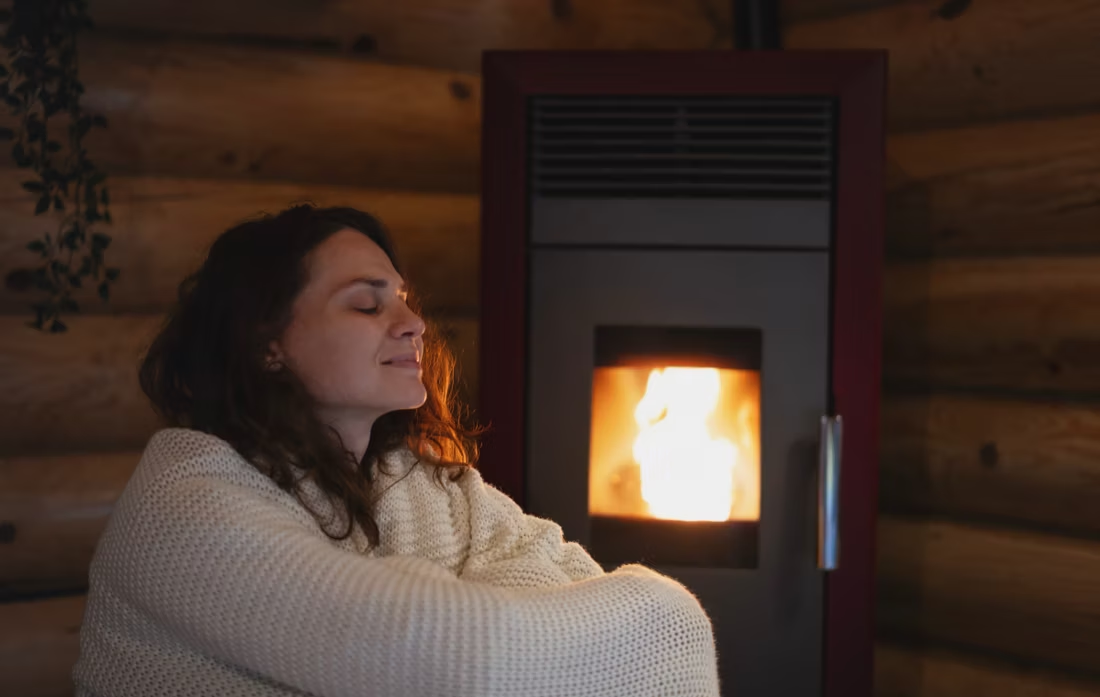
Four fuels. One honest answer for Westmoreland County.
Wood
81 models available near Westmoreland County.
Find your wood stove →Gas
365 models available near Westmoreland County.
Find your gas fireplace →Pellet
See what's available near Westmoreland County.
Find your pellet stove →Electric
11 models available near Westmoreland County.
Find your electric fireplace →Three steps. No salesperson until you're ready.
Tell us about your project
Your zip code, your situation, and the fuel you're leaning toward—or let the answers point you to one.
See what's actually available
The brands dealers within 100 miles genuinely carry—real options, never a catalog mirage.
Get your dealer & Project Guide
A trusted local dealer, plus the free Project Guide & Parts List that names every component of the job.
Frequently Asked Questions
Which fuel works best in Westmoreland County?
It depends on your home and how you plan to use it. Wood is a strong fit here—oak, hickory, and maple are all locally abundant and burn long and hot, and with winter lows averaging around 25°F, a mid-efficiency wood stove or insert handles the season comfortably without needing the 20-hour catalytic burns you'd want somewhere colder like Bozeman, MT. Gas is the convenience option, though since most of the county isn't on a natural gas main, that usually means propane—a good fit for weekend and river homes where you want instant heat without hauling wood. Pellet stoves are a solid middle ground; Energex, Hamer, and Greene Team pellets are all available regionally, so fuel supply isn't a concern. Electric fireplaces work well as supplemental heat or ambiance in bedrooms, sunrooms, or the many second homes along the Potomac and Rappahannock, but they're not typically the primary heat source given the length of the local heating season.
Do I need a permit to install a fireplace in Westmoreland County?
In most cases, yes. Virginia's Uniform Statewide Building Code applies here, and new wood stoves, wood inserts, gas appliances, and pellet stoves generally require a building permit through the county building department, with inspections at rough-in and final. Wood-burning units need to meet current EPA emissions standards to be installed new. Since most of the county runs on propane rather than piped natural gas, gas installs typically also require a separate fuel-gas permit and work from a licensed gas technician for the tank hookup and line. Electric fireplaces usually skip the permit process unless you're hardwiring a built-in unit into a new circuit. Most local hearth retailers pull the permit as part of the installation, so it's rarely something homeowners have to manage themselves.
Are there air quality restrictions on wood burning in Westmoreland County?
No—Westmoreland County isn't in an EPA non-attainment area and doesn't deal with the winter inversion issues that trigger burn advisories in places like the Klamath Basin or parts of the Mountain West. There are no curtailment periods or mandatory no-burn days here. That said, new wood stove and insert installations still need to meet current EPA emissions standards, and it's worth burning well-seasoned oak, hickory, or maple rather than green wood—not because of any local ordinance, but because it burns cleaner and more efficiently in any stove.
Can one local hearth retailer handle all four fuel types?
Some can, but with a county this small, coverage is uneven and often depends on who's willing to make the drive out to the Northern Neck. Retailers based in Fredericksburg or along the Route 3 corridor toward Warsaw are more likely to carry wood, gas, and pellet units together, since that's a larger service area with more volume. Pure electric-fireplace sellers and smaller propane suppliers are more common as single-fuel specialists. If you want to compare fuels side by side, it's worth checking which of the retailers on this hub carry more than one fuel type before scheduling a consultation.
How does service work in rural parts of Westmoreland County?
Most technicians serving the county are based outside it—in Fredericksburg, Warsaw, or the broader Northern Neck—and travel in for annual chimney sweeps, gas inspections, and pellet stove cleaning. Because the county is a peninsula bounded by the Potomac and Rappahannock rivers, drive times between communities like Colonial Beach and Montross can run 25-30 minutes even though they're in the same county, so expect a modest travel fee on top of the service call, and book pre-season (September-October) rather than waiting for a mid-winter appointment when scheduling gets tight.
What's the typical cost range for fireplace installation across all fuel types in Westmoreland County?
Costs run close to typical Mid-Atlantic pricing since the mild 4A climate doesn't require the heavy-duty venting or insulation upgrades colder regions need. Wood stove or insert installation: roughly $4,000-$8,500 depending on chimney condition and whether it's a retrofit or new construction. Propane fireplace, insert, or stove: roughly $4,000-$9,500, with tank setup and line work affecting the low versus high end. Pellet stove or insert: roughly $4,000-$7,000 for a typical install. Electric fireplace: $200-$3,000 for the unit itself, plus $300-$1,000 in labor for anything beyond a plug-and-play wall unit. Exact pricing depends on the retailer and the specifics of your home—the fuel pages above break this down further.
What is an in-home preview and do I need one?
It's a visit where a hearth professional measures your space, confirms the model you picked actually works in your home, and walks the specs—framing, gas line, venting, finish work—before anything is ordered. Some details you just can't know until you see the house. Never make a down payment without one; it's the single most-skipped step that burns buyers.
Does a fireplace add value to my home?
On average, a fireplace adds back to the home about the same amount you spent installing it. Add the monthly savings from heating the rooms you actually use instead of the whole house—often hundreds of dollars a year—and the value case is strong before you even count what a fire does for how your family uses the room.
How much should I budget for a fireplace?
For an average home—covering the fireplace, the vent pipe, and basic installation—a budget between $3,900 and $5,500 gives you a lot of options across wood, gas, and pellet. By the time you add finish work, gas line, and electrical, the average complete installation lands between $5,000 and $12,000 all-in. In a remodel or new build, a good rule is to put about 2.5% of the total project cost toward the fireplace.
Wood, gas, pellet, or electric—how do I choose?
Match the fuel to your life, not the other way around. Wood: lowest fuel cost and total power-outage independence, but you're hauling and stacking. Gas: press a button, set a thermostat, no maintenance to speak of. Pellet: wood economics with automatic feeding, in exchange for weekly cleaning and a need for electricity. Electric: plugs in anywhere with honest supplemental heat. Nobody regrets the fuel that fits how they actually live.
Stove and Fireplace Dealers in Westmoreland County
Listings include WhyFire partner dealers, dealers we have verified as authorized for the brands we recommend, and established local businesses that carry hearth products. Every listing shows which one it is. The ones marked Preferred run on WhyFire's software, so they can show you real pricing and book your appointment right here. No manufacturer pays for placement. How we verify dealers →
Hearth & Home Shoppe
Gas Fireplace Service Of Stafford
Superior Fireplaces - La Plata
Holtzman Propane
Get matched with a Westmoreland County hearth dealer.
Tell us about your home and we'll send a free Project Guide & Parts List—the parts you need, including the vent kit, and a local dealer recommendation for your fuel and your project.
Find Your Fireplace →