
Reliable Gas Heat for Fairfax County's Coldest Nights.
Instant, clean-burning warmth for West Springfield homes—from a trusted local dealer who knows Washington Gas service lines and Fairfax County permitting inside and out.
Every Project Starts From One of These Five Situations
Zone heat that fits suburban Fairfax living.
West Springfield sits in Fairfax County at 268 feet elevation, in climate zone 4A with a heating season on par with other Mid-Atlantic towns and average winter lows around 23°F. That's a real Mid-Atlantic winter—cold enough to need consistent supplemental heat, but nowhere near the sustained sub-zero stretches you'd see in a place like Madison, WI or Burlington, VT. It's the kind of climate where a fireplace gets used most weekday evenings from November through March, not just for a handful of deep-freeze weeks.
On the county's tight suburban lots—many with HOA covenants that limit outdoor wood storage and open burning—gas has become the default fuel for both new construction and fireplace upgrades. Washington Gas serves the vast majority of West Springfield addresses, so most homes already have the infrastructure in place. A direct-vent gas insert or fireplace delivers heat at the flip of a switch, with none of the cordwood stacking, ash cleanup, or defensible-space concerns that come with a wood-burning setup on a quarter-acre lot.
Three steps. No salesperson until you're ready.
Tell us about your project
Your zip code, your situation, and the fuel you're leaning toward—or let the answers point you to one.
See what's actually available
The brands dealers within 100 miles genuinely carry—real options, never a catalog mirage.
Get your dealer & Project Guide
A trusted local dealer, plus the free Project Guide & Parts List that names every component of the job.
Frequently Asked Questions
How much does a gas fireplace installation cost in West Springfield?
Most West Springfield gas fireplace and insert installs run between roughly $4,000 and $10,000, depending on the unit, the venting path, and whether new gas line work is needed. A direct-vent insert going into an existing masonry fireplace with a nearby gas line already run—common in the older brick-front colonials around West Springfield and Rolling Valley—sits toward the lower end. New construction or a fireplace added to a room without existing venting, requiring a longer gas line run from the meter, pushes toward the higher end. A local dealer will confirm the number after seeing your chimney or wall cavity in person.
Can I convert my existing masonry fireplace to gas?
Yes, and it's one of the more common projects in this part of Fairfax County. Many West Springfield homes built in the 1960s through 1980s have open masonry fireboxes that were rarely used for actual wood fires—small suburban lots and HOA rules make cutting, storing, and burning cordwood impractical for most owners here. A gas insert slides into that existing masonry opening, uses a stainless liner run up the current chimney, and gives you real heat output and a lit fire in seconds instead of an open hearth that mostly just loses heat up the flue.
Do I need natural gas, or can I use propane instead?
Washington Gas provides natural gas service to most of West Springfield, so if your home already has a gas water heater, range, or furnace, adding a fireplace typically means an extension off your existing line. For the small number of properties on the fringes of the service area without a natural gas connection, propane is a straightforward alternative—most gas fireplace models can be built for either fuel, and your installer sets the correct orifice and regulator for whichever you're running. A propane tank installation adds cost and lead time, so it's worth confirming your gas service status early in the process.
Will my gas fireplace still work if the power goes out?
Most direct-vent gas fireplaces with IPI (intermittent pilot ignition) run on a battery backup that kicks in automatically during an outage—you'll want fresh AA batteries in the unit each fall so it's ready when Fairfax County loses power to a summer thunderstorm or winter ice event. A few manufacturers, notably Valor, go a step further: their pilot assembly generates its own electricity through the thermocouple, so the fireplace never depends on batteries at all. Ask your local dealer which ignition system is on any unit you're considering if outage backup matters to you.
What's the difference between a gas fireplace, gas insert, and gas stove?
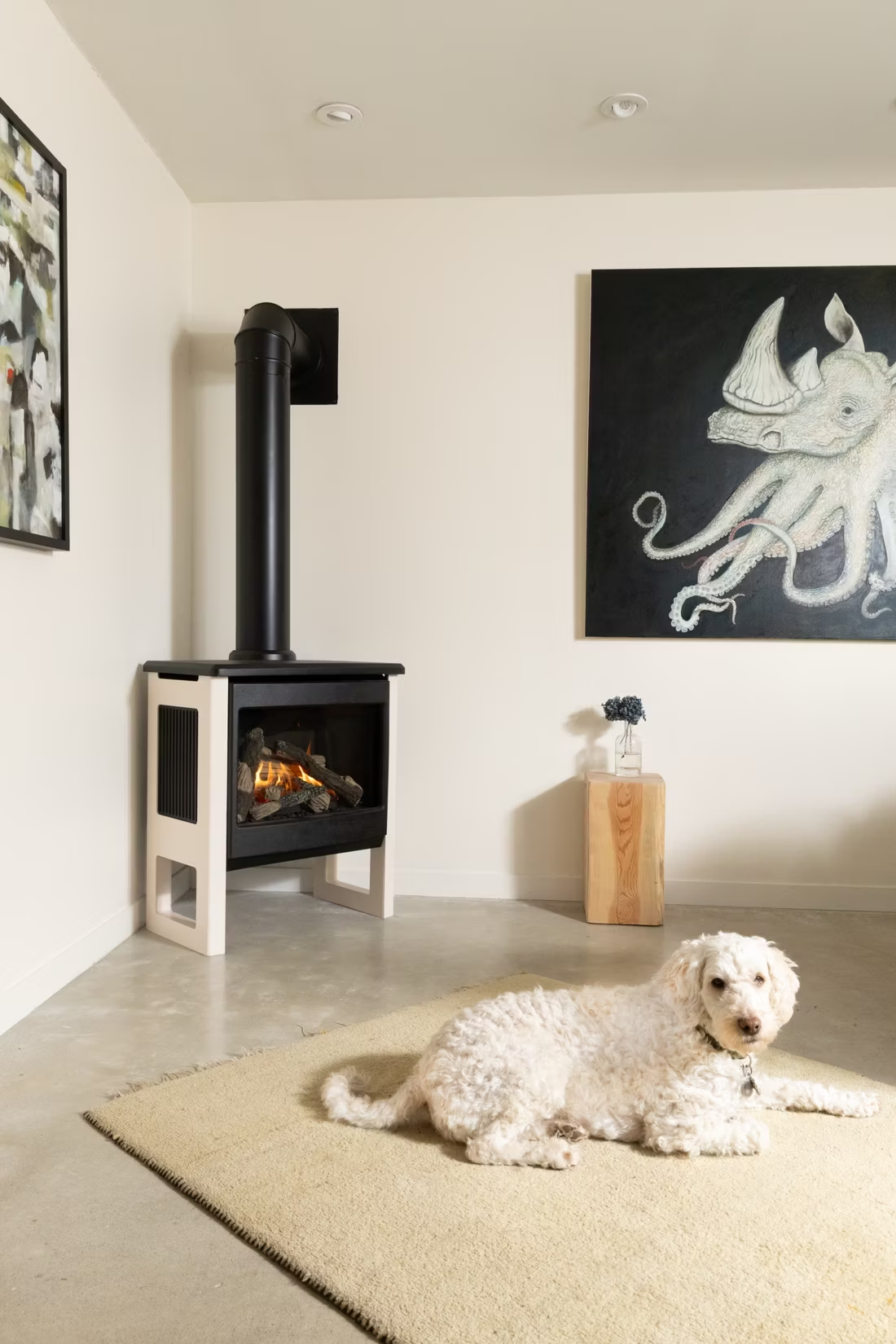
A gas fireplace is a fully built-in unit framed into a wall—the standard choice for new construction or a room that has never had a fireplace. A gas insert is sized to slide into an existing masonry firebox, turning an old open hearth into a sealed, efficient heat source using the chimney you already have. A gas stove is a freestanding cabinet unit, similar in footprint to a wood stove, that can sit against nearly any wall with the right venting. Given how many West Springfield homes already have a masonry fireplace from their original construction, an insert is the most common upgrade path here.
Do I need a permit to install a gas fireplace in West Springfield?
Yes—Fairfax County requires both a building permit and a gas line permit for new gas fireplace or insert installations, administered through the Fairfax County Department of Land Development Services. The gas line portion has to be run or connected by a licensed gas-fitter, which is one reason to go with an established hearth dealer rather than a general handyman: they coordinate the mechanical, gas, and inspection steps as one package instead of leaving you to schedule separate trades.
Vented vs. vent-free gas fireplaces—what does Virginia allow?
Vented (direct-vent) gas fireplaces pull combustion air from outside and exhaust it back outside through sealed pipe—they're code-compliant everywhere and the standard recommendation for a primary heat source. Vent-free units burn directly into the room air and are legal in Virginia, but they come with strict room-size and ventilation requirements and aren't permitted for use as a whole-room's only heat source in some jurisdictions. For West Springfield's typical living room and family room installations, direct-vent units are by far the more common choice among local dealers, since they deliver full heat output without any indoor air quality trade-offs.
How often should my gas fireplace be serviced?
Plan on an annual inspection, usually scheduled in early fall before the heating season starts. A technician checks the burner, pilot assembly, venting, and gas connections, and cleans the glass and interior—a much lighter job than a wood chimney sweep, but still important, since a dirty burner or degraded gasket is the most common cause of a fireplace that won't stay lit. Local gas appliance technicians in the Fairfax/West Springfield area typically charge in the $150 to $250 range for this service.
Gas vs. electric fireplace—which makes more sense for my home?
Gas delivers real radiant heat—enough to noticeably warm a room on a 23°F January evening—and most units still light during a power outage. Electric fireplaces plug into a standard outlet, need no venting or gas line at all, and install in an afternoon, but their heat output is capped and they go dark the moment Dominion Energy's power drops. At Dominion's residential rate of about 14 cents per kWh, running an electric unit as daily supplemental heat costs more per BTU than gas. For West Springfield homes wanting a genuine secondary heat source for cold snaps, gas is usually the better fit; for a bedroom, basement, or rental where simple ambiance is the goal, electric is often plenty.
Why is a fireplace insert so efficient?
An insert does two things: it seals the chimney completely, so you stop losing air you already paid to heat, and it radiates warmth into the room through the firebox and glass. Most add a heat-exchange fan that pulls cool room air underneath, wraps it around the hot firebox, and pushes it back out warm. Your home is more efficient before you've even lit the first fire.
Why is my open fireplace making my house colder?
Open fireplaces suck—literally. As the fire burns, it consumes air your furnace already paid to heat and pulls it out through the chimney, so the house is actually colder after the fire goes out than before you lit it. An insert fixes this: it seals the chimney, puts fixed glass across the front, and turns that hole in your house into a real heat source.
Does a fireplace add value to my home?
On average, a fireplace adds back to the home about the same amount you spent installing it. Add the monthly savings from heating the rooms you actually use instead of the whole house—often hundreds of dollars a year—and the value case is strong before you even count what a fire does for how your family uses the room.
How much should I budget for a fireplace?
For an average home—covering the fireplace, the vent pipe, and basic installation—a budget between $3,900 and $5,500 gives you a lot of options across wood, gas, and pellet. By the time you add finish work, gas line, and electrical, the average complete installation lands between $5,000 and $12,000 all-in. In a remodel or new build, a good rule is to put about 2.5% of the total project cost toward the fireplace.
Nearby Dealers
Hearth shops serving West Springfield and the surrounding area.
Find your gas fireplace in West Springfield.
Tell us about your home and we'll match you with a trusted local Fairfax County dealer and send over your free Project Guide & Parts List—the exact parts, vent kit, and installer recommendation for your gas project.
Find Your Fireplace →