
Find the right pellet stove for your Shenandoah Valley home.
Consistent, low-maintenance heat for Warren County's Blue Ridge winters—from Front Royal to Bentonville and Linden. Get matched with a trusted local dealer who can size and install it right.
Every Project Starts From One of These Five Situations
Steady heat with less hassle than cordwood.
Warren County sits in the northern Shenandoah Valley, bounded by the Blue Ridge to the east and Massanutten Mountain to the west, with a moderate but real heating season and average winter lows around 24°F—closer to Madison, WI's shoulder months than to the deep-freeze extremes further north. It's cold enough for months of steady supplemental or primary heat, but mild enough that homeowners here often weigh pellet against wood and gas rather than defaulting to whichever burns hottest.
That's where pellet stoves earn their place. With oak, hickory, and maple as the dominant hardwoods locally, plenty of Warren County residents already burn cordwood—but a pellet stove trades the splitting, stacking, and daily tending for a hopper you fill every day or two and a thermostat you set and forget. Regional pellet brands including Energex, Hamer Pellet Fuel, and Greene Team Pellet Fuel are distributed throughout the Shenandoah Valley, so fuel supply isn't the constraint it can be in more remote parts of the state. Warren County has no air quality non-attainment designation, so there's no local burn-restriction pressure pushing homeowners toward or away from pellet—the choice comes down to convenience, budget, and how a given home is laid out.
Three steps. No salesperson until you're ready.
Tell us about your project
Your zip code, your situation, and the fuel you're leaning toward—or let the answers point you to one.
See what's actually available
The brands dealers within 100 miles genuinely carry—real options, never a catalog mirage.
Get your dealer & Project Guide
A trusted local dealer, plus the free Project Guide & Parts List that names every component of the job.
Frequently Asked Questions
How much does a pellet stove installation cost in Warren County?
Pellet stove and insert installations in Warren County typically run $4,500 to $7,500, depending on the unit, whether it's a freestanding stove or an insert going into an existing fireplace, and how much venting work is required. Pellet stoves vent through a smaller-diameter pipe than wood stoves and can often run horizontally through an exterior wall rather than requiring a full vertical chimney—which can bring costs down for homes without an existing masonry fireplace. A local dealer can give you a firm number after seeing the room and the wall or chimney situation.
Do pellet stoves work during a power outage?
This is the one real tradeoff against wood heat, and it's worth being direct about it: pellet stoves need electricity to run the auger that feeds pellets into the burn pot and the blower that pushes heat into the room. Without power, most units won't operate at all. Some models accept a battery backup or small generator to bridge shorter outages, which is worth asking your local dealer about if Warren County's occasional ice-storm outages are a concern. For homes that want guaranteed heat with zero electrical dependency, a wood stove burning local oak or hickory is the more resilient backup option—some Warren County households run both.
What size pellet stove do I need for my home?
Sizing depends on square footage, ceiling height, and how open your floor plan is. As a general guide for Warren County's climate: smaller units (under 1,000 sq ft) suit a single room or a supplemental-heat setup, mid-size units (1,000–2,000 sq ft) cover most main living areas in the valley's older farmhouses and newer subdivisions alike, and larger units (2,000+ sq ft) can carry a well-insulated whole home as primary heat. Homes higher up toward the Blue Ridge or Massanutten foothills run a little colder overnight than the valley floor around Front Royal, so it's worth mentioning your specific location to whoever is sizing the unit.
What's the difference between a pellet stove and a pellet insert?
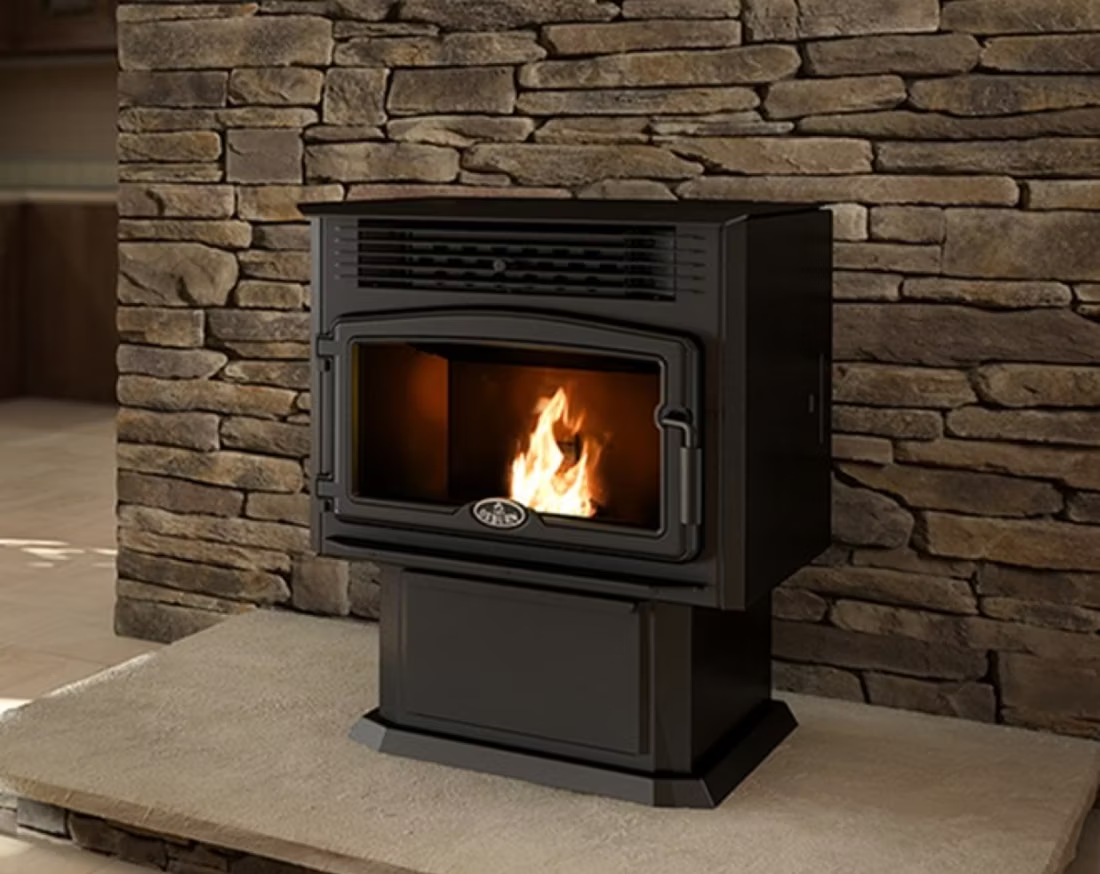
A pellet stove is a freestanding unit that sits on its own hearth pad and vents out through a wall or existing chimney chase—it can go almost anywhere in a room with the right clearances. A pellet insert is built to slide into an existing masonry fireplace opening, converting an old wood-burning fireplace into a much more efficient, thermostat-controlled heat source. For Warren County homes with an existing fireplace that's rarely used because it's inefficient, an insert is often the more straightforward upgrade. Homes without an existing fireplace typically go with a freestanding stove instead.
Where can I buy pellet fuel in Warren County?
Pellets are widely available throughout the Shenandoah Valley from regional producers including Energex, Hamer Pellet Fuel, and Greene Team Pellet Fuel, typically sold by the 40-pound bag or by the ton (a ton generally covers a full heating season for a supplemental-use home). Local hardware stores, farm supply retailers, and hearth dealers in and around Front Royal commonly stock bags in-season, and buying a full ton ahead of winter usually locks in a better per-bag price than buying as you go.
Do I need a permit to install a pellet stove in Warren County?
Yes—new pellet stove and insert installations require a building permit through the Warren County building department (or the Town of Front Royal building office if the home is within town limits), and the unit needs to meet current EPA emissions standards. Most local hearth dealers handle the permit application and inspection scheduling as part of the installation, so it's rarely something the homeowner has to manage directly. Because pellet stoves vent differently than wood stoves, make sure your installer is specifically experienced with pellet venting rather than just wood or gas.
How often does a pellet stove need cleaning and maintenance?
Pellet stoves need more frequent light maintenance than wood stoves but far less heavy cleaning. Plan on emptying the ash pan every few days to weekly depending on use, cleaning the burn pot and glass roughly weekly during heavy-use months, and a full professional service—checking the auger, exhaust fan, and gaskets—once a year, typically before the start of the season. Compared to an annual wood chimney sweep, it's a smaller job each time but a more frequent one. Local hearth dealers in Warren County who sell pellet units generally offer this annual service.
Pellet stove vs. wood stove—which is right for my Warren County home?
Wood stoves burning local oak, hickory, or maple work without any electricity, give you the most control over fuel cost if you cut or buy your own cordwood, and provide a real fallback during winter power outages. Pellet stoves are far more convenient day to day—no splitting or stacking, a thermostat instead of constant tending, and a cleaner, more consistent burn—but they depend entirely on electricity to run. In a mild-winter county like Warren, where the heating season is real but not brutal, either fuel handles the job comfortably; the decision usually comes down to how much hands-on fire-tending a household actually wants.
Pellet stove vs. gas fireplace—which is right for my home?
Gas fireplaces offer instant on-off heat with no fuel storage or hopper-filling at all, which is hard to beat for convenience. Pellet stoves trade some of that instant convenience for a more traditional flame appearance, generally lower fuel cost per BTU than propane (since natural gas service is limited outside Front Royal's core), and the ability to run on a fuel—wood pellets—that's produced regionally rather than piped or trucked in. For Warren County homes without natural gas access, pellet often ends up being the more economical clean-burning alternative to propane; a local dealer can walk through both options and give you real numbers for your specific home.
Why is a fireplace insert so efficient?
An insert does two things: it seals the chimney completely, so you stop losing air you already paid to heat, and it radiates warmth into the room through the firebox and glass. Most add a heat-exchange fan that pulls cool room air underneath, wraps it around the hot firebox, and pushes it back out warm. Your home is more efficient before you've even lit the first fire.
Can a pellet stove heat a whole house?
It genuinely can. I burned a pellet stove as my only heat source for years after a furnace died, and it kept the entire house warm. Pellets feed automatically from a hopper, so you get wood-heat economics with thermostat-style control. Two honest caveats: it needs weekly cleaning during the season, and most models need electricity to run—ask about battery backup if outages are a concern.
Does a fireplace add value to my home?
On average, a fireplace adds back to the home about the same amount you spent installing it. Add the monthly savings from heating the rooms you actually use instead of the whole house—often hundreds of dollars a year—and the value case is strong before you even count what a fire does for how your family uses the room.
What is an in-home preview and do I need one?
It's a visit where a hearth professional measures your space, confirms the model you picked actually works in your home, and walks the specs—framing, gas line, venting, finish work—before anything is ordered. Some details you just can't know until you see the house. Never make a down payment without one; it's the single most-skipped step that burns buyers.
Stove and Fireplace Dealers in Warren County
Listings include WhyFire partner dealers, dealers we have verified as authorized for the brands we recommend, and established local businesses that carry hearth products. Every listing shows which one it is. The ones marked Preferred run on WhyFire's software, so they can show you real pricing and book your appointment right here. No manufacturer pays for placement. How we verify dealers →
Area – Huntly, Va
Miller Ace Hardware
Holtzman Propane
Dmv Chimneys & Masonry Repair
Prouty's Chimney Sweep
Blossman Gas And Appliance
Amazing Flame
Costello's Hearth & Spa - Warrenton
Nova Fire Design
Pellet Brands Stocked Around Warren County
Manufacturers will point you to the nearest stocking dealer.
Get your Warren County pellet stove Project Guide & Parts List.
Tell us about your home and heating goals, and we'll match you with a trusted local dealer and send a free Project Guide & Parts List—the exact venting and equipment your pellet project needs, plus who to call in Warren County to install it.
Find Your Fireplace →