
Add fireplace warmth to your Staunton home—no chimney required.
With a long, demanding heating season and winter lows averaging 25°F, Staunton homes need real supplemental warmth—but not every house has a working chimney. Find the right electric unit and connect with a trusted local dealer.
Every Project Starts From One of These Five Situations
Instant heat and ambiance, without the venting work.
Staunton sits in the Shenandoah Valley with a genuinely cold-but-manageable winter—average lows near 25°F and a solidly long heating season, cooler than much of coastal Virginia but nowhere near the extremes of a place like Burlington, VT. Plenty of homes in the surrounding countryside still burn oak, hickory, and maple, and residents can cut their own firewood through a Monongahela National Forest permit for about $20 a cord between May and October. But inside the city itself—especially in the Victorian and Greek Revival homes around the Wharf District, Gospel Hill, and Newtown—a lot of fireboxes are decorative, capped, or simply not worth the cost of relining a masonry flue.
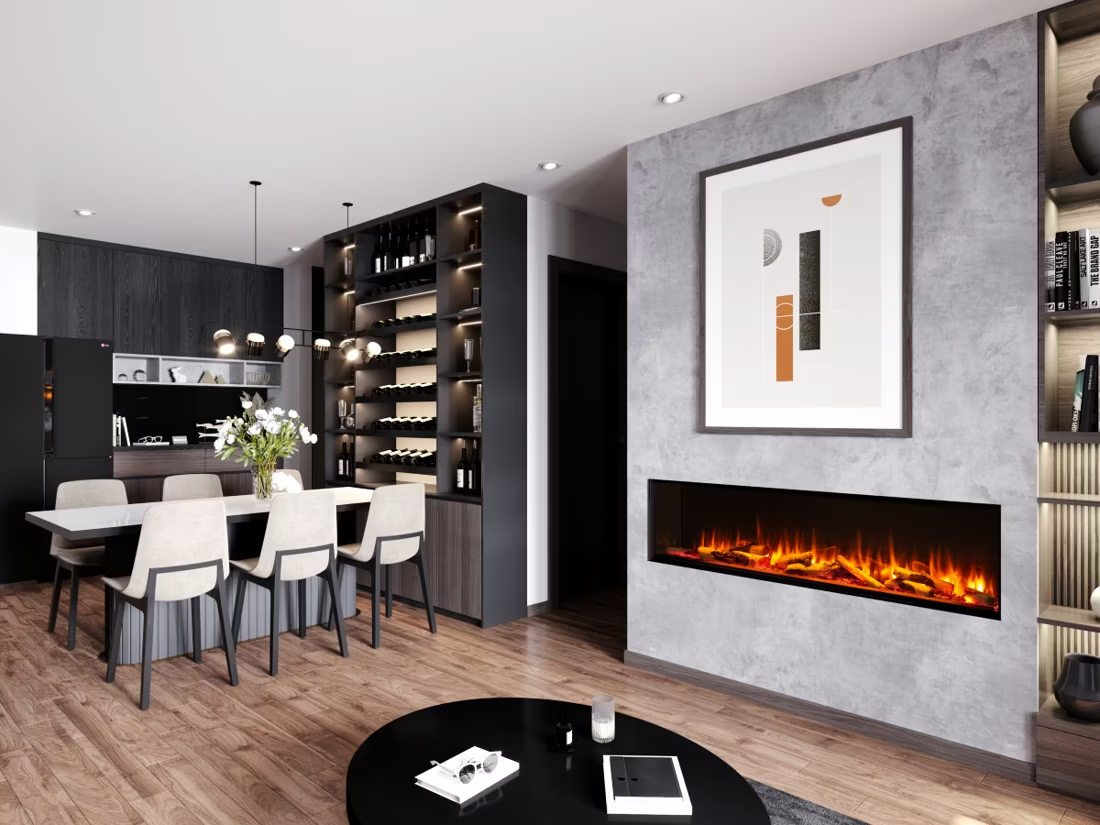
That's where electric fireplaces earn their place. There's no chimney to inspect, no air quality advisory to check (Staunton has none on record), and no cutting permit to file. A plug-in insert or built-in unit delivers real supplemental heat to a bedroom, sunroom, or finished basement, plus the look of a fire in rentals, condos, and historic homes where venting work isn't practical. It won't replace a furnace on a January night in the valley, but for zone heating and ambiance, it's the lowest-friction option in Staunton—and one a local dealer can usually install in an afternoon.
Three steps. No salesperson until you're ready.
Tell us about your project
Your zip code, your situation, and the fuel you're leaning toward—or let the answers point you to one.
See what's actually available
The brands dealers within 100 miles genuinely carry—real options, never a catalog mirage.
Get your dealer & Project Guide
A trusted local dealer, plus the free Project Guide & Parts List that names every component of the job.
Frequently Asked Questions
How much does an electric fireplace installation cost in Staunton?
Most electric fireplace projects in Staunton run somewhere between $300 and $2,500. A plug-in insert that drops into an existing firebox or a freestanding stove-style unit sits at the low end—no electrician needed if it runs on a standard 120V outlet. A larger built-in wall unit or linear electric fireplace that requires a dedicated 240V circuit and some framing or trim work sits toward the higher end, since that involves an electrician and sometimes drywall repair. A local dealer can give you a firm number after seeing the space and the existing electrical panel capacity.
Will an electric fireplace actually heat my Staunton home, or is it just for looks?
It depends on the room and the unit. Most electric fireplaces put out around 5,000 to 10,000 BTUs, which is enough to noticeably warm a bedroom, sunroom, or open living area up to roughly 400 square feet—genuinely useful supplemental heat on a 25°F valley morning. What it won't do is replace central heat for a whole house during Staunton's coldest stretches; the long, demanding heating season here means the furnace or heat pump is still doing the bulk of the work. Think of an electric unit as zone heat for the room you actually live in, not a whole-home solution.
Do I need a permit to install an electric fireplace in Staunton?
In most cases, no. A plug-in insert or a unit that uses an existing standard outlet doesn't trigger a permit because there's no gas line and no venting involved. Where a permit does come into play is a built-in electric fireplace that requires a new dedicated circuit or panel work—that's an electrical permit through the local building department, and it's typically pulled by the electrician doing the install rather than the homeowner. Compare that to wood or gas installs elsewhere in the county, which almost always require a building permit for the chimney or venting work.
What's the difference between an electric fireplace, an electric insert, and an electric log set?
An electric fireplace is typically a self-contained unit—freestanding, wall-mount, or built into cabinetry—with its own frame and firebox look. An electric insert is sized to slide into an existing masonry or prefab firebox, which makes it the go-to option for Staunton's older homes with a decorative fireplace that no longer functions as a chimney. An electric log set is the simplest option: a set of glowing logs that drops into an existing hearth for ambiance, with little to no heat output. For most Staunton homeowners with a non-working fireplace they want to bring back to life, an insert is the right call; for a room with no firebox at all, a wall-mount or built-in unit makes more sense.
Electric vs. wood—which makes sense for a Staunton home?
Wood still has a real following in and around Staunton—oak, hickory, and maple are all locally common, and a Monongahela National Forest cutting permit runs about $20 per cord from May through October for anyone willing to cut their own. Wood also keeps working during a power outage, which electric can't do. But wood means a working chimney, annual sweeps, and hauling and stacking cordwood—a lot to take on for a home where the fireplace is mostly for a cozy evening rather than primary heat. Electric wins for convenience, zero emissions (relevant even though Staunton has no listed air quality concerns), and installs in homes where relining a flue isn't in the budget. Many Staunton homeowners with an unused masonry fireplace choose an electric insert specifically because it sidesteps the chimney question entirely.
Will my electric fireplace still work during a power outage?
No—electric fireplaces need power to run the heating element, lights, and flame effect, so they shut down along with everything else when the grid goes out. That's a real consideration in the Shenandoah Valley, where winter storms and downed lines can knock out power for a stretch. If backup heat during outages matters to your household, a wood stove or a battery-backed gas unit is worth discussing with a local dealer alongside an electric option—some Staunton homeowners end up with electric for daily convenience and a wood-burning unit elsewhere in the house for outage backup.
Is an electric insert a good fit for Staunton's older, historic homes?
Often, yes. Staunton has a lot of housing stock from the Victorian and Greek Revival eras—homes around Gospel Hill and the Wharf District especially—where the original masonry fireplace still looks great but hasn't been used in decades and would cost thousands to reline for wood or gas. An electric insert slides into that same opening, uses the existing surround and mantel, and gets the fireplace back in daily use without touching the chimney structure at all. It's one of the more common projects local dealers see in Staunton's historic neighborhoods specifically because it preserves the original look.
How long does an electric fireplace installation take?
A plug-in insert or freestanding unit can often be installed in under an hour—it's largely a matter of fit and finish. A built-in wall unit requiring a new circuit typically takes a half day to a full day once you factor in the electrician's rough-in work and any trim carpentry around the unit. Compare that to a wood stove install with chimney work, which can take one to two days, or a gas insert requiring a new gas line, which can take longer depending on the run. Electric is consistently the fastest fireplace project a Staunton dealer will handle.
How do I size an electric fireplace for my room?
Match the unit's BTU output to the room, not the wall it's going on. A 5,000 BTU insert is generally enough for a bedroom or small den; rooms up to around 400 square feet usually call for something closer to 8,000 to 10,000 BTUs if you want it to function as real supplemental heat rather than just ambiance. Ceiling height, window count, and how well the room is insulated all shift that estimate—an older Staunton home with single-pane windows will need more output than a newly renovated space of the same size. A local dealer can walk the room and give you a specific recommendation rather than relying on a size chart alone.
Does an electric fireplace need a vent or chimney?
No—that's its superpower. An electric fireplace needs a wall and an outlet, period. No vent pipe, no gas line, no clearances to design around, which is why it works in bedrooms, offices, apartments, and walls where venting a gas or wood unit would be impractical or impossible. Installation is typically the simplest and least expensive of any fireplace type.
Can I put a TV above my fireplace?
Yes—with an asterisk. Fireplaces are hot and TVs don't like heat. Either put a mantel between them to deflect rising warmth, or choose a fireplace with heat-management technology that creates a cool zone on the wall above—the wall stays around 125 degrees, barely warm, while the room still gets full heat. If you like clean lines and don't want a mantel, heat management is the answer.
Can I install a fireplace myself?
If you're putting a fire in your house on purpose, it's best to work with an expert. Unless you're genuinely experienced in framing, gas line, vent pipe, and the national code on clearances to combustibles, have a professional do it—and ideally the same company that sells you the fireplace, so warranty, service, and liability all live under one roof.
Can a fireplace actually lower my heating bill?
Yes—by creating a comfort zone. A furnace heats every square foot of the house just to warm the one room you're in; a gas fireplace on low burns roughly a sixth of the gas a typical furnace does. Set the furnace around 55–60 degrees as a baseline, then heat the rooms your family actually uses. Families who heat this way commonly save $20–$60 a month.
Stove and Fireplace Dealers in Staunton County
Listings include WhyFire partner dealers, dealers we have verified as authorized for the brands we recommend, and established local businesses that carry hearth products. Every listing shows which one it is. The ones marked Preferred run on WhyFire's software, so they can show you real pricing and book your appointment right here. No manufacturer pays for placement. How we verify dealers →
Clines Heating And Cooling
Holtzman Propane
Valley Filter & Maintenance
Blossman Gas And Appliance
Blue Ridge Chimney
Acme Stove Co.
Find your electric fireplace in Staunton.
Tell us a bit about your home and we'll match you with the right electric fireplace or insert, plus a free Project Guide & Parts List—the exact parts and your recommended local Staunton dealer.
Find Your Fireplace →