
Keep Your Family Warm and Safe—No Matter What
Portsmouth rarely needs a primary heat source—but when a hurricane or nor'easter knocks the power out for days, a wood stove is the one appliance that doesn't care. We'll help you figure out if one makes sense for your home.
Every Project Starts From One of These Five Situations
Wood heat isn't the norm here—and the climate explains why.
Portsmouth sits at essentially sea level in the Hampton Roads region of coastal Virginia, with an average winter low around 32°F and a fairly mild, moderate winter heating season overall. That's a fraction of the winter heating load a cold-climate city like Duluth, MN sees in a single winter, and it means most Portsmouth homes get by fine on a central heat pump or furnace without ever needing a dedicated wood-burning appliance as their main heat source.
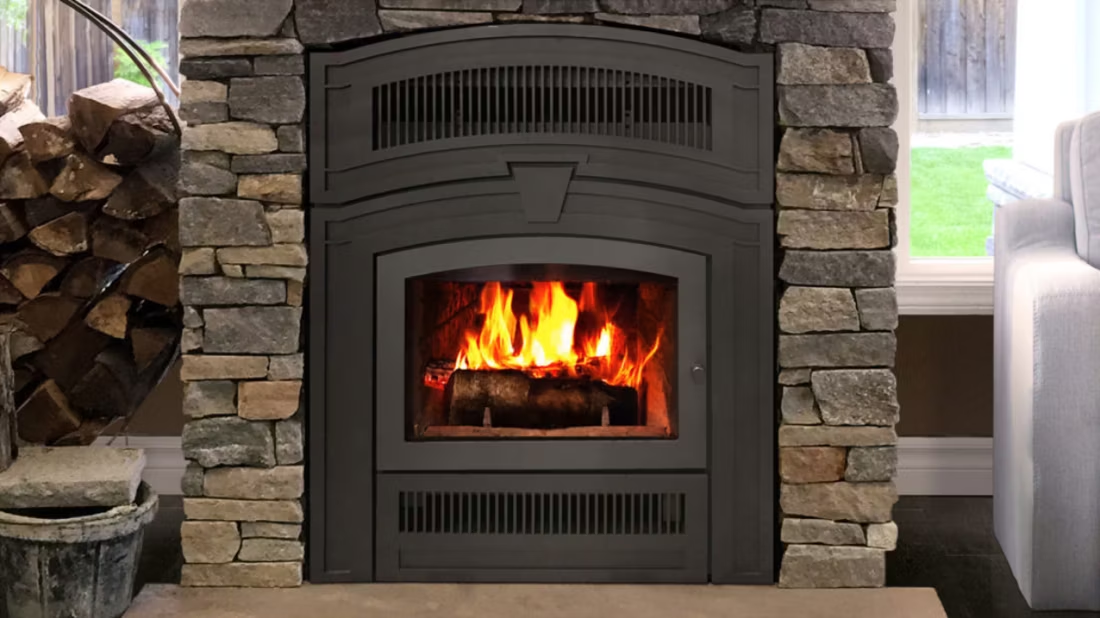
That said, wood stoves aren't unheard of here. Hampton Roads sits directly in the path of Atlantic hurricanes and winter nor'easters, and multi-day power outages after a named storm are a real and recurring experience for this part of Virginia. A wood stove that doesn't need electricity to run is genuinely useful backup heat in that scenario. Others install one for ambiance in a den or sunroom, or because they inherited a masonry fireplace and want to upgrade it into something that actually throws heat. Local hardwoods like oak, hickory, and maple are readily available from Tidewater-area firewood dealers, and with no regional air quality restrictions on wood burning, there's nothing stopping a homeowner who wants one—it's simply a smaller, more specific use case here than it is farther north or out west.
Three steps. No salesperson until you're ready.
Tell us about your project
Your zip code, your situation, and the fuel you're leaning toward—or let the answers point you to one.
See what's actually available
The brands dealers within 100 miles genuinely carry—real options, never a catalog mirage.
Get your dealer & Project Guide
A trusted local dealer, plus the free Project Guide & Parts List that names every component of the job.
Frequently Asked Questions
Are wood stoves even practical in a climate as mild as Portsmouth's?
For most Portsmouth homes, a wood stove isn't going to be your primary heat source—the climate just doesn't demand it the way it does in places with a much longer, harder winter heating season. Where a wood stove earns its keep here is as backup heat during hurricane and nor'easter power outages, as supplemental heat in a detached room or sunroom, or purely for ambiance. If you're weighing wood against gas for everyday comfort, gas is the more practical primary choice in this climate; wood is the better fit if your priority is a heat source that works with zero electricity.
How much does a wood stove installation cost in Portsmouth?
Costs vary based on whether you're installing a freestanding stove with new Class A chimney pipe or dropping an insert into an existing masonry fireplace. In coastal Virginia, homeowners typically spend somewhere in the $3,500 to $8,000 range depending on the unit, venting path, and any hearth pad or framing work needed. Because wood installs are less common here than gas or electric, it's worth getting a quote from a dealer who regularly does this kind of work rather than a general contractor—they'll know how to size the flue correctly for our shorter, milder burn season.
Do I need a permit to install a wood stove in Portsmouth?
Yes—new wood-burning appliance installations in the City of Portsmouth go through the local building permit process, and the stove itself needs to meet current EPA New Source Performance Standards. Most hearth dealers who install wood stoves handle the permit application and inspection scheduling as part of the job, so you typically aren't the one filing paperwork with the city yourself. Because wood installs are less frequent here, confirm your installer has actually pulled a wood-stove permit in Portsmouth before, not just a gas one.
What firewood species are available locally around Portsmouth?
Oak, hickory, and maple are the common hardwoods sold by firewood dealers throughout the Hampton Roads area, all of which burn hot and clean once properly seasoned. Given our humid coastal climate, seasoning takes longer here than in drier regions—plan on at least six to twelve months of covered, stacked drying time before oak or hickory burns well, longer if it's been a wet summer.
Will a wood stove actually help during hurricane season power outages?
Yes, and this is the strongest practical case for wood heat in Portsmouth. When a hurricane or nor'easter takes down power lines across Hampton Roads, homes on electric heat pumps or gas furnaces with electronic ignition lose heat entirely until Virginia Electric & Power Co. restores service, which can take several days after a major storm. A wood stove burns and radiates heat with no electrical input at all, which makes it one of the more resilient backup heat options a coastal Virginia homeowner can have, alongside a generator for everything else in the house.
Is wood smoke a problem in Portsmouth the way it is in some other cities?
No—Portsmouth doesn't have the winter temperature inversions or wood-smoke non-attainment status that create burn restrictions in some western cities. There are no local air quality advisories tied to residential wood burning here. That said, an EPA-certified stove is still the right call for efficiency and lower creosote buildup, and it's required for new installs under current building code regardless of local air quality conditions.
Should I get a wood stove or a gas fireplace for my Portsmouth home?
For most Portsmouth households, gas is the more practical everyday choice—natural gas and propane fireplaces are common here, light instantly, and don't require firewood storage or ash cleanup in a humid climate where dry wood is harder to keep. Wood makes more sense specifically if you want a heat source that works without electricity during storm outages, or if you already have a masonry fireplace you'd like to convert into something more functional. Some homeowners here end up with both: gas for daily convenience, a small wood stove or insert set aside for backup.
Where can I buy firewood in Portsmouth?
Several firewood suppliers deliver throughout Hampton Roads, typically selling seasoned oak, hickory, and maple by the cord or half-cord, with prices generally running $200 to $300 per cord depending on species and how well-seasoned the wood is. Because our humid summers slow down drying, buying wood a season ahead—rather than the week before a cold snap—makes a real difference in how well it burns.
What size wood stove do I actually need if I'm only using it occasionally?
If you're installing a wood stove primarily as storm backup or supplemental warmth rather than full-time heat, you generally don't need to size it for whole-home output the way you would in a colder climate. A small to mid-size stove rated for 1,000 to 1,500 square feet is usually plenty to keep a main living area comfortable during an extended outage or take the chill off a sunroom on a rare cold snap. A local dealer can walk through your specific room and insulation to confirm sizing during a free consultation.
Why won't my new wood stove get going like my old one?
New wood stoves are 70%+ efficient, so far less heat goes up the flue—which also means less draft to get a fire established. The rule: build a genuinely hot fire for about 45 minutes before you choke it down. Skip that and you get smoke in the room, creosote in the chimney, and a fire that never takes off. Most performance complaints trace straight back to this.
Why is my open fireplace making my house colder?
Open fireplaces suck—literally. As the fire burns, it consumes air your furnace already paid to heat and pulls it out through the chimney, so the house is actually colder after the fire goes out than before you lit it. An insert fixes this: it seals the chimney, puts fixed glass across the front, and turns that hole in your house into a real heat source.
What is an in-home preview and do I need one?
It's a visit where a hearth professional measures your space, confirms the model you picked actually works in your home, and walks the specs—framing, gas line, venting, finish work—before anything is ordered. Some details you just can't know until you see the house. Never make a down payment without one; it's the single most-skipped step that burns buyers.
Can a fireplace actually lower my heating bill?
Yes—by creating a comfort zone. A furnace heats every square foot of the house just to warm the one room you're in; a gas fireplace on low burns roughly a sixth of the gas a typical furnace does. Set the furnace around 55–60 degrees as a baseline, then heat the rooms your family actually uses. Families who heat this way commonly save $20–$60 a month.
Get matched with a wood stove dealer in Portsmouth.
Tell us about your home and how you'd actually use a wood stove—daily warmth, storm backup, or ambiance—and we'll match you with a trusted local dealer and send over a free Project Guide & Parts List with the exact parts, including the vent kit, for your Portsmouth install.
Find Your Fireplace →