
Gas heat that keeps pace with Portsmouth's damp Tidewater winters.
Instant, reliable warmth for homes along the Elizabeth River and throughout Hampton Roads—where winters are mild but the humidity and nor'easter power outages make a well-installed gas fireplace worth having. Find the right unit and connect with a trusted local dealer.
Every Project Starts From One of These Five Situations
Reliable heat for a coastal climate that rarely gets brutal.
Portsmouth sits on the Elizabeth River at the heart of Hampton Roads, with an average winter low around 32 degrees and a fairly light winter heating load overall—a fraction of what colder inland states see. Most winters bring more damp chill and the occasional hard freeze than sustained deep cold, which is exactly the kind of climate where a gas fireplace shines: quick, controllable heat for the handful of genuinely cold nights and shoulder-season chill, without the commitment of a wood-burning setup sized for a much harsher winter.
Virginia Natural Gas serves most of Portsmouth's neighborhoods, so homeowners with an existing gas water heater or range often already have the infrastructure in place to add a fireplace. Many of the older homes in Olde Towne Portsmouth were built with masonry fireplaces that never saw much use once central heat arrived—a gas insert converts that unused firebox into real, on-demand heat. And with hurricane season and coastal nor'easters occasionally knocking out power for Dominion Energy customers, a gas fireplace with battery-backup ignition gives Portsmouth homes a heat source that doesn't depend on the grid staying up.
Three steps. No salesperson until you're ready.
Tell us about your project
Your zip code, your situation, and the fuel you're leaning toward—or let the answers point you to one.
See what's actually available
The brands dealers within 100 miles genuinely carry—real options, never a catalog mirage.
Get your dealer & Project Guide
A trusted local dealer, plus the free Project Guide & Parts List that names every component of the job.
Frequently Asked Questions
How much does a gas fireplace installation cost in Portsmouth?
A typical gas fireplace installation in Portsmouth runs roughly $4,000 to $9,500, depending on the unit, the venting path, and whether new gas line work is required. Converting an existing masonry fireplace—common in Olde Towne Portsmouth's older housing stock—with a direct-vent gas insert and a stainless liner tends to land on the lower to middle end, especially if you're already on Virginia Natural Gas service. A new built-in gas fireplace for a remodel or addition, with fresh venting and gas line runs, sits toward the higher end. Homes in the historic district may also need exterior venting reviewed for visibility from the street, which a local installer familiar with Portsmouth's permitting process can help navigate.
Can I convert my existing wood fireplace to gas?
Yes, and it's a common project in Portsmouth's older neighborhoods, where many homes still have the original oak or brick masonry fireboxes built decades ago. A gas insert slides into the existing opening and vents through a stainless liner run up the same chimney, so you keep the mantel and masonry look while gaining real, thermostat-controlled heat. Costs generally run $4,500 to $8,500 depending on the insert and whether the chimney needs relining or repair work first—older Portsmouth chimneys sometimes need a liner inspection before a gas insert can go in safely.
Do I need natural gas, or can I use propane?
Most of Portsmouth falls within the Virginia Natural Gas service territory, so if your home already has gas for the water heater, range, or furnace, adding a fireplace is usually a straightforward tie-in. For homes outside the service area, in newer developments not yet connected, or in situations where running a gas line would be costly, propane is a practical alternative with a local supplier setting up a tank. Most gas fireplace models can be configured for either fuel—your installer sets the correct orifice and regulator for whichever you're running.
Will my gas fireplace work during a power outage?
Most modern gas fireplaces are built to keep working when the power goes out, which matters in Portsmouth given how often hurricane season and coastal nor'easters knock out Dominion Energy service for a day or more. Units with intermittent pilot ignition include a battery backup that automatically takes over, so the fireplace lights on demand off the batteries until power returns—just remember to keep fresh ones in the unit. Valor's gas fireplaces take a different approach: their pilot generates its own electricity through the thermocouple, so there's no battery to maintain at all. Ask your local dealer about the ignition system on any model you're considering, especially if storm-season reliability matters to you.
What's the difference between a gas fireplace, gas insert, and gas stove?
A gas fireplace is a fully built-in unit framed into a wall, typically chosen for new construction or a remodel. A gas insert is sized to slide into an existing masonry firebox—the common route for Portsmouth's older homes with fireplaces that predate central heating. A gas stove is a freestanding unit that sits on the floor on its own hearth pad, similar in footprint to a wood stove but running on gas. For most Portsmouth homeowners working with an existing fireplace, an insert is the natural fit; new rooms or additions without an existing firebox are usually better suited to a built-in unit.
Do I need a permit to install a gas fireplace in Portsmouth?
Yes—the City of Portsmouth requires both a building permit and a gas permit for new gas fireplace installations, and the gas line connection has to be done by a licensed gas-fitter. Most local hearth retailers handle the permitting as part of the installation. Homes in the Olde Towne Historic District may face an added layer of review if the venting termination is visible from the street, since exterior alterations there are subject to architectural guidelines—a dealer with experience in the historic district will know how to route venting to satisfy both code and the aesthetic review.
What's the difference between vented and vent-free gas fireplaces?
Vented (direct-vent) gas fireplaces pull combustion air from outside and exhaust it back outside through a sealed pipe—they're the cleanest and most universally recommended option. Vent-free units burn gas directly into the room with no external venting, which means combustion byproducts, including water vapor, stay indoors. That's a real consideration in Portsmouth's already humid, coastal climate, where added indoor moisture from a vent-free unit can contribute to condensation and mold issues in older, less-ventilated homes. Vent-free units are legal in Virginia within strict room-sizing and oxygen-sensor requirements, but for most Portsmouth homes, direct-vent is the safer and more comfortable long-term choice—worth discussing with a local dealer before you decide.
How often should my gas fireplace be serviced?
Plan on an annual inspection, ideally before the fall heating season starts. A technician checks the burner, pilot assembly, gas connections, and venting, and cleans the glass and interior. In Portsmouth's salt-air coastal environment, vent components and metal fittings can corrode faster than they would further inland, so annual service matters more here than it might in a drier climate—catching early corrosion before it becomes a venting problem is worth the $150 to $250 most local providers charge for the visit.
Gas vs. wood—which is right for my home in Portsmouth?
With Portsmouth's mild winters and a fairly light winter heating load overall, gas covers the vast majority of heating needs without the hassle of stacking and seasoning cordwood. Wood—typically local oak, hickory, or maple—remains popular here more for ambiance and the occasional backup heat source during extended outages than as a primary necessity, since Portsmouth's winters rarely demand the kind of sustained, all-night burns that colder climates like Burlington, VT rely on wood for. Gas wins on convenience and consistency for most homes; wood is worth considering if you specifically want an emergency heat source that doesn't depend on gas service or electricity for ignition.
Can I put a TV above my fireplace?
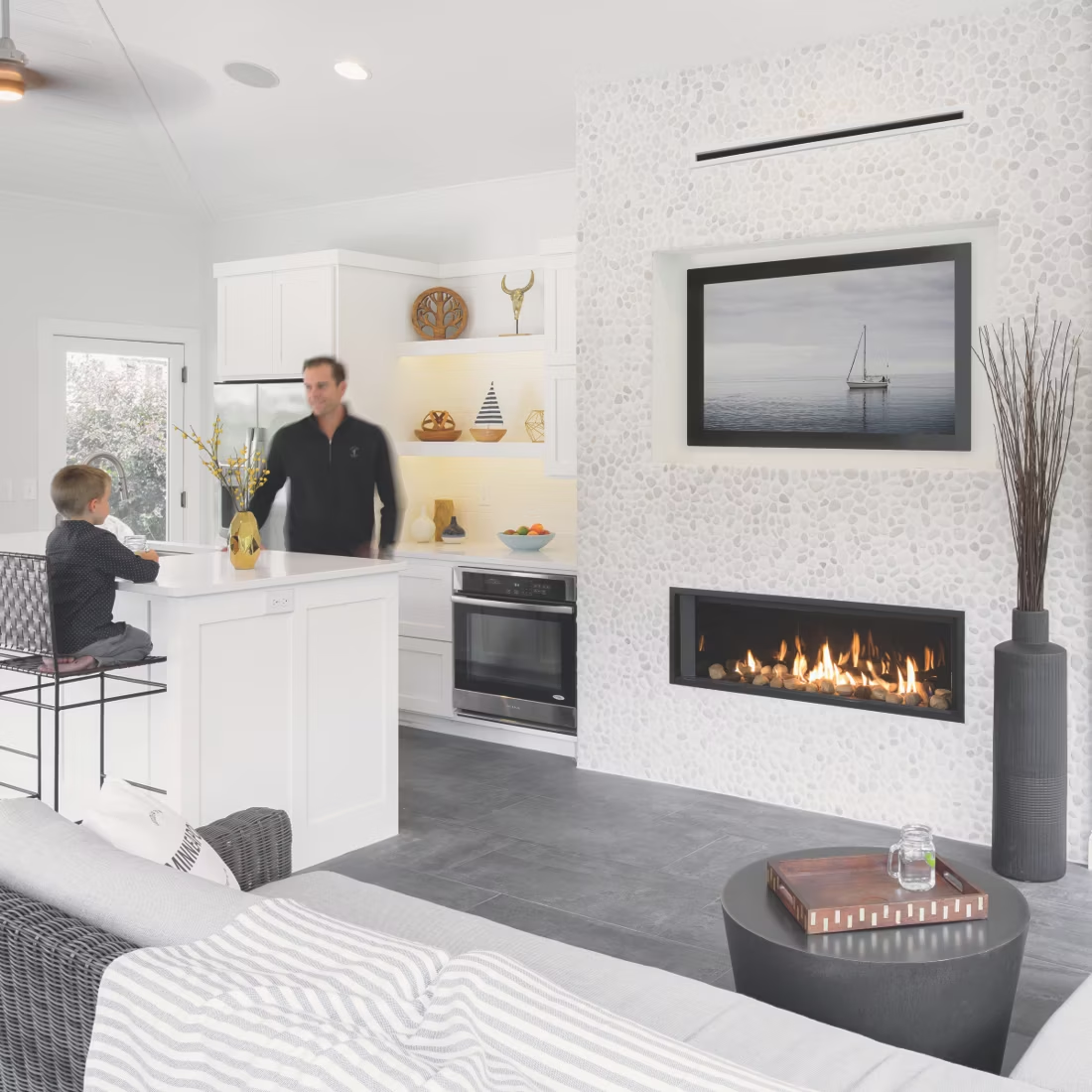
Yes—with an asterisk. Fireplaces are hot and TVs don't like heat. Either put a mantel between them to deflect rising warmth, or choose a fireplace with heat-management technology that creates a cool zone on the wall above—the wall stays around 125 degrees, barely warm, while the room still gets full heat. If you like clean lines and don't want a mantel, heat management is the answer.
Why is my open fireplace making my house colder?
Open fireplaces suck—literally. As the fire burns, it consumes air your furnace already paid to heat and pulls it out through the chimney, so the house is actually colder after the fire goes out than before you lit it. An insert fixes this: it seals the chimney, puts fixed glass across the front, and turns that hole in your house into a real heat source.
How much should I budget for a fireplace?
For an average home—covering the fireplace, the vent pipe, and basic installation—a budget between $3,900 and $5,500 gives you a lot of options across wood, gas, and pellet. By the time you add finish work, gas line, and electrical, the average complete installation lands between $5,000 and $12,000 all-in. In a remodel or new build, a good rule is to put about 2.5% of the total project cost toward the fireplace.
Does a fireplace add value to my home?
On average, a fireplace adds back to the home about the same amount you spent installing it. Add the monthly savings from heating the rooms you actually use instead of the whole house—often hundreds of dollars a year—and the value case is strong before you even count what a fire does for how your family uses the room.
Stove and Fireplace Dealers in Portsmouth County
Listings include WhyFire partner dealers, dealers we have verified as authorized for the brands we recommend, and established local businesses that carry hearth products. Every listing shows which one it is. The ones marked Preferred run on WhyFire's software, so they can show you real pricing and book your appointment right here. No manufacturer pays for placement. How we verify dealers →
Taylor's Do It Center
Ray Johnson's Fireplace Shop
Coastal Chimney & Contracting, Corp.
Fireside Hearth & Home - Newport News
Taylor's Fire Works
Solid Structures
Find your gas fireplace in Portsmouth, VA.
Tell us a bit about your home and we'll match you with a trusted local Portsmouth dealer and send over a free Project Guide & Parts List—the exact parts, including the vent kit, for your gas fireplace project.
Find Your Fireplace →