
Find your electric fireplace in Portsmouth.
Zone heat and real ambiance for Portsmouth's mild Tidewater winters—no chimney, no gas line, no venting. Find the right unit and get matched with a trusted local dealer.
Every Project Starts From One of These Five Situations
Mild winters, real heat where you actually sit.
Portsmouth sits on the Elizabeth River in the heart of Hampton Roads, with a humid subtropical climate and a mild, short winter heating season, plus an average winter low near 32°F. That's a fraction of the heating load a place like Duluth or Burlington carries—most Portsmouth homes lean on central HVAC for the handful of genuinely cold snaps each winter, which is exactly the kind of climate where an electric fireplace earns its keep. Rather than sizing a whole-home wood or gas system around a few cold weeks, homeowners here are increasingly adding electric units to the rooms they actually live in.
Whether it's a wall-mount unit in a Churchland great room, a built-in electric insert warming up a fireplace opening in an Olde Towne rowhouse, or a freestanding unit in an apartment near the Naval shipyard, electric fireplaces plug into a standard household circuit (or a dedicated line for larger built-ins) served by Dominion Energy and produce instant, controllable heat with zero combustion byproducts. No chimney to sweep, no gas line to run, and no masonry to maintain—which matters in a city with a lot of historic housing stock where adding new venting isn't always practical or is restricted by the home's construction.
Three steps. No salesperson until you're ready.
Tell us about your project
Your zip code, your situation, and the fuel you're leaning toward—or let the answers point you to one.
See what's actually available
The brands dealers within 100 miles genuinely carry—real options, never a catalog mirage.
Get your dealer & Project Guide
A trusted local dealer, plus the free Project Guide & Parts List that names every component of the job.
Frequently Asked Questions
How much does an electric fireplace installation cost in Portsmouth?
Most electric fireplace projects in Portsmouth run $400 to $1,200 installed. A plug-in freestanding or wall-mount unit on an existing outlet sits at the low end—often closer to the cost of the unit itself plus a couple hours of labor. A built-in electric insert or a linear wall unit that requires a dedicated 120V or 240V circuit, drywall or mantel work, and an electrician to run new wiring lands toward the higher end. Converting an existing masonry fireplace opening to hold an electric insert is usually the middle of that range, since the opening often needs minor framing or trim work to get a clean fit.
Do I need an electrician or a permit to install an electric fireplace?
A simple plug-in unit that draws from an existing outlet typically doesn't require a permit—it's treated like any other appliance. A built-in electric fireplace or a unit that needs a new dedicated circuit does require an electrician, and the City of Portsmouth's permitting office generally requires an electrical permit for that new circuit work. Many of Portsmouth's older homes, especially in Olde Towne and Cradock, still have original or upgraded-but-limited panel capacity, so it's worth having an electrician confirm the panel can support a larger built-in unit (some draw close to 1,500 watts) before you commit to a model.
Will my electric fireplace work during a power outage?
No—this is the honest tradeoff with electric heat. Unlike a gas fireplace with battery-backup ignition or a wood stove that needs no power at all, an electric fireplace goes dark the moment the grid does. Hampton Roads sees its share of outages during nor'easters and tropical systems, so if backup heat during a storm is a priority, an electric unit should be a supplement to another heat source rather than your only plan. For everyday use—evenings, mild cold snaps, ambiance—it's a low-maintenance, low-risk way to add heat to a room without touching your home's gas or wood-burning setup.
What's the difference between an electric fireplace, insert, and wall-mount unit?
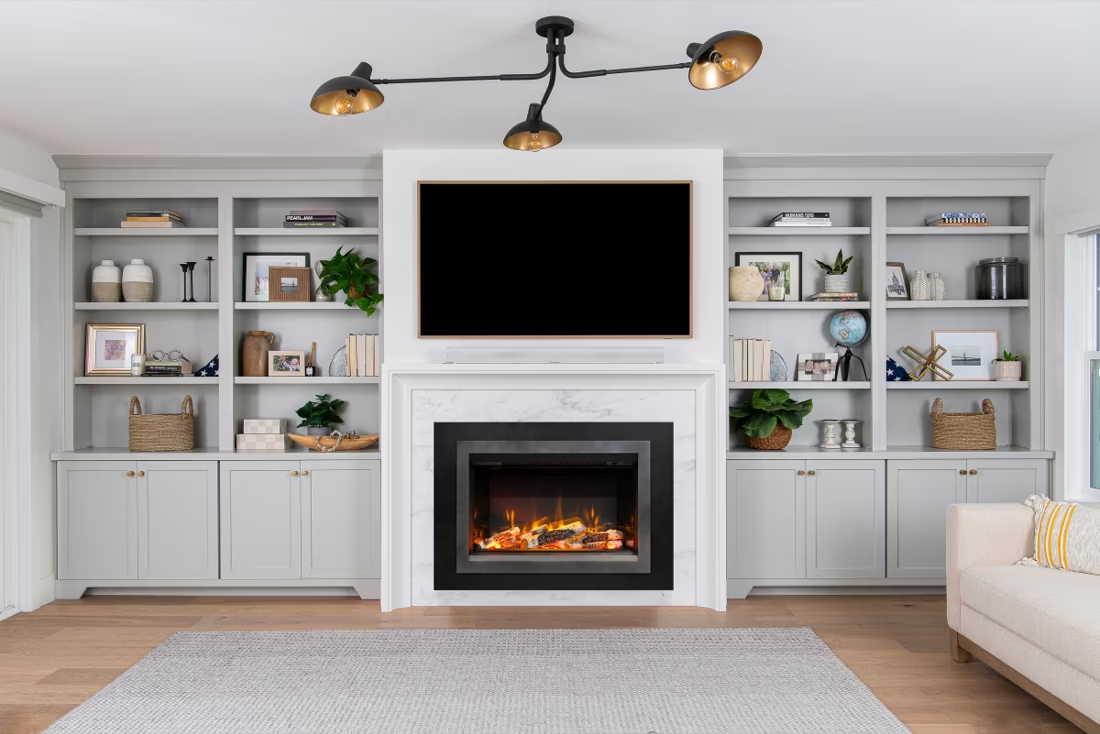
An electric insert is built to slide into an existing masonry or factory-built fireplace opening, giving an old, unused fireplace real heat output again without touching the chimney. A wall-mount or linear unit hangs on the wall like a piece of art or a TV, popular in newer Portsmouth builds and condos where there's no existing fireplace at all. A freestanding electric stove or mantel unit sits on the floor and can go almost anywhere with an outlet nearby. For homeowners in Olde Towne or Port Norfolk with an existing but unused masonry fireplace, an insert is usually the more natural fit; for a room without any fireplace, a wall-mount or freestanding unit is more common.
Can I put an electric insert into my existing wood fireplace?
Yes, and it's a common project for Portsmouth's older housing stock, much of it built with masonry fireplaces burning oak, hickory, or maple that see little use today. An electric insert fits into that same opening, uses the existing surround and mantel, and requires no chimney work—in fact the chimney can be left capped or unused entirely, since electric inserts don't vent. The main consideration is electrical: most inserts need a dedicated circuit, so budget for an electrician alongside the insert itself if your fireplace isn't already wired.
How much heat does an electric fireplace actually put out?
Most residential electric fireplaces top out around 5,000 BTU (roughly 1,500 watts), enough to comfortably warm a single room of 300-400 square feet as supplemental heat—not enough to replace central heating for a whole house. Given Portsmouth's relatively mild winter load, that's usually a fine match: an electric unit in the family room or primary bedroom handles the shoulder-season chill and the occasional cold night, while your existing HVAC covers the rest of the home. If you're trying to heat a larger open floor plan, talk to a local dealer about a larger linear unit or multiple zones rather than assuming one unit will do it all.
Are electric fireplaces a good fit for apartments and rentals in Portsmouth?
Yes—this is one of the fastest-growing use cases locally, particularly in the apartment and condo stock near Downtown Portsmouth and the Naval shipyard. A freestanding or wall-mount electric unit needs nothing more than a standard outlet, doesn't require landlord approval for venting or gas work, and can move with a tenant if the unit is freestanding. It's also one of the few fireplace options that doesn't run into fire-code or insurance restrictions common to wood or gas appliances in multi-unit buildings.
Electric vs. gas fireplace—which is right for my Portsmouth home?
Gas delivers more real heat output and can be configured to keep working during a power outage with the right ignition system, but it requires a gas line (natural gas or propane) and venting work that adds real cost, especially in a historic home without existing gas service. Electric skips all of that—no gas line, no venting, no permit for a plug-in unit—but produces less heat and depends entirely on the grid. For Portsmouth's mild climate, where most rooms just need supplemental warmth rather than a primary heat source, electric is often the simpler and less expensive route. Homes that already have gas service and want a stronger, storm-resilient heat source may still lean gas.
Do electric fireplaces raise my Dominion Energy bill much?
A typical electric fireplace running on its 1,500-watt high setting costs roughly 15-20 cents an hour to run at current Dominion Energy rates—noticeable if you run it constantly all winter, but modest for occasional evening or supplemental use. Most owners run the unit a few hours a day during cooler months rather than continuously, which keeps the added cost well below what a comparable amount of central heating would run. Many models also let you run the flame effect with the heater off, so you get the ambiance without any real heating cost at all.
Can I put a TV above my fireplace?
Yes—with an asterisk. Fireplaces are hot and TVs don't like heat. Either put a mantel between them to deflect rising warmth, or choose a fireplace with heat-management technology that creates a cool zone on the wall above—the wall stays around 125 degrees, barely warm, while the room still gets full heat. If you like clean lines and don't want a mantel, heat management is the answer.
Do electric fireplaces actually produce heat?
Yes—most put out around 4,800–5,000 BTUs from a standard outlet, which comfortably warms a bedroom, office, or den as a comfort-zone heater. What they won't do is carry a whole house the way wood, gas, or pellet can. Think of electric as ambiance-first with honest supplemental heat: flames on with no heat in July, flames plus warmth in January.
Does a fireplace add value to my home?
On average, a fireplace adds back to the home about the same amount you spent installing it. Add the monthly savings from heating the rooms you actually use instead of the whole house—often hundreds of dollars a year—and the value case is strong before you even count what a fire does for how your family uses the room.
Can a fireplace actually lower my heating bill?
Yes—by creating a comfort zone. A furnace heats every square foot of the house just to warm the one room you're in; a gas fireplace on low burns roughly a sixth of the gas a typical furnace does. Set the furnace around 55–60 degrees as a baseline, then heat the rooms your family actually uses. Families who heat this way commonly save $20–$60 a month.
Stove and Fireplace Dealers in Portsmouth County
Listings include WhyFire partner dealers, dealers we have verified as authorized for the brands we recommend, and established local businesses that carry hearth products. Every listing shows which one it is. The ones marked Preferred run on WhyFire's software, so they can show you real pricing and book your appointment right here. No manufacturer pays for placement. How we verify dealers →
Taylor's Do It Center
Ray Johnson's Fireplace Shop
Coastal Chimney & Contracting, Corp.
Fireside Hearth & Home - Newport News
Taylor's Fire Works
Solid Structures
Get your Portsmouth electric fireplace Project Guide & Parts List.
Tell us about your home and we'll match you with a trusted local Portsmouth dealer and send a free Project Guide & Parts List—the right electric fireplace or insert, sized correctly, with no big-box guesswork.
Find Your Fireplace →