
Gas heat that fits Oakton's brick colonials.
Instant, clean heat for Fairfax County homes—whether you're converting an old masonry fireplace or adding gas to a newer build. I'll match you with a trusted local dealer who can size it right.
Every Project Starts From One of These Five Situations
Convenience wins in this part of Fairfax County.
Oakton sits at about 400 feet in climate zone 4A, with winter lows averaging in the low 20s and a solid winter heating season—real cold, but nothing like the wood-heat culture of places like Burlington, VT or Duluth, MN. Most Oakton neighborhoods were built up from the 1960s through the 1980s as brick colonials and split-levels, many with a masonry fireplace that was framed for wood but rarely gets used that way anymore. Between HOA expectations, busy two-income households, and the sheer convenience of a switch-operated flame, gas has become the default upgrade.
Washington Gas serves natural gas across most of Oakton and the surrounding Fairfax County suburbs, which makes a straight gas line hookup realistic for the majority of homes here. Dominion Energy (Virginia Electric & Power Co) handles the grid, and residential rates around 14 cents per kWh mean an electric fireplace can make sense as a secondary or accent unit even where gas is the primary heat source. For most Oakton homeowners, though, the driving project is converting an existing wood-burning fireplace into a gas insert—keeping the mantel and masonry surround while swapping the actual heat source for something that lights on demand and doesn't need a cord of oak stacked in the garage.
Three steps. No salesperson until you're ready.
Tell us about your project
Your zip code, your situation, and the fuel you're leaning toward—or let the answers point you to one.
See what's actually available
The brands dealers within 100 miles genuinely carry—real options, never a catalog mirage.
Get your dealer & Project Guide
A trusted local dealer, plus the free Project Guide & Parts List that names every component of the job.
Frequently Asked Questions
How much does a gas fireplace installation cost in Oakton?
Most Oakton projects fall between $4,000 and $9,500. A gas insert dropped into an existing masonry fireplace with a gas line already run to the house sits at the lower end. A new direct-vent gas fireplace for a basement remodel or addition—with fresh gas line, framing, and venting through an exterior wall—runs toward the middle and upper end. Homes on propane, or projects needing a longer gas line extension from the street, can push past that range. A local dealer will give you a firm number after seeing the space in person.
Can I convert my existing wood fireplace to gas?
Yes—and in Oakton this is the most common request by far, given how many colonials and split-levels here have a masonry fireplace built decades ago and rarely used since. A gas insert typically installs into the existing firebox with a stainless liner run up your current chimney, so you keep the brick surround and mantel. Cost usually runs $4,500 to $8,500 depending on the insert and whether Washington Gas service is already run to that side of the house. It's a weekend-length project for most local installers, not a full remodel.
Do I need natural gas, or can I use propane?
Washington Gas covers most of Oakton and the surrounding Fairfax County zip codes, so if your home already has gas for the furnace, water heater, or range, adding a fireplace is usually a straightforward tap-in. A smaller number of properties on the edges of the service area—particularly some larger lots toward Vienna and Great Falls—rely on propane instead, typically with a buried tank. Nearly every gas fireplace model on the market can be configured for either fuel; your installer sets the correct orifice and regulator for whichever you have.
Will my gas fireplace work during a power outage?
Most will. Units with IPI (intermittent pilot ignition) run off AA batteries that kick in automatically when Dominion Energy service drops—which does happen in Oakton during ice storms and summer derechos. The fireplace lights the same way it always does, just on battery power until the grid comes back. Valor fireplaces skip the batteries entirely—their pilot's thermocouple generates its own electricity, so the unit stays functional indefinitely. Worth asking about specifically if backup heat during an outage matters to you.
What's the difference between a gas fireplace, gas insert, and gas stove?
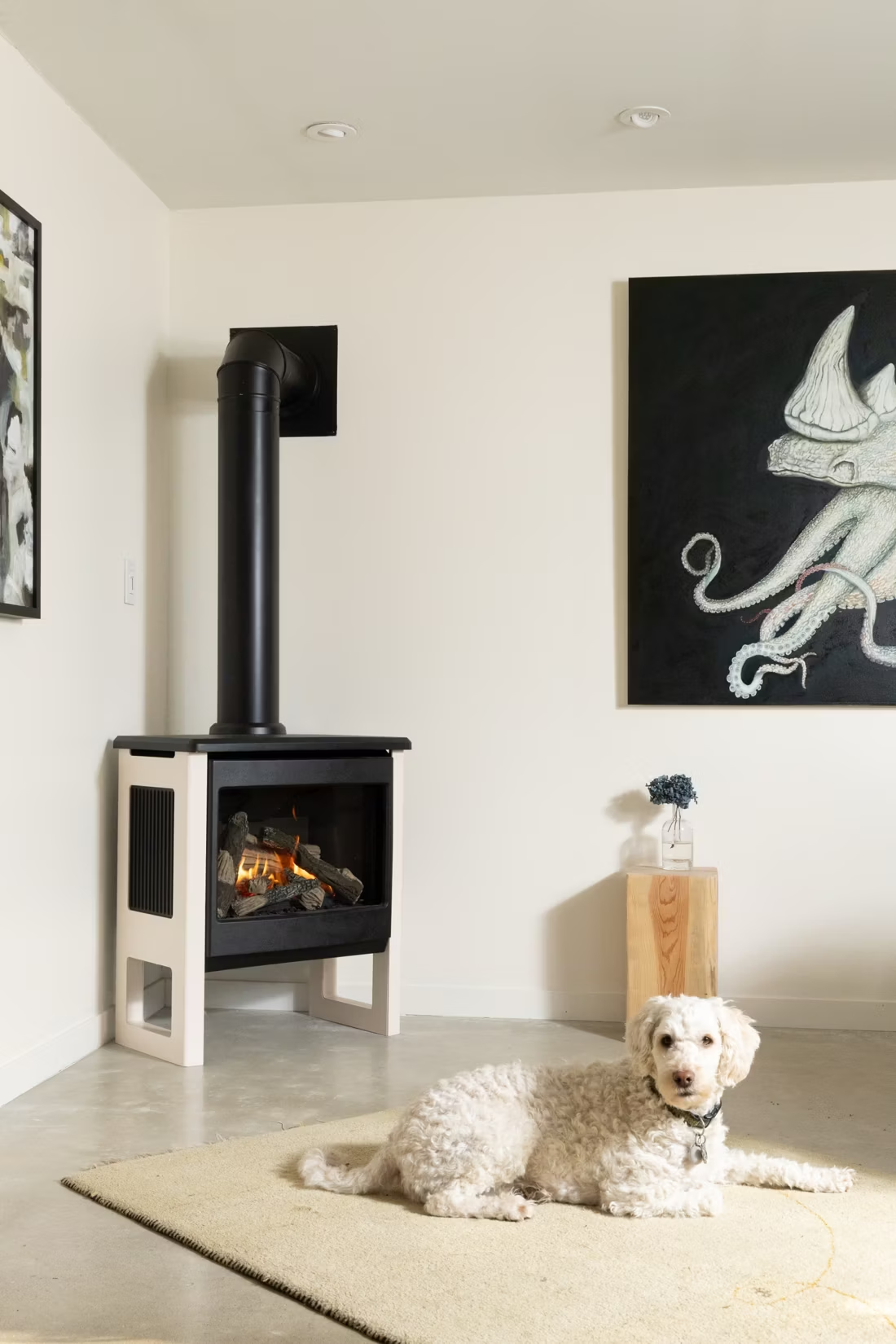
A gas fireplace is a fully built-in unit framed into a wall—the right call for a basement remodel or new addition without an existing firebox. A gas insert slides into an existing masonry fireplace and uses your current chimney as the vent path, which is why it's the go-to choice in Oakton's older colonials. A gas stove is a freestanding cast-iron or steel unit that sits on the floor like a wood stove but burns gas—less common here, but occasionally used in a sunroom or finished basement without a chimney nearby.
Do I need a permit to install a gas fireplace in Oakton?
Yes. Fairfax County requires both a building permit and a gas permit through the county's Land Development Services office for new gas fireplace installations, and the gas line work has to be done by a licensed gas fitter. Most established local dealers pull these permits as part of the job and schedule the inspection, so you're not coordinating separate trades yourself—one more reason to avoid a big-box or handyman install for gas work specifically.
Should I get a vented or vent-free gas fireplace?
Vented (direct-vent) units draw combustion air from outside and exhaust it back outside through sealed venting—they're the standard recommendation almost everywhere, including Oakton. Vent-free units burn directly into the room and are legal in Virginia with proper room-sizing and oxygen-depletion sensors, but many of Oakton's newer, tightly built homes with modern energy-code envelopes aren't great candidates for adding extra combustion byproducts to the indoor air. For most homes here, a direct-vent insert or fireplace is the cleaner, safer, and more broadly recommended choice.
How often should my gas fireplace be serviced?
Plan on an annual inspection, ideally in early fall before you start using it regularly. A technician checks the burner, pilot assembly, venting, and gas connections, and cleans the glass and interior—usually $150 to $250 for the visit. It's a much shorter job than a wood chimney sweep, but skipping it is how you end up with an igniter failure or a sooty glass panel in the middle of a cold snap.
Should I do gas instead of wood?
For most Oakton homeowners, yes—true wood-burning as a primary heat source is uncommon here. There's no national forest cutting permit nearby the way there is in more rural parts of Virginia, lot sizes don't favor stacking and seasoning cordwood, and most of the oak, hickory, and maple you see around the neighborhood is landscaping, not firewood. A handful of homeowners keep an existing masonry fireplace burning wood for occasional ambiance, but for daily use and real heat output, converting to a gas insert is the far more common—and far more practical—path in this part of Fairfax County.
Why is my open fireplace making my house colder?
Open fireplaces suck—literally. As the fire burns, it consumes air your furnace already paid to heat and pulls it out through the chimney, so the house is actually colder after the fire goes out than before you lit it. An insert fixes this: it seals the chimney, puts fixed glass across the front, and turns that hole in your house into a real heat source.
Is my gas fireplace wasting gas?
If it was installed more than 15 years ago, probably. Older gas fireplaces keep a standing pilot light burning all the time, and that little flame can cost a couple hundred dollars a year. Newer models use pilot-on-demand ignition—the pilot lights only when you use the fireplace and goes out when you turn it off.
How much should I budget for a fireplace?
For an average home—covering the fireplace, the vent pipe, and basic installation—a budget between $3,900 and $5,500 gives you a lot of options across wood, gas, and pellet. By the time you add finish work, gas line, and electrical, the average complete installation lands between $5,000 and $12,000 all-in. In a remodel or new build, a good rule is to put about 2.5% of the total project cost toward the fireplace.
Can I install a fireplace myself?
If you're putting a fire in your house on purpose, it's best to work with an expert. Unless you're genuinely experienced in framing, gas line, vent pipe, and the national code on clearances to combustibles, have a professional do it—and ideally the same company that sells you the fireplace, so warranty, service, and liability all live under one roof.
Nearby Dealers
Hearth shops serving Oakton and the surrounding area.
Find your gas fireplace in Oakton.
Tell me a bit about your home and I'll put together a free Project Guide & Parts List—the right gas fireplace or insert, the exact venting kit it needs, and a trusted local Oakton-area dealer to install it.
Find Your Fireplace →