
Clean, low-maintenance heat for North Shore's lake homes.
Franklin County winters bring lows near 26°F and a moderate heating season for the area—cold enough to matter, mild enough that a thermostatically controlled pellet stove can carry a lake house through the season without a woodpile. Find the right unit and connect with a trusted local dealer.
Every Project Starts From One of These Five Situations
Pellet heat fits life on the water—and off the grid.
North Shore sits along Smith Mountain Lake in Franklin County, at roughly 955 feet of elevation in climate zone 4A. Winters here average a low around 26°F with a moderate heating season for the area—real cold, but nothing like the much harsher, far longer winters that towns like Duluth, Minnesota deal with. That moderate profile is exactly where pellet stoves earn their keep: they don't need to run 24/7 at full output to keep a home comfortable, and they don't demand the wood-cutting labor that a place with harder winters might justify.
This stretch of Franklin County doesn't have municipal natural gas service, so most homes here run on propane, electricity from Appalachian Power, or wood. A pellet stove fills a useful gap: no propane tank to maintain, no cordwood to split and stack (even though the oak, hickory, and maple that grow thick around the lake make good firewood if you want it), and a hopper that holds enough fuel to run unattended for a day or more. For part-time lake homes especially, that hands-off operation matters—you can load the hopper before a weekend and not think about it again. Regional pellet brands like Energex, Hamer Pellet Fuel, and Greene Team Pellet Fuel are all distributed through this part of Virginia, so fuel isn't hard to find.
Three steps. No salesperson until you're ready.
Tell us about your project
Your zip code, your situation, and the fuel you're leaning toward—or let the answers point you to one.
See what's actually available
The brands dealers within 100 miles genuinely carry—real options, never a catalog mirage.
Get your dealer & Project Guide
A trusted local dealer, plus the free Project Guide & Parts List that names every component of the job.
Frequently Asked Questions
How much does a pellet stove installation cost in North Shore?
Most pellet stove installations in this part of Franklin County run in the $3,000 to $6,500 range, depending on the unit and whether you're venting through an existing chimney or running new PL-vent pipe through a wall. Installing into an existing masonry fireplace as a pellet insert is usually on the lower end since some of the venting work is already in place. New construction or homes without an existing flue—common on newer lake-house builds around North Shore—tend to land toward the higher end once wall penetration and venting are factored in. A local dealer will give you a firm number after seeing the space.
What size pellet stove do I need for a North Shore home?
It depends on square footage, ceiling height, and how open your floor plan is—lake houses with vaulted great rooms need more output than a tight ranch-style cabin. As a starting point: smaller units (40,000 BTU or less) handle a single large room or a modest cabin, while mid-size stoves (40,000–60,000 BTU) can carry a full main level in a 4A climate like this one, where winter lows average around 26°F rather than deep sub-zero cold. A local dealer can walk your space and size it properly—oversizing a pellet stove just means it short-cycles and burns less efficiently.
What's the difference between a pellet stove and a pellet insert?
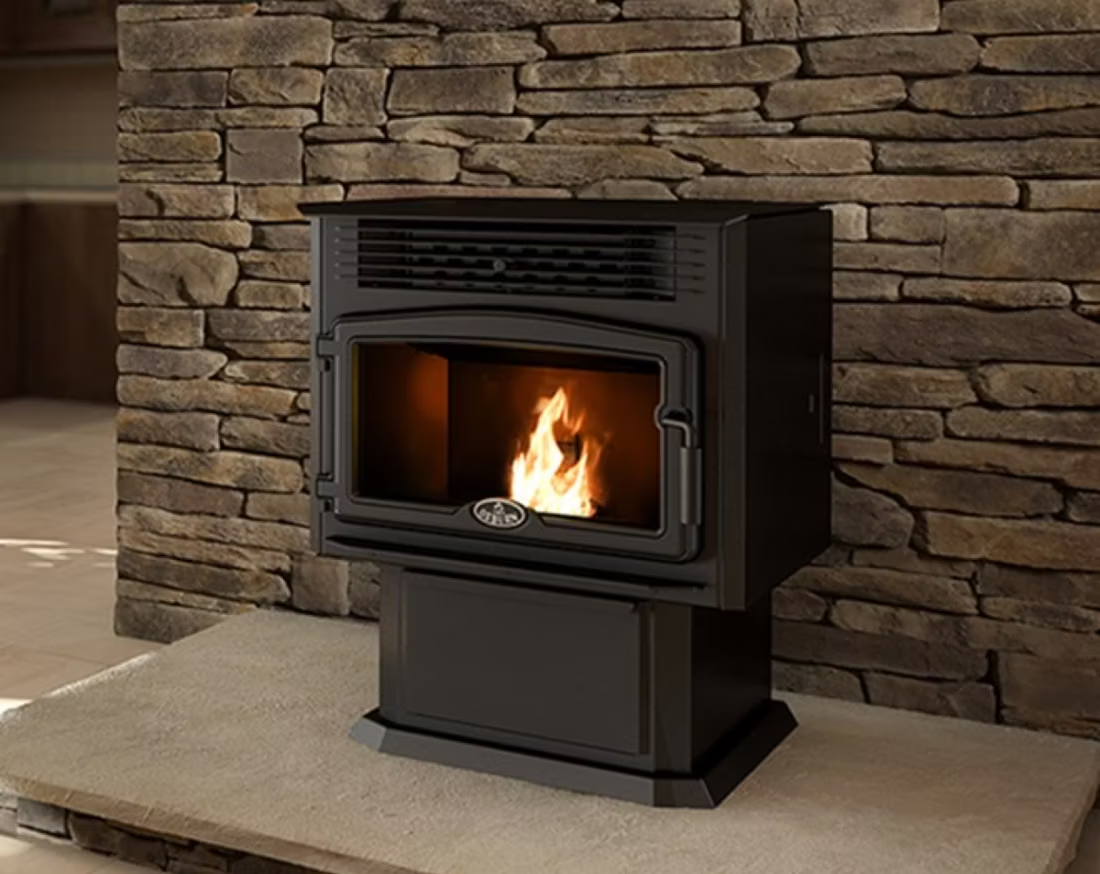
A pellet stove is a freestanding unit that sits on its own hearth pad and vents through a wall or existing chimney—it can go almost anywhere with the right clearances. A pellet insert is built to slide into an existing masonry fireplace opening, using your current chimney (with a proper liner) as the vent path. For older lake homes around North Shore with a traditional fireplace already in place, an insert is often the tidier option since it keeps the existing mantel and hearth look while upgrading the heat output substantially. Homes without an existing fireplace are usually better suited to a freestanding stove.
Will my pellet stove work if the power goes out?
Not without help. Pellet stoves rely on an electric auger to feed fuel and a blower to distribute heat, so a power outage stops the stove even with a full hopper. That's worth knowing in a rural stretch of Franklin County served by Appalachian Power, where ice storms and downed lines can knock out power for hours or longer around the lake. Some homeowners pair a pellet stove with a small battery backup or a portable generator specifically to keep the auger and igniter running through an outage. If uninterrupted heat during outages is a priority, a wood stove or a gas unit with battery-backed ignition is worth comparing.
Do I need a permit to install a pellet stove in North Shore?
Yes—Franklin County requires a building permit for new pellet stove installations, and the unit needs to meet current EPA emissions standards. Most local hearth dealers handle the permit paperwork as part of the installation, so you generally don't have to file anything yourself. There are no air quality non-attainment concerns or burn restrictions in this part of Virginia, so once the stove is installed and inspected, you're free to run it as often as you'd like.
What's a good pellet stove for this climate?
Because winters around North Shore are moderate—average lows near 26°F rather than the deep cold of the upper Midwest—a mid-size, thermostatically controlled pellet stove is usually enough to heat a main living area without running at max output all winter. Look for a unit with a multi-speed auger feed so it can throttle down on milder days rather than overheating the room. Local dealers carrying this part of Virginia typically stock a range of mid-size units suited to exactly this kind of climate; ask about the auger feed range and hopper capacity relative to your square footage.
How much maintenance does a pellet stove need?
Pellet stoves need more routine attention than a gas unit but less than a wood stove's annual chimney sweep. Plan on emptying the ash pan every few days during heavy use, wiping the glass weekly, and vacuuming the burn pot and heat exchanger tubes every couple of weeks. Once a year, have a technician clean the exhaust venting, check the auger motor and igniter, and inspect the gaskets—this keeps the stove running efficiently and catches wear on the moving parts before they fail mid-winter.
Where can I buy pellets near North Shore?
Regional brands like Energex, Hamer Pellet Fuel, and Greene Team Pellet Fuel are all distributed through this part of southern Virginia and are typically available through local hearth retailers, farm supply stores, and hardware stores near Smith Mountain Lake. Prices for hardwood pellets in this region generally run in the $250 to $300 per ton range, and buying a full winter's supply (roughly 2 to 3 tons for a mid-size home) in late summer or early fall, before demand picks up, is usually the best way to avoid shortages.
Pellet stove vs. wood stove—which makes more sense at the lake?
Wood is abundant here—the oak, hickory, and maple that cover the hills around Smith Mountain Lake make excellent firewood, and a wood stove works without electricity, which matters when Appalachian Power lines go down in an ice storm. Pellet stoves trade that off-grid reliability for convenience: no splitting or stacking, a thermostat that holds a steady temperature, and a hopper you can load once and walk away from for a day or more, which suits a part-time lake home well. Electric heat is also worth weighing against either option—at Appalachian Power's residential rate of about 17 cents per kWh, straight electric resistance heat costs more to run than either wood or pellets over a full winter. For a home used mainly on weekends, pellet often wins on convenience; for a full-time residence with a woodlot out back, wood may be the more economical long-term choice.
Why is a fireplace insert so efficient?
An insert does two things: it seals the chimney completely, so you stop losing air you already paid to heat, and it radiates warmth into the room through the firebox and glass. Most add a heat-exchange fan that pulls cool room air underneath, wraps it around the hot firebox, and pushes it back out warm. Your home is more efficient before you've even lit the first fire.
How often does a pellet stove need cleaning?
A clean pellet stove is a happy pellet stove. Plan on cleaning the burn pot about once a week when you're burning regularly—ash and clinkers gum up the air holes just like a pellet barbecue. Most pellet stove problems trace back to skipped cleaning that nobody explained up front. Some designs make it easy with a trapdoor burn pot: pull a lever and the gunk drops into the ash pan.
What is an in-home preview and do I need one?
It's a visit where a hearth professional measures your space, confirms the model you picked actually works in your home, and walks the specs—framing, gas line, venting, finish work—before anything is ordered. Some details you just can't know until you see the house. Never make a down payment without one; it's the single most-skipped step that burns buyers.
How much should I budget for a fireplace?
For an average home—covering the fireplace, the vent pipe, and basic installation—a budget between $3,900 and $5,500 gives you a lot of options across wood, gas, and pellet. By the time you add finish work, gas line, and electrical, the average complete installation lands between $5,000 and $12,000 all-in. In a remodel or new build, a good rule is to put about 2.5% of the total project cost toward the fireplace.
Nearby Dealers
Hearth shops serving North Shore and the surrounding area. Every listing shows whether it is a WhyFire partner, a dealer we have verified as authorized for the brands we recommend, or a local business carrying hearth products. No manufacturer pays for placement. How we verify dealers →
Area – Burnt Chimney, Va
Redwood Fuel
Glenwood Oil & Gas
Davenport Energy Rocky Mount
Blossman Gas And Appliance
Black Goose Chimney
Davenport Energy Roanoke
Davenport Energy
Skyline Hearth & Fire
Pellet Brands Stocked Around North Shore
Manufacturers will point you to the nearest stocking dealer.
Find your pellet stove in North Shore.
Tell us about your home on the lake or in town, and we'll match you with the right pellet stove or insert—plus a free Project Guide & Parts List with the exact parts, vent kit, and a trusted local Franklin County dealer to install it.
Find Your Fireplace →