
Find the right fireplace for your Franklin County home.
Wood, gas, pellet, and electric fireplace resources for every community in Franklin County—from Rocky Mount to the Smith Mountain Lake shoreline in Union Hall and Penhook. Find the right unit and connect with a trusted local hearth retailer.
Every Project Starts From One of These Five Situations
Moderate winters, hardwood heritage in Franklin County, Virginia.
Franklin County sits in the Blue Ridge foothills of south-central Virginia, home to Smith Mountain Lake, Ferrum College, and a heating climate that's noticeably gentler than the northern Rockies or upper Midwest—think Minneapolis or Madison, WI, where the winter heating load runs roughly twice as high. At climate zone 4A, with a moderate heating season and winter lows averaging 29°F, this is a mixed-humid climate where wood heat is common but rarely a survival necessity. The oak, hickory, and maple that fill the county's hardwood ridges split easily and burn hot and long—hickory in particular is prized here for both smoking meat and heating a den on a cold January night. Rocky Mount, the county seat, sits alongside smaller communities like Boones Mill, Ferrum, and Callaway, plus the lake communities of Union Hall, Penhook, and Wirtz—each with its own mix of farmhouses, lake homes, and newer construction that all need heat sized right for a county with real but moderate cold.
What you'll find on this hub: hearth retailers, chimney and appliance service technicians, and fuel suppliers serving every corner of Franklin County—from Rocky Mount out along Route 40 to Ferrum and Boones Mill, and down to the Smith Mountain Lake shoreline in Union Hall, Hardy, and Penhook. Pick your fuel below to see local dealers, typical installation costs, and the units that make sense for a Franklin County home, whether that's a hillside farmhouse burning oak and hickory or a lakefront property running a gas or electric unit for weekend warmth.
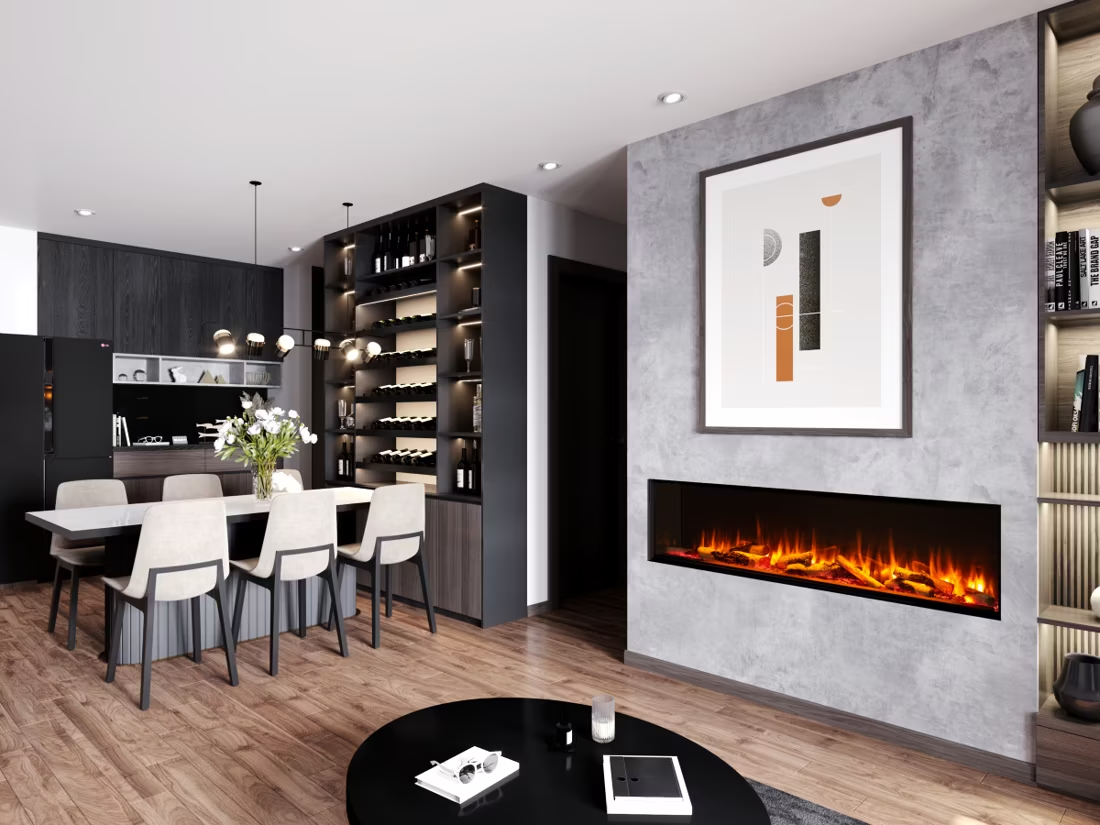
Four fuels. One honest answer for Franklin County.
Three steps. No salesperson until you're ready.
Tell us about your project
Your zip code, your situation, and the fuel you're leaning toward—or let the answers point you to one.
See what's actually available
The brands dealers within 100 miles genuinely carry—real options, never a catalog mirage.
Get your dealer & Project Guide
A trusted local dealer, plus the free Project Guide & Parts List that names every component of the job.
Frequently Asked Questions
Which fuel works best in Franklin County?
It depends on the home and how you use it. Wood is a strong, practical choice here—Franklin County's hardwood ridges produce plenty of oak, hickory, and maple, and a lot of homeowners already have a woodlot or a source lined up. With winter lows averaging 29°F and a moderate heating season overall, the county doesn't demand the 20-hour catalytic burns you'd need in Duluth or Bozeman, but a good wood stove or insert still cuts heating bills meaningfully. Gas is the low-maintenance choice, especially for homeowners who'd rather not handle firewood—most rural parts of the county run on propane rather than piped natural gas, so budget for a propane tank alongside the fireplace install. Pellet stoves are a solid middle ground, with regional brands like Energex, Hamer Pellet Fuel, and Greene Team Pellet Fuel sold locally, giving you wood-like heat without splitting logs. Electric fireplaces work well as supplemental heat for a den, bedroom, or lake house that only needs ambiance and mild warmth most of the season. Plenty of Franklin County homes mix fuels—wood or pellet as the workhorse heater, gas or electric for convenience in a secondary room.
Do I need a permit to install a fireplace in Franklin County?
Generally yes. New wood stoves, wood inserts, gas fireplaces, gas inserts, gas stoves, and pellet stoves typically require a building permit through Franklin County's building inspections department, and gas installations usually need a separate permit for the gas line work, whether you're on propane or piped gas. Wood-burning appliances need to meet current EPA emissions standards to pass inspection. Electric fireplaces are the exception—plug-in units generally don't need a permit, though a built-in electric fireplace that requires new wiring or a dedicated circuit will. Most local hearth retailers handle the permit paperwork as part of the installation, so it's rarely something the homeowner has to manage solo.
Are there air quality restrictions on wood burning in Franklin County?
No—Franklin County isn't in an EPA non-attainment area and doesn't have a burn-ban ordinance or seasonal wood-smoke advisories like some western counties do. That said, an EPA-certified wood stove or insert is still worth the upgrade over an old pre-1988 stove: you'll get more heat out of the same rick of oak or hickory, less smoke in the yard, and a unit that qualifies for financing and insurance without issue. There's no regulatory pressure here, just the practical case for burning cleaner.
Can one local hearth retailer handle all four fuel types?
Many hearth retailers serving Franklin County carry three or four fuel types—wood, gas, pellet, and electric—because the county's mix of farmhouses, lake homes, and newer construction means customers walk in asking for all of them. A dealer who stocks working displays across fuel types can show you the real trade-offs side by side rather than just steering you toward whatever they happen to specialize in. Some smaller local shops focus more narrowly—a stove shop that's mainly wood and pellet, for instance, or a fireplace showroom that leans gas and electric. The retailer listings on this hub note which fuels each one carries, so you can tell before you drive out to wherever they're based.
How does service work in rural areas of Franklin County?
Most chimney sweeps and appliance technicians serving Franklin County are based near Rocky Mount and drive out to the rest of the county—the Smith Mountain Lake shoreline communities of Union Hall, Penhook, and Hardy, and the Ferrum and Boones Mill areas to the south and west. Expect a modest trip charge for the farther lake properties, and know that scheduling is much easier in September and October than it is once the first cold snap hits in December. If you're on a lake property that sits empty part of the week, it's worth getting your annual sweep or gas inspection done before the season starts rather than waiting for a problem to show up on a weekend visit.
What's the typical cost range for fireplace installation across all fuel types in Franklin County?
Costs run a bit lower here than in higher cost-of-living regions, but the spread by fuel type is similar. Wood stove or insert installation: roughly $3,500–$7,500 for a typical install, more if a masonry chimney needs relining. Gas fireplace, insert, or stove: roughly $4,000–$9,000, with propane tank setup and line work pushing costs toward the higher end for homes without existing gas service. Pellet stove or insert: roughly $3,500–$6,500 installed. Electric fireplace: $200–$2,500 for the unit itself, plus $300–$1,000 in labor for anything beyond a simple plug-in—most wall-mount and insert installs fall in that range. The county + fuel pages above break these down further with local retailer pricing.
Wood, gas, pellet, or electric—how do I choose?
Match the fuel to your life, not the other way around. Wood: lowest fuel cost and total power-outage independence, but you're hauling and stacking. Gas: press a button, set a thermostat, no maintenance to speak of. Pellet: wood economics with automatic feeding, in exchange for weekly cleaning and a need for electricity. Electric: plugs in anywhere with honest supplemental heat. Nobody regrets the fuel that fits how they actually live.
How much should I budget for a fireplace?
For an average home—covering the fireplace, the vent pipe, and basic installation—a budget between $3,900 and $5,500 gives you a lot of options across wood, gas, and pellet. By the time you add finish work, gas line, and electrical, the average complete installation lands between $5,000 and $12,000 all-in. In a remodel or new build, a good rule is to put about 2.5% of the total project cost toward the fireplace.
Does a fireplace add value to my home?
On average, a fireplace adds back to the home about the same amount you spent installing it. Add the monthly savings from heating the rooms you actually use instead of the whole house—often hundreds of dollars a year—and the value case is strong before you even count what a fire does for how your family uses the room.
What is an in-home preview and do I need one?
It's a visit where a hearth professional measures your space, confirms the model you picked actually works in your home, and walks the specs—framing, gas line, venting, finish work—before anything is ordered. Some details you just can't know until you see the house. Never make a down payment without one; it's the single most-skipped step that burns buyers.
Stove and Fireplace Dealers in Franklin County
Listings include WhyFire partner dealers, dealers we have verified as authorized for the brands we recommend, and established local businesses that carry hearth products. Every listing shows which one it is. The ones marked Preferred run on WhyFire's software, so they can show you real pricing and book your appointment right here. No manufacturer pays for placement. How we verify dealers →
Davenport Energy
Glenwood Oil & Gas
Miller's Custom Countertops
Tates Gas Appliance
Francis Oil And Propane
Foster Fuels - Rustburg
Area – Burnt Chimney, Va
Redwood Fuel
Davenport Energy Rocky Mount
Find your fireplace in Franklin County.
Tell us about your home and we'll match you with a trusted local dealer and a free Project Guide & Parts List—a plan for your fireplace project in Franklin County with the exact parts, including the vent kit, and the dealer we recommend for your area.
Find Your Fireplace →