
Keep Your Family Warm and Safe—No Matter What
Wood isn't the default heat source in this part of Fairfax County—but for the right home, a wood insert or stove still makes sense. See what's realistic, and get matched with a local dealer who installs it correctly.
Every Project Starts From One of These Five Situations
Wood heat is the exception, not the rule, in Mantua.
Mantua sits inside Fairfax County at just over 300 feet of elevation, with winters that dip to an average low near 23°F and a moderate winter heating load a year—noticeably milder than the Upper Midwest or northern New England, where wood is often a primary heat source. Most homes in this established, close-in Fairfax neighborhood rely on natural gas or electric heat pumps for day-to-day comfort, and a lot of the housing stock here—split-levels and colonials from the 1960s and '70s—was built with an existing masonry fireplace rather than a dedicated wood-burning appliance.
That doesn't mean wood is off the table. A number of Mantua homeowners with an existing masonry fireplace look at a wood-burning insert specifically for backup heat during the ice storms and multi-day power outages that occasionally hit this part of Fairfax County, or simply for the ambiance of a real fire on cold nights. Firewood here isn't harvested off national forest land the way it is farther west—local oak, hickory, and maple are typically sourced from tree services and firewood delivery outfits rather than a Forest Service permit. If wood heat makes sense for your situation, a local dealer can tell you honestly whether it's worth pursuing or whether gas or electric is the better fit for this climate and this house.
Three steps. No salesperson until you're ready.
Tell us about your project
Your zip code, your situation, and the fuel you're leaning toward—or let the answers point you to one.
See what's actually available
The brands dealers within 100 miles genuinely carry—real options, never a catalog mirage.
Get your dealer & Project Guide
A trusted local dealer, plus the free Project Guide & Parts List that names every component of the job.
Frequently Asked Questions
Is wood heat actually common in Mantua?
Not really, and it's worth being upfront about that. Mantua's winters are moderate compared to colder wood-heat regions—average lows around 23°F and a moderate winter heating load a year—and most homes here already have efficient gas or electric heat as their primary system. Wood stoves and inserts still get installed, but usually as a secondary or backup heat source, or to bring an existing masonry fireplace back into real use, rather than as a whole-home heating strategy. If you're set on wood, it's absolutely doable—just go in expecting a supplemental system, not a furnace replacement.
What does a wood stove or insert installation cost in Mantua?
For a Fairfax County home like the ones in Mantua, a wood-burning insert into an existing masonry fireplace typically runs $4,000 to $8,500, depending on the unit, whether a new stainless steel liner is needed for the existing chimney, and any masonry repair. A freestanding wood stove in a home without an existing chimney runs higher once Class A pipe and through-roof or through-wall venting are added—often $8,000 to $12,000. Because wood installs are less common here than gas or electric work, get a quote from a dealer who regularly does hearth work in Northern Virginia rather than a general contractor.
Do I need a permit to install a wood stove in Mantua?
Yes. Fairfax County requires a building permit for new wood-burning appliance installations, handled through Fairfax County Land Development Services, and the installation has to meet current EPA emissions and clearance standards. If you live in one of Mantua's neighborhoods with an active homeowners or civic association—the Mantua Citizens Association covers much of the area—check whether any exterior chimney or flue changes need architectural review before work starts. A local hearth dealer who's pulled permits in Fairfax County before will usually manage this process for you.
Can I convert my existing fireplace to a wood-burning insert?
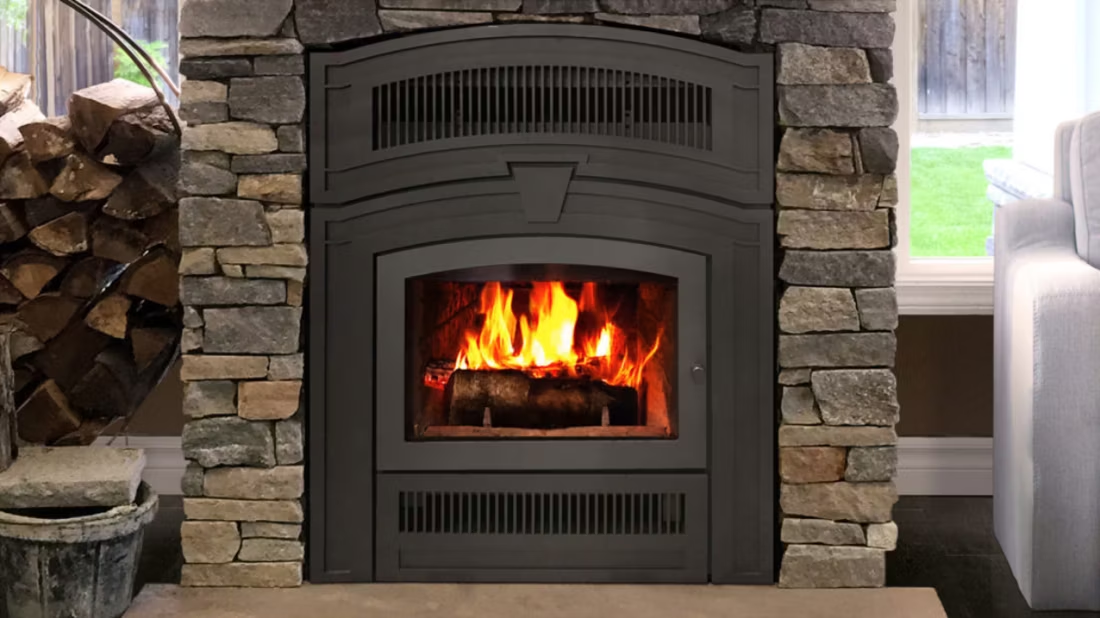
This is the most common wood project in Mantua, since a lot of the area's split-level and colonial homes already have a working masonry fireplace that's inefficient on its own—most of the heat just goes up the chimney. A wood insert slides into that existing opening, uses a new stainless liner run through your existing flue, and turns an open fireplace that loses heat into a closed, efficient unit that can actually warm a room. Expect this conversion to run $4,000 to $7,500 depending on the insert and the condition of the existing chimney.
Where does firewood come from if Mantua isn't near national forest land?
Unlike wood-heat regions out west with Forest Service cutting permits, Fairfax County doesn't have that kind of public land access nearby, so firewood in Mantua is almost always purchased rather than self-cut. Local tree services, landscaping companies, and dedicated firewood delivery outfits sell seasoned oak, hickory, and maple—the common hardwoods in this part of the Piedmont—typically by the rick or half-cord. Ask for wood that's been seasoned at least six to twelve months; unseasoned local hardwood burns poorly and contributes to creosote buildup.
Are there any burn restrictions I should know about in Mantua?
Fairfax County doesn't have the kind of winter inversion or non-attainment air quality issues that trigger burn bans in some Western cities, so there are no wood-smoke curtailment periods here. That said, the D.C. metro area does occasionally issue summer Ozone Action Day advisories, which apply to outdoor burning (yard debris, open fires) rather than indoor wood stoves or inserts, so a properly installed wood insert isn't affected by those advisories.
Does a wood stove make sense for backup heat during power outages?
This is one of the strongest arguments for wood heat in Mantua. Ice storms and downed lines occasionally knock out power for Virginia Electric & Power Company customers in this part of Fairfax County for a day or more, and a wood stove or insert is one of the few heat sources that keeps working with no electricity at all—no blower motor, no igniter, no thermostat. For homeowners who've been through a multi-day outage, that reliability is often the deciding factor over an electric fireplace, which needs power to run.
Wood vs. gas—which makes more sense for a Mantua home?
Gas is the more practical everyday choice for most Mantua homes—natural gas service is widely available in this part of Fairfax County, and a gas fireplace or insert gives you instant, thermostat-controlled heat with none of the wood handling or chimney maintenance. Wood makes more sense if you specifically want a heat source that works during a power outage, already have a masonry fireplace you want to bring back into real use, or simply prefer the experience of a real wood fire. Plenty of homes here end up with both: gas for daily convenience, a wood insert as backup.
How often does a wood insert need chimney service in Mantua?
Even with lighter, supplemental use, plan on an annual chimney inspection and sweep, ideally in late summer or early fall before you start burning for the season. Because most Mantua wood installs are secondary heat rather than a primary system burning multiple cords a winter, creosote tends to build up more slowly than in a full-time wood-heat home—but skipping the annual check is still the leading cause of chimney fires, and it's a quick, inexpensive appointment compared to the cost of the insert itself.
Why is my open fireplace making my house colder?
Open fireplaces suck—literally. As the fire burns, it consumes air your furnace already paid to heat and pulls it out through the chimney, so the house is actually colder after the fire goes out than before you lit it. An insert fixes this: it seals the chimney, puts fixed glass across the front, and turns that hole in your house into a real heat source.
What's the difference between an insert and a zero-clearance fireplace?
An insert is a fireplace that slides into a pre-existing wood-burning fireplace—if you don't have one, there's nothing to insert it into. A zero-clearance fireplace is built into a framed wall, which makes it the answer for remodels and new construction. Simple test: existing masonry fireplace means insert; blank or framed wall means zero-clearance.
Can I install a fireplace myself?
If you're putting a fire in your house on purpose, it's best to work with an expert. Unless you're genuinely experienced in framing, gas line, vent pipe, and the national code on clearances to combustibles, have a professional do it—and ideally the same company that sells you the fireplace, so warranty, service, and liability all live under one roof.
How much should I budget for a fireplace?
For an average home—covering the fireplace, the vent pipe, and basic installation—a budget between $3,900 and $5,500 gives you a lot of options across wood, gas, and pellet. By the time you add finish work, gas line, and electrical, the average complete installation lands between $5,000 and $12,000 all-in. In a remodel or new build, a good rule is to put about 2.5% of the total project cost toward the fireplace.
Nearby Dealers
Hearth shops serving Mantua and the surrounding area. Every listing shows whether it is a WhyFire partner, a dealer we have verified as authorized for the brands we recommend, or a local business carrying hearth products. No manufacturer pays for placement. How we verify dealers →
Aspen Green Gasworks
Homeliving Fireplaces
Genesis Chimney Services
Cyprus Air, Indoor Comfort
Lawn & Leisure
Nova Fireplace And Stove
Fireside Hearth & Home - Manassas
Deckscapes Of Virginia
Cyprus Air
Costello's Hearth & Spa - Rockville
Capitol Chimney Service
Chimney.com
The Fireplace Shop
Tri-County Hearth & Patio
See if wood heat makes sense for your Mantua home.
Tell us about your home and your existing fireplace, if you have one, and we'll put together a free Project Guide & Parts List—the exact parts, including the vent kit, and a trusted local dealer who installs wood inserts and stoves in Fairfax County.
Find Your Fireplace →