
Instant Heat for Mantua Homes, No Woodpile Required.
Clean, on-demand gas heat for Fairfax County's cold winter nights. Find the right fireplace or insert and get matched with a trusted local dealer.
Every Project Starts From One of These Five Situations
A suburban neighborhood built for convenient, clean heat.
Mantua sits inside Fairfax County, a dense, established suburban community of brick colonials and split-levels built mostly in the 1950s and 60s, just outside Washington, D.C. Winters here are real but moderate by national standards—Climate Zone 4A, roughly 4,931 heating degree days a year, and average winter lows around 23°F, nothing close to the sub-zero stretches of a place like Duluth or Fargo. Genuine wood-burning is uncommon in Mantua today: quarter-acre lots, close-set houses, and mature landscaping make firewood storage and smoke a real neighbor-relations issue, and there's no nearby national forest or cutting-permit office the way there is in Virginia's more rural counties.
What Mantua does have is deep natural gas infrastructure. Washington Gas serves most of this part of Fairfax County, and Dominion Energy (listed here as Virginia Electric & Power Co) provides electric service for the handful of homes without a gas hookup. That combination makes gas the default hearth fuel in the neighborhood—instant flip-of-a-switch heat that pairs naturally with central HVAC in a colonial-era home, no ash or creosote to manage, and in many cases a straightforward path to converting an existing wood-burning masonry fireplace most of these houses were originally built with.
Three steps. No salesperson until you're ready.
Tell us about your project
Your zip code, your situation, and the fuel you're leaning toward—or let the answers point you to one.
See what's actually available
The brands dealers within 100 miles genuinely carry—real options, never a catalog mirage.
Get your dealer & Project Guide
A trusted local dealer, plus the free Project Guide & Parts List that names every component of the job.
Frequently Asked Questions
How much does a gas fireplace installation cost in Mantua?
A typical gas fireplace installation in Mantua runs $4,500 to $11,000, depending on the unit, the venting path, and whether new gas line work is needed. Converting one of the neighborhood's many original 1950s and 60s masonry fireplaces into a direct-vent gas insert—using the existing chimney with a stainless liner—tends to land on the lower-to-middle end, especially since most of these homes already have gas service from Washington Gas. New construction, additions, or homes needing a fresh gas line run from the meter will sit toward the higher end. A local dealer will give you a firm number after seeing your fireplace and gas line access in person.
Can I convert my existing wood fireplace to gas?
Yes, and it's one of the most common projects in Mantua given how many houses here came with an original wood-burning masonry fireplace. A gas insert is installed into that existing firebox, venting through the same chimney with a new stainless liner, and typically costs $4,500 to $9,500 depending on the insert and whether the gas line already reaches that wall. Because Washington Gas service is already in place at most Mantua addresses, the conversion is usually simpler and cheaper here than in areas still relying on propane.
Do I need natural gas, or can I use propane?
Most Mantua homes are already served by Washington Gas, so if you have a gas water heater, range, or furnace, adding a fireplace is usually a matter of tapping into existing service. For the small number of properties without a natural gas hookup, propane is a workable alternative—most gas fireplace models can be configured for either fuel with the right orifice and regulator, though propane requires a tank installed by a local supplier. Your dealer will confirm which fuel makes sense for your specific address.
Will my gas fireplace still work if the power goes out?
Most modern gas fireplaces will. Units with IPI (intermittent pilot ignition) run on a small battery backup that automatically kicks in during an outage, so the fireplace lights and operates normally—you just need to keep fresh batteries in the unit. Valor fireplaces take a different approach: their pilot generates its own electricity through the thermocouple, so there's no battery to maintain at all. For Mantua winters, where an ice storm or downed line can knock out power for a day or more, that ignition detail is worth asking your local dealer about.
What's the difference between a gas fireplace, gas insert, and gas stove?
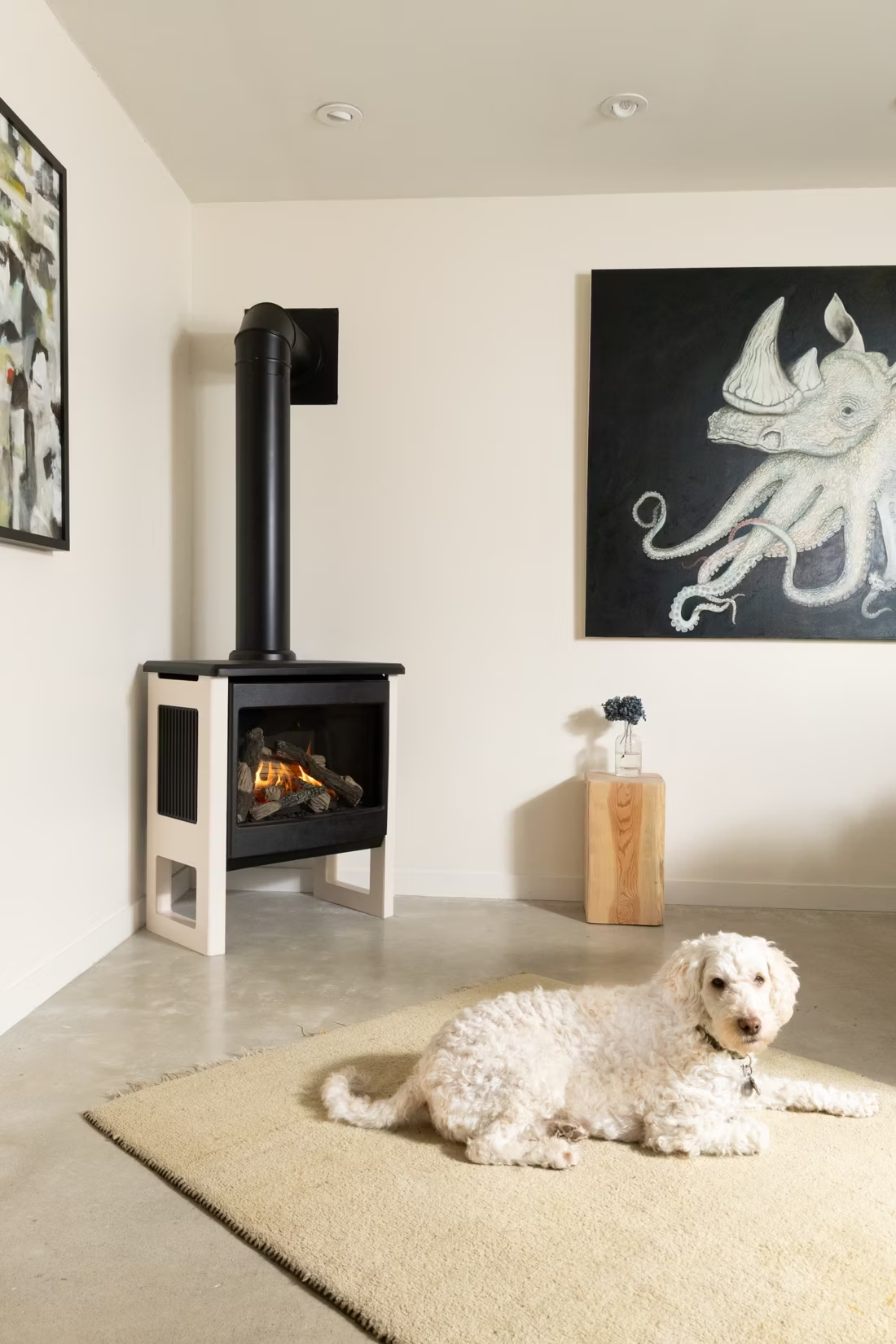
A gas fireplace is a fully built-in unit framed into a wall—common in additions or new construction. A gas insert slides into an existing masonry firebox and uses the current chimney as its vent path, which is the typical route for Mantua's original 1950s and 60s fireplaces. A gas stove is a freestanding cast-iron or steel unit that sits on the floor like a wood stove but runs on gas, a good fit for a room without any existing fireplace. For most homeowners here converting an original hearth, an insert is the right call.
Do I need a permit to install a gas fireplace in Mantua?
Yes. Fairfax County requires both a building permit and a gas permit for new gas fireplace or insert installations, issued through Fairfax County's Land Development Services. Any gas line work has to be done by a licensed gas fitter. Most established hearth dealers in the area handle the permitting and inspection scheduling as part of the installation, so you're not coordinating multiple trades and county sign-offs yourself.
Should I get a vented or vent-free gas fireplace?
Vented (direct-vent) gas fireplaces draw combustion air from outside and exhaust it back outside through sealed venting, keeping combustion byproducts out of the house. Vent-free units burn directly into the room and are legal in Virginia under specific room-size and ventilation rules, but they release some water vapor and trace combustion gases indoors. For Mantua's tightly built lots and mostly closed floor plans, direct-vent units are the more common and more broadly recommended choice—full heat output with no indoor air quality tradeoffs. A local dealer can walk you through both if you want to weigh it yourself.
How often does a gas fireplace need to be serviced?
Plan on an annual inspection, ideally before the start of the heating season. A technician checks the burner, pilot assembly, venting, and gas connections, and cleans the glass and interior—a much smaller job than a chimney sweep but just as important for safe operation. Local gas appliance service providers typically charge $150 to $250 for this visit, and it's the kind of maintenance that's easy to put off until a pilot won't light on the first cold night of the year.
Is wood ever a realistic option in Mantua, or is gas really the only choice?
Genuine cordwood-burning is uncommon in Mantua today. Most of the neighborhood's brick colonials were built with a wood-burning fireplace, but the majority of homeowners have since converted to gas inserts, largely because there's no adjacent national forest or Forest Service cutting-permit office the way there is in rural Virginia, so firewood has to be delivered—oak, hickory, and maple are the species typically available, running around $300 to $400 a cord from regional suppliers. Wood is still workable if your masonry chimney is in good condition, but between the storage, ash, and smoke considerations on a tight suburban lot, most Mantua households land on gas for daily use.
Is my gas fireplace wasting gas?
If it was installed more than 15 years ago, probably. Older gas fireplaces keep a standing pilot light burning all the time, and that little flame can cost a couple hundred dollars a year. Newer models use pilot-on-demand ignition—the pilot lights only when you use the fireplace and goes out when you turn it off.
Why is my open fireplace making my house colder?
Open fireplaces suck—literally. As the fire burns, it consumes air your furnace already paid to heat and pulls it out through the chimney, so the house is actually colder after the fire goes out than before you lit it. An insert fixes this: it seals the chimney, puts fixed glass across the front, and turns that hole in your house into a real heat source.
Can a fireplace actually lower my heating bill?
Yes—by creating a comfort zone. A furnace heats every square foot of the house just to warm the one room you're in; a gas fireplace on low burns roughly a sixth of the gas a typical furnace does. Set the furnace around 55–60 degrees as a baseline, then heat the rooms your family actually uses. Families who heat this way commonly save $20–$60 a month.
Does a fireplace add value to my home?
On average, a fireplace adds back to the home about the same amount you spent installing it. Add the monthly savings from heating the rooms you actually use instead of the whole house—often hundreds of dollars a year—and the value case is strong before you even count what a fire does for how your family uses the room.
Nearby Dealers
Hearth shops serving Mantua and the surrounding area. Every listing shows whether it is a WhyFire partner, a dealer we have verified as authorized for the brands we recommend, or a local business carrying hearth products. No manufacturer pays for placement. How we verify dealers →
Aspen Green Gasworks
Homeliving Fireplaces
Genesis Chimney Services
Cyprus Air, Indoor Comfort
Lawn & Leisure
Nova Fireplace And Stove
Fireside Hearth & Home - Manassas
Deckscapes Of Virginia
Cyprus Air
Costello's Hearth & Spa - Rockville
Capitol Chimney Service
Chimney.com
The Fireplace Shop
Tri-County Hearth & Patio
Find your gas fireplace in Mantua.
Tell us a bit about your home and we'll match you with a trusted local dealer and send over a free Project Guide & Parts List—the exact parts, vent kit, and recommended installer for your Mantua gas fireplace project.
Find Your Fireplace →