
A Niche Fit for Lynchburg's Mild Winters.
Pellet stoves aren't the default choice in Lynchburg's Piedmont climate, but for the right home they still make sense. We'll help you figure out if yours is one of them.
Every Project Starts From One of These Five Situations
Pellet stoves are the exception, not the rule, here.
Lynchburg sits at just 693 feet in the James River valley of central Virginia's Piedmont, with winter lows averaging 24°F and only a modest winter heating load overall. That's a fraction of what pellet-stove strongholds like Duluth, MN or Burlington, VT see every winter, where a hopper-fed stove is often load-bearing heat for months at a time. In Lynchburg, most homeowners meet their heating needs with gas or an electric heat pump through Appalachian Power, which is why pellet fuel shows up here as a niche choice rather than a default one.
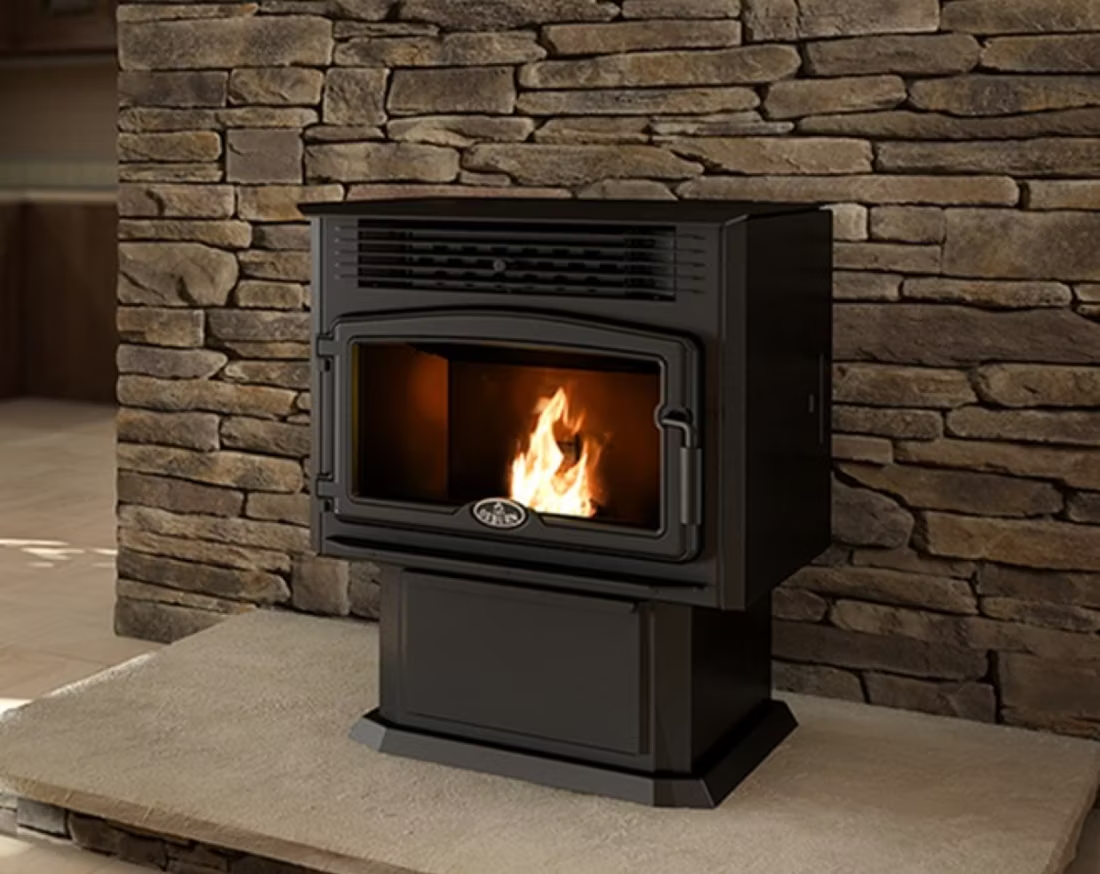
That doesn't mean pellet stoves don't exist locally—they do, usually in sunrooms, finished basements, workshops, or as backup heat for homeowners who like the low-maintenance, thermostat-like control a pellet appliance offers over splitting and stacking cordwood. Regional pellet brands including Energex, Hamer Pellet Fuel, and Greene Team Pellet Fuel are sold through farm and hardware stores in the area, so fuel supply isn't the obstacle—fit and demand are. If you're one of the homeowners for whom a pellet stove makes sense, we can still connect you with a local dealer who installs and services them correctly.
Three steps. No salesperson until you're ready.
Tell us about your project
Your zip code, your situation, and the fuel you're leaning toward—or let the answers point you to one.
See what's actually available
The brands dealers within 100 miles genuinely carry—real options, never a catalog mirage.
Get your dealer & Project Guide
A trusted local dealer, plus the free Project Guide & Parts List that names every component of the job.
Frequently Asked Questions
How much does a pellet stove installation cost in Lynchburg?
Nationally, a pellet stove installation typically runs $3,000 to $6,000 once you include the appliance, a small-diameter PL venting kit through an exterior wall, and an electrical outlet for the auger and blower. Lynchburg pricing tends to track that same range, though because demand is lower here than in colder markets, fewer dealers keep pellet units in stock—expect a special order lead time of two to four weeks rather than same-week installation. Ask any local hearth retailer for a firm quote after an in-home look at your venting path.
Does a pellet stove make sense for Lynchburg's climate?
For most homes, no—not as a primary heat source. With winter lows averaging 24°F and a fairly light winter heating load overall, Lynchburg's climate is far milder than places like Burlington, VT or Duluth, MN, where pellet stoves routinely run daily through a long, hard winter. Here, gas and electric heat pump systems handle the bulk of heating load more efficiently and with less homeowner effort. Where a pellet stove still earns its place is supplemental heat in a sunroom or finished basement, ambiance in a room that otherwise sits cold, or backup heat for someone who wants a hedge against a winter ice storm knocking out the grid—as long as they have battery or generator backup, since pellet stoves need electricity to run the auger and blower.
Where can I buy pellet fuel in Lynchburg?
Regional brands including Energex, Hamer Pellet Fuel, and Greene Team Pellet Fuel are sold through farm supply and hardware retailers in and around the Lynchburg area, typically running somewhere in the $250 to $320 per ton range depending on the brand and season. Because pellet stoves are less common locally than in colder markets, you won't find pellets stocked at every big-box store—it's worth calling ahead in early fall before the first cold snap, when local supply tends to sell through fastest.
Do I need a permit to install a pellet stove in Lynchburg?
Yes—pellet stove installations require a building permit through the City of Lynchburg's building inspections department, covering the appliance placement, wall penetration for venting, and any electrical work for the outlet. Most local dealers who sell and install pellet stoves handle this paperwork as part of the job, so you're not filing anything yourself. Because pellet installs are less routine here than gas or electric work, it's worth confirming your installer has direct experience with pellet venting specifically, not just wood or gas.
Why is wood heat also uncommon in Lynchburg despite oak and hickory being everywhere?
It's a market pattern more than a supply issue. Oak, hickory, and maple are abundant locally, and the George Washington & Jefferson National Forest issues cutting permits for $20 per cord during the May-to-October season for homeowners willing to cut their own—but Lynchburg's mild winters mean most homes simply don't need a primary wood-burning appliance the way a home in the Blue Ridge highlands or further north might. Both wood and pellet stoves end up as secondary or lifestyle choices here, while gas and electric heat carry the daily load.
How does pellet stove venting compare to a wood stove or fireplace?
Pellet stoves vent through a small-diameter (typically 3 or 4-inch) PL-rated pipe straight out an exterior wall—no masonry chimney or Class A pipe required. That makes them considerably cheaper and simpler to install than a wood stove or fireplace, which is one reason they still get specced into Lynchburg sunrooms and basement remodels even though the fuel type overall isn't in high local demand. The tradeoff is that the vent fan and auger both need power, so a generator or battery backup is worth considering if you're counting on the stove during a storm-related outage.
How much maintenance does a pellet stove need?
Plan on emptying the ash pan every few days during regular use, a deeper cleaning of the burn pot and heat exchanger every few weeks, and a full professional service once a year—typically $150 to $200 locally—to check the auger, exhaust fan, and gaskets. Because pellet stoves run on electricity (through Appalachian Power at roughly $0.17 per kWh in this area), the running cost includes a small electric draw in addition to the pellets themselves, which is worth factoring in if you're comparing it against a heat pump for supplemental use.
What size pellet stove do I need?
Given Lynchburg's mild heating demand, most pellet stoves installed locally are sized for a single room or zone rather than a whole house—a small unit (under 1,000 sq ft) is usually plenty for a sunroom, den, or basement rec room. Full-house sizing is rarely the goal here since the appliance is almost always supplemental to a gas or electric system. A local dealer can size the unit to your specific room and insulation level during a quick in-home visit.
Pellet stove vs. electric heat pump—which makes more sense in Lynchburg?
For most Lynchburg homes, an electric heat pump through Appalachian Power is the more practical whole-home solution—it heats and cools, requires no fuel storage, and fits the region's moderate heating load without any hopper-loading or ash cleanup. A pellet stove makes more sense as a supplemental or backup option: it produces real radiant heat in a specific room, works during brief outages if you have battery backup, and gives a fireplace-like presence a heat pump can't. Most homeowners who add a pellet stove here already have central heat and are solving for a cold room or a backup plan, not replacing their primary system.
Why is my open fireplace making my house colder?
Open fireplaces suck—literally. As the fire burns, it consumes air your furnace already paid to heat and pulls it out through the chimney, so the house is actually colder after the fire goes out than before you lit it. An insert fixes this: it seals the chimney, puts fixed glass across the front, and turns that hole in your house into a real heat source.
Why is a fireplace insert so efficient?
An insert does two things: it seals the chimney completely, so you stop losing air you already paid to heat, and it radiates warmth into the room through the firebox and glass. Most add a heat-exchange fan that pulls cool room air underneath, wraps it around the hot firebox, and pushes it back out warm. Your home is more efficient before you've even lit the first fire.
Can I install a fireplace myself?
If you're putting a fire in your house on purpose, it's best to work with an expert. Unless you're genuinely experienced in framing, gas line, vent pipe, and the national code on clearances to combustibles, have a professional do it—and ideally the same company that sells you the fireplace, so warranty, service, and liability all live under one roof.
What is an in-home preview and do I need one?
It's a visit where a hearth professional measures your space, confirms the model you picked actually works in your home, and walks the specs—framing, gas line, venting, finish work—before anything is ordered. Some details you just can't know until you see the house. Never make a down payment without one; it's the single most-skipped step that burns buyers.
Nearby Dealers
Hearth shops serving Lynchburg and the surrounding area.
Pellet Brands Stocked Around Lynchburg
Manufacturers will point you to the nearest stocking dealer.
Find your pellet stove in Lynchburg.
Tell us about your space and how you'd use it, and we'll match you with a local dealer who installs pellet stoves correctly—plus a free Project Guide & Parts List for your specific setup.
Find Your Fireplace →