
Warm Up Any Room in Lynchburg—No Chimney Required.
From Rivermont Avenue Victorians to newer builds off Wards Road, electric fireplaces give Lynchburg homeowners real ambiance and zone heat without gas lines or masonry work. Find the right unit and connect with a trusted local dealer.
Every Project Starts From One of These Five Situations
A practical fit for Lynchburg's older homes.
Lynchburg's winters are moderate by Virginia mountain standards—about 4,489 heating degree days a year and average lows near 24°F, nothing like the deep cold of Duluth or Burlington. That means most homes here don't need a wood stove or pellet appliance as primary heat; central HVAC handles the bulk of it. But Lynchburg has a lot of housing stock from the Federal Hill, Diamond Hill, and Rivermont Avenue eras—homes with decorative fireboxes, capped chimneys, or no chimney at all—where residents still want the visual warmth of a fire without reopening a flue.
That's where electric fireplaces do their best work. An electric insert drops into an existing (even non-functional) masonry firebox, or a wall-mount or built-in unit goes into a room that never had a fireplace to begin with, all running on standard household current from Appalachian Power. At Lynchburg's residential rate of about 17 cents per kWh, a typical 1,500-watt unit costs roughly 25 to 30 cents an hour to run on high heat—inexpensive zone heat for a guest room, sunroom, or finished basement, with none of the flue, gas line, or annual sweep that wood or gas options require.
Three steps. No salesperson until you're ready.
Tell us about your project
Your zip code, your situation, and the fuel you're leaning toward—or let the answers point you to one.
See what's actually available
The brands dealers within 100 miles genuinely carry—real options, never a catalog mirage.
Get your dealer & Project Guide
A trusted local dealer, plus the free Project Guide & Parts List that names every component of the job.
Frequently Asked Questions
How much does an electric fireplace installation cost in Lynchburg?
Costs vary a lot by unit type. A plug-in freestanding or wall-mount electric fireplace typically runs $150 to $600 installed, since it just needs a standard outlet—no permit, no electrician, in many cases a same-day setup. A built-in wall insert or linear electric fireplace that requires a dedicated 20-amp circuit run by an electrician usually lands between $1,200 and $3,500 in Lynchburg, depending on wall access and wiring distance. Full mantel-and-surround builds with custom cabinetry can push toward $4,000 to $6,000. Local dealers will scope your specific wall and electrical setup before quoting a firm number.
Do I need a permit to install an electric fireplace in Lynchburg?
In most cases, no. Plug-in electric fireplaces and inserts that use existing outlets don't trigger a permit requirement because there's no venting, gas line, or structural chimney work involved. If your installation requires a new dedicated circuit or panel work—common with larger built-in units—the electrical portion typically needs a permit through the City of Lynchburg's Department of Community Development, and it should be pulled and inspected by a licensed electrician. A reputable local hearth dealer will tell you upfront whether your specific unit and wall setup require one.
What size electric fireplace do I need for my room?
Electric fireplaces are rated in BTUs, and most standard units top out around 4,600–5,200 BTU (roughly 1,500 watts), which comfortably heats a 400–450 square foot room as supplemental heat. For a bedroom or home office in a typical Lynchburg house, a 30-to-40-inch wall-mount or insert is usually plenty. For open-concept living areas or larger additions, look at linear units in the 50-to-60-inch range, or plan on the electric fireplace as ambiance and zone comfort rather than your only heat source—Lynchburg's central HVAC systems are still doing the primary heavy lifting through the coldest stretches.
How much does it cost to run an electric fireplace in Lynchburg?
At Appalachian Power's residential rate of about $0.17 per kWh, a typical 1,500-watt electric fireplace running on high heat costs roughly 25 to 30 cents per hour. Running it for six hours a night through a cold week costs somewhere around $10 to $12 for that stretch—noticeably cheaper than running whole-home electric resistance heat, and a reasonable way to take the edge off a chilly room without turning up the thermostat for the whole house. Most units also run on a flame-only, no-heat setting for near-zero operating cost when you just want the visual.
Can I convert an old wood-burning fireplace to electric in my Lynchburg home?
Yes, and it's a common project in Lynchburg's older neighborhoods. Many Federal Hill and Diamond Hill homes have original masonry fireboxes that haven't burned wood in decades—chimneys that are capped, deteriorated, or simply never used. An electric insert slides into that existing firebox opening, plugs into a nearby outlet or a newly run circuit, and restores the look of a working fireplace with none of the chimney liner repair, creosote buildup, or annual sweep that reactivating the flue for real wood burning (oak, hickory, and maple are the common regional species) would require. It's usually the fastest, lowest-cost way to bring a dead fireplace back to life.
Electric vs. gas fireplace—which is better for my Lynchburg home?
Gas is standard and widely available in Lynchburg, and it delivers real, meaningful heat output plus the option to run during a power outage on models with battery-backup ignition—useful when an ice storm off the Blue Ridge foothills takes down power lines. Electric fireplaces can't provide backup heat during an outage since they require grid power, but they cost far less to install (no gas line, no venting), have zero emissions or combustion byproducts, and can go virtually anywhere in the house, including interior walls and upper floors where gas venting isn't practical. If you want a statement piece in a bedroom, basement, or room without existing gas service, electric is usually the simpler, cheaper path. If you want real supplemental heat for a main living space, gas is worth the extra investment.
Will an electric fireplace actually heat my room, or is it just for looks?
A quality electric fireplace with a real heating element (not just a light-and-fan effect) will genuinely warm a small-to-medium room—most are rated for 400 to 500 square feet on high. Given Lynchburg's relatively mild winter lows (averaging around 24°F, well short of the sustained sub-zero stretches you'd see in Fargo or International Falls), that's usually enough to keep a guest room, home office, or sunroom comfortable without running central heat to that part of the house. Just don't expect it to carry a large open floor plan or replace your furnace on the coldest nights of the year.
What happens to my electric fireplace during a power outage?
It won't operate at all—electric fireplaces have no battery backup and go dark the moment Appalachian Power service drops. That's the main tradeoff against gas or wood options for homeowners thinking about winter storm resilience. If backup heat during outages matters to you (ice storms do occasionally knock out power in the Lynchburg area), it's worth pairing an electric fireplace for everyday ambiance with a separate wood or gas appliance, or at minimum keeping a generator or battery power station on hand for essential circuits.
Is wood or pellet heat an option in Lynchburg, or is electric really the practical choice?
Wood and pellet appliances are uncommon as primary heat inside the city of Lynchburg—most homes here run on electric or gas central systems, and the housing stock in the historic districts often lacks a usable chimney. That said, wood isn't unheard of outside the city: cutting permits through the George Washington & Jefferson National Forest run about $20 per cord during the May–October season, and rural properties around Lynchburg County do burn oak, hickory, and maple for supplemental heat. Inside city limits, though, electric fireplaces are the far more practical route for most homeowners wanting fire ambiance without chimney work, wood storage, or ash cleanup.
Do electric fireplaces actually produce heat?
Yes—most put out around 4,800–5,000 BTUs from a standard outlet, which comfortably warms a bedroom, office, or den as a comfort-zone heater. What they won't do is carry a whole house the way wood, gas, or pellet can. Think of electric as ambiance-first with honest supplemental heat: flames on with no heat in July, flames plus warmth in January.
Can I put a TV above my fireplace?
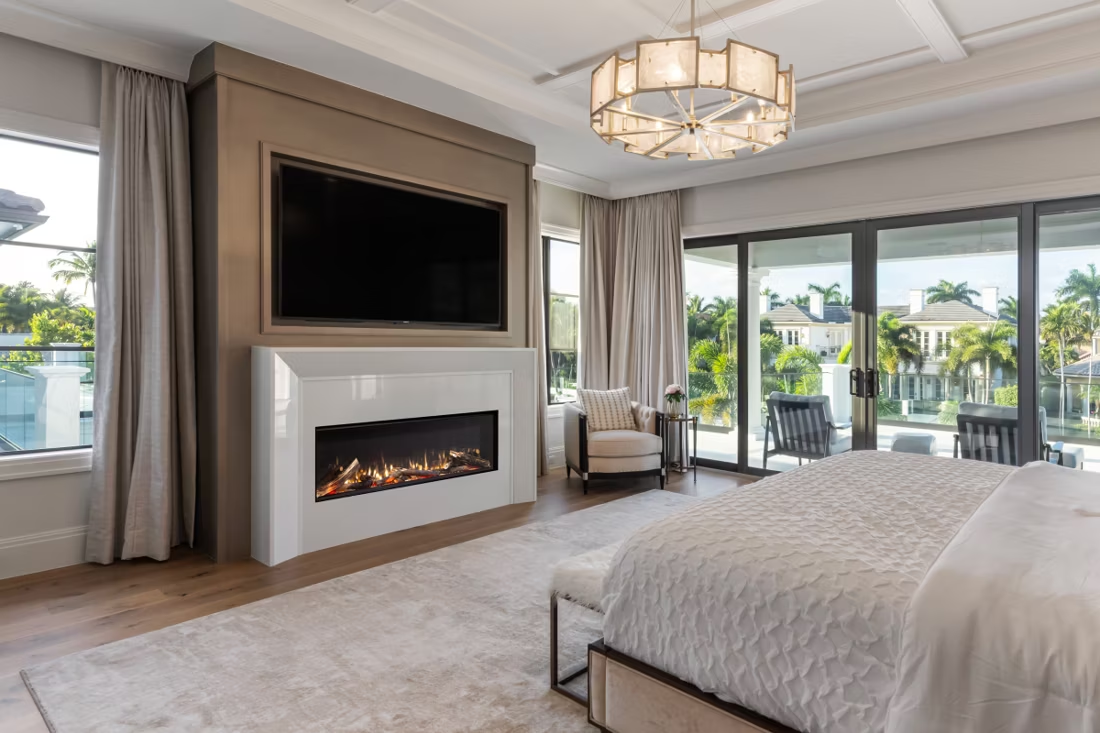
Yes—with an asterisk. Fireplaces are hot and TVs don't like heat. Either put a mantel between them to deflect rising warmth, or choose a fireplace with heat-management technology that creates a cool zone on the wall above—the wall stays around 125 degrees, barely warm, while the room still gets full heat. If you like clean lines and don't want a mantel, heat management is the answer.
What is an in-home preview and do I need one?
It's a visit where a hearth professional measures your space, confirms the model you picked actually works in your home, and walks the specs—framing, gas line, venting, finish work—before anything is ordered. Some details you just can't know until you see the house. Never make a down payment without one; it's the single most-skipped step that burns buyers.
How much should I budget for a fireplace?
For an average home—covering the fireplace, the vent pipe, and basic installation—a budget between $3,900 and $5,500 gives you a lot of options across wood, gas, and pellet. By the time you add finish work, gas line, and electrical, the average complete installation lands between $5,000 and $12,000 all-in. In a remodel or new build, a good rule is to put about 2.5% of the total project cost toward the fireplace.
Nearby Dealers
Hearth shops serving Lynchburg and the surrounding area.
Electric Service in Lynchburg
An electric fireplace's heater draws about 1,500 watts—pennies per hour at local rates.
Appalachian Power Co
Find your electric fireplace in Lynchburg.
Tell us about your room and wiring situation, and we'll put together a free Project Guide & Parts List—the right electric fireplace or insert for your space, plus a match with a trusted local Lynchburg dealer who can install it correctly.
Find Your Fireplace →