
Pellet Heat Isn't the Norm in Lincolnia—But It Can Still Work.
Lincolnia's mild winters and wide natural gas access mean pellet stoves are the exception, not the rule—but for backup heat, ambiance, or a wood-look stove without chimney upkeep, a local dealer can still make it work.
Every Project Starts From One of These Five Situations
Gas dominates heating here—pellet fills a narrow niche.
Lincolnia sits inside the Beltway in Fairfax County at just 245 feet elevation, with a climate zone 4A profile and a moderate seven-month heating season—average winter lows hover around 30°F, nowhere near the sub-zero stretches that make pellet heat a primary strategy in places like Burlington, VT or Duluth, MN. With natural gas infrastructure standard across most of the neighborhood and Dominion Energy (Virginia Electric & Power Co.) delivering reliable grid power at roughly 14 cents per kWh, most homeowners here default to a direct-vent gas fireplace or an electric insert long before they consider a pellet stove.
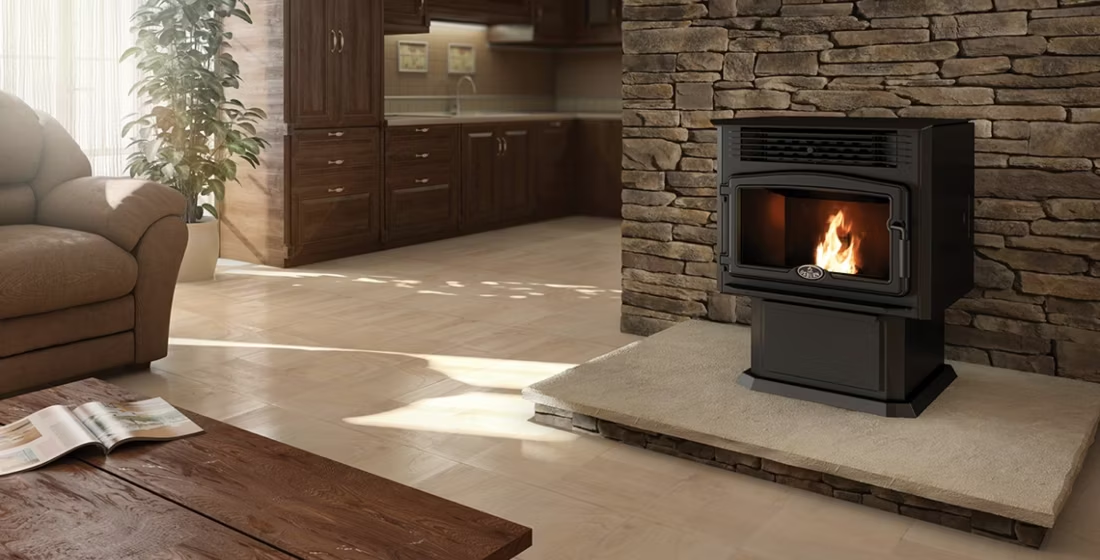
That's why pellet fuel relevance is rated not-applicable for Lincolnia—it's not that pellet stoves don't exist here, it's that they occupy a small niche: a wood-look stove for a den without a chimney, supplemental heat for a detached garage or basement rec room, or backup heat for homeowners who remember the ice storms that have knocked out power across Fairfax County. When a Lincolnia homeowner does want a pellet stove, dealers serving Northern Virginia typically stock Mid-Atlantic-milled brands like Energex, Hamer Pellet Fuel, and Greene Team Pellet Fuel—all made from the oak, hickory, and maple sawmill waste common to the region.
Three steps. No salesperson until you're ready.
Tell us about your project
Your zip code, your situation, and the fuel you're leaning toward—or let the answers point you to one.
See what's actually available
The brands dealers within 100 miles genuinely carry—real options, never a catalog mirage.
Get your dealer & Project Guide
A trusted local dealer, plus the free Project Guide & Parts List that names every component of the job.
Frequently Asked Questions
Are pellet stoves common in Lincolnia?
Not really—and we'd rather tell you that upfront than send you shopping for something that doesn't fit. Lincolnia's winters average a 30°F low with a moderate seven-month heating season, mild enough that most homes rely on natural gas or electric heat for primary comfort. Add in the older, tighter lots inside the Beltway and a fair number of condos and townhomes with limited exterior wall space for venting, and pellet stoves end up being a specialty product here rather than a mainstream one. If you're set on one, a local hearth dealer can still make it work—it's just a smaller, more custom project than in the pellet-heavy Midwest or Mountain West.
How much does a pellet stove installation cost in Lincolnia?
Because pellet stoves are a niche request here, Fairfax County doesn't track install pricing for them the way it does for the far more common gas insert. Nationally, a pellet stove or insert with a 3-inch PL-vent kit typically runs $3,500 to $7,000 installed, depending on the unit and whether you're venting through an existing masonry chimney or cutting a new wall penetration. Because so few Lincolnia homes have an existing wood-burning setup to convert, expect to land closer to the higher end once wall penetration, hearth pad, and electrical work for the auger and blower are added in. A trusted local dealer will give you a firm number after seeing your home.
Why isn't pellet heat considered a good fit for Lincolnia?
It comes down to climate and housing stock. With a moderate seven-month heating season and a 30°F average winter low, Lincolnia's heating season is moderate compared to genuinely pellet-dependent regions like International Falls, MN or Caribou, ME, where extended cold makes a hopper-fed stove worth the investment. Combine that with widespread natural gas access across most of the neighborhood and a housing mix heavy on townhomes and garden-style condos with little room for a stove and its bagged pellet storage, and gas fireplaces and electric inserts end up being the practical default. Pellet still works as a supplemental or specialty heat source—it's just not the first recommendation for most homes here.
Is natural gas available throughout Lincolnia?
Yes—natural gas service (typically Washington Gas in this part of Fairfax County) reaches most of the Lincolnia area, which is a big part of why gas fireplaces and inserts are rated 'standard' here while pellet stoves are not. If your home is already plumbed for gas—most are, since gas water heaters and furnaces are common in this pocket of Northern Virginia—a direct-vent gas insert is usually a simpler, less expensive project than adding a pellet stove from scratch.
If I still want a pellet stove, where do I start?
Start with a hearth dealer who serves Northern Virginia rather than a big-box store—pellet stoves are uncommon enough here that not every retailer carries or services them. You'll need a building permit through Fairfax County Land Development Services, and the installer will size the direct-vent PL pipe run through an exterior wall since most Lincolnia homes don't have an existing masonry chimney to reuse. Regional pellet fuel brands like Energex, Hamer Pellet Fuel, and Greene Team Pellet Fuel are sold through Mid-Atlantic hearth retailers and hardware stores, so fuel supply isn't the limiting factor—finding a dealer who installs and services the appliance is.
Do pellet stoves work during a power outage?
Not without help. Unlike a wood stove, a pellet stove's auger and combustion blower both run on household current, so a standard unit goes dark the moment the power drops—something to weigh carefully if you're considering one specifically as backup heat. Dominion Energy's grid in this part of Fairfax County is generally reliable, but ice storms have knocked out power for days at a time in Northern Virginia before. Homeowners who want pellet heat as true emergency backup typically pair the stove with a small battery/inverter setup sized for the auger and blower load—ask your installer about wattage draw before you buy the backup power.
Pellet stove vs. gas insert—which makes more sense for a Lincolnia home?
For most homes here, gas wins on convenience and cost: a direct-vent gas insert lights at the flip of a switch, needs no fuel storage, and—since natural gas service is standard across most of Lincolnia—usually costs less to install than a pellet stove with new wall venting. Pellet's advantage is the real-flame, wood-look experience and a lower fuel cost per BTU if you're burning a lot of heat, but it requires bag storage, hopper loading, ash removal, and household power to run. If you already have gas service to your home, that's usually the simpler and more common local choice; pellet is worth it mainly for homeowners specifically drawn to the wood-look flame or planning to heat a detached space like a garage.
Where can I buy pellet fuel near Lincolnia?
Pellets aren't sold on every corner here the way they are in pellet-heavy markets, but Mid-Atlantic brands like Energex, Hamer Pellet Fuel, and Greene Team Pellet Fuel are distributed through hearth retailers and some hardware stores across Northern Virginia, usually running $250 to $325 per ton depending on the brand and season. Buying early in the fall before the first cold snap is worth doing here specifically because local stock tends to be thinner than in states where pellet stoves are the primary heat source—retailers don't keep the same volume on hand.
Pellet vs. electric—which is right for my Lincolnia home?
Electric fireplaces and inserts are the lower-commitment option: no fuel storage, no venting in most cases, and simple installation, running on Dominion Energy's residential rate of about 14 cents per kWh. Pellet stoves put out more real heat and work well as a supplemental source in a cold room or detached space, but they need bagged fuel storage, regular hopper loading and ash cleanout, and electricity to run—so they don't offer the outage independence of a wood stove despite looking similar. For a Lincolnia home where the goal is ambiance or light supplemental warmth in a finished basement or sunroom, electric is usually the simpler fit; pellet makes sense if you specifically want more heat output than an electric unit can deliver.
What's the difference between an insert and a zero-clearance fireplace?
An insert is a fireplace that slides into a pre-existing wood-burning fireplace—if you don't have one, there's nothing to insert it into. A zero-clearance fireplace is built into a framed wall, which makes it the answer for remodels and new construction. Simple test: existing masonry fireplace means insert; blank or framed wall means zero-clearance.
Can a pellet stove heat a whole house?
It genuinely can. I burned a pellet stove as my only heat source for years after a furnace died, and it kept the entire house warm. Pellets feed automatically from a hopper, so you get wood-heat economics with thermostat-style control. Two honest caveats: it needs weekly cleaning during the season, and most models need electricity to run—ask about battery backup if outages are a concern.
What is an in-home preview and do I need one?
It's a visit where a hearth professional measures your space, confirms the model you picked actually works in your home, and walks the specs—framing, gas line, venting, finish work—before anything is ordered. Some details you just can't know until you see the house. Never make a down payment without one; it's the single most-skipped step that burns buyers.
Can a fireplace actually lower my heating bill?
Yes—by creating a comfort zone. A furnace heats every square foot of the house just to warm the one room you're in; a gas fireplace on low burns roughly a sixth of the gas a typical furnace does. Set the furnace around 55–60 degrees as a baseline, then heat the rooms your family actually uses. Families who heat this way commonly save $20–$60 a month.
Nearby Dealers
Hearth shops serving Lincolnia and the surrounding area. Every listing shows whether it is a WhyFire partner, a dealer we have verified as authorized for the brands we recommend, or a local business carrying hearth products. No manufacturer pays for placement. How we verify dealers →
Cyprus Air, Indoor Comfort
Nova Fireplace And Stove
Aspen Green Gasworks
Homeliving Fireplaces
Genesis Chimney Services
Lawn & Leisure
Cyprus Air
Tri-County Hearth & Patio
Costello's Hearth & Spa - Rockville
Capitol Chimney Service
Fireside Hearth & Home - Manassas
Superior Fireplaces - La Plata
Chimney.com
Deckscapes Of Virginia
Belair Engineering & Service Co, Inc
The Fireplace Shop
Pellet Brands Stocked Around Lincolnia
Manufacturers will point you to the nearest stocking dealer.
Get matched with a Lincolnia pellet stove dealer.
Tell us about your home and we'll connect you with a trusted Northern Virginia hearth dealer and send over a free Project Guide & Parts List—including the vent kit—for your pellet project in Lincolnia.
Find Your Fireplace →