
Warm Up Fast in Lincolnia, No Wood Required.
With a moderate winter heating season and winter lows averaging around 30°F, Lincolnia doesn't need a wood-burning setup to stay warm—it needs a gas fireplace that turns on instantly and looks good doing it.
Every Project Starts From One of These Five Situations
Gas fits how Fairfax County actually lives.
Lincolnia sits inside Fairfax County at just 245 feet of elevation, in climate zone 4A—a world away from the deep-freeze winters of a place like Madison, WI, where the winter heating load can run twice as high. Winter lows here average around 30°F, and the heating season, while real, is comparatively mild. That milder climate, combined with dense single-family and townhome development close to Alexandria and DC, is a big part of why gas has become the default fireplace fuel in this part of Fairfax County rather than wood.
Most of Lincolnia falls within the Washington Gas natural gas service territory, and homes without a gas line typically run on propane instead. Electric service comes through Virginia Electric & Power Co (Dominion Energy) at roughly 14 cents per kWh, which makes electric fireplaces a reasonable no-venting option for condos and townhomes where running a gas line or masonry chimney isn't practical. For most detached homes, though, a direct-vent gas fireplace or insert delivers real heat at the flip of a switch—a fit for the zone-heating, central-HVAC lifestyle that's typical of Northern Virginia housing stock.
Three steps. No salesperson until you're ready.
Tell us about your project
Your zip code, your situation, and the fuel you're leaning toward—or let the answers point you to one.
See what's actually available
The brands dealers within 100 miles genuinely carry—real options, never a catalog mirage.
Get your dealer & Project Guide
A trusted local dealer, plus the free Project Guide & Parts List that names every component of the job.
Frequently Asked Questions
How much does a gas fireplace installation cost in Lincolnia?
In the Lincolnia and greater Fairfax County market, a direct-vent gas insert installed into an existing masonry fireplace typically runs $4,500 to $8,500, depending on the unit and whether a gas line is already run to the firebox. A new built-in gas fireplace for a remodel or addition—with framing, venting, and a fresh gas line—usually lands between $7,000 and $12,000. Homes that need a propane tank set because they're outside the Washington Gas service area tend to sit at the higher end. A local dealer will give you a firm number after seeing the space in person.
Can I convert my existing wood fireplace to gas?
Yes, and it's one of the most common projects in Lincolnia's older single-family neighborhoods, many of which were built with masonry wood-burning fireplaces that see little actual use. A gas insert slides into the existing firebox and uses a stainless liner run through your current chimney, which keeps the exterior look intact while eliminating ash, smoke, and the hassle of sourcing cordwood in a dense suburban area. Conversions generally run $4,500 to $8,000 depending on whether a gas line already reaches the fireplace or needs to be extended from the meter.
Do I need natural gas, or can I use propane?
Either works, but most of Lincolnia is within the Washington Gas service territory, so if your home already has natural gas for the furnace, water heater, or stove, adding a fireplace is usually a straightforward tap-in. Pockets of Fairfax County outside the utility's mains rely on propane instead, delivered and stored in a tank set by a local propane supplier. Nearly every gas fireplace on the market can be configured for either fuel—your installer sets the correct orifice and regulator for whichever service you have.
Will my gas fireplace still work if the power goes out?
Most modern gas fireplaces will, with the right ignition system. Units with IPI (intermittent pilot ignition) run on a small battery backup that kicks in automatically when line power drops, so the fireplace still lights on demand—just remember to keep fresh batteries in the unit. Valor fireplaces take a different approach: their pilot assembly generates its own electricity through a thermocouple, so there's no battery to maintain at all. Given how many Lincolnia neighborhoods lose power during Nor'easters and summer thunderstorm outages, that's a detail worth asking your local dealer about.
What's the difference between a gas fireplace, a gas insert, and a gas stove?
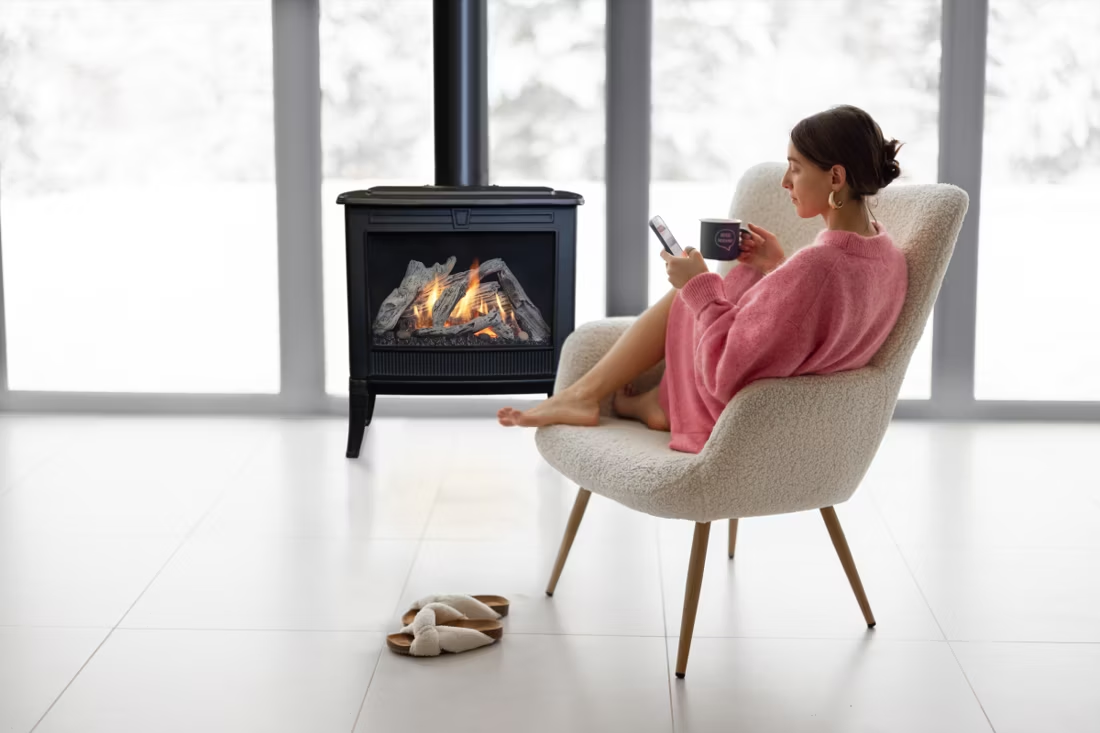
A gas fireplace is a fully built-in unit framed into a wall—the right call for new construction or a major remodel. A gas insert is sized to drop into an existing masonry firebox, which is common in Lincolnia's older brick homes with a chimney already in place. A gas stove is a freestanding cast-iron or steel unit that sits on the floor like a wood stove but burns gas, and it's a good option for a townhome or condo without a masonry fireplace. Which one makes sense for your Lincolnia home usually comes down to whether you're starting from an existing fireplace or a blank wall.
Do I need a permit to install a gas fireplace in Lincolnia?
Yes—Fairfax County Land Development Services requires a building permit for gas fireplace installations, along with a separate mechanical or gas permit for the gas line work itself, which must be done by a licensed gas-fitter. Most established hearth dealers in the area pull these permits as part of the installation and coordinate the required inspection, so you generally don't have to manage it yourself. Skipping the permit can create real problems later at resale, since Fairfax County home inspections often flag unpermitted gas appliance work.
What's the difference between vented and vent-free gas fireplaces?
Vented (direct-vent) gas fireplaces draw combustion air from outside and exhaust it back outside through a sealed pipe—they're the cleanest and most universally accepted option. Vent-free units burn without any exterior venting, releasing some water vapor and combustion byproducts into the room, which means they're subject to strict room-size and ventilation rules under Virginia's mechanical code. Vent-free units are legal in Virginia, but many Fairfax County condo and townhome associations restrict or prohibit them outright due to indoor air quality concerns, and Lincolnia's mostly-attached and close-set housing stock makes that a real consideration. For most homes here, a direct-vent unit is the simpler, more broadly acceptable choice.
How often should a gas fireplace be serviced?
Plan on an annual inspection, ideally before the first cold snap each fall. A technician checks the burner, pilot assembly, venting, and gas connections, and cleans the glass and interior—a much smaller job than chimney sweeping for a wood-burning unit, but still important, since a cracked seal or blocked vent cap is a real safety issue. Local gas appliance service techs in the Fairfax County area typically charge $150 to $250 for a standard annual inspection and cleaning.
Should I even consider a wood-burning fireplace in Lincolnia, or is gas really the better call?
For most Lincolnia homes, gas is the practical answer. Wood-burning fireplaces exist in some of the area's older housing stock, but new wood stove or insert installations are uncommon here—dense lot sizes, HOA and condo association rules, and the convenience expectations of a DC-metro commuter lifestyle all push homeowners toward gas. There's also no air-quality curtailment program in Fairfax County the way there is in wood-heavy mountain regions, which removes one traditional argument for keeping a wood backup for outages. If you already have a masonry fireplace and love the idea of a real wood fire occasionally, that's a valid personal preference—but for daily use and resale value, a gas insert or fireplace is what most local buyers and inspectors expect to see.
Is my gas fireplace wasting gas?
If it was installed more than 15 years ago, probably. Older gas fireplaces keep a standing pilot light burning all the time, and that little flame can cost a couple hundred dollars a year. Newer models use pilot-on-demand ignition—the pilot lights only when you use the fireplace and goes out when you turn it off.
Can I put a TV above my fireplace?
Yes—with an asterisk. Fireplaces are hot and TVs don't like heat. Either put a mantel between them to deflect rising warmth, or choose a fireplace with heat-management technology that creates a cool zone on the wall above—the wall stays around 125 degrees, barely warm, while the room still gets full heat. If you like clean lines and don't want a mantel, heat management is the answer.
Can a fireplace actually lower my heating bill?
Yes—by creating a comfort zone. A furnace heats every square foot of the house just to warm the one room you're in; a gas fireplace on low burns roughly a sixth of the gas a typical furnace does. Set the furnace around 55–60 degrees as a baseline, then heat the rooms your family actually uses. Families who heat this way commonly save $20–$60 a month.
What is an in-home preview and do I need one?
It's a visit where a hearth professional measures your space, confirms the model you picked actually works in your home, and walks the specs—framing, gas line, venting, finish work—before anything is ordered. Some details you just can't know until you see the house. Never make a down payment without one; it's the single most-skipped step that burns buyers.
Nearby Dealers
Hearth shops serving Lincolnia and the surrounding area. Every listing shows whether it is a WhyFire partner, a dealer we have verified as authorized for the brands we recommend, or a local business carrying hearth products. No manufacturer pays for placement. How we verify dealers →
Cyprus Air, Indoor Comfort
Nova Fireplace And Stove
Aspen Green Gasworks
Homeliving Fireplaces
Genesis Chimney Services
Lawn & Leisure
Cyprus Air
Tri-County Hearth & Patio
Costello's Hearth & Spa - Rockville
Capitol Chimney Service
Fireside Hearth & Home - Manassas
Superior Fireplaces - La Plata
Chimney.com
Deckscapes Of Virginia
Belair Engineering & Service Co, Inc
The Fireplace Shop
Find your gas fireplace in Lincolnia.
Tell us about your home and we'll match you with a trusted local Fairfax County dealer and send over a free Project Guide & Parts List—the exact parts, including the vent kit, for your gas fireplace project.
Find Your Fireplace →