
Keep Your Family Warm and Safe—No Matter What
From Kilmarnock to Irvington to White Stone, Lancaster County's oak, hickory, and maple woodlots have heated Rappahannock River homes for generations. Find the right stove or insert, and connect with a trusted local dealer.
Every Project Starts From One of These Five Situations
Hardwood heat for a peninsula climate.
Lancaster County sits at the tip of Virginia's Northern Neck, bounded by the Rappahannock River on one side and the Chesapeake Bay on the other, with a year-round population of just over 2,300. The county falls in climate zone 4A—mixed-humid winters that run colder than coastal Carolina but milder than the Blue Ridge or Shenandoah Valley, thanks to the moderating pull of the Bay and river. It's not extreme cold, but it's cold enough, often enough, that a wood stove or insert earns its place here—especially on waterfront properties where winter Nor'easters can knock out power for days at a stretch.
Unlike much of western Virginia, Lancaster County has no national forest and no public cutting-permit program—firewood here comes from private woodlots, local tree services, and residents clearing their own land rather than a Forest Service permit office. Oak, hickory, and maple are the backbone species: dense, high-BTU hardwoods that split clean and hold a coal bed overnight. The county also reports no air-quality non-attainment issues or winter inversion problems, so burning wood in Lancaster County doesn't run into the kind of curtailment periods homeowners deal with in parts of the Pacific Northwest—one less thing to track before lighting a fire.
Three steps. No salesperson until you're ready.
Tell us about your project
Your zip code, your situation, and the fuel you're leaning toward—or let the answers point you to one.
See what's actually available
The brands dealers within 100 miles genuinely carry—real options, never a catalog mirage.
Get your dealer & Project Guide
A trusted local dealer, plus the free Project Guide & Parts List that names every component of the job.
Frequently Asked Questions
How much does a wood stove installation cost in Lancaster County?
A wood stove or insert installation in Lancaster County typically runs $3,000 to $7,500, depending on the unit, whether it's going into an existing masonry fireplace or starting fresh as a freestanding stove, and how much chimney work is involved. Homes without an existing chimney—common in newer construction around Kilmarnock and White Stone—tend to run higher, sometimes $8,000 to $12,000, once Class A pipe and roof penetration are factored in. Because Lancaster County doesn't have a deep bench of local hearth retailers, waterfront and rural properties along the Rappahannock sometimes carry a modest travel charge if the installer is coming up from the Tidewater or Richmond area.
What size wood stove or insert do I need for my home?
Sizing comes down to square footage, insulation, ceiling height, and whether the stove is primary or supplemental heat. Because Lancaster County sits in the milder zone 4A band rather than the harsher interior climates of western Virginia, most homes here don't need the largest catalytic units built for sub-zero, multi-day cold. Small stoves suit a single room or a Bay-front cottage, medium stoves handle most Northern Neck main living areas, and large stoves make sense for bigger farmhouses or homes leaning on wood as their primary heat during storm season. A local dealer will size your home for free during an in-home visit—worth doing, since an oversized stove smolders and builds creosote, while an undersized one won't keep up during a hard cold snap.
Where can I find certified wood stove installers near me?
Look for NFI (National Fireplace Institute) or CSIA (Chimney Safety Institute of America) certification—both signal proper training in wood-burning appliance installation and venting. Lancaster County's small population means the nearest certified hearth retailers may be based in Kilmarnock, White Stone, or a short drive up the Northern Neck toward Warsaw; some jobs may include a modest travel fee. It's worth avoiding a general handyman or contractor for a wood-burning install—incorrect clearances and venting are the leading cause of chimney fires, and a certified installer typically handles the county permit paperwork as part of the job.
What's the difference between a wood stove and a wood insert?
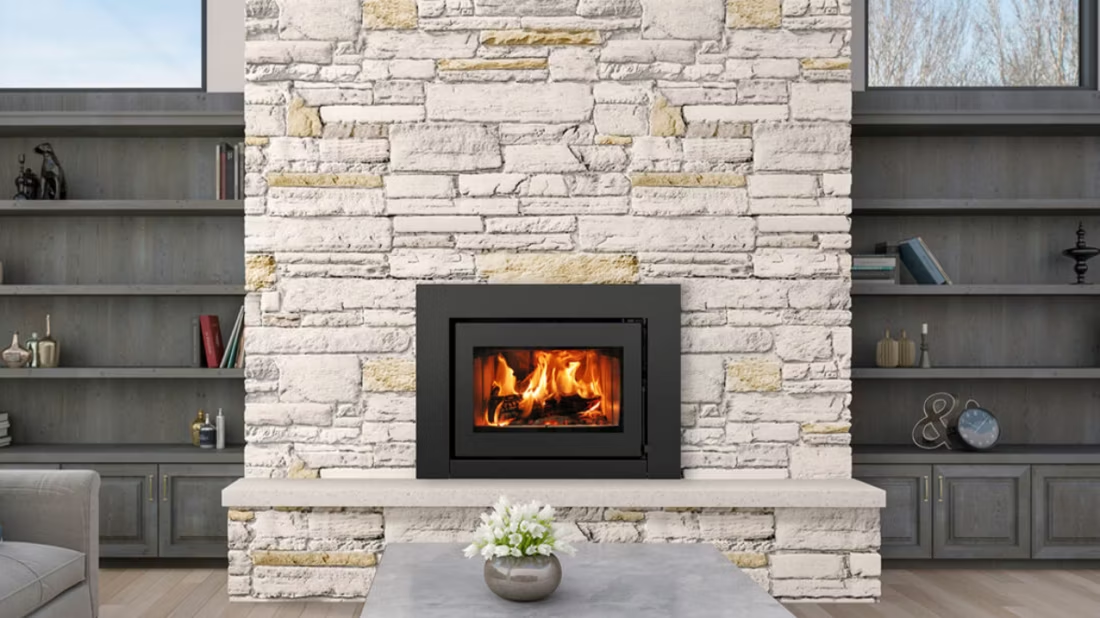
A wood stove is a freestanding unit on a hearth pad that vents through a chimney and can go almost anywhere with the right clearances. A wood insert slides into an existing masonry fireplace, turning a drafty open hearth into a sealed, high-efficiency heat source. Lancaster County has a lot of older farmhouses and waterfront homes with existing masonry fireplaces, which makes an insert the more common choice—it reuses the chimney you already have and dramatically improves heat output over an open fireplace. Newer homes without an existing fireplace typically go with a freestanding stove instead.
Do I need a permit to install a wood stove in Lancaster County?
Yes—new wood stove and insert installations require a building permit through Lancaster County under the Virginia Uniform Statewide Building Code, and the appliance itself needs to meet current EPA emissions standards. Most local installers handle the permit application and inspection scheduling as part of the job, so it typically isn't something a homeowner has to manage directly. Because Lancaster County reports no non-attainment or inversion issues, there are no seasonal burning curtailments to work around here, unlike some parts of the country where wood smoke advisories restrict use during certain winter conditions.
What's the best wood stove for Lancaster County's climate?
Because Lancaster County sits in the milder zone 4A band rather than a harsh interior climate, a mid-sized non-catalytic stove from a brand like Pacific Energy or Lopi is usually plenty for most homes here, burning local oak and hickory efficiently without the need for the longest-burn catalytic models built for far colder regions. That said, on waterfront properties where Nor'easters regularly cause multi-day power outages, homeowners who want a stove they can rely on as backup heat sometimes step up to a longer-burning model anyway—ask a local dealer to walk through both options against your home's exposure and insulation.
How often should my chimney be inspected and cleaned?
The CSIA recommends an annual inspection for any wood-burning appliance, and that holds in Lancaster County too—ideally scheduled in late summer or early fall before burning season starts. The Northern Neck's humid, salt-air environment is worth flagging specifically: masonry chimneys on waterfront homes can see faster mortar and flashing wear than inland chimneys, so an annual check is also a chance to catch weather-related deterioration before it becomes a bigger repair. Heavy users burning several cords a winter as primary heat may want a mid-season check as well.
Where can I get firewood in Lancaster County?
Since there's no national forest or public cutting-permit program in Lancaster County, firewood here comes from private sources—local tree services, landowners clearing timber, and small seasonal sellers who advertise by word of mouth or roadside signs around Kilmarnock and Irvington. Oak, hickory, and maple are the most common species sold locally, all good dense hardwoods for long, hot burns. Prices vary by seller since there's no standardized regional market, so it's worth asking a few local suppliers and confirming the wood has seasoned at least six months to a year before burning.
Wood stove vs. pellet stove—which is right for me?
Wood stoves burn cordwood, work without electricity, and pair naturally with the private-woodlot firewood culture common on the Northern Neck—a real advantage during the multi-day power outages that Nor'easters and hurricanes can bring to this stretch of the Chesapeake. Pellet stoves burn compressed pellets from regional brands like Energex, Hamer Pellet Fuel, or Greene Team Pellet Fuel, and they're easier to load and run cleaner, but the auger and blower need electricity, so they go dark in an outage unless paired with a battery backup. For Lancaster County homes near the water where storm-driven power loss is a real planning factor, wood often wins as the more resilient choice; for in-town homes prioritizing convenience with steady power, pellet is a solid option.
Why is my open fireplace making my house colder?
Open fireplaces suck—literally. As the fire burns, it consumes air your furnace already paid to heat and pulls it out through the chimney, so the house is actually colder after the fire goes out than before you lit it. An insert fixes this: it seals the chimney, puts fixed glass across the front, and turns that hole in your house into a real heat source.
What's the difference between an insert and a zero-clearance fireplace?
An insert is a fireplace that slides into a pre-existing wood-burning fireplace—if you don't have one, there's nothing to insert it into. A zero-clearance fireplace is built into a framed wall, which makes it the answer for remodels and new construction. Simple test: existing masonry fireplace means insert; blank or framed wall means zero-clearance.
Can I install a fireplace myself?
If you're putting a fire in your house on purpose, it's best to work with an expert. Unless you're genuinely experienced in framing, gas line, vent pipe, and the national code on clearances to combustibles, have a professional do it—and ideally the same company that sells you the fireplace, so warranty, service, and liability all live under one roof.
Can a fireplace actually lower my heating bill?
Yes—by creating a comfort zone. A furnace heats every square foot of the house just to warm the one room you're in; a gas fireplace on low burns roughly a sixth of the gas a typical furnace does. Set the furnace around 55–60 degrees as a baseline, then heat the rooms your family actually uses. Families who heat this way commonly save $20–$60 a month.
Stove and Fireplace Dealers in Lancaster County
Listings include WhyFire partner dealers, dealers we have verified as authorized for the brands we recommend, and established local businesses that carry hearth products. Every listing shows which one it is. The ones marked Preferred run on WhyFire's software, so they can show you real pricing and book your appointment right here. No manufacturer pays for placement. How we verify dealers →
Nwp Energy
Old Town Stove & Hearth
Find your wood fireplace in Lancaster County.
Tell us about your home on the Northern Neck and we'll match you with the right wood stove or insert, plus a free Project Guide & Parts List—vent kit included—from a trusted local dealer.
Find Your Fireplace →