
Find the right hearth for your Northern Neck home.
Wood, gas, pellet, and electric fireplace resources for Kilmarnock, Irvington, White Stone, Weems, Lively, and every community on the Rappahannock and Chesapeake shorelines of Lancaster County. Find the right unit and connect with a local hearth retailer who actually installs in this county.
Every Project Starts From One of These Five Situations
Tidewater heating on Virginia's Northern Neck.
Lancaster County sits at the tip of Virginia's Northern Neck peninsula, bounded by the Rappahannock River on one side and the Chesapeake Bay on the other. The climate here is Zone 4A, mixed-humid—winters are damp and breezy off the water rather than brutally cold, and nothing like the sustained sub-zero stretches you'd see in Burlington, Vermont or Duluth, Minnesota. That said, nor'easters and cold fronts off the Bay can push overnight lows into the teens, and older waterfront homes with single-pane windows and crawl spaces still lose heat fast. Oak, hickory, and maple are the common hardwoods split locally, and wood heat remains part of daily life on the peninsula, especially in homes without natural gas service.
With a population of roughly 2,371, Lancaster County doesn't support a large number of hearth retailers—most that serve the area are based in or around Kilmarnock and cover the whole Northern Neck, from Irvington and White Stone down to Weems and Lively. Some homeowners looking for a wider selection travel toward Fredericksburg or the Richmond area. This hub rolls up retailers, technicians, and fuel suppliers across all four fuel types serving the county. Pick your fuel below for local dealers, installation costs, and recommended units for your specific project.
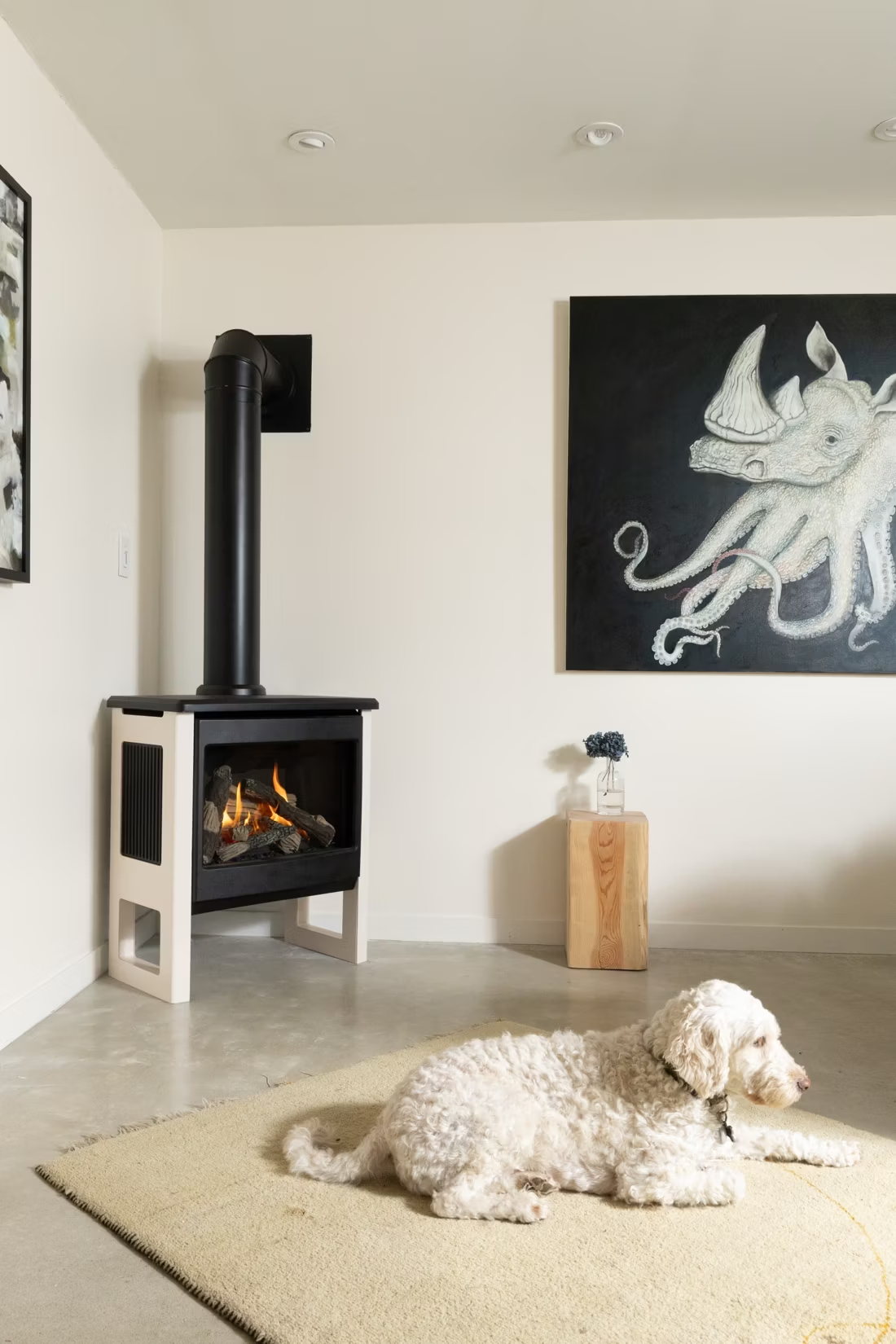
Four fuels. One honest answer for Lancaster County.
Three steps. No salesperson until you're ready.
Tell us about your project
Your zip code, your situation, and the fuel you're leaning toward—or let the answers point you to one.
See what's actually available
The brands dealers within 100 miles genuinely carry—real options, never a catalog mirage.
Get your dealer & Project Guide
A trusted local dealer, plus the free Project Guide & Parts List that names every component of the job.
Frequently Asked Questions
Which fuel works best in Lancaster County?
It depends on the home. Wood remains a strong choice on the Northern Neck—oak, hickory, and maple are the hardwoods people are already splitting and stacking, and a Zone 4A climate means a mid-size stove or insert, not an all-night catalytic unit, is usually enough. Gas is the convenience pick, though natural gas service is limited across much of rural Lancaster County, so most gas fireplace and insert installs run on propane rather than piped gas. Pellet is a solid middle ground—Energex, Hamer Pellet Fuel, and Greene Team Pellet Fuel are all sold within reach of the county, so fuel supply isn't a concern. Electric fireplaces do well in the county's many seasonal and waterfront homes on the Rappahannock and the Bay, where owners want ambiance and supplemental heat without venting or a chimney. Many full-time residents end up pairing wood or pellet as primary heat with gas or electric in secondary rooms.
Do I need a permit to install a fireplace in Lancaster County?
Generally yes. New wood stoves, wood inserts, gas fireplaces, gas inserts, gas stoves, and pellet stoves typically require a building permit through the Lancaster County Building Department under the Virginia building code, and any gas line work needs a licensed gas-fitter and a separate permit. Electric fireplaces usually skip the permit process unless it's a built-in unit requiring a new hardwired circuit. Given how many properties here are seasonal or waterfront homes, it's worth confirming with the building department early—older cottages and camps sometimes need additional structural review before a chimney or vent penetration is approved. Most local retailers handle the permitting as part of installation.
Are there air quality restrictions on wood burning in Lancaster County?
No—Lancaster County has no reported air quality non-attainment issues, winter inversions, or wildfire smoke concerns, so there are no burn advisories or curtailment days to plan around here the way there are in some Western counties. That doesn't mean emissions don't matter: an EPA-certified stove or insert still burns cleaner, uses less wood per BTU, and produces less creosote buildup in chimneys exposed to the Bay's humidity. It's a good idea to check with your retailer about EPA 2020 NSPS-certified units even though local rules don't require them.
Can one local hearth retailer handle all four fuel types?
In a county this size, most retailers serving Lancaster County carry more than one fuel type out of necessity—the customer base is too small to support single-fuel specialty shops. Dealers based near Kilmarnock commonly stock wood and gas together, with pellet stoves and electric units as secondary lines. If you're set on comparing all four fuels side by side, you may need to check dealers slightly outside the county, toward Fredericksburg or the Richmond metro, where showrooms carry a broader working display. Ask any local retailer directly which fuels they install and service before committing—coverage varies dealer to dealer.
How does service work in rural parts of Lancaster County?
Technicians serving Lancaster County typically travel from Kilmarnock or from farther up the Northern Neck, and some come down from the Fredericksburg area for larger jobs. Expect a modest travel fee for stops in Weems, Lively, or the more remote stretches near White Chapel. Because so many homes here are seasonal or vacation properties on the water, scheduling gets tight in spring and fall as owners open or close up for the season—booking chimney sweeps and gas inspections a few weeks ahead of your visit window helps avoid a wait.
What's the typical cost range for fireplace installation across all fuel types in Lancaster County?
Wood stove or insert installation: roughly $4,000–$8,500 for a typical install, more if a masonry chimney needs relining. Gas fireplace, insert, or stove: roughly $4,500–$10,000, with propane tank or line setup adding to the cost on properties without existing gas service. Pellet stove or insert: roughly $4,000–$7,000 for most installs. Electric fireplace: $200–$3,000 for the unit itself, plus $300–$1,000 in labor for anything beyond a simple plug-in placement, such as a built-in wall unit. Exact numbers depend on your home's venting situation and which local dealer handles the job—see the county + fuel pages for more detail.
Wood, gas, pellet, or electric—how do I choose?
Match the fuel to your life, not the other way around. Wood: lowest fuel cost and total power-outage independence, but you're hauling and stacking. Gas: press a button, set a thermostat, no maintenance to speak of. Pellet: wood economics with automatic feeding, in exchange for weekly cleaning and a need for electricity. Electric: plugs in anywhere with honest supplemental heat. Nobody regrets the fuel that fits how they actually live.
What is an in-home preview and do I need one?
It's a visit where a hearth professional measures your space, confirms the model you picked actually works in your home, and walks the specs—framing, gas line, venting, finish work—before anything is ordered. Some details you just can't know until you see the house. Never make a down payment without one; it's the single most-skipped step that burns buyers.
Can I install a fireplace myself?
If you're putting a fire in your house on purpose, it's best to work with an expert. Unless you're genuinely experienced in framing, gas line, vent pipe, and the national code on clearances to combustibles, have a professional do it—and ideally the same company that sells you the fireplace, so warranty, service, and liability all live under one roof.
How much should I budget for a fireplace?
For an average home—covering the fireplace, the vent pipe, and basic installation—a budget between $3,900 and $5,500 gives you a lot of options across wood, gas, and pellet. By the time you add finish work, gas line, and electrical, the average complete installation lands between $5,000 and $12,000 all-in. In a remodel or new build, a good rule is to put about 2.5% of the total project cost toward the fireplace.
Stove and Fireplace Dealers in Lancaster County
Listings include WhyFire partner dealers, dealers we have verified as authorized for the brands we recommend, and established local businesses that carry hearth products. Every listing shows which one it is. The ones marked Preferred run on WhyFire's software, so they can show you real pricing and book your appointment right here. No manufacturer pays for placement. How we verify dealers →
Nwp Energy
Old Town Stove & Hearth
Find your Lancaster County fireplace match.
Tell us about your home and we'll match you with a trusted Northern Neck hearth dealer and send a free Project Guide & Parts List—the exact parts, vent kit, and recommended local installer for your fuel and your house.
Find Your Fireplace →