
Keep Your Family Warm and Safe—No Matter What
Lake Monticello's wooded lots are full of oak, hickory, and maple. A properly sized wood stove or insert turns that into real, reliable heat—and a trusted local dealer can get it installed right.
Every Project Starts From One of These Five Situations
Wood heat fits Lake Monticello's wooded lots naturally.
Lake Monticello sits in the Piedmont of Fluvanna County at about 344 feet elevation, with a climate zone 4A winter that's milder than the mountains to the west but still cold enough to matter—average lows around 25°F and a solid, months-long heating season each year. That's enough sustained cold for a wood stove to earn its keep, especially in the older homes built through the community's development since the late 1960s, many with existing masonry fireplaces that are prime candidates for a high-efficiency insert.
Because most lots here are heavily wooded with oak, hickory, and maple, plenty of homeowners are already sitting on a firewood supply from lot clearing or storm-downed trees—dense hardwoods that burn hot and long once properly seasoned. Fluvanna County has no local air quality restrictions or burn curtailment periods on wood-burning appliances, which is one less hurdle than homeowners face in some other parts of the country. Add in the reality that ice storms occasionally take down power lines served by Central Virginia Electric Cooperative and Dominion (Virginia Electric & Power Co) in this semi-rural stretch of the grid, and a wood stove becomes more than ambiance—it's heat you can count on when the power isn't there.
Three steps. No salesperson until you're ready.
Tell us about your project
Your zip code, your situation, and the fuel you're leaning toward—or let the answers point you to one.
See what's actually available
The brands dealers within 100 miles genuinely carry—real options, never a catalog mirage.
Get your dealer & Project Guide
A trusted local dealer, plus the free Project Guide & Parts List that names every component of the job.
Frequently Asked Questions
How much does a wood stove installation cost in Lake Monticello?
A typical wood stove or insert installation in this part of central Virginia runs roughly $3,500 to $8,500, depending on whether you're installing a freestanding stove with new Class A chimney pipe or dropping an insert into an existing masonry fireplace with a stainless liner. Many Lake Monticello homes already have a working fireplace, which usually puts the project toward the lower end. New construction or additions without an existing flue—more common on newer lots—tend to land higher once venting and hearth pad work are added in.
What size wood stove do I need for my home?
Sizing depends on square footage, ceiling height, and how open your floor plan is—a common consideration in Lake Monticello, where many homes are single-family ranches or two-story houses on acre-plus wooded lots. A small stove handles a den or a single open living area, a medium stove covers most main-floor living spaces, and a larger stove can carry a well-insulated whole home through a Piedmont winter. Given the moderate winter heating load here compared to colder climates, oversizing is a common mistake—a stove that's too big for the space will smolder and build creosote instead of burning clean.
Where can I find certified wood stove installers near Lake Monticello?
Look for NFI (National Fireplace Institute) or CSIA (Chimney Safety Institute of America) certification—Lake Monticello itself is a small community, so most certified hearth dealers and installers serving this area are based in nearby Charlottesville or along the Route 15/Zion Crossroads corridor. Working with the same certified company for both the sale and the install keeps warranty coverage intact and ensures the venting and clearances meet code, rather than relying on a general contractor unfamiliar with wood-burning appliance requirements.
What's the difference between a wood stove and a wood insert for a Lake Monticello home?
A wood stove is a freestanding unit on a hearth pad that vents through new chimney pipe—flexible for placement but requires venting infrastructure if you don't already have it. A wood insert slides into an existing masonry fireplace and uses a stainless steel liner run through your current chimney, which is often the better fit for the older homes throughout Lake Monticello that were built with a wood-burning fireplace already in place. If your home doesn't have an existing chimney, a freestanding stove or zero-clearance wood fireplace is usually the more practical route.
Do I need a permit to install a wood stove in Lake Monticello?
Yes—new wood stove and insert installations require a building permit through the Fluvanna County Building Department, and the unit needs to meet current EPA emissions standards. Most local installers handle that paperwork as part of the job. One thing specific to this community: because Lake Monticello is governed by the Lake Monticello Owners' Association, exterior work like a new chimney or flue penetration may also need architectural review committee approval before you start—worth checking with the POA alongside your county permit.
What's the best wood stove for Lake Monticello's climate?
With average winter lows around 25°F and a moderate heating season compared to harsher climates, Lake Monticello homes generally don't need the extreme 20-plus-hour catalytic burn times built for sub-zero regions. Mid-size non-catalytic stoves from brands like Pacific Energy, Lopi, or Vermont Castings are a strong fit and burn efficiently on the oak and hickory common to local wooded lots, which run dense and hot once seasoned. For homes that also want backup heat during ice-storm outages, ask your local dealer about models that don't rely on any blower or electronic components to operate.
How often should my chimney be inspected and cleaned?
CSIA recommends an annual inspection for any wood-burning appliance, and that holds for Lake Monticello—ideally scheduled in late summer or early fall before burning season starts. Because oak and hickory are the dominant local species and both need six to twelve months of proper seasoning to burn clean, homeowners burning unseasoned wood tend to build creosote faster and may want a mid-season check. Skipping inspections is the leading cause of residential chimney fires, so it's not a step worth deferring.
Where can I get firewood in Lake Monticello?
There's no national forest land immediately adjacent to Lake Monticello, so most firewood here comes from private sources rather than a Forest Service cutting permit—either wood cleared from your own lot (oak, hickory, and maple are all common) or purchased from local Fluvanna-area and central Virginia firewood sellers. Delivered cordwood typically runs $200 to $275 per cord depending on species and whether it's already seasoned. If you're cutting your own from a downed tree or lot-clearing project, plan on stacking and drying it at least six months, longer for oak, before it burns clean.
Wood stove vs. pellet stove—which is right for a Lake Monticello home?
Wood stoves burn cordwood, work without any electricity, and make sense here given how much usable hardwood is already on most wooded lots—a real advantage when a Piedmont ice storm knocks out power served by Central Virginia Electric Cooperative or Dominion. Pellet stoves burn compressed pellets from regional producers like Energex, Hamer Pellet Fuel, or Greene Team Pellet Fuel, and offer easier day-to-day operation with less mess, but the auger and blower need electricity, so they won't run during an outage without a generator. For primary heat or storm backup, wood tends to be the better fit in Lake Monticello; for daily convenience with reliable grid power, pellet is worth a look.
Why is my open fireplace making my house colder?
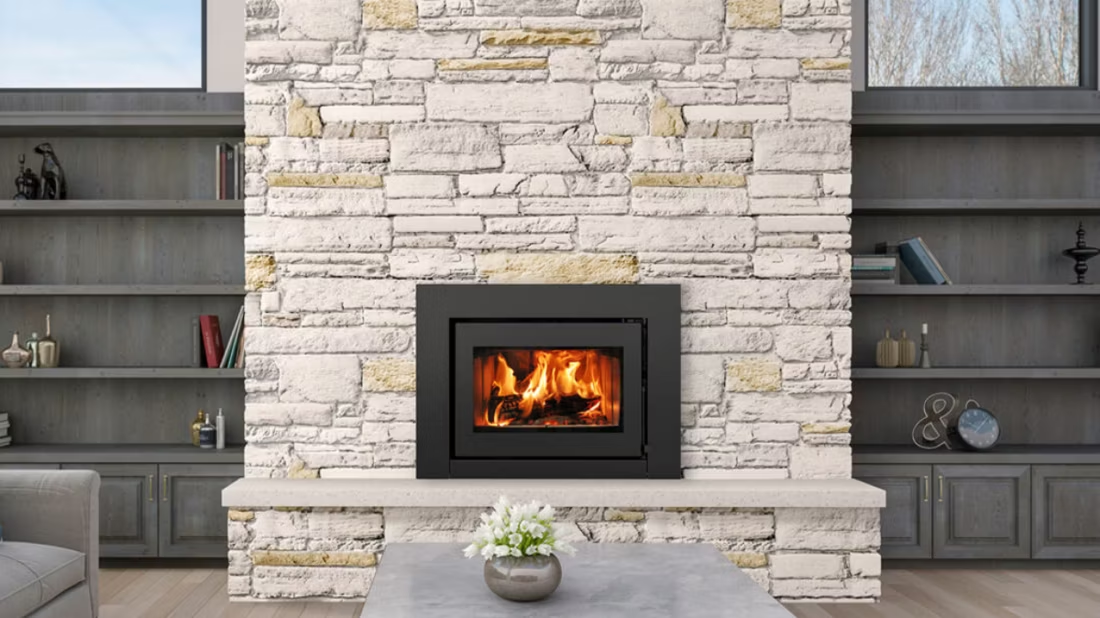
Open fireplaces suck—literally. As the fire burns, it consumes air your furnace already paid to heat and pulls it out through the chimney, so the house is actually colder after the fire goes out than before you lit it. An insert fixes this: it seals the chimney, puts fixed glass across the front, and turns that hole in your house into a real heat source.
Why is a fireplace insert so efficient?
An insert does two things: it seals the chimney completely, so you stop losing air you already paid to heat, and it radiates warmth into the room through the firebox and glass. Most add a heat-exchange fan that pulls cool room air underneath, wraps it around the hot firebox, and pushes it back out warm. Your home is more efficient before you've even lit the first fire.
Can I install a fireplace myself?
If you're putting a fire in your house on purpose, it's best to work with an expert. Unless you're genuinely experienced in framing, gas line, vent pipe, and the national code on clearances to combustibles, have a professional do it—and ideally the same company that sells you the fireplace, so warranty, service, and liability all live under one roof.
How much should I budget for a fireplace?
For an average home—covering the fireplace, the vent pipe, and basic installation—a budget between $3,900 and $5,500 gives you a lot of options across wood, gas, and pellet. By the time you add finish work, gas line, and electrical, the average complete installation lands between $5,000 and $12,000 all-in. In a remodel or new build, a good rule is to put about 2.5% of the total project cost toward the fireplace.
Nearby Dealers
Hearth shops serving Lake Monticello and the surrounding area. Every listing shows whether it is a WhyFire partner, a dealer we have verified as authorized for the brands we recommend, or a local business carrying hearth products. No manufacturer pays for placement. How we verify dealers →
Foster Fuels
Acme Stoves Of Charlottesville
Blossman Gas And Appliance
The Chimney Guys
Find your wood stove in Lake Monticello.
Tell us about your home and we'll match you with a trusted local dealer and send over a free Project Guide & Parts List—the exact stove or insert, vent kit, and installation plan for your Lake Monticello property.
Find Your Fireplace →