
Find the right fireplace for your Fluvanna County home.
Wood, gas, pellet, and electric fireplace resources for every community in Fluvanna County—from Palmyra and Fork Union to Lake Monticello and Bremo Bluff. Find the right fit for a Piedmont Virginia winter and connect with a trusted local hearth retailer.
Every Project Starts From One of These Five Situations
Piedmont hardwood country between the James and Rivanna Rivers.
Fluvanna County sits in Virginia's rolling Piedmont, bounded by the James River to the south and the Rivanna River cutting through the middle, with just under 11,000 residents spread across roughly 288 square miles. A large share of that population lives in Lake Monticello, the county's planned community; the rest is spread thin across farmland, wooded acreage, and small crossroads communities like Kents Store and Carysbrook. Climate zone 4A puts Fluvanna in mixed-humid territory—winters average a low around 25°F, and the county's winter heating load is a fraction of what a place like Madison, WI or Burlington, VT racks up, but still enough for a real four-to-five-month heating season running roughly November through March. Oak, hickory, and maple dominate the local woodlots, and a lot of rural Fluvanna properties still have enough standing hardwood to supply their own firewood for years.
What you'll find on this hub: hearth retailers, service technicians, and fuel suppliers serving every part of the county—Palmyra, Fork Union, Troy, Columbia, Bremo Bluff, and Lake Monticello included. Fluvanna is small and largely rural, so a good share of the businesses that service the county are actually based in nearby Charlottesville, the Zion Crossroads corridor in Louisa County, or the western Richmond suburbs—they just drive in for consultations and installs. Pick your fuel below to see local dealers, typical installation costs, and the resources that fit your project, whether you're heating a farmhouse on wooded acreage or a house at Lake Monticello.
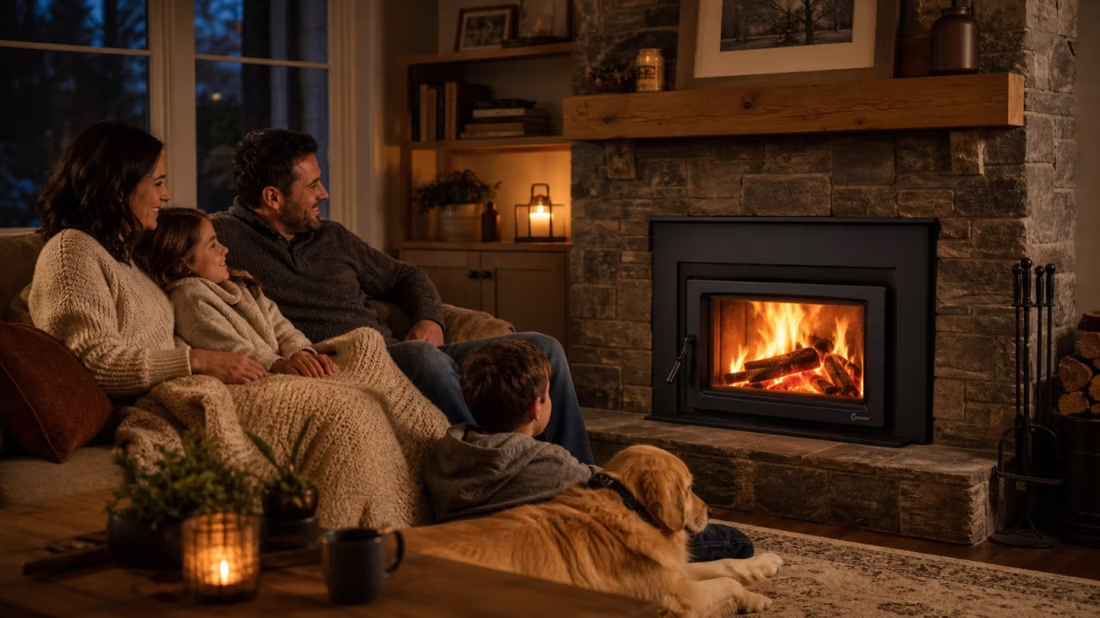
Four fuels. One honest answer for Fluvanna County.
Three steps. No salesperson until you're ready.
Tell us about your project
Your zip code, your situation, and the fuel you're leaning toward—or let the answers point you to one.
See what's actually available
The brands dealers within 100 miles genuinely carry—real options, never a catalog mirage.
Get your dealer & Project Guide
A trusted local dealer, plus the free Project Guide & Parts List that names every component of the job.
Frequently Asked Questions
Which fuel works best in Fluvanna County?
It depends on the property. Wood remains a strong choice for rural Fluvanna homes with standing hardwood—oak, hickory, and maple woodlots are common enough that plenty of homeowners cut and season their own firewood rather than buying it. Propane is the practical "gas" option here since rural Fluvanna doesn't have natural gas mains; many homes already run a propane tank for the water heater or range, so adding a propane fireplace or insert is often a simple tie-in. Pellet stoves are a solid middle ground—no woodpile to manage, and regional brands like Energex, Hamer Pellet Fuel, and Greene Team Pellet Fuel keep supply close by. Electric is more viable here than in harder-freeze climates: with winter lows averaging around 25°F rather than single digits, an electric insert can genuinely supplement—sometimes even carry—heat in a bedroom, sunroom, or addition. Most Fluvanna households end up mixing fuels: wood or propane as the main heat source, electric or pellet filling in elsewhere.
Do I need a permit to install a fireplace in Fluvanna County?
Generally, yes. Fluvanna is unincorporated outside of its village centers, so all building permits—including wood stoves, wood inserts, propane fireplaces, propane inserts, and pellet stoves—run through the single county Building Department in Palmyra rather than a separate town office. New wood-burning appliances need to meet the federal EPA 2020 NSPS emissions standard. Propane installations also require a licensed gas-fitter for the line work and tank connection, which is a separate step from the stove installation itself. Electric fireplaces are usually exempt from permitting unless it's a built-in unit that involves running a new circuit or hardwiring. Most local retailers who install in Fluvanna handle the permit paperwork as part of the job.
Are there wood-burning or air quality restrictions in Fluvanna County?
No—Fluvanna doesn't have the winter inversion issues or non-attainment status that trigger burn advisories in some other parts of Virginia, and there are no seasonal curtailment periods to plan around. That said, an EPA-certified stove is still worth choosing on its own merits: certified units burn oak and hickory more completely, which means more heat per cord and less creosote buildup in the flue over a season. Without air-quality restrictions to think about, the bigger practical concern in Fluvanna is proper wood seasoning—dense hardwoods like oak need a full 12 to 24 months of drying in Virginia's humid summers before they burn clean.
What's the typical cost range for fireplace installation across all fuel types in Fluvanna County?
Costs vary by fuel and by how much existing infrastructure is already in place. Wood stove or insert installation: roughly $4,000–$8,500, more if a full chimney liner is needed. Propane fireplace, insert, or stove: roughly $4,000–$9,500, with the higher end covering new propane tank placement and line runs for homes that don't already have propane service. Pellet stove or insert: roughly $3,800–$6,800 for a typical install. Electric fireplace: $200–$2,800 for the unit itself, plus $300–$1,000 in labor for anything beyond a simple plug-and-play placement. See the county + fuel pages above for cost detail tied to specific local retailers.
Where do Fluvanna County homeowners actually find hearth retailers and service techs?
Because Fluvanna is small and rural, most of the businesses that install and service fireplaces here aren't headquartered in the county—they're based in Charlottesville, the Zion Crossroads corridor in Louisa County, or the western Richmond suburbs, and they drive into Palmyra, Fork Union, Lake Monticello, and points in between for the actual work. That usually means a modest travel fee for service calls and a bit more lead time to get scheduled, especially in the fall when everyone's booking pre-season chimney sweeps and propane inspections at once. Booking in September or October, before the first cold snap, is the easiest way to get on the calendar without a wait.
What firewood is available locally, and how does it burn?
Fluvanna's Piedmont hardwood forests are dominated by oak, hickory, and maple, and all three are excellent stove wood. Hickory and oak are dense—around 22 to 24 million BTUs per cord—which means longer, hotter, steadier burns and better overnight coaling than softer woods. The tradeoff is seasoning time: oak in particular needs a full 12 to 24 months split and stacked before it's dry enough to burn cleanly in Virginia's humid summers, so planning a season ahead matters if you're cutting your own. Maple splits easier and seasons a bit faster, making it a good shoulder-season wood while the oak and hickory finish drying for the coldest stretch of winter.
Can a fireplace actually lower my heating bill?
Yes—by creating a comfort zone. A furnace heats every square foot of the house just to warm the one room you're in; a gas fireplace on low burns roughly a sixth of the gas a typical furnace does. Set the furnace around 55–60 degrees as a baseline, then heat the rooms your family actually uses. Families who heat this way commonly save $20–$60 a month.
Wood, gas, pellet, or electric—how do I choose?
Match the fuel to your life, not the other way around. Wood: lowest fuel cost and total power-outage independence, but you're hauling and stacking. Gas: press a button, set a thermostat, no maintenance to speak of. Pellet: wood economics with automatic feeding, in exchange for weekly cleaning and a need for electricity. Electric: plugs in anywhere with honest supplemental heat. Nobody regrets the fuel that fits how they actually live.
Does a fireplace add value to my home?
On average, a fireplace adds back to the home about the same amount you spent installing it. Add the monthly savings from heating the rooms you actually use instead of the whole house—often hundreds of dollars a year—and the value case is strong before you even count what a fire does for how your family uses the room.
What is an in-home preview and do I need one?
It's a visit where a hearth professional measures your space, confirms the model you picked actually works in your home, and walks the specs—framing, gas line, venting, finish work—before anything is ordered. Some details you just can't know until you see the house. Never make a down payment without one; it's the single most-skipped step that burns buyers.
Stove and Fireplace Dealers in Fluvanna County
Listings include WhyFire partner dealers, dealers we have verified as authorized for the brands we recommend, and established local businesses that carry hearth products. Every listing shows which one it is. The ones marked Preferred run on WhyFire's software, so they can show you real pricing and book your appointment right here. No manufacturer pays for placement. How we verify dealers →
Foster Fuels
Acme Stoves Of Charlottesville
Blossman Gas And Appliance
The Chimney Guys
Find your fireplace in Fluvanna County.
Pick your fuel below, and we'll match you with a trusted local dealer plus a free Project Guide & Parts List—the exact parts, vent kit, and recommended installer for your Fluvanna County home.
Find Your Fireplace →