
Find the right gas fireplace for your King and Queen County home.
Since there's no municipal gas main running through this stretch of the Middle Peninsula, propane is the fuel that actually gets used here. I'll help you find the right unit and match you with a local dealer who installs it correctly.
Every Project Starts From One of These Five Situations
Propane-powered comfort for a Middle Peninsula county with no gas mains.
King and Queen County sits between the Mattaponi and Pamunkey rivers in Virginia's rural Middle Peninsula—low density, wooded parcels, and no municipal natural gas infrastructure reaching most of the county. Climate zone 4A here means a mixed-humid winter: nothing like the mountain cold of the Shenandoah, but cold enough for a real heating season with occasional hard freezes and, thanks to the county's exposure to Chesapeake Bay storm systems, the kind of hurricane-season power outages that make a battery-backed gas appliance worth having.
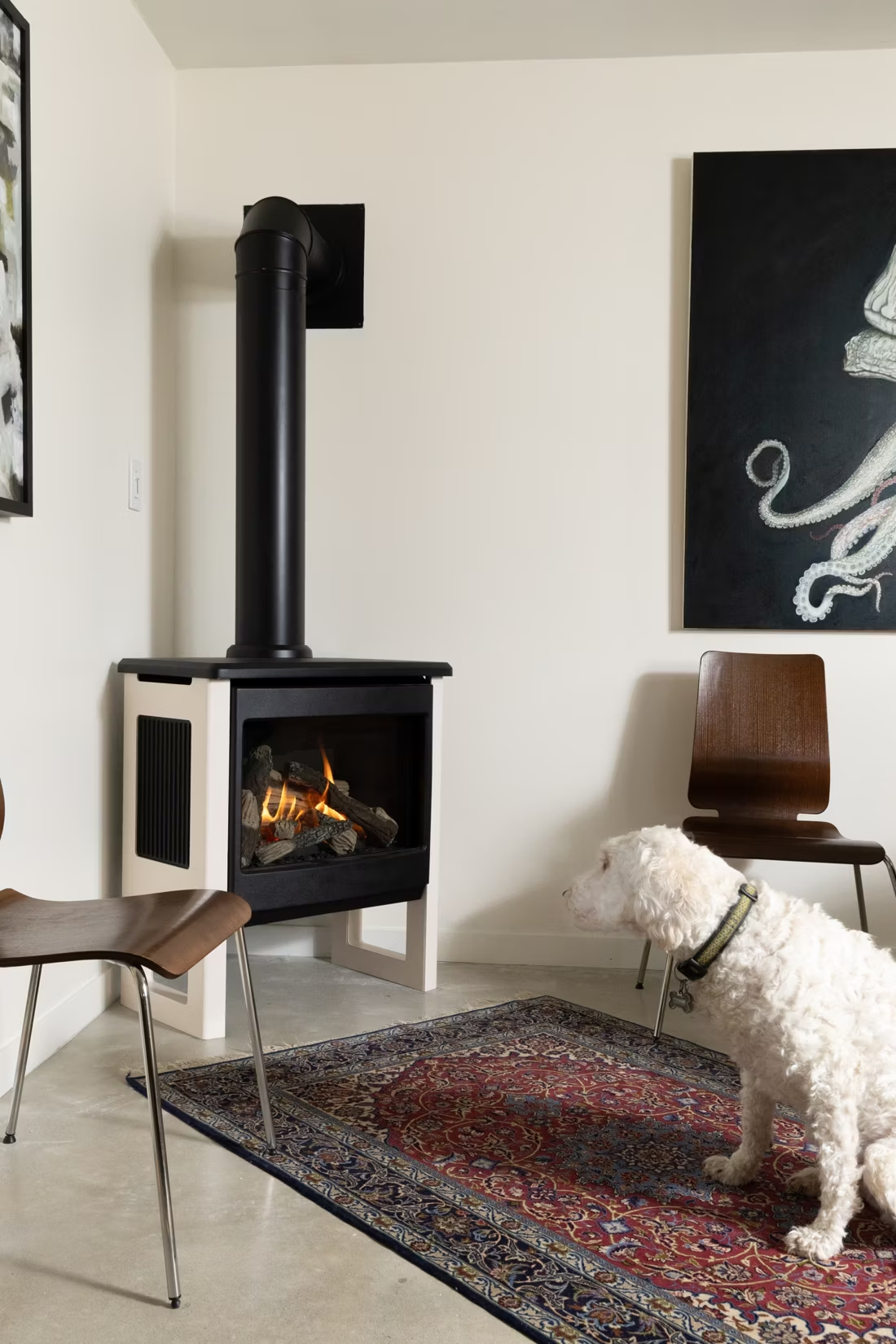
Because there's no gas main to tap into, nearly every gas fireplace installed in King and Queen County runs on propane, delivered and stored in a tank on the property. Many of the county's older farmhouses have existing masonry fireplaces originally built for oak and hickory cordwood—a common local conversion is fitting one of those with a direct-vent propane insert, which keeps the original hearth look while delivering push-button heat. New builds and additions typically go with a built-in direct-vent propane fireplace instead. Either way, work goes through the King and Queen County Building Department for permitting, and a licensed gas-fitter handles the propane line and regulator sizing.
Three steps. No salesperson until you're ready.
Tell us about your project
Your zip code, your situation, and the fuel you're leaning toward—or let the answers point you to one.
See what's actually available
The brands dealers within 100 miles genuinely carry—real options, never a catalog mirage.
Get your dealer & Project Guide
A trusted local dealer, plus the free Project Guide & Parts List that names every component of the job.
Frequently Asked Questions
How much does a gas fireplace installation cost in King and Queen County?
Most propane fireplace and insert installations in King and Queen County land in the $4,000 to $9,000 range. A propane insert going into an existing masonry fireplace with a stainless liner run is usually on the lower end. A new built-in direct-vent fireplace for a room addition or remodel—with framing, venting, and a fresh propane line from the tank—sits higher. If you don't already have a propane tank on the property, add the cost of a tank installation from a local propane supplier, which is a separate line item from the fireplace work itself.
Do I need natural gas, or does propane work fine here?
Propane is the standard choice—King and Queen County doesn't have natural gas main service reaching most properties, so virtually every gas fireplace installed here runs on propane from a stored tank rather than a utility line. This isn't a compromise: modern direct-vent fireplaces are built to run on either fuel, and your installer simply sets the correct orifice and regulator for propane. If you're moving from a home with natural gas, the fireplace itself will look and perform the same; the difference is just where the fuel comes from.
Do I need a permit to install a gas fireplace in King and Queen County?
Yes. New gas fireplace and insert installations require a building permit through the King and Queen County Building Department, and any propane line work needs to be done by a licensed gas-fitter as part of that permit. Most local hearth dealers coordinate the building permit, the propane line hookup, and the final inspection together, so you're not left managing separate trades. If you're converting an existing wood-burning masonry fireplace to propane, the liner and venting work also gets inspected as part of the same permit.
Will my gas fireplace work during a power outage?
Most will, which matters in a county exposed to the storm systems that roll off the Chesapeake Bay during hurricane season. Units with IPI (intermittent pilot ignition) run on battery backup—typically AA batteries in the unit—so the fireplace lights on demand even with the power out, as long as the batteries are fresh. Valor fireplaces take a different approach: the pilot's thermocouple generates the small amount of electricity the unit needs, so there's no battery to remember at all. For a rural county where outages can stretch for a day or more after a storm, either option gives you real heat with no generator required.
What's the difference between a gas fireplace, insert, and stove?
A gas fireplace is a fully built-in unit framed into a wall—the right call for new construction or a room addition. A gas insert is sized to slide into an existing masonry fireplace opening, using a liner run up your existing chimney as the vent path, which is the common route for King and Queen County's older farmhouses with original oak or hickory-burning hearths. A gas stove is a freestanding cabinet unit that sits on the floor like a wood stove but burns propane. For most homes here with an existing fireplace, an insert is the straightforward upgrade; homes without one usually go with a built-in unit instead.
Can I convert my wood-burning fireplace to gas?
Yes, and it's one of the more common projects for this county's older housing stock. A propane insert fits into your existing masonry opening with a stainless liner run through the chimney, so you keep the original hearth and mantel while eliminating the need to split and haul oak or hickory. Cost typically runs $4,500 to $8,500 depending on the insert and how much liner and venting work is involved. Your propane tank size and location get factored in at the same time—if you're not already set up with a tank, that's a separate quote from a local propane supplier.
Are vent-free propane fireplaces allowed in King and Queen County?
Vent-free (ventless) propane units are legal in Virginia, but they burn directly into the room without any exterior venting, which means strict room-sizing rules and an oxygen depletion sensor are required by code. Direct-vent units, by contrast, draw combustion air from outside and exhaust it back outside through a sealed pipe—cleaner, and the option most local dealers steer homeowners toward for a primary living space. For a smaller supplemental room, like a den or converted porch, a vent-free unit can still make sense. Ask a local dealer to walk through both options against your specific room dimensions before deciding.
How often does a propane fireplace need servicing?
Plan on an annual inspection, ideally in late summer or early fall before the first cold snap. A technician checks the burner, pilot assembly, venting, and propane connections, and cleans the glass and interior components. This is a much lighter service than a wood chimney sweep, but it matters just as much for safety—a technician will also confirm your regulator is sized correctly for your specific propane tank setup, which can drift out of spec over time. Expect to pay $150 to $250 for a standard annual visit from a local gas appliance service provider.
Should I go with gas or stick with wood for my King and Queen County home?
Wood is still very much in use here—oak, hickory, and maple are the common local species, and a wood stove or fireplace runs without any dependence on a propane delivery truck or the power grid. Gas trades that self-sufficiency for push-button convenience: no splitting, hauling, or ash cleanup, and more consistent heat output with a battery-backed unit that still works in a storm outage. For a primary living space where daily convenience matters, propane usually wins. For a lot of King and Queen County households, the practical answer is both: a gas insert in the main room for everyday use, with a wood-burning option kept in reserve elsewhere on the property.
Is my gas fireplace wasting gas?
If it was installed more than 15 years ago, probably. Older gas fireplaces keep a standing pilot light burning all the time, and that little flame can cost a couple hundred dollars a year. Newer models use pilot-on-demand ignition—the pilot lights only when you use the fireplace and goes out when you turn it off.
What do I measure to size a fireplace insert?
Four numbers tell you what fits: the front width, the front height, the back width, and the overall depth of your existing fireplace opening. Grab a tape measure, jot those down, and snap a photo of the wall—those two things do more to move your project forward than anything else you can do today.
What is an in-home preview and do I need one?
It's a visit where a hearth professional measures your space, confirms the model you picked actually works in your home, and walks the specs—framing, gas line, venting, finish work—before anything is ordered. Some details you just can't know until you see the house. Never make a down payment without one; it's the single most-skipped step that burns buyers.
Can I install a fireplace myself?
If you're putting a fire in your house on purpose, it's best to work with an expert. Unless you're genuinely experienced in framing, gas line, vent pipe, and the national code on clearances to combustibles, have a professional do it—and ideally the same company that sells you the fireplace, so warranty, service, and liability all live under one roof.
Stove and Fireplace Dealers in King and Queen County
Listings include WhyFire partner dealers, dealers we have verified as authorized for the brands we recommend, and established local businesses that carry hearth products. Every listing shows which one it is. The ones marked Preferred run on WhyFire's software, so they can show you real pricing and book your appointment right here. No manufacturer pays for placement. How we verify dealers →
Holtzman Propane
Old Town Stove & Hearth
Phillips Energy,Inc - Providence Forge
Find your gas fireplace in King and Queen County.
Tell me a bit about your home and your existing propane setup, and I'll put together a free Project Guide & Parts List—the right unit, the vent kit, and a trusted local dealer who can actually install it.
Find Your Fireplace →