
Instant heat for the Middle Peninsula's rural homes and river cottages.
No gas line to run, no chimney to line—just clean zone heat for the farmhouses, additions, and waterfront cottages along the Mattaponi and Pamunkey Rivers. Find the right unit and connect with a trusted local dealer.
Every Project Starts From One of These Five Situations
Clean heat without the chimney, gas line, or wood pile.
King and Queen County sits on Virginia's Middle Peninsula between the Mattaponi and Pamunkey Rivers, with the county seat at King and Queen Courthouse—a small historic crossroads surrounded by farmland, hardwood forest, and river frontage. It's one of the least densely populated counties in the state, and the housing stock reflects it: older farmhouses, waterfront cottages, and newer homes built without any expectation of municipal natural gas, because there isn't a gas main serving most of the county. Winters here fall in Zone 4A, the same mixed-humid classification as Richmond—real cold snaps into the 20s and teens happen most winters, but nothing close to the sustained deep freezes of a place like Duluth, Minnesota.
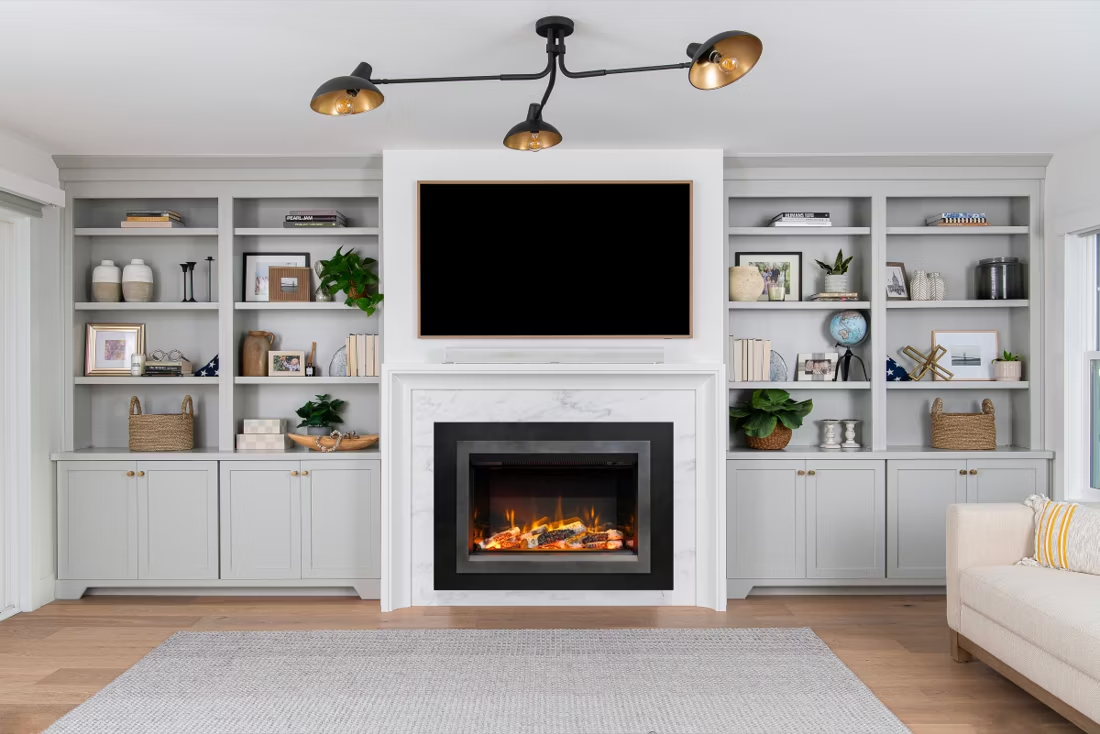
With no natural gas infrastructure through most of the county, homeowners typically choose between propane, wood, and electric—and electric fireplaces have become the go-to answer for the situations propane tanks and wood chimneys don't solve well: a sunroom addition, a converted outbuilding, a waterfront cottage that only gets used part of the year, or an old farmhouse fireplace opening whose flue hasn't been safe to burn in for decades. An electric insert or built-in unit runs on standard or dedicated circuit power through Dominion Energy or, in more rural stretches of the county, Rappahannock Electric Cooperative, needs no venting or chimney work, and can typically be installed in an afternoon rather than a multi-day project.
Three steps. No salesperson until you're ready.
Tell us about your project
Your zip code, your situation, and the fuel you're leaning toward—or let the answers point you to one.
See what's actually available
The brands dealers within 100 miles genuinely carry—real options, never a catalog mirage.
Get your dealer & Project Guide
A trusted local dealer, plus the free Project Guide & Parts List that names every component of the job.
Frequently Asked Questions
How much does it cost to install an electric fireplace or insert in King and Queen County?
A plug-in freestanding electric stove or a basic insert that drops into an existing fireplace opening typically runs $300 to $1,200 installed, since it plugs into a standard outlet and needs no electrician. A larger built-in wall unit or a model that requires a dedicated 240-volt circuit runs closer to $2,000 to $5,000 once electrical work is included. Either way, costs stay well below what wood or propane installations run in this county, because there's no chimney, liner, or gas line to install—the electrical work is the only trade involved.
Do I need a permit for an electric fireplace in King and Queen County?
Most plug-in electric units don't require a permit, since there's no gas line or chimney modification involved. If you're adding a dedicated circuit for a larger built-in unit, that electrical work needs a permit through the King and Queen County building department and should be done by a licensed electrician. Either way, it's a far simpler permitting path than a wood or propane install, which involves combustion-appliance inspection and, for wood, chimney or liner sign-off.
What size electric fireplace do I need for my home?
Most electric fireplaces top out around 5,000 to 10,000 BTU (roughly 1,500 watts), which is enough to comfortably heat a single room or addition—a sunroom, a den, a converted outbuilding—but won't replace a whole-home heating system in a Zone 4A winter. In King and Queen County, electric units work best as zone heat layered on top of a propane furnace or a wood stove burning local oak, hickory, or maple. If you're trying to heat an entire older farmhouse with drafty rooms, a wood stove or propane system will outperform electric on the coldest nights; electric shines for supplemental comfort in one room at a time.
What's the difference between an electric insert, a wall-mounted unit, and a freestanding electric stove?
An electric insert is built to slide into an existing masonry fireplace opening, which makes it a popular option for the county's older farmhouses that have a fireplace opening but a chimney that hasn't been safe to burn wood in for years. A wall-mounted unit installs flush against a wall, similar to a flat-screen TV, and suits additions or newer rooms without an existing fireplace. A freestanding electric stove sits on the floor and mimics the look of a wood stove, which fits well in river cottages going for a rustic look without the wood handling. All three plug in or wire the same way—the choice mostly comes down to whether you have an existing fireplace opening to fill.
Will an electric fireplace work during a power outage?
No—and this matters more here than in a lot of places. Electric fireplaces need power to run the heater and blower, and King and Queen County's rural overhead lines along the Mattaponi and Pamunkey run through a lot of tree cover, so outages from summer storms, nor'easters, and hurricane remnants moving up the Middle Peninsula aren't rare. Most homeowners here pair an electric fireplace for everyday convenience with a wood stove burning local oak, hickory, or maple, or a propane heater, as genuine backup heat when the power drops. If outage resilience is a priority for your household, that's worth discussing with a local dealer before you commit to electric as your only heat source in a given room.
What does it cost to run an electric fireplace in King and Queen County?
A typical 1,500-watt unit run on high costs somewhere around 20 to 30 cents an hour at current Dominion Energy or Rappahannock Electric Cooperative residential rates—a few dollars for an evening's use. Electric heat generally costs more per BTU than wood or propane on the coldest nights, but for zone heating a single room, it's often cheaper than running a central heat pump harder to warm the whole house, especially in an addition or cottage that only gets occasional use.
Can I install an electric insert into an old, unused fireplace opening?
Yes, and it's one of the more common projects in this county's older housing stock. Many King and Queen County farmhouses have a brick fireplace opening that hasn't been used for wood in years because the flue or firebox was never brought up to modern safety standards. An electric insert drops into that same opening without requiring any chimney repair, liner, or flue inspection—it gives the fireplace a working heat source and the original look again, without the cost of relining a chimney that may not be structurally sound to begin with.
Electric, wood, or propane—which is right for my home?
Wood, burned from the oak, hickory, and maple common throughout the county, delivers the highest heat output and keeps working through a power outage—a real consideration on the rural Middle Peninsula. Propane offers whole-house heating capacity without a wood supply to manage, and most homes here already have a tank. Electric offers the lowest install cost, zero emissions, and the least maintenance, but it depends entirely on grid power and can't match wood or propane BTU-for-BTU on the coldest nights. Many homes in the county end up running two of the three—a propane furnace or wood stove for primary heat, and an electric fireplace for a specific room where running ductwork or a chimney doesn't make sense.
Are there rebates available for electric heating in King and Queen County?
Rappahannock Electric Cooperative and Dominion Energy both periodically run efficiency rebate programs for members, which can include incentives for electric heating equipment or whole-home efficiency upgrades—the specifics and eligibility change from year to year, so it's worth checking directly with whichever provider serves your part of the county before you buy. Since electric fireplaces have no emissions to regulate, they also sidestep the EPA certification and local air-quality rules that apply to wood-burning appliances elsewhere in Virginia, though King and Queen County doesn't currently have air quality restrictions on wood burning either.
Do electric fireplaces actually produce heat?
Yes—most put out around 4,800–5,000 BTUs from a standard outlet, which comfortably warms a bedroom, office, or den as a comfort-zone heater. What they won't do is carry a whole house the way wood, gas, or pellet can. Think of electric as ambiance-first with honest supplemental heat: flames on with no heat in July, flames plus warmth in January.
Can I put a TV above my fireplace?
Yes—with an asterisk. Fireplaces are hot and TVs don't like heat. Either put a mantel between them to deflect rising warmth, or choose a fireplace with heat-management technology that creates a cool zone on the wall above—the wall stays around 125 degrees, barely warm, while the room still gets full heat. If you like clean lines and don't want a mantel, heat management is the answer.
Does a fireplace add value to my home?
On average, a fireplace adds back to the home about the same amount you spent installing it. Add the monthly savings from heating the rooms you actually use instead of the whole house—often hundreds of dollars a year—and the value case is strong before you even count what a fire does for how your family uses the room.
Can I install a fireplace myself?
If you're putting a fire in your house on purpose, it's best to work with an expert. Unless you're genuinely experienced in framing, gas line, vent pipe, and the national code on clearances to combustibles, have a professional do it—and ideally the same company that sells you the fireplace, so warranty, service, and liability all live under one roof.
Stove and Fireplace Dealers in King and Queen County
Listings include WhyFire partner dealers, dealers we have verified as authorized for the brands we recommend, and established local businesses that carry hearth products. Every listing shows which one it is. The ones marked Preferred run on WhyFire's software, so they can show you real pricing and book your appointment right here. No manufacturer pays for placement. How we verify dealers →
Holtzman Propane
Old Town Stove & Hearth
Phillips Energy,Inc - Providence Forge
Find your electric fireplace in King and Queen County.
Tell us a bit about your home—farmhouse, addition, or river cottage—and we'll match you with the right electric fireplace or insert, plus a free Project Guide & Parts List and a trusted local dealer to install it.
Find Your Fireplace →