
Find the right hearth for your King and Queen County home.
Wood, gas, pellet, and electric fireplace resources for every corner of King and Queen County—from the courthouse village out to Shacklefords and Stevensville. Find the right fuel for your home and connect with a local hearth dealer who actually services this stretch of the Middle Peninsula.
Every Project Starts From One of These Five Situations
Rural heating traditions along Virginia's Middle Peninsula.
King and Queen County sits on Virginia's Middle Peninsula between the Mattaponi and York rivers, and it stays about as rural as Virginia gets. Winters here fall in Climate Zone 4A—mixed-humid, with cold fronts and the occasional hard freeze but nothing like the sustained sub-zero stretches you'd get in Duluth or Bozeman. That milder profile means a wood or gas appliance sized for this region doesn't need the overnight-burn capacity a Northern stove requires; it needs to handle damp cold, not extreme cold. The county's oak, hickory, and maple forests have supplied firewood to local households for generations, and that supply is still the backbone of wood heat here. Without municipal gas lines reaching most of the county, propane—not piped natural gas—is the practical gas option for most homes.
On this hub you'll find hearth retailers, service technicians, and fuel suppliers covering the whole county—the courthouse area, Shacklefords, Little Plymouth, Newtown, Stevensville, and the farms and river-frontage properties in between. Pick your fuel below to see local dealers, realistic installation costs, and the units that actually make sense for a mixed-humid Virginia winter, whether you're heating a farmhouse near the Mattaponi or a cabin off Route 14.
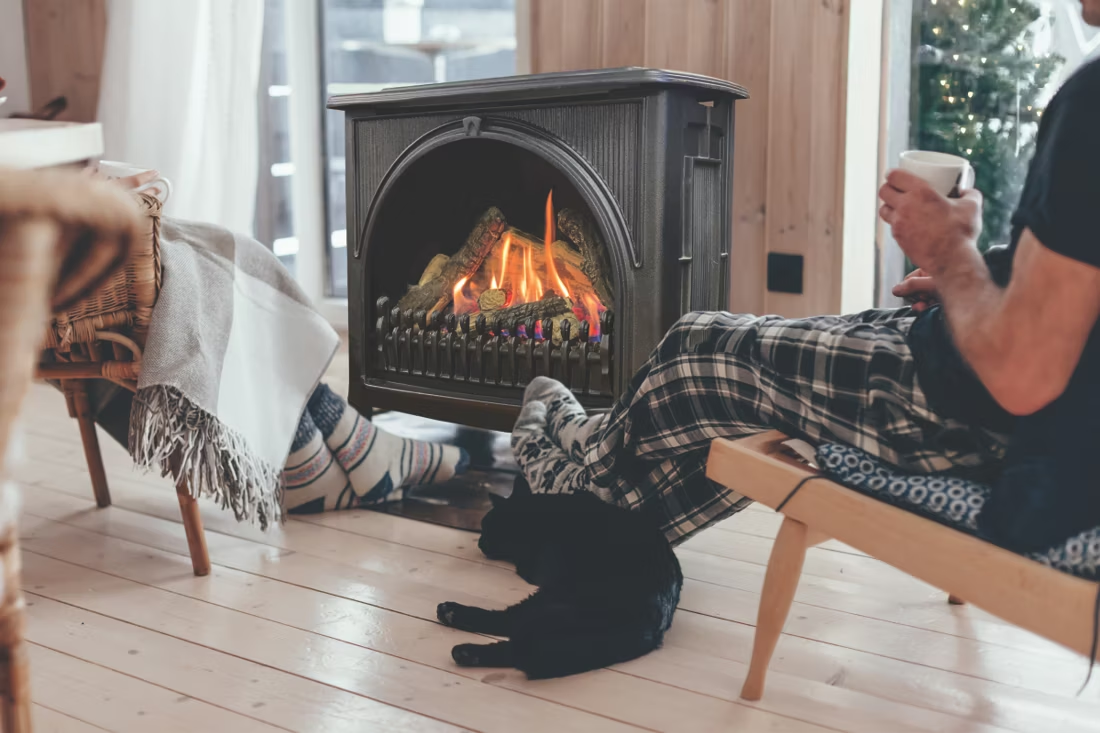
Four fuels. One honest answer for King and Queen County.
Wood
See what's available near King and Queen County.
Find your wood stove →Gas
See what's available near King and Queen County.
Find your gas fireplace →Pellet
See what's available near King and Queen County.
Find your pellet stove →Electric
See what's available near King and Queen County.
Find your electric fireplace →Three steps. No salesperson until you're ready.
Tell us about your project
Your zip code, your situation, and the fuel you're leaning toward—or let the answers point you to one.
See what's actually available
The brands dealers within 100 miles genuinely carry—real options, never a catalog mirage.
Get your dealer & Project Guide
A trusted local dealer, plus the free Project Guide & Parts List that names every component of the job.
Frequently Asked Questions
Which fuel works best in King and Queen County?
It depends on the house and how you use it. Wood is a natural fit given the county's oak, hickory, and maple woodlots—a cast-iron or steel stove sized for Zone 4A winters will comfortably heat a farmhouse or cabin without the 20+ hour burn times a colder climate would demand. Gas is the convenience option, but since most of the county isn't reached by municipal natural gas lines, that almost always means a propane fireplace or insert fed by a tank rather than a piped hookup. Pellet stoves are a solid middle ground—less splitting and stacking than cordwood, with regional brands like Energex, Hamer, and Greene Team readily available. Electric fireplaces work well as supplemental heat in bedrooms or additions, but they're not a primary heat source here any more than anywhere else with real winter cold. Many King and Queen homes end up running wood or propane as the main heater and electric for ambiance in a secondary room.
Do I need a permit to install a fireplace in King and Queen County?
Generally yes. New wood stoves, wood inserts, gas appliances, and pellet stoves typically require a building permit through the county building department, and any wood-burning appliance sold or installed new must meet current EPA emissions standards. Propane installations also involve line and tank work that should be handled by a licensed propane technician, separate from the building permit itself. Electric fireplaces usually don't need a permit unless you're doing a built-in installation with new wiring or a dedicated circuit. Most local hearth retailers who serve this part of the Middle Peninsula handle the permitting as part of the installation, so you're not filing paperwork yourself in most cases.
Are there air quality restrictions on wood burning in King and Queen County?
No. King and Queen County has no air quality non-attainment designations and no burn bans or curtailment periods like you'd find in a smoke-prone basin such as the Klamath area of Oregon. The county's low population density and river-and-farmland geography mean wood smoke simply doesn't accumulate the way it can in a bowl-shaped valley or a dense urban area. New wood stoves still need to meet EPA emissions standards at the point of sale, but that's a federal manufacturing requirement, not a local burning restriction—you can burn oak and hickory on a cold night here without checking an advisory page first.
Can one local hearth retailer handle all four fuel types?
Given how sparsely populated King and Queen County is, most of the retailers who actually service this area are based in nearby Middle Peninsula or Tidewater towns and carry a mix of wood, propane/gas, and pellet lines, with electric fireplaces as a smaller add-on category. Few if any dealers are physically located inside the county itself, so coverage depends on which retailer is willing to make the drive for delivery and installation. If you want to compare fuels side by side, look for a multi-fuel dealer with showroom displays rather than assuming a single county-based shop exists for every fuel—the county + fuel pages above list which dealers actually cover this territory.
How does service work in a county this rural and small?
Expect travel time to be part of the equation. With a population this small and spread across farmland and river frontage, technicians serving King and Queen County are typically based in a neighboring town and schedule service calls in batches rather than same-day visits. Booking your annual chimney sweep or propane appliance inspection in late summer or early fall—before the first cold snap—gets you a far easier appointment than calling in December when everyone else has the same idea. If you're on wood heat, keeping a backup source of heat (a propane space heater or generator-fed circuit) is a reasonable hedge against the occasional delayed service call or winter storm.
What's the typical cost range for fireplace installation across fuel types in King and Queen County?
Costs run a bit below Northern Virginia and Tidewater urban pricing, though travel fees for rural delivery can offset some of that. Wood stove or insert installation: roughly $3,500–$8,000 depending on chimney condition and whether new masonry or liner work is needed. Propane fireplace, insert, or stove: roughly $4,000–$9,500, with tank setup and line work affecting the low or high end. Pellet stove or insert: roughly $3,500–$6,500 for a typical install. Electric fireplace: $200–$2,500 for the unit itself, plus $300–$1,000 in labor for anything beyond a simple plug-in placement. For unit-specific numbers, check the county + fuel pages above—pricing there reflects what local dealers actually quote for this part of the Middle Peninsula.
How much should I budget for a fireplace?
For an average home—covering the fireplace, the vent pipe, and basic installation—a budget between $3,900 and $5,500 gives you a lot of options across wood, gas, and pellet. By the time you add finish work, gas line, and electrical, the average complete installation lands between $5,000 and $12,000 all-in. In a remodel or new build, a good rule is to put about 2.5% of the total project cost toward the fireplace.
What is an in-home preview and do I need one?
It's a visit where a hearth professional measures your space, confirms the model you picked actually works in your home, and walks the specs—framing, gas line, venting, finish work—before anything is ordered. Some details you just can't know until you see the house. Never make a down payment without one; it's the single most-skipped step that burns buyers.
Wood, gas, pellet, or electric—how do I choose?
Match the fuel to your life, not the other way around. Wood: lowest fuel cost and total power-outage independence, but you're hauling and stacking. Gas: press a button, set a thermostat, no maintenance to speak of. Pellet: wood economics with automatic feeding, in exchange for weekly cleaning and a need for electricity. Electric: plugs in anywhere with honest supplemental heat. Nobody regrets the fuel that fits how they actually live.
Should the dealer who sells my fireplace also install it?
Ideally, yes. A fireplace project involves vent pipe, gas line, electrical, and often tile or stone. Hire three or four separate trades and you own the liability and the game of telephone between them. One company selling and installing means one accountable party, start to finish—ask about factory training, on-time completion records, and what happens if an inspection fails.
Stove and Fireplace Dealers in King and Queen County
Listings include WhyFire partner dealers, dealers we have verified as authorized for the brands we recommend, and established local businesses that carry hearth products. Every listing shows which one it is. The ones marked Preferred run on WhyFire's software, so they can show you real pricing and book your appointment right here. No manufacturer pays for placement. How we verify dealers →
Holtzman Propane
Old Town Stove & Hearth
Phillips Energy,Inc - Providence Forge
Find your fireplace in King and Queen County.
Pick your fuel below to see local dealers, realistic installation costs, and get matched with a trusted retailer who actually services this part of the Middle Peninsula.
Find Your Fireplace →